News
Ginger prices soar in Lagos amid supply shortages, transportation cost

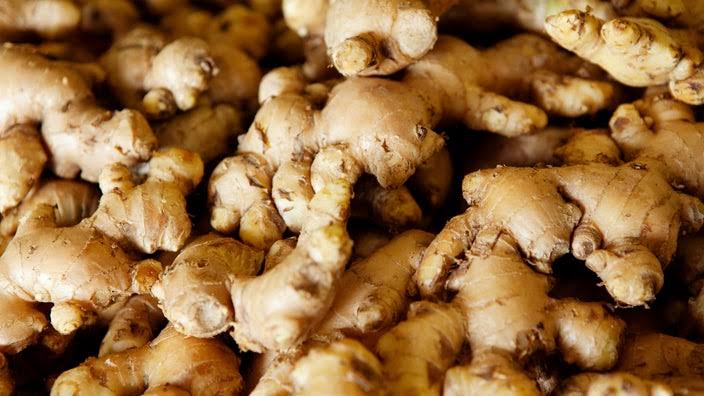
Traders and consumers in Lagos have lamented the sharp rise in ginger prices, attributing the development to insecurity in major producing communities, dwindling supply, and rising transportation costs.
The respondents, who spoke with journalists on Sunday, said the situation had made the popular spice increasingly unaffordable for many households.
Ginger is widely used in Nigerian homes for cooking, beverages, and traditional remedies because of its distinctive flavour and perceived health benefits.
The spice is produced mainly in Kaduna, Nasarawa, Niger, and Plateau states before being transported to markets across the country.
However, traders said supplies reaching Lagos markets had declined significantly in recent months, resulting in steep price increases.
Data from the National Bureau of Statistics showed that Nigeria’s ginger exports dropped by 74 per cent to N6.28 billion in the first nine months of 2024, compared with N23.76 billion recorded during the corresponding period of 2023.
Industry stakeholders have linked the decline partly to disease outbreaks that affected ginger farms in key producing states, including Kaduna and Kano.
The Minister of State for Agriculture and Food Security, Aliyu Abdullahi, noted that ginger farmers have lost over N12 billion to the epidemic since 2023.
Speaking with journalists, the Public Relations Officer of Oyingbo Market, Ademola Oduyemi, said insecurity in some farming communities had disrupted cultivation and harvesting activities.
According to him, information from suppliers indicates that many farmers can no longer access their farms due to security concerns.
“Some farmers are unable to harvest their crops, while others are reluctant to plant. This has reduced the volume of ginger coming into the market and contributed to the scarcity we are witnessing,” he said.
Mr Oduyemi said the shortage had pushed prices to unprecedented levels.
“A paint bucket of ginger now sells for between N40,000 and N46,000, depending on size and quality.
“Half a paint bucket costs between N22,500 and N23,000, while a derica measure sells for about N12,000.
“Many retail buyers who cannot afford larger quantities now purchase individual pieces, which sell for about N500 each,” he said.
He added that rising transport costs and growing demand had compounded the supply challenge.
“If farmers can safely return to their farms and production improves, supply will increase and prices may stabilise,” he said.
Also speaking, Florence Akinfolubi, a ginger trader at Oyingbo Market, said reduced supplies from producing states had continued to affect availability.
“We receive far less ginger than before. Whenever supply drops, prices inevitably rise.
“Transportation costs have also increased considerably. Moving produce from the North to Lagos is more expensive, and that reflects in market prices,” she said.
Another trader, Abdullahi Musa, said growing consumer demand was exerting additional pressure on available supplies.
“More people now buy ginger regularly because of its health benefits.
“Demand keeps increasing, but supply is not keeping pace, and that is driving prices higher,” he said.
At Lawanson Market, a spice dealer, Iyabo Daleko, said traders were finding it increasingly difficult to sustain their businesses.
“We spend more on purchasing and transporting ginger, yet customers complain whenever prices go up.
“Many buyers now settle for smaller quantities because they can no longer afford what they used to buy,” she said.
Consumers also expressed concern over the persistent increase.
Janet Madueke described the situation as frustrating.
“A tiny piece of ginger now sells for about N1,000 in the market near my residence in Surulere.
“The price is outrageous, and despite the cost, the quality does not appear to be as good as before,” she said.
Similarly, another consumer, Funmilayo Ogunleye, said the rising cost of ginger was stretching household budgets.
“I use ginger regularly for cooking and preparing drinks.
“The price has almost doubled compared to what I paid earlier this year, so I now buy less and use it more sparingly,” she said.
Adewale Balogun said he had also reduced his purchases because of the escalating cost.
“Ginger is a staple in my home, especially for tea and other drinks.
“These days, what N1,000 used to buy can no longer go far. It is becoming difficult for average families,” he said.
Some residents warned that continued increases in the prices of food items and spices could further worsen the cost-of-living challenges facing many households.
They urged government authorities to strengthen security in farming communities, improve agricultural production, address transportation bottlenecks, and enhance food distribution systems to stabilise prices.
According to them, ginger remains an essential household commodity whose availability and affordability should be prioritised.
(NAN)





The Ekiti State High Court sitting in Ado-Ekiti has dismissed a suit filed by the African Democratic Congress, ADC, challenging the guidelines for the December 12, 2026, local government and Local Council Development Areas, LCDAs, elections.
The suit was instituted against the Ekiti State Independent Electoral Commission, EKSIEC, and its Chairman, Justice Cornelius Ilori Akintayo, rtd, seeking to invalidate the guidelines issued for the conduct of the forthcoming elections.
A statement issued by EKSIEC Information Commissioner, Soji Oloketuyi, on behalf of the commission’s chairman, said the case was initially filed at the Federal High Court, which subsequently transferred it to the State High Court for adjudication.
Delivering judgment in the suit, Justice S.B.J. Bamise dismissed the action in a 76-page judgment, describing the plaintiffs as “meddlesome interlopers” who, according to the court, sought to truncate the forthcoming local government elections.
The court also awarded costs of N100,000 in favour of EKSIEC and the other defendant in the suit, marking a legal development in the commission’s preparations for the December 12 elections.
The commission said the judgment followed the ADC’s challenge to the electoral guidelines, as preparations continue for the conduct of the 2026 local government and LCDAs elections across Ekiti State.
Ekiti council polls: Court dismisses ADC suit against EKSIEC

The Nigerian Army troops have rescued 28 kidnap victims in Katsina and Zamfara states.
The troops arrested three suspected pipeline vandals in Rivers State and kiled two suspected criminals in Bauchi State.
This is contained in an operational report detailing military activities across several theatres between Thursday and Friday, released in Abuja on Saturday.
The report said that troops of Operation Fansan Yamma rescued 27 victims kidnapped by suspected terrorists in Gamji community, Sabuwa Local Government Area of Katsina State, at about 12:25 a:m., on Friday.
It said the rescued victims were handed over to the community leader, Falalu Suleiman, for further action.
The report noted that troops responding to an attack on farmers in Dutsen Maru community, Maru Local Government Area of Zamfara State, forced the attackers to flee and abandon one kidnap victim.
According to the report, troops rescued the victim and recovered three motorcycles and a donkey.
It further said that in Rivers State, troops of the Joint Task Force South-South, Operation Delta Safe, arrested three suspects over an alleged vandalisation and removal of pipelines belonging to the Nigerian Pipelines and Storage Company (NPSC) along the Bonny export line serving the Port Harcourt refinery.
“The operation took place at Okochiri community, Okrika Local Government Area, on Thursday.
“The troops recovered 210 pieces of vandalised pipes, 12 boats, five motorcycles, six batteries, a generator, a fire extinguisher and two heavy-duty metal-cutting machines,” it said.
The report noted that efforts were ongoing to apprehend the suspected buyer.
It also said that troops of Operation MESA, acting on intelligence about ransom payment to kidnappers, engaged and neutralised two suspected criminals in the Ningi Local Government Area of Bauchi State.
According to the report, troops also arrested a herder and his son over an alleged killing in Jimpi village, Tafawa Balewa Local Government Area in separate operation.
The report further said that troops of Operation Enduring Peace recovered the body of a civilian kidnapped on October 14 in Gwol-Hoss community, Riyom Local Government Area of Plateau State.
“The decomposing body was discovered along the Gwol-Hoss-Makera Road on Friday and evacuated by family members for burial,” it said.
The report said that troops responding to an attack on illegal miners at Makale mining site in the Bokkos Local Government Area also found two bodies, while the assailants fled on sighting the troops.
According to the report, efforts are ongoing to apprehend the perpetrators of both incidents.
It added that troops of the 17 Brigade engaged armed terrorists on motorcycles in Kurba village, Kankara Local Government Area of Katsina state, forcing them to abandon one motorcycle.
It added, “The operations form part of ongoing efforts to rescue abducted persons, combat violent crime, protect critical infrastructure and strengthen security across the country.”
(NAN)
-

 News4 days ago
MTN, Airtel take 90% of Nigeria’s 15m new subscribers as Glo shifts ground – Technology Times
-
News2 days ago
Miners Association Seeks Support To Unlock $3bn Gemstone Export Potential
-
Health2 days ago
Katsina health professionals declare 7-day warning strike
-
Health3 days ago
Kenya confirms second Ebola case as contact develops symptoms in quarantine