News
Gagdi Unveils Scorecard, Backs Mutfwang’s Second Term, Eyes 2027 Re-election

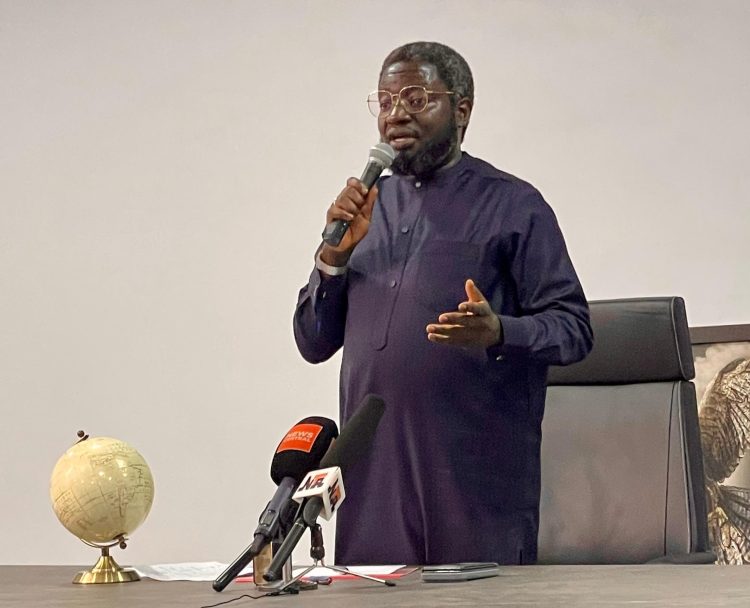
The Member representing Pankshin, Kanke, and Kanam Federal Constituency, Yusuf Adamu Gagdi, has presented his stewardship scorecard, outlining his legislative achievements, constituency projects, and political direction ahead of the 2027 elections.
Gagdi, who also serves as Chairman of the House Committee on Navy, made the presentation on Saturday, April 25, 2026, during a media parley with journalists, bloggers, content creators, and other media practitioners at his residence in Rayfield, Jos.
Highlighting his performance in the Green Chamber, the lawmaker disclosed that he has sponsored 58 bills at the National Assembly, with six already signed into law by the President. Key among them are the conversion of the Federal College of Education, Pankshin into a Federal University of Education, amendments to the Police Act, and the establishment of both the Admiralty University in Delta State and the National Hydrographic Agency.
On constituency development, Gagdi said his office has facilitated employment opportunities for thousands of constituents in federal agencies. He also pointed to major infrastructure strides across PKK, including the rehabilitation of nine roads in Pankshin, construction of 16 roads in Kanam, and ongoing work on 38 small bridges and three major bridges. Additional interventions include access to potable water and various empowerment programmes.

The lawmaker further revealed that financial support has been extended to educational institutions, including the Federal University in Pankshin, to support their growth and expansion.
Addressing allegations of bias in job placements, Gagdi dismissed claims of religious favoritism, insisting that opportunities are based strictly on merit.
“Employment opportunities are based on competence and credibility, not religion. Both Christians and Muslims have benefited,” he stated.
Gagdi also used the occasion to declare his support for Plateau State Governor, Caleb Mutfwang, endorsing his bid for a second term. He cited ongoing infrastructure projects, particularly road construction across Pankshin, Kanke, and Kanam, as evidence of the governor’s performance.
“My support is driven by the interest of the people. The governor has demonstrated commitment through visible projects,” he said.
On the issue of zoning, Gagdi expressed confidence in his chances of re-election in 2027, emphasizing that the Nigerian Constitution places no limit on how many times he can contest. He urged political opponents to focus on ideas rather than sentiments.
Reaffirming his commitment to service, the lawmaker pledged to continue advancing development initiatives and fostering national unity. He noted that attracting federal institutions to the constituency remains a key strategy for boosting local growth and expanding opportunities.
Gagdi also called on Nigerians to support the administration of President Bola Ahmed Tinubu, acknowledging that while current policies may be challenging, they are aimed at delivering long-term benefits.
First elected in 2019 and re-elected in 2023, Gagdi has maintained a strong presence in his constituency. As political activities gradually build toward 2027, his performance record and grassroots engagement are expected to play a decisive role in shaping the race in PKK.
News
Injury Heartbreak for Aruna Quadri! Nigerian Star Retires Against Egypt’s Elbeiali in ITTF Africa Championships Round of 16

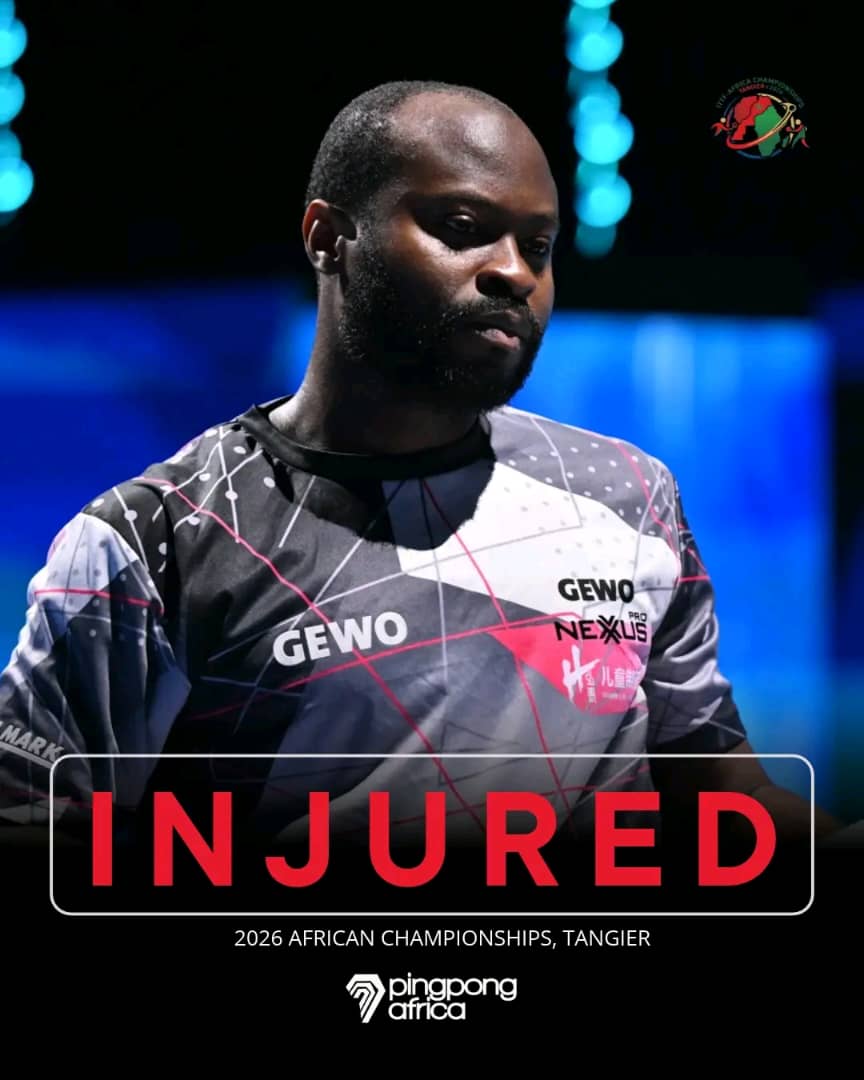
Nigeria’s table tennis star Aruna Quadri suffered a heartbreaking exit from the 2026 ITTF Africa Senior Championships in Tangier, Morocco, after an injury forced him to retire during his men’s singles Round of 16 encounter against Egypt’s Mohamed Elbeiali.
Sports247 reports that the highly anticipated contest ended prematurely after Aruna, who had been battling his Egyptian opponent in a closely contested match, became unable to continue despite attempting to play through the discomfort.
The setback brought an unfortunate conclusion to the Nigerian’s campaign, ending his hopes of progressing to the quarterfinals. The encounter had been evenly balanced, with both players winning a game apiece before the injury disrupted proceedings.
With the match tied at 1-1 and the third game locked at 10-10, Aruna experienced physical discomfort that required medical attention. The Nigerian star requested a medical timeout before returning to the table in an attempt to continue the contest.
However, Elbeiali eventually secured the third game to establish a 2-1 advantage. Despite Aruna’s determination to remain competitive, the injury continued to affect his participation.
The Nigerian ultimately retired from the encounter, handing Elbeiali passage into the quarterfinals.
Aruna had entered the Round of 16 following victory over an Angolan opponent, keeping alive his ambition of challenging for another continental title. His meeting with Elbeiali represented an important test against a familiar Egyptian opponent.
However, the injury prevented the Nigerian from completing the contest and competing for a place among the tournament’s final eight players. The retirement was particularly disappointing considering how closely matched both players had been before the interruption.
The setback shifts attention towards Aruna’s recovery, with the extent of the injury yet to be established. For the experienced Nigerian international, regaining full fitness will be essential before returning to competitive action.
Aruna remains one of Nigeria’s most accomplished table tennis players, having represented the country at major international tournaments and established himself among Africa’s leading competitors.
His unexpected withdrawal represents a disappointing development for Nigerian table tennis supporters who had hoped to see him progress further in Tangier.
Although his campaign ended earlier than anticipated, Aruna’s determination to continue after receiving medical attention demonstrated his competitive spirit. The immediate priority will now be his recovery and a safe return to the table.

The African Action Congress, AAC, presidential candidate, Omoyele Sowore, has blasted President Bola Tinubu and the All Progressives Congress, APC, over what he described as a fake show of support in Kaduna during the APC campaign flag-off.
In a post on his verified X handle on Saturday, Sowore said the APC and Tinubu want Nigerians to mistake a packed stadium for nationwide support.
According to him, the Ranchers Bees Stadium in Kaduna holds just 5,000 people, adding that supporters were transported in from across Nigeria to fill it.
"You packed 5000 people in Kaduna and called it nationwide support? The APC and the Tinubu government want Nigerians to mistake a 'packed' stadium for nationwide support.
"Ranchers Bees Stadium in Kaduna holds just 5,000 people, even at that, supporters were transported in from across Nigeria to fill it," Sowore said.
The human rights activist stressed that President Tinubu will still lose the 2027 presidential election despite the alleged staged crowd.
"In 2027, President Bola Tinubu will still lose the election," he added.
You packed 5000 people in Kaduna, called it nationwide support – Sowore mocks Tinubu, APC
-

 News2 days ago
Obi, Kwankwaso to hold Middle Belt Youth, Village Hall Meeting in Jos
-
News4 days ago
Blacksmith hits unicorn valuation after Sequoia leads Series C
-
News3 days ago
Handball President Jibril Saidu Ojih Explains Reasons Behind Introduction Of Transfer Fees For Nigerian Players
-
Entertainment3 days ago
FOGMMON PLATEAU CONGRATULATES EJIDIKE UGOCHUKWU (𝙈𝙞𝙣𝙨𝙩𝙧𝙚𝙡 𝙅𝙞𝙙) ON HIS APPOINTMENT AS NATIONAL PRESIDENT