
Business
FULL LIST: CBN revokes licences of 46 microfinance banks

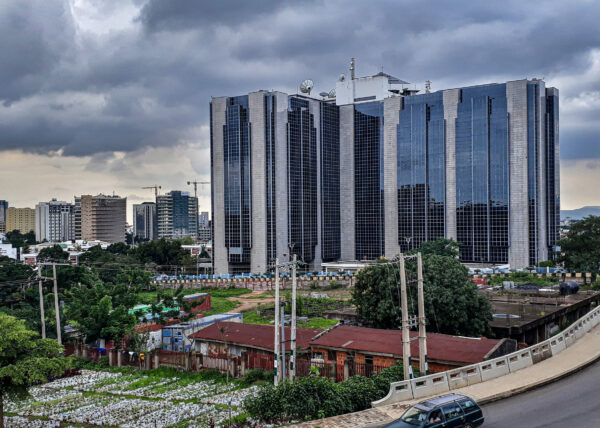

The Central Bank of Nigeria (CBN) has released the names of the 46 microfinance banks whose operating licences were revoked for failing to meet the regulatory requirements for continued operation.
The apex bank disclosed on Wednesday that the revocation was carried out in accordance with its powers under Sections 12 and 13 of the Banks and Other Financial Institutions Act (BOFIA), 2020.
According to the CBN, the licences were revoked because the affected microfinance banks had insufficient assets to meet their liabilities, closed operations without regulatory approval, or became inactive and ceased financial intermediation.
The revocations were also attributed to the banks’ failure to commence operations within 12 months of obtaining their licences and failure to maintain the minimum capital funds unimpaired by losses.
READ ALSO: CBN revokes licences of 46 microfinance banks
Revocation list
On the list of 46 microfinance banks whose licences were revoked, Kano State accounted for the highest number, with 13 banks, followed by Lagos with 8.

Also, Abia, the Federal Capital Territory (Abuja), Kaduna, Kebbi, Niger, Ogun, Plateau, recorded two banks each, while Anambra, Akwa Ibom, Bayelsa, Benue, Cross River, Delta, Kwara, Ondo, Osun, Oyo, and Rivers had one bank each.
By category, 25 of the affected institutions were Tier 2 microfinance banks, 18 were Tier 1 microfinance banks, and three were State microfinance banks.
The regulator said the license revocation forms part of its ongoing efforts to strengthen oversight of the financial system and ensure that licensed financial institutions comply with extant laws and prudential regulations.
Here are the microfinance banks whose licenses were revoked:
| S/N | Microfinance Bank | Category | State |
| 1 | Minji-Se Churchill MFB | Tier 1 | Rivers |
| 2 | Merchant MFB | Tier 2 | Abia |
| 3 | Janmaa MFB | Tier 1 | Kwara |
| 4 | Busu MFB | Tier 2 | Niger |
| 5 | Gold MFB | Tier 1 | Lagos |
| 6 | Zain MFB (formerly Dawakin Tofa MFB) | Tier 2 | Kano |
| 7 | Bompai MFB | Tier 1 | Kano |
| 8 | Ajwa MFB (formerly Gezawa MFB) | Tier 2 | Kano |
| 9 | NOW NOW DIGITAL MFB | Tier 2 | Kano |
| 10 | Crystabel Microfinance Bank | Tier 1 | Bayelsa |
| 11 | Chanelle MFB | State | Lagos |
| 12 | Abia SME MFB | Tier 1 | Abia |
| 13 | Kamba MFB | Tier 2 | Kebbi |
| 14 | Iwade MFB | Tier 2 | Ogun |
| 15 | Winview MFB | Tier 1 | Abuja (FCT) |
| 16 | Zuru MFB | Tier 2 | Kebbi |
| 17 | Minjibir MFB | Tier 1 | Kano |
| 18 | Shanono MFB | Tier 2 | Kano |
| 19 | Sumaila MFB | Tier 2 | Kano |
| 20 | Rimin Gado MFB | Tier 2 | Kano |
| 21 | Mwaghavul MFB | State | Plateau |
| 22 | Sycamore MFB | Tier 2 | Kano |
| 23 | TOFA MFB | Tier 2 | Kano |
| 24 | Safegate MFB | Tier 1 | Lagos |
| 25 | Creekline MFB | Tier 2 | Delta |
| 26 | Bestar MFB | Tier 1 | Oyo |
| 27 | Livingspring MFB | Tier 1 | Cross River |
| 28 | Apple MFB | Tier 2 | Ogun |
| 29 | Stanford MFB | State | Uyo* |
| 30 | Frontline MFB | Tier 2 | Anambra |
| 31 | Zafec MFB | Tier 2 | Kaduna |
| 32 | Supreme MFB | Tier 1 | Lagos |
| 33 | Bejin-Doko MFB | Tier 2 | Niger |
| 34 | Kanopoly MFB | Tier 1 | Kano |
| 35 | Bellbank MFB (formerly Tsanyawa MFB) | Tier 2 | Kano |
| 36 | Yeneng MFB | Tier 2 | Plateau |
| 37 | Creditville MFB | Tier 1 | Lagos |
| 38 | MBAG MFB | Tier 1 | Lagos |
| 39 | STRAIGHT SAHARA MFB | Tier 1 | Benue |
| 40 | OURPASS MFB | Tier 2 | Ondo |
| 41 | VERDANT MFB | Tier 1 | Lagos |
| 42 | BASAWA MFB | Tier 2 | Kaduna |
| 43 | CASHA MFB | Tier 2 | Abuja (FCT) |
| 44 | ESTEEM MFB | Tier 2 | Kano |
| 45 | ENTERPRENEUR MFB | Lagos | |
| 46 | AVANTUS MFB | Tier 2 | Osun |





The International Monetary Fund (IMF) and the World Bank, in partnership with the Bank of Thailand, have launched a framework titled ‘Bangkok Bueprint’, which outlines key considerations for tackling cyber-enabled fraud in financial services.
The institutions said the launch was a response to the increasing sophisticated scams around the world which threaten consumer confidence and financial stability.
The framework was launched on the sidelines of the 2026 IMF/World Bank Annual Meetings in Bangkok, Thailand.
It seeks to guide policymakers, regulators, financial institutions and other stakeholders in identifying vulnerabilities and developing measures to prevent and respond to digital financial fraud.
Bangkok blueprint
According to the institutions, the growing scale and sophistication of cyber-enabled fraud pose a systemic policy challenge that requires coordinated action across the financial sector and beyond.
The blueprint defines cyber-enabled fraud as the use of digital technologies and psychological manipulation to obtain illicit gains through transactions authorised or unauthorised by victims.

The lenders noted that while digitalisation has improved efficiency and expanded access to financial services since the 2018 IMF–World Bank Bali Fintech Agenda, it has also increased the scale, speed and sophistication of fraud.
“Large-scale operations—often linked to transnational organized crime—are now generating losses significant enough to affect households and businesses and potentially undermine trust in the financial system,” the framework stated.
They warned that declining confidence in digital financial services could undermine the benefits of financial inclusion, resilience, job creation and economic growth.
12 key considerations
The Bangkok Blueprint outlines 12 key considerations organised around five pillars: establishing strategic and legal foundations; strengthening the fraud-mitigation cycle; leveraging existing risk-mitigation and enforcement frameworks; expanding domestic and cross-border cooperation; and promoting consumer protection and resilience.
National strategies and legal foundations
Under the first pillar, the institutions recommended that countries establish comprehensive national strategies for fraud-resilient digital finance, with clear objectives, accountability arrangements, designated leadership, adequate resources and monitoring mechanisms.
The second consideration called for sound legal, regulatory and supervisory frameworks that empower authorities to allocate liability, protect consumers, share information promptly, and freeze and recover fraud proceeds.
The document revealed that these frameworks should be proportionate to the risks and adaptable to changing fraud methods.
Prevention, detection and recovery
The second pillar contains four considerations focused on strengthening the fraud-mitigation cycle in order to fight cyber fraud.
The third consideration called for safeguards to be embedded in the design of digital financial services, ensuring that fraud prevention is accessible, proportionate and continuously adapted to emerging threats.
The fourth consideration recommended collaborative and adaptive fraud prevention, with financial institutions and other relevant stakeholders identifying vulnerabilities early and working together to disrupt fraudsters and their networks.
The fifth consideration called for a system-wide fraud-detection architecture combining monitoring by individual institutions with ecosystem-level surveillance.
According to the instructions, this should be supported by structured data sharing, enabling protocols and collaborative analytics.
The sixth recommended coordinated response and recovery mechanisms to contain fraud incidents quickly and limit their impact.
These should include preparedness, escalation planning, investigation, and standardised incident reporting across relevant institutions and authorities, the IMF and World Bank’s framework stated.
Cybersecurity, money laundering and law enforcement
The third pillar outlines three considerations for leveraging existing risk-mitigation and enforcement frameworks.
Under the third pillar, the seventh consideration called for stronger cybersecurity regulation, supervision and risk-management arrangements to protect financial service providers, infrastructure and users against cyber-enabled fraud.
The eighth recommended using existing anti-money laundering and combating the financing of terrorism frameworks to strengthen fraud prevention and detection, deprive criminals of illicit gains and disrupt organised criminal networks.
The ninth consideration called for effective law enforcement, proportionate and dissuasive criminal sanctions, and the recovery of criminal proceeds to deter fraud and related money laundering.
The document added that publicising successful law enforcement actions can strengthen deterrence and demonstrate that offenders are being held accountable.
Domestic and international cooperation
The fourth pillar contains two considerations addressing cooperation within and across national borders in the combat targeted at cyber fraud around the global financial systems.
Here, the tenth consideration recommended systematic, risk-based collaboration between public and private sector stakeholders to address vulnerabilities and enable rapid action throughout the fraud-mitigation process.
The eleventh called for cross-border cooperation, coordination and information-sharing arrangements to prevent and mitigate fraud across jurisdictions.
READ ALSO: EFCC arraigns three for allegedly impersonating Tunde Ednut, ₦18.2 million fraud in Abuja
The institutions emphasised that fraud often originates outside the financial sector, including on social media, digital platforms, e-commerce websites and telecommunications networks.
The framework identified central banks, financial regulators, data protection authorities, finance ministries, financial intelligence units, law enforcement agencies, telecommunications providers, digital platforms and financial infrastructures as important participants in this coordinated response.
Consumer protection and awareness
The twelfth and final consideration focused on strengthening consumer protection, empowerment and awareness in the fight against cyber fraud.
The blueprint recommended that existing financial consumer protection frameworks be strengthened to address emerging fraud risks.
It also called for consumers to understand the threats they face, their rights and protections, and the liability, redress and remediation arrangements available when fraud occurs.
The institutions said national authorities should adapt the recommendations to their domestic circumstances, considering differences in legal and regulatory frameworks, institutional capacity, fraud risks and the structure of digital financial ecosystems.
The IMF and World Bank clarified that the Bangkok Blueprint is a non-prescriptive framework and does not constitute formal policy guidance from either institution.
Discover more from Premium Times Nigeria
Subscribe to get the latest posts sent to your email.
-

 News3 days ago
Meta releases its first frontier model, Muse Wonder
-
Health3 days ago
AMR: Livestock uses more antibiotics than human health sector
-
News4 days ago
2027: Avoid contact with political parties in election disputes – CJN warns judges
-
News2 days ago
MTN, Airtel take 90% of Nigeria’s 15m new subscribers as Glo shifts ground – Technology Times


