Business
Edun, Dangiwa Resign from Tinubu’s Cabinet, Not Sacked


The Presidency has dismissed reports suggesting that the former Minister of Finance and Coordinating Minister of the Economy, Wale Edun, was removed from office by President Bola Ahmed Tinubu, clarifying that he voluntarily resigned on health grounds.
In a statement issued on Wednesday by the Special Adviser to the President on Information and Strategy, Bayo Onanuga, it was confirmed that Edun formally tendered his resignation before the President announced a replacement on Tuesday.
Similarly, the former Minister of Housing and Urban Development, Ahmed Musa Dangiwa, also stepped down from his position, expressing appreciation to the President for the opportunity to serve in the Federal Executive Council.
Mr. Edun, who marked his 70th birthday on Monday and has recently experienced health challenges, submitted his resignation on the same day. In his letter, he thanked the President for the opportunity to serve the nation.
“It has been an honour to be part of your administration and the Renewed Hope Agenda,” he wrote.
“Under your leadership, Nigeria has become stronger, more stable, and more respected internationally.
“I wish you continued success in the years ahead.”
Before his exit was officially announced by the Office of the Secretary to the Government of the Federation, Edun paid a farewell visit to President Tinubu at the State House on Tuesday. He later left following a private meeting that lasted about an hour, indicating his intention to focus on personal engagements.
Ahmed Musa Dangiwa, a professional architect, previously served as Managing Director of the Federal Mortgage Bank from 2015 to 2022 and as Secretary to the Katsina State Government before his appointment as minister in August 2023.
Edun, an economist and investment banker, served as Lagos State Commissioner for Finance between 1999 and 2004 during Tinubu’s tenure as governor.
He earlier worked at Chase Merchant Bank in Lagos from 1980 to 1986 before joining the World Bank under its Young Professionals Programme, where he contributed to economic and financial projects across Latin America and the Caribbean.
In 1989, he co-founded Investment Banking & Trust Company Limited (now Stanbic IBTC) and later established Denham Management Limited in 1994, which evolved into the Chapelhill Denham Group. He served as chairman of the company from 2008 to 2021.
President Tinubu has commended both Edun and Dangiwa for their service and contributions to the administration’s economic reform agenda, and wished them success in their future endeavours.
The President has also directed the newly appointed Minister of Finance, Taiwo Oyedele, to consolidate ongoing reforms and strengthen the administration’s fiscal and economic policies with renewed focus, discipline, and innovation.
In addition, President Tinubu is expected to forward the nomination of Muttaqha Rabe Darma, also from Katsina State, to the Senate for confirmation as Minister of Housing.
The post Edun, Dangiwa Resign from Tinubu’s Cabinet, Not Sacked appeared first on Business Today NG.
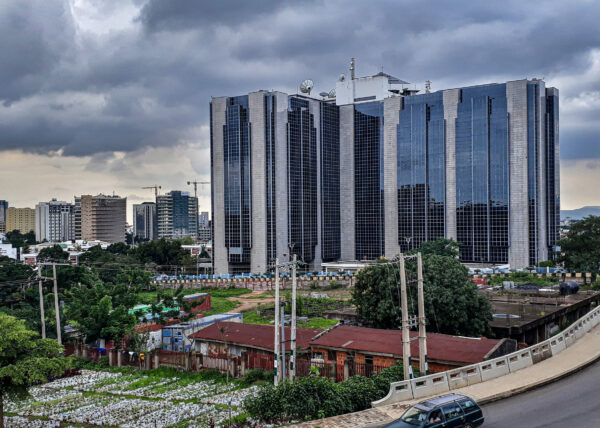
Nigeria’s business activity strengthened in September 2026, but households became more pessimistic about economic conditions, finances and prices, according to new reports by the Central Bank of Nigeria (CBN).
The CBN’s September Purchasing Managers’ Index (PMI) showed that overall economic activity expanded for the fourth consecutive month, with the Composite PMI rising to 53.0 points from 52.7 points in August.
The survey, conducted between 7 and 11 September among 1,900 purchasing and supply executives across the Industry, Services and Agriculture sectors, showed that 23 of the 32 subsectors surveyed recorded expansion, while nine declined.
The improvement was supported by stronger industrial activity, with the Industry PMI rising to 52.0 points in September from 50.6 points in August, marking a second consecutive month of expansion.
The sector’s Output Index also rose to 53.2 points, supported by increases in new orders and employment, while the Raw Materials Inventory Index returned to expansion at 51.1 points from 49.4 points in August.
The Services sector remained in expansion at 53.2 points, compared with 53.3 points in August, while the Agriculture PMI eased slightly to 53.1 points from 53.4 points.


The regulatory body said agriculture had now recorded 26 consecutive months of expansion.
However, the improvement in business activity was accompanied by renewed pressure on input prices.
The Composite input price index increased by 0.8 points in September, while the output price index declined by 0.5 points.
CBN said the September PMI pointed to a “broadening recovery” in economic activity, although the renewed increase in input price pressures warranted close monitoring.
Household expectations
Meanwhile, the picture was less positive among households. In a separate report, CBN’s September Household Expectations Survey, it was revealed that the Overall Consumer Sentiments Index fell sharply to -18.7 points from -9.9 points in August, indicating increased pessimism about the economy.
The Economic Conditions Index stood at -21.5 points, while the Family Financial Situation Index was -23.9 points and the Family Income Sentiments Index stood at -10.5 points.
This indicates a pessimistic outlook on current economic conditions among households and regarding their family financial situation.
Also, the report showed that Nigerian households also reported stronger concerns about prices.
The average price sentiment index rose to 33.5 points from 23.0 points in August, indicating that respondents perceived prices as remaining high. Among the selected items, households reported the lowest perceptions of price changes for food and telecommunication services.
The Central Bank said households expected price pressures to remain elevated over the next three and six months, with the price outlook indices standing at 29.7 and 28.4 points, respectively.
Meanwhile, Nigeria’s headline inflation eased marginally to 15.39 per cent in August 2026 from 15.43 per cent in July, according to the National Bureau of Statistics (NBS), while month-on-month inflation fell more sharply to 0.71 per cent from 1.57 per cent.
CBN said the respondents’ cautious mood was also reflected in household spending intentions, with food remaining the dominant expenditure priority, followed by transportation, other household goods, education, and electricity and water.
It said households remained particularly reluctant to make major purchases. The sentiment indices for house purchases, motor vehicles, investments and consumer durables were all negative, at -68.2, -67.3, -50.7 and -49.5 points, respectively.
Buying conditions also remained weak, with the index for consumer durables at 24.8 points and that for motor vehicles and buildings and landed properties at 24.2 points, all below the 50-point threshold.
The survey further showed that 61.1 per cent of respondents believed faster price increases would weaken the Nigerian economy, while 62.2 per cent preferred lower lending rates.
However, 45.1 per cent favoured higher interest rates when they were presented as a means of containing inflation, while 44.8% preferred lower interest rates, even at the cost of rising inflation.
READ ALSO: CBN urges Nigerians to handle Naira with care
Despite the weak September sentiment, households expected confidence to improve gradually, with the Overall Consumer Sentiments Index projected at -8.7 points next month, -0.4 points over the next three months and 7.1 points over the next six months.
The contrasting findings suggest that while business conditions continued to improve in September, households remained under pressure from high prices, interest rates and concerns about their finances.
The regulatory body said households remained cautious during the month, with subdued buying conditions and purchase intentions pointing to persistent concerns about household finances and economic conditions.
Discover more from Premium Times Nigeria
Subscribe to get the latest posts sent to your email.
-

 News3 days ago
PLASU Opens Doors to Global Investors at 2nd Inaugural Lecture
-
Health2 days ago
Plateau: Medical Women Association of Nigeria Marks Older Persons Day with Free Outreach
-
News3 days ago
Plateau Specialist Hospital Celebrates Nigeria at 66, Salutes Mutfwang’s Health Initiatives
-
News3 days ago
Nigeria At 66: Rotjimwa Yilyok Salutes President Tinubu, APC Leadership and Plateau Government