News
Project BRIDGE: Nigeria seeks private capital as $20bn fibre link opens for bidding – Technology Times

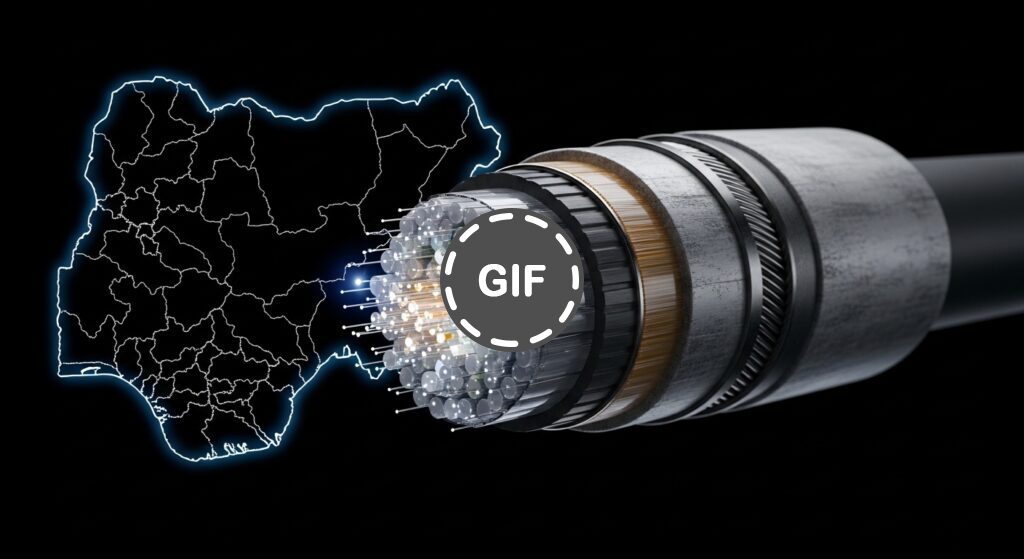
The Federal Government has launched a major push to deepen Nigeria’s digital economy with a call for private sector investors to participate in a $20 billion infrastructure programme under the Building Resilient Digital Infrastructure for Growth initiative otherwise known as Project BRIDGE.
The programme, known as Project BRIDGE, is a joint effort involving the Federal Ministry of Communications, Innovation and Digital Economy (FMCIDE), the Nigeria Sovereign Investment Authority (NSIA), and the World Bank. It is designed to accelerate the deployment of critical digital infrastructure nationwide through a structured public-private partnership (PPP) model.
The Ministry says Project BRIDGE will establish a Special Purpose Vehicle (SPV) “aimed at deploying at least 90,000 km of Fiber Optic cables as Nigeria’s core connectivity Infrastructure and national backbone for universal access to Information and Communication Technology (ICT) across Nigeria, under a Private-Public Partnership (PPP) funding model.” This initiative will complete Nigeria’s intended target of 120,000 km of fibre-optic cable roll-out in Nigeria as identified in the Nigeria National Broadband Plan 2020 – 2025.
Project BRIDGE to complete Nigeria’s intended target of 120,000 km fibre


Under the framework, the government will take a minority stake of between 25% and 49% in a Special Purpose Vehicle (SPV) to be established for the project, while private sector investors will hold a controlling interest of at least 51%. The SPV will serve as the central vehicle for mobilising investment and executing the programme.
Quest Merchant Bank, which has been appointed as Transaction Adviser to structure the initiative and coordinate the process of identifying qualified private investors, is inviting expressions of interest from eligible investors with demonstrable experience in infrastructure financing, development, and operations.
The fibre project is positioned as a strategic intervention to close Nigeria’s digital infrastructure gap, expand broadband access, and strengthen connectivity across key sectors of the economy. The initiative aligns with broader national goals to drive digital inclusion, enhance economic productivity, and support innovation-led growth.
Under the framework, the government will take a minority stake of between 25% and 49% in a Special Purpose Vehicle (SPV) to be established for the project, while private sector investors will hold a controlling interest of at least 51%. The SPV will serve as the central vehicle for mobilising investment and executing the programme.
According to the invitation by the Transaction Adviser, the total project cost is estimated at $20 billion, with the government already securing $800 million in funding support from the World Bank’s International Development Association (IDA). Private investors are expected to contribute at least $10 billion in equity, alongside additional debt financing to fully capitalise the project.
Prospective investors, according to the Transaction Adviser, are required to submit detailed proposals outlining their corporate profile, financial capacity, investment strategy, and track record in delivering large-scale infrastructure projects. Submissions must also include disclosures on litigation status, conflicts of interest, and compliance with anti-corruption regulations in line with World Bank procurement standards.
The selection process will be guided by the World Bank’s procurement regulations for investment project financing, with evaluation criteria focusing on technical expertise, financial strength, and the ability to mobilise funding within defined timelines. Successful applicants will be shortlisted and invited to proceed to the next phase of the transaction process.
Applications are to be submitted electronically to ProjectBRIDGE@questmbl.com, with hard copies delivered to Quest Merchant Bank’s head office in Lagos, according to the announcement.
The announcement also noted that the invitation does not constitute an offer or solicitation for securities, and participation will be subject to applicable regulatory approvals. The initiative, however, signals a significant step in Nigeria’s effort to crowd in private capital for large-scale digital infrastructure development, a critical enabler for the country’s digital transformation ambitions.
Stay ahead with real-time reports, breaking news, and exclusive insights delivered directly to your phone. Don’t settle for outdated information. Join TECHNOLOGYTIMES NEWS on WhatsApp for 24/7 updates.
Join Our Whatsapp Channel
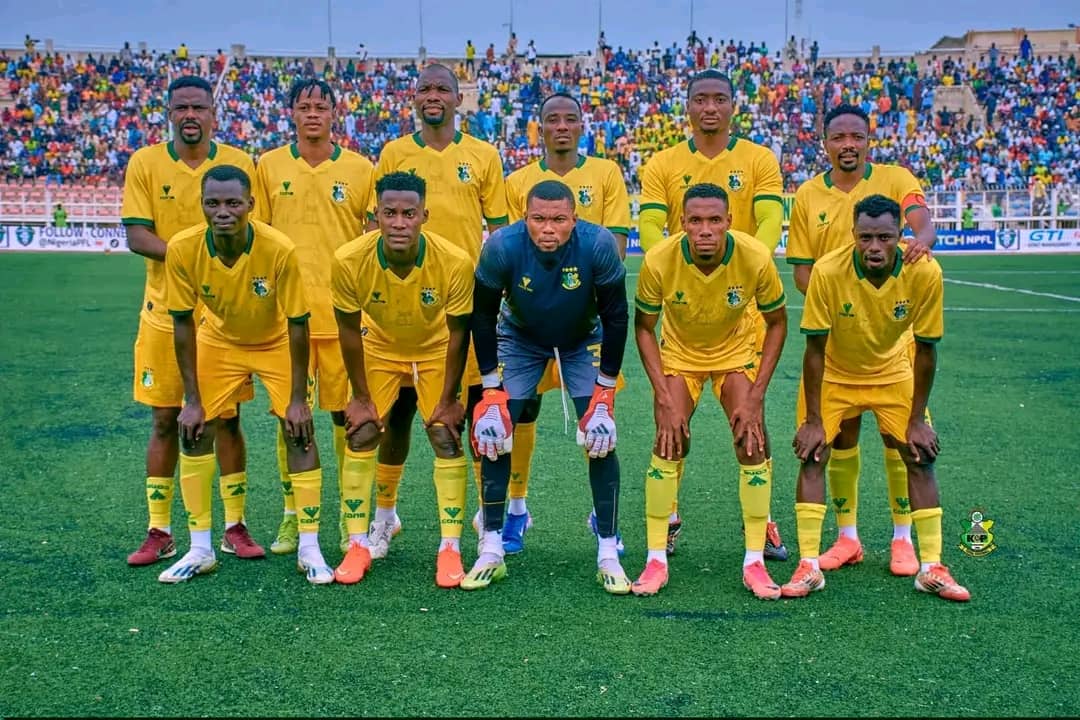
Kano Pillars and Sporting Lagos played out a 1-1 draw in an entertaining EuroMatch Nigeria Premier Football League Matchday 7 encounter in Kano, with both sides settling for a point after a closely contested battle.
Sports247 reports that the result means the Mai Su Gida have now followed up their previous goalless draw against Enyimba with another stalemate, while Sporting Lagos also recorded their second consecutive draw after being held to a barren 0-0 draw by Ikorodu City in the Lagos Derby.
Kano Pillars started the encounter with the intention of making home advantage count, but Sporting Lagos remained organised and disciplined as both teams searched for an opening.
The breakthrough finally arrived deep into first-half stoppage time when Valentine Ugwu put Sporting Lagos ahead in the 45+2nd minute, giving the visitors a valuable lead heading into the interval.
Kano Pillars responded strongly after the restart and quickly found a way back into the contest.
The hosts were rewarded in the 48th minute when Abdullahi Musa drew Kano Pillars level, finishing off a move created by veteran midfielder Rabiu Ali, whose assist once again underlined his influence in the Pillars midfield.
With the score level at 1-1, both sides pushed for a decisive second goal, but neither could find the breakthrough during the remainder of the encounter.
Kano Pillars will take encouragement from their ability to recover from going behind, while Sporting Lagos will also be satisfied with securing a point away from home after surrendering their lead.
For the Mai Su Gida, the draw represents another opportunity gained but also another two points dropped from a winning position, as they continue their campaign in search of consistency.
Sporting Lagos, meanwhile, remain unbeaten across their recent fixtures but will be looking to convert their promising performances into maximum points as the season progresses.
The 1-1 result leaves both teams with plenty to build on, particularly in attack, as they prepare for their next assignments in the EuroMatch NPFL.
With the league campaign continuing to gather momentum, Kano Pillars and Sporting Lagos will now turn their attention to their upcoming fixtures, hoping to turn future draws into victories.
-

 News3 days ago
PLASU Opens Doors to Global Investors at 2nd Inaugural Lecture
-
Health2 days ago
Plateau: Medical Women Association of Nigeria Marks Older Persons Day with Free Outreach
-
News3 days ago
Plateau Specialist Hospital Celebrates Nigeria at 66, Salutes Mutfwang’s Health Initiatives
-
News3 days ago
Nigeria At 66: Rotjimwa Yilyok Salutes President Tinubu, APC Leadership and Plateau Government