Business
SEC Launches Nationwide Campaign to Return Unclaimed Dividends to Investors

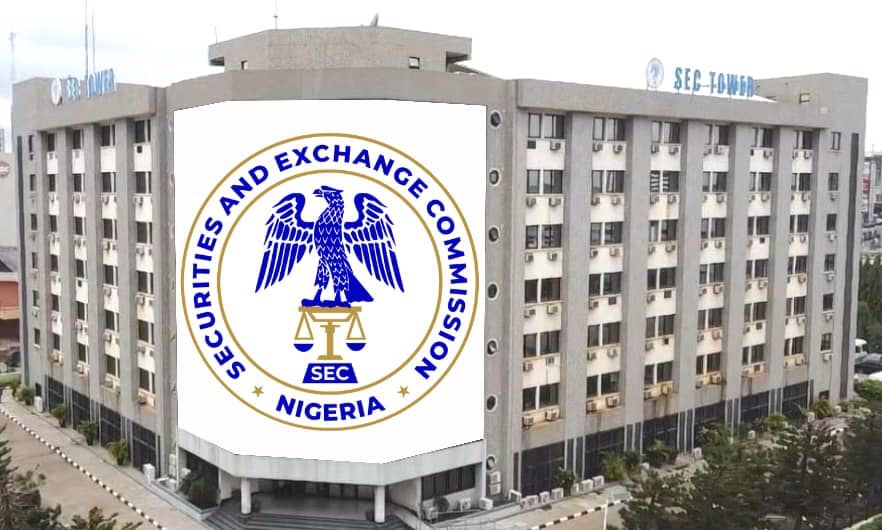

The Securities and Exchange Commission (SEC) has commenced a nationwide enlightenment campaign to help Nigerians recover unclaimed dividends and other monies arising from capital market transactions.
The campaign, which began with a town hall meeting in Lagos on Thursday, is aimed at sensitising investors on the existence of unclaimed monies, the role of the National Investor Protection Fund (NIPF) and the procedures for verifying and recovering legitimate claims.
The SEC Director-General, Emomotimi Agama, who was represented at the event by the Director, Registration and Exchanges, Market Infrastructure Department, Hafsat Rufai, said the initiative was necessary to ensure that funds belonging to investors were returned to their rightful owners.
Agama said unclaimed monies administered by the NIPF included return monies from public offers, scheme consideration from mergers, acquisitions and corporate restructuring transactions, as well as other funds belonging to investors that had remained unclaimed.
He noted that the Commission considered it unacceptable for investors’ funds to remain unclaimed, adding that many investors and their families were either unaware that such monies existed or did not know the procedures for recovering them.
“The Commission considers this situation unacceptable. Funds belonging to investors should ultimately find their way back to their rightful owners,” he said.
Agama said the SEC Board had approved a nationwide public enlightenment campaign to sensitise Nigerians on unclaimed monies, the role of the NIPF and the process for making legitimate claims.
He said the Lagos programme marked the commencement of the outreach, which would subsequently cover the six geopolitical zones and the Federal Capital Territory.
The SEC, he added, would also use electronic and social media platforms, its official website and other communication channels to reach more Nigerians, while continuing to publish and periodically update the list of companies whose corporate actions had resulted in unclaimed monies.
The Director-General said the campaign would also address the transmission of securities following the death of an investor, noting that families were often unaware that their deceased relatives owned shares or other capital market investments.
He said even when beneficiaries were aware of such investments, many lacked knowledge of the legal and administrative procedures required to obtain probate or letters of administration and transmit the investments to the rightful beneficiaries.
“As a result, valuable investments and return on investments sometimes remain inaccessible for many years, thereby denying beneficiaries the financial benefits intended for them,” he said.
Agama said the Lagos programme included an expert session on probate administration and the transmission of securities to demystify the process and provide practical guidance to investors and their families.
He urged investors to maintain proper records of their investments and encouraged families to take steps to preserve inherited wealth.
The SEC DG also warned Nigerians against Ponzi schemes and other fraudulent investment arrangements, saying fraudsters continued to exploit economic pressures and digital platforms to lure unsuspecting members of the public with promises of guaranteed and unusually high returns.
He urged the public to be cautious of investment opportunities offering risk-free returns, stressing that investor education and vigilance remained critical to combating financial fraud.
Speaking on behalf of the Lagos State Attorney-General and Commissioner for Justice, Lawal Pedro, SAN, Deputy Director in the Ministry of Justice, Olujoke Ogunojemite, commended the SEC for extending the campaign to Lagos and recognising the role of legal institutions in resolving issues relating to unclaimed dividends and other assets.
She said the issue had a practical impact on beneficiaries who were unable to access assets after the death of their loved ones.
Ogunojemite said the ministry was committed to ensuring that legal processes did not become barriers to beneficiaries seeking to recover legitimate assets.
“We will continue to provide partners for citizens to resolve such issues,” she said.
She described the SEC’s outreach as commendable, saying it would help restore assets to their rightful beneficiaries.
The Lagos State Government, she added, remained ready to collaborate with the SEC and other stakeholders to promote investor education and strengthen financial inclusion.
The post SEC Launches Nationwide Campaign to Return Unclaimed Dividends to Investors appeared first on Business Today NG.





President Bola Tinubu says Nigeria has significantly reduced its reliance on oil revenue as his administration pushes to diversify the economy and attract more investment into other sectors.
He said the government would continue to develop the petroleum industry but use its resources to support broader economic activity rather than depend on crude oil as the main driver of growth.
The President, represented by Vice President Kashim Shettima, spoke on Tuesday in Abuja at the fifth anniversary of the Nigerian Upstream Petroleum Regulatory Commission (NUPRC).
“We have already reduced our dependence on oil revenue, and we intend to go further,” President Tinubu said.
He said the government’s diversification strategy was focused on agriculture, manufacturing, digital and creative industries, while the oil and gas sector would continue to provide energy, foreign exchange and revenue for the country.
The claim comes as the administration continues to pursue reforms aimed at increasing oil production, improving revenue remittances and attracting fresh investment into the petroleum sector.


In February, President Tinubu issued an executive order directing oil and gas revenues due to the Federation to be paid directly into the Federation Account.
The order also ended certain deductions previously retained by NNPC Limited, including a 30 per cent management fee on profit oil and profit gas.
Oil remains important to Nigeria’s finances
Despite the government’s push to reduce dependence on oil, petroleum remains an important source of public revenue and foreign exchange.
The sector has, however, faced challenges including fluctuations in crude production and oil prices, as well as security and operational problems.
PREMIUM TIMES reported in March that oil and gas revenue remittances had fallen significantly below projections in the first two months of 2026. While N937.10 billion was budgeted as oil and gas revenue for the period, actual remittances stood at N137.41 billion.
President Tinubu said improved security and cooperation among oil producers, host communities, security agencies and the NUPRC had helped stabilise production.
He said the government’s efforts had also helped attract investors who previously left Nigeria, adding that the country had ranked first among Africa’s leading destinations for upstream investment for two consecutive years.
Push for more oil and gas investment
The Minister of State for Petroleum Resources, Oil, Heineken Lokpobiri, said Nigeria currently produces about 1.7 million barrels of crude oil per day and has more than 37 billion barrels of oil reserves.
Mr Lokpobiri said more investment, additional licensing rounds and increased exploration were needed to unlock the country’s petroleum resources.
The NUPRC has also reported increased investment activity in the upstream sector.
In August, the regulator said it had approved more than $57 billion in Field Development Plans since 2024, with 22 major offshore projects expected to come on stream between 2026 and 2030. The projects are estimated to attract between $30 billion and $50 billion in investment.
Nigeria’s oil and condensate reserves stood at 37.01 billion barrels as of January 2026, while gas reserves increased to 215.19 trillion cubic feet, according to NUPRC data.
Tinubu declares decade of gas
President Tinubu said gas would be central to the government’s energy strategy, describing the period ahead as a decade of gas.
“With the largest gas reserves in Africa, we will expand gas supply for power, industry and clean cooking, reduce flaring and methane emissions, and grow renewable energy alongside it,” he said.
READ ALSO: PBAT Door-to-Door Movement mourns officers in crash, suspends campaign activities
He added that the government would pursue an energy transition suited to Nigeria’s circumstances, arguing that the country should meet its climate commitments without compromising energy access and economic development.
He also noted that a stronger upstream industry could create jobs for Nigerian engineers, fabricators and oilfield service companies.
President Tinubu said the Petroleum Industry Act had provided a foundation for reforms in the sector but noted that legislation alone could not guarantee investment.
According to him, investors had raised concerns about high costs, lengthy contracting processes and uncertainty around fiscal terms for complex projects.
He urged the NUPRC to maintain clear regulatory processes, provide reliable timelines and work with other government agencies to reduce overlapping requirements.
The President also said operators benefiting from government incentives must meet their obligations on work programmes, local content, environmental protection and host communities.
He urged the commission to remain independent and accountable in its regulatory decisions.
Discover more from Premium Times Nigeria
Subscribe to get the latest posts sent to your email.
-

 News4 days ago
Troops rescue 15 kidnap victims, nab two suspects in nationwide operations
-
 Business4 days ago
Nigeria’s business activity expands as household confidence weakens
-
News2 days ago
2027: El-Rufai’s detention could hurt APC, generate sympathy – SEDSAC director, other analysts express views
-
News3 days ago
Nigerians warned as AI creates new sextortion threat – Technology Times