Business
CBN Revokes Licences of 46 Microfinance Banks



BY NKECHI NAECHE-ESEZOBOR—The Central Bank of Nigeria (CBN) has revoked the operating licences of 46 microfinance banks with effect from July 1, 2026, as part of efforts to strengthen the stability of the country’s financial system and enforce regulatory compliance.
The apex bank said the action was taken in accordance with its powers under Sections 12 and 13 of the Banks and Other Financial Institutions Act (BOFIA), 2020.
According to the CBN, the revocation was approved by its Governor, Mr. Olayemi Cardoso, following the affected banks’ failure to meet the regulatory requirements necessary for continued operation as licensed financial institutions.
The Bank explained that the decision was necessitated by one or more regulatory infractions, including insufficient assets to meet liabilities, closure of operations without prior approval from the CBN, prolonged inactivity and cessation of financial intermediation, failure to commence operations within 12 months of receiving a licence, and failure to maintain the minimum capital requirement unimpaired by losses.
The CBN stated that the revocation forms part of its ongoing supervisory and regulatory measures aimed at safeguarding the stability of the financial sector, protecting depositors, and ensuring that all licensed financial institutions operate in compliance with existing laws and regulatory standards.
The apex bank reaffirmed its commitment to promoting a safe, sound, and resilient financial system, adding that it will continue to take appropriate regulatory and supervisory actions whenever necessary to maintain public confidence in Nigeria’s financial system.
The post CBN Revokes Licences of 46 Microfinance Banks appeared first on Business Today NG.






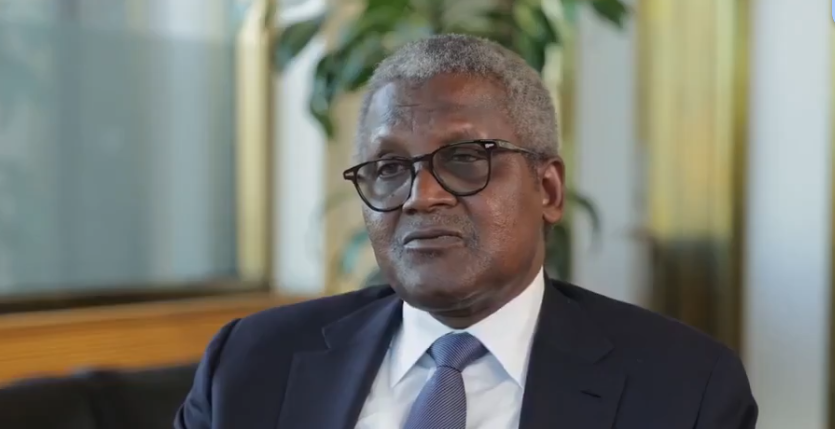
Ethiopian Prime Minister Abiy Ahmed and Djibouti President Ismaïl Omar Guelleh have commended Dangote Group’s $660 million Damarjog-Dewele Oil Terminal and Pipeline Project, describing it as a major infrastructure investment capable of transforming regional trade and energy supply.
The leaders spoke at the groundbreaking ceremony for the project at the Damerjog Industrial Development Free Trade Zone in Djibouti.
The project involves the construction of a 120-kilometre multiproduct pipeline connecting marine and coastal storage facilities at Damarjog in Djibouti with inland storage and distribution facilities at Dewele in Ethiopia.
Upon completion, the pipeline is expected to facilitate the movement of refined petroleum products into Ethiopia, reduce transportation bottlenecks and improve the reliability of fuel supplies to the country and the wider region.
Boost to Djibouti
President Guelleh said the project would support Djibouti’s ambition to become a major logistics, industrial and energy hub in Africa.
“Today marks an important chapter in Djibouti’s journey toward becoming a premier centre for logistics, energy, and industrial development. The Damarjog-Dewele Pipeline Project is not merely infrastructure; it is an investment in the future prosperity of our region,” he said.


According to him, the investment would increase trade volumes, expand port operations, attract additional investments and create direct and indirect employment opportunities.
“We are proud to partner with the Dangote Group in delivering a project that demonstrates the strength of African-led investment and practical African solutions to African challenges,” Mr Guelleh said.
On his part, Prime Minister Abiy said the pipeline would strengthen Ethiopia’s energy security by providing a more efficient and reliable channel for transporting refined petroleum products.
“Ethiopia’s continued economic expansion depends on reliable and efficient access to energy resources. This pipeline will provide a modern, dependable, and cost-effective system for transporting refined petroleum products into the country, thereby enhancing our energy security and reducing supply-chain vulnerabilities,” he said.
He said the project would support sectors including aviation, transportation, agriculture, manufacturing and construction by improving access to petroleum products.
The prime minister also said the infrastructure would reduce losses associated with long-distance transportation and improve the efficiency of Ethiopia’s petroleum distribution network.
He described the project as another example of economic cooperation between Ethiopia and Djibouti.
The project will reduce logistics risks
Speaking at the ceremony, Aliko Dangote, President and Chief Executive of Dangote Industries Limited, said the project was part of the group’s broader efforts to develop infrastructure that supports Africa’s economic growth and self-sufficiency.
“This project is designed to enhance energy security, improve supply-chain efficiency, and create sustainable economic value for both Djibouti and Ethiopia,” Mr Dangote said.
He said Djibouti would benefit from increased port activity, revenues and employment, while Ethiopia would gain improved energy security and reduced logistics constraints.
Mr Dangote noted that the Djibouti corridor is a major route for Ethiopia’s imports and exports, including petroleum products.
According to him, the pipeline would reduce dependence on long-distance tanker movements, ease congestion and lower operational risks associated with transporting petroleum products by road.
READ ALSO: Dangote refinery drove Nigeria’s petrol supply in August as NNPC refineries remain shut — Report
The project is also expected to create jobs during construction and operation and provide opportunities for local contractors, suppliers, transport operators and communities.
The Damarjog-Dewele project is part of Dangote Group’s Vision 2030 strategy, under which the conglomerate plans to invest $50 billion across Africa in industrial and energy infrastructure.
Mr Dangote said the group’s objective was to support African countries in reducing dependence on imports and increasing local production.
“Our vision is to support African countries in becoming self-sufficient in products for which they possess the raw materials, market demand, and strategic necessity,” he said.
The project further expands Dangote Group’s investments in Africa’s energy and industrial sectors, following the development of the Dangote Petroleum Refinery in Nigeria and other investments across the continent.
Discover more from Premium Times Nigeria
Subscribe to get the latest posts sent to your email.
-

 Featured2 days ago
PLATEAU STATE: IS THERE PEACE, OR ONLY THE ABSENCE OF VIOLENCE?
-
News2 days ago
Plateau Killings: Rotjimwa Yilyok Urges Security Agencies to Intensify Action
-
Business3 days ago
General Business to Drive 72% of Mutual Benefits Assurance’s Projected ₦96.82bn GWP
-
News2 days ago
Former Archbishop of Canterbury Justin Welby Calls for Peace, Protection of Communities During Plateau Visit