News
Applied Computing wants to give oil and gas operators an AI model for the entire plant


Applied Computing, a London-based startup that’s building a foundation AI model for the oil, gas and petrochemical industry, has raised a $20 million Series A led by engineering giant KBR, with Databricks Ventures participating.
Founded in 2023, the startup targets oil, gas, refining and petrochemical systems, where a single facility can have thousands of sensors measuring everything from temperature and pressure to velocity and viscosity. While there’s a huge market for helping energy companies solve the data tracking problem, the fragmentation that presents a significant hurdle.
Facilities consequently make operating decisions using less than 8% of the data available to them, says Applied Computing’s co-founder and CEO Callum Adamson (pictured above, right). Operators already collect much of this information, he said, but they struggle to combine the sensor readings, engineering documentation, and physics and chemistry quickly enough to analyze and make predictions.
“It’s getting those three data sources to talk to each other in real time. That’s the real key,” he told TechCrunch.
Unlike large language models, which predict the next word, Applied Computing says its foundation model, Orbital, combines a time series model, a physics-based model, and a language model to predict the state of a facility. It does this by analyzing sensor readings, keeping physics and chemistry in mind, and recognizing a facility’s equipment constraints and operator activity. It also allows technicians to run simulations of how a change in one part of a facility could affect the rest of its operations.

Essentially, Applied Computing is pitching speed: It claims Orbital can flag anomalies, investigate what caused them, and model whether a proposed fix could create problems elsewhere in the facility, all within minutes. Adamson claims the product can compress investigations that previously took days or weeks into seconds, helping operators reduce energy use and maintain output.
That promise of speed seems to have found believers. The startup says it has gone from stealth to double-digit millions in annual recurring revenue in under 18 months. Adamson said Orbital is in use at some “large, publicly listed” upstream oil and gas, downstream refining and petrochemicals companies, although he declined to mention how many customers it has.
Its partners include Indian energy company Wipro, and KBR, which has integrated Orbital into its INSITE 3.0 digital platform for energy projects, and is using the product for ammonia production. Adamson said the startup is also working with a “major U.S. upstream operator,” and plans to announce a partnership with a European oil major in the coming weeks.
Still, Applied Computing is entering a market that has entrenched industrial software suppliers as well as more focused AI startups. AspenTech sells simulation and AI-powered modeling software for upstream, refining and chemical operations, while AVEVA offers physics-based process simulation, optimization, and “what-if” modeling for industrial plants. Cognite and Seeq target the data layer, helping facilities analyze industrial data, and apply AI to design workflows.
Adamson argues that the company’s moat is not access to industrial data or process knowledge, but assembling AI researchers to build a model that can compete with Orbital.
“It’s an AI problem. It’s not a data problem, and it’s not an energy problem,” he said. “If you’re a tier-one AI researcher, where are you going to work? … I don’t think Shell’s on that list.”
Adamson also pointed to the data Orbital receives through its deployments. Operational data from refineries and other energy facilities is generally not available publicly, he said, while simulated data cannot fully reproduce what happens inside a working plant.
The KBR partnership may help the company, too. Adamson said the partnership gives Applied Computing access to operational data, industry expertise, and also introductions to more potential customers.
Applied Computing plans to use the $20 million to expand internationally, hire for research and engineering roles, and explore deployments with energy clients.
The company on Thursday said it’s also opened an office in Houston, adding to its headquarters in London and operational hub in Bengaluru. Adamson said the U.S. base puts the startup closer to two existing customers in North America, and an expansion into the Middle East is also in the works.
When you purchase through links in our articles, we may earn a small commission. This doesn’t affect our editorial independence.





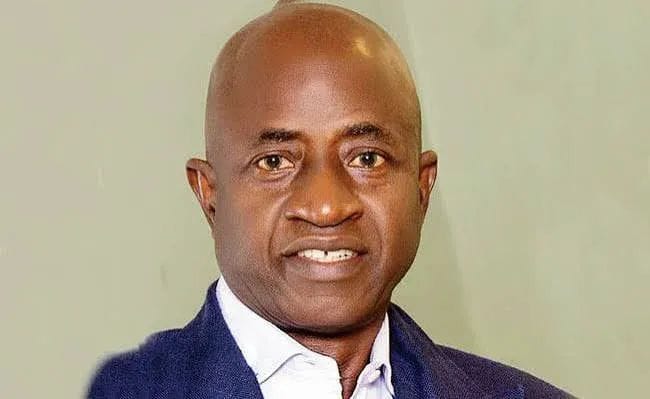
Former Super Eagles captain and 1980 Africa Cup of Nations winner Segun Odegbami has questioned the decision to retain the current Nigeria Football Federation leadership, calling for a fresh direction ahead of next month’s NFF elections.
Odegbami believes Nigerian football needs a serious conversation about its future before stakeholders proceed with another election cycle.
The NFF elective congress is scheduled to take place next month in Lafia, Nasarawa State, where incumbent president Ibrahim Gusau is expected to seek a second four-year term.
Speaking on the state of Nigerian football, Odegbami criticised what he described as a recurring leadership pattern and urged stakeholders to consider alternative leadership.
“There are so many things that are wrong. We need to have a serious conversation before they jump into elections that we have seen already,” Odegbami said.
The former Green Eagles captain also questioned the performance of the current administration, particularly against the backdrop of Nigeria’s failure to qualify for the 2026 FIFA World Cup.
“They did not take us to the World Cup. They should not be there.
That’s what we are saying.
“Let’s get other people to task.”
Odegbami stressed that his position was not motivated by personal disagreements with members of the federation but by his desire to see Nigerian football develop.
“We are all friends. It’s not about personalities; it’s about the interest of Nigeria.
“Let’s take this decision in the interest of the people, in the interest of the clubs, and not in the interest of those who are perpetuating themselves in office. That’s what we are saying,” he added.
The forthcoming NFF election is expected to generate significant interest within Nigerian football, with Gusau seeking another term amid calls from some stakeholders for changes in the federation’s leadership and administration.
The current administration has faced criticism over several issues, including the Super Eagles’ failure to qualify for the 2026 FIFA World Cup and concerns surrounding the management and development of domestic football.
However, the period has also produced notable achievements, including Nigeria’s runners-up finish at the 2023 Africa Cup of Nations and the Super Falcons’ triumph at the 2025 Women’s Africa Cup of Nations.
Odegbami’s comments are likely to add further intensity to the debate ahead of the Lafia congress, with stakeholders expected to decide whether Nigerian football is better served by continuity under Gusau or a change in leadership.
The central question ahead of the election remains whether the NFF should maintain its current direction or embrace a new leadership approach capable of restoring Nigeria’s position as one of Africa’s leading football nations.
-

 Entertainment3 days ago
Big Chinni Thrills Audience as NASCO Cornflakes Powers Mr & Miss UNIJOS 2026
-
News3 days ago
The fourth edition of Jasper Fiton Football Tournament Begins in Bokkos, Unites 45 Teams for Peace and Talent Discovery
-
News10 hours ago
Governor Mutfwang Begins Strategic Assessment to Restore Plateau’s Heritage, Boost Tourism
-
News3 days ago
Grassrunner’s Godwin Raphael Itotomi Completes Move to French Club Stade de Reims