Connect with us

Opinion

 Burutai commends Lalong for using sports to restore peace in Plateau State

editor

Published

on

Buratai

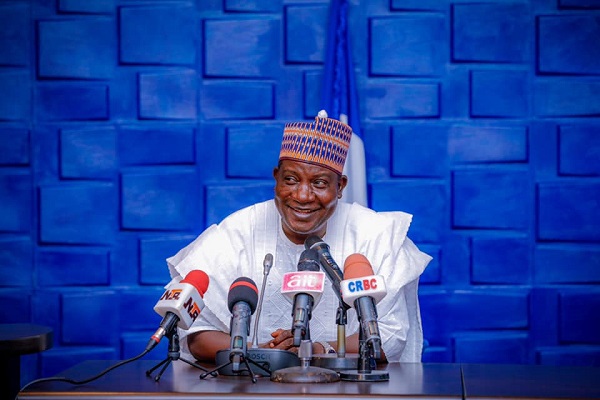
Lt- General Tukur Buratai, former Chief of Army Staff (COAS), has commended Governor Simon Lalong administration’s commitment to peace and security with careful implementation of diverse strategic efforts since he assumed office.

Buratai stressed that the governor’s intervention with golf has enhanced unity and engaged the youth for energy in meaningful pursuit. Speaking after accompanying the governor to commission the Lamingo Golf Course building, which was refurbished and named after the governor, Burutai commended the governor for prioritizing peace-building and security, saying that as governor, who must go deeper into national politics, more Nigerians will benefit from his commitment to serve humanity.

In his response, Lalong expressed his happiness for being named as a harbinger of peace and security through the development of golf, saying that he highly appreciates the high-profile visitors for identifying with the tournament, which, he said, contributed to the stability of the state over the years.

Captain of the club, Reverend Father Bless Agwom, said that 400 international golfers, including professionals from Ghana and the United States, came to compete for prizes in various categories of the competition.

Continue Reading
Click to comment

Leave a Reply

Your email address will not be published. Required fields are marked *

Opinion

Beyond the Curfew: Why Jos North Keeps Bleeding and What Must Change

lamaqgodoz

Published

on

IMG 20260407 WA0043
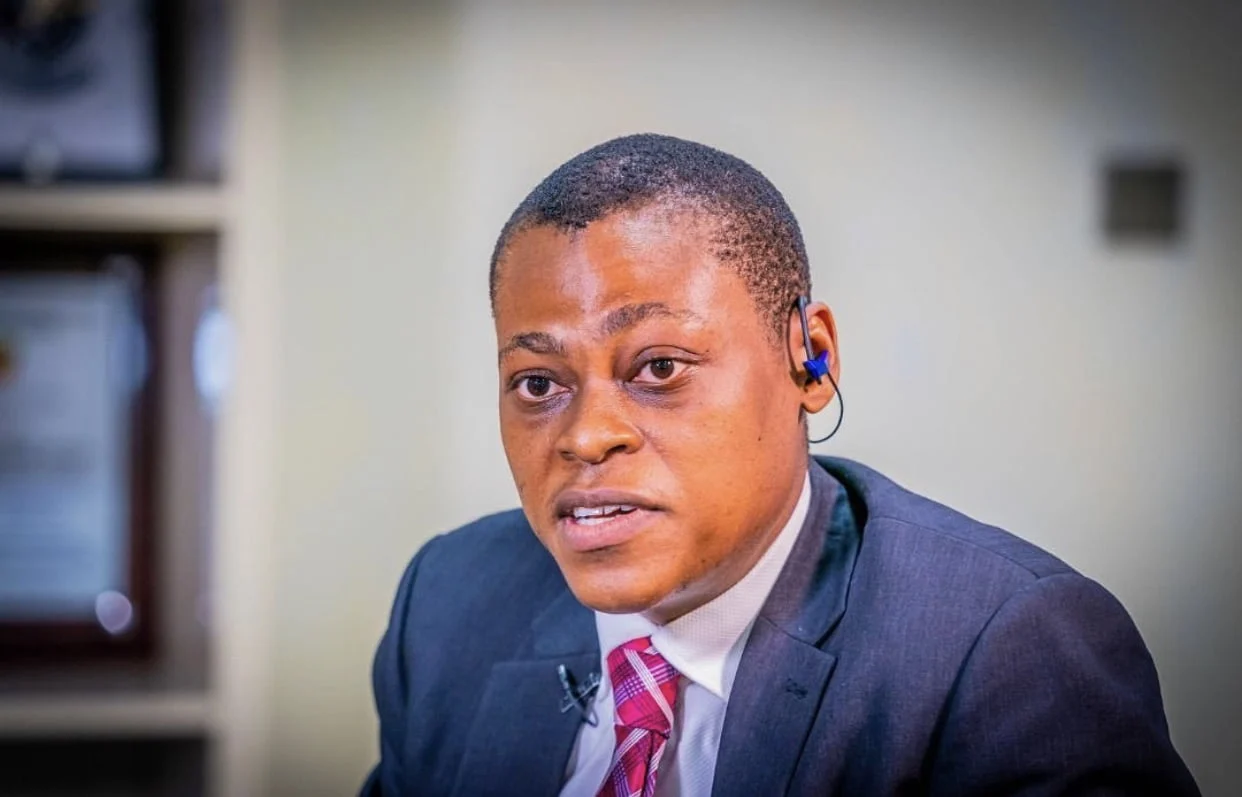
Ilyas Ilyas Muhammad State Coordinator, SDGs Alliance, Plateau State Chapter | A Concerned Nigerian Student of Peace and Conflict Resolution

BLOOD ON THE PLATEAU:

Understanding the Crisis in Anguwan Rukuba, Jos North, and the Path to Sustainable Peace


By: 

Ilyas Ilyas Muhammad

State Coordinator, SDGs Alliance, Plateau State Chapter | A Concerned Nigerian

Student of Peace and Conflict Resolution

I. Introduction

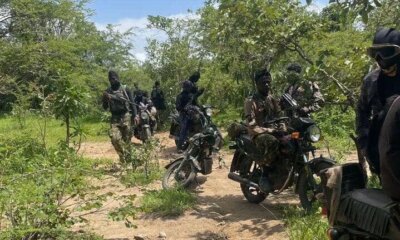
Once celebrated as the ‘Home of Peace and Tourism,’ Plateau State in Nigeria’s North Central has, over the past two decades, become synonymous with one of the most persistent and devastating cycles of communal violence on the African continent. The latest reminder of this painful reality came on the evening of Sunday, March 29, 2026, when unidentified gunmen riding on motorcycles stormed the Anguwan Rukuba community in Jos North Local Government Area of Plateau State. In a matter of minutes, the tranquility of an ordinary Sunday evening was shattered as the attackers fired indiscriminately at residents going about their daily lives — men and women, Muslims and Christians alike, all equal victims of senseless brutality.

Eyewitnesses recounted scenes of horror as people ran in all directions, some falling never to rise again. By the time the shooting stopped, at least 26 to 33 people lay dead — the figures varying across different reports — with several others critically wounded. In the aftermath, enraged youths blocked major roads, and fears of reprisal attacks gripped the entire Jos metropolis. The state government swiftly imposed a 48-hour curfew on Jos North LGA, running from midnight of March 29 to April 1, 2026. Yet even as the curfew was lifted, fresh tensions erupted again, forcing traders who had cautiously reopened their shops to flee and plunging the city back into fear and uncertainty.

As a student of Peace and Conflict Resolution, I am compelled not merely to mourn the dead — though they deserve every tear this nation can offer — but to examine, with intellectual honesty and moral clarity, the deep structural roots that continue to feed this violence, and to evaluate what has been done, and what must still be done, to bring lasting peace to Jos North and Plateau State as a whole.


II. The Incident: What Happened in Anguwan Rukuba?

The attack in Anguwan Rukuba is not an isolated event but rather the most recent manifestation of a long and bloody pattern of violence in Jos North. On the evening of March 29, 2026, motorcycle-riding gunmen descended on the Anguwan Rukuba junction and opened fire on unsuspecting residents. The attack was swift, coordinated, and devastating. Among the victims were members of different faith communities, a grim reminder that indiscriminate violence does not distinguish between religion, age, or background. Police confirmed at least 26 deaths, while community leaders placed the figure higher, noting that bodies were still being retrieved from the hospital.

The Plateau State Police Command and Governor Caleb Manasseh Mutfwang condemned the attack as ‘barbaric and unprovoked,’ ordering security agencies to identify and apprehend those responsible. No group claimed responsibility, and as of the time of this writing no official suspects had been named. The absence of swift accountability deepened public anxiety and fuelled speculation across communities already primed by years of unresolved grievances.

The University of Jos suspended examinations scheduled for March 30 and 31, citing heightened tension and advising students and staff to remain indoors. Religious and community organisations — including the Jama’atu Nasril Islam (JNI) and the Jasawa Community Development Association (JCDA) — issued rare joint condemnations, calling the attack a grave threat to peace and coexistence in Plateau State. The League of Northern Democrats (LND) further demanded a transparent investigation into all aspects of the attack. These convergent condemnations, cutting across religious and community lines, reflect the broad consensus among ordinary Nigerians in Plateau State that this violence belongs to no one’s interest.


III. Root Causes of the Crisis


3.1 The Indigene-Settler Divide and the Politics of Belonging

At the very core of the Jos North crisis lies one of Nigeria’s most intractable constitutional and political problems: the indigene-settler dichotomy. Jos is a city that came into its modern form largely during British colonial rule, when the discovery of tin ore in the early twentieth century attracted migrants from across the country and the broader region. Certain communities who had inhabited the Plateau for generations came to identify strongly as ‘indigenes,’ while communities who arrived later — regardless of how many generations they have since lived in the area — were classified as ‘settlers’ and denied the same bundle of rights and privileges.

This distinction is not merely symbolic. The Nigerian indigene certificate system grants economic and political privileges — including access to jobs, scholarships, and political appointments — to recognised ‘indigenes,’ effectively treating long-resident communities as second-class citizens in the place they call home. This structural exclusion has generated deep-seated grievances on multiple sides that repeatedly erupt into violence. The tensions in Jos North have been traced back to as early as 1994, with major violent outbreaks recurring in 2001, 2002, 2004, 2008, and beyond. Each episode left hundreds dead, thousands displaced, and the fault lines deeper and more entrenched.

In the words of the International Crisis Group: the Jos crisis is rooted in the failure to ensure that residency, rather than ethnicity alone, determines citizens’ rights. Until this foundational issue is addressed at the constitutional level, peace will remain fragile.

3.2 Religious Identity and Its Manipulation

Jos sits at the geographic and cultural fault line between Nigeria’s predominantly Muslim north and predominantly Christian south. This positioning makes it uniquely vulnerable to the exploitation of religious identity for political purposes. It must be stated clearly and without equivocation: the violence afflicting Plateau State does not spare any religion. Muslims and Christians have both suffered as victims of attacks in this conflict. Communities of both faiths have buried their dead, mourned their wounded, and lived in fear of the next strike.

The danger lies not in religion itself — which, on all sides, preaches peace, compassion, and the sanctity of human life — but in the manipulation of religious identity by political actors and extremists who use faith as a mobilisation tool to advance agendas that have nothing to do with genuine religious conviction. When ordinary people are made to feel that their survival is tied to the defeat of the ‘other’ religion, violence becomes justifiable in minds that have been distorted by fear and manufactured hatred. This manipulation, on all sides, must be called out and resisted.

3.3 The Farmer-Herder Conflict and Competition Over Resources

Intertwined with the indigene-settler dispute is the broader farmer-herder conflict that has devastated communities across Nigeria’s North Central and beyond. Plateau State, with its fertile lands and strategic location, has historically been a meeting point for sedentary farming communities who till the land and nomadic pastoral communities who move with their livestock. For generations, these groups coexisted through informal agreements and mutual respect. But that fragile coexistence has been eroded by a combination of factors.

Climate change and desertification in Nigeria’s far north have pushed herders further south in search of water and pasture. Population growth has shrunk available farmland. The erosion of traditional grazing routes — many now converted to cultivated land — has created constant flashpoints. The proliferation of small arms across the region means that what once might have been resolved through community arbitration now ends in bloodshed. The farmer-herder conflict in Plateau State has claimed thousands of lives and displaced tens of thousands more over the past two decades, adding yet another layer of trauma, mistrust, and grievance to communities already scarred by political exclusion.

3.4 Impunity and the Failure of Justice

Perhaps the most damaging driver of the continuing crisis is the near-total impunity enjoyed by perpetrators of violence. Across decades of bloodshed in Plateau State, the Nigerian government has convened at least sixteen judicial commissions of inquiry into violence in Jos alone, yet prosecutions have been vanishingly rare and convictions even rarer. Communities that have suffered attacks and received no justice are left with no mechanism to address their grievances other than vigilante reprisal. This creates a self-reinforcing cycle: attack, impunity, counter-attack, impunity — without end.

When the perpetrators of the Anguwan Rukuba massacre remain officially unknown days after the attack, despite eyewitness accounts and the resources of the Nigerian security apparatus, the message sent to both victims and perpetrators is clear: violence carries no consequence. This message is fatal to any serious peace-building effort.

3.5 Poverty, Unemployment, and the Militarisation of Youth

Underlying all of these structural factors is a deep pool of economic despair. High youth unemployment, inadequate infrastructure, and the collapse of public services have created large numbers of young people across Jos North who are idle, desperate, and susceptible to recruitment by armed groups, criminal gangs, and ethnic or religious militias. Violence becomes not merely a political expression but an economic strategy — a means of survival and status in a society that has failed to provide legitimate alternatives. The proliferation of small arms — flowing across porous borders from conflict zones in the Sahel — has transformed communal disputes that once involved traditional implements into massacres carried out with automatic weapons. This militarisation of civilian conflict is a regional crisis that Nigeria has not yet developed an adequate strategy to address.

IV. Measures Taken: Government and Community Responses

In the immediate aftermath of the Anguwan Rukuba attack, the Plateau State Government imposed a 48-hour curfew on Jos North LGA, deploying additional security personnel to flashpoints across the city. Governor Caleb Mutfwang publicly condemned the attack and pledged accountability, assuring residents in a statewide broadcast that the government would not yield to fear or intimidation. The deployment of military and police reinforcements across volatile neighbourhoods represented a standard first-response measure aimed at preventing further escalation and retaliatory attacks.

Religious and community organisations offered another layer of response. The JNI and JCDA issued condemnations calling for calm, justice, and the protection of innocent lives — a meaningful gesture given that these organisations represent different segments of the community. Religious leaders convened emergency peace meetings, echoing the kind of inter-faith dialogue that has historically served as a crucial buffer against escalation in Jos.

At the national level, various civil society groups and political organisations called for investigations and the strengthening of security in the region. The federal government’s security apparatus was urged to accelerate intelligence-gathering and apprehend those responsible. Historically, the Plateau State government has also engaged in longer-term peace-building efforts, including inter-community dialogue platforms, peace education in schools, and collaboration with international organisations such as the United States Institute of Peace and various UN agencies on conflict prevention programmes. Traditional rulers and community elders have at various points mediated between farming and pastoral communities, with some peace agreements producing tangible reductions in localised violence.

However, the recurring nature of the violence — with major attacks spanning more than two decades — is testament to the fact that these measures, however well-intentioned, have not been sufficient. Curfews address symptoms; they do not cure diseases. Peace accords that are signed but not enforced are pieces of paper. Commissions of inquiry that file reports no one acts upon are exercises in futility. The gap between what has been done and what is needed remains vast and, with each new tragedy, more urgent.

V. The Way Forward: A Peace and Conflict Resolution Perspective

As a student of Peace and Conflict Resolution and as State Coordinator of the SDGs Alliance, Plateau State Chapter, I believe that ending the cycle of violence in Jos North requires a comprehensive, multi-track approach that addresses root causes rather than merely managing symptoms.

First and most urgently, the question of citizenship rights and political inclusion must be resolved at the constitutional level. Nigeria cannot continue to have a tiered citizenship system that denies full rights to long-resident communities. Legislative reforms that guarantee equal access to political representation, employment, and social services — irrespective of how one’s community is classified historically — are not merely desirable; they are essential to breaking the cycle of grievance-driven violence.

Second, the impunity that perpetrators of communal violence have enjoyed for decades must end. A specialised, independent judicial mechanism with real prosecutorial powers must be established to investigate and prosecute those responsible for attacks such as the one in Anguwan Rukuba. Justice is not merely a moral imperative — it is a practical tool of conflict prevention. Communities that witness accountability are less likely to pursue revenge.

Third, a comprehensive resource-sharing and land-use management framework must be implemented to address the farmer-herder conflict. This includes the legal demarcation and enforcement of grazing corridors, rapid-response community mediation mechanisms, and alternative livelihood programmes for communities whose traditional ways of life are being disrupted by environmental and economic pressures.

Fourth, genuine inter-faith and inter-community dialogue must be institutionalised as a permanent feature of governance in Plateau State — not as a crisis response, but as a proactive peace-building investment. Religious leaders across all divides bear a special responsibility to ensure their platforms are used for reconciliation, not division.

Fifth, the federal and state governments must invest meaningfully in the economic development of Jos North and the country at lager— creating jobs, funding education, and providing young people with legitimate alternatives to violence. A generation with real hope and real opportunity is a generation that cannot easily be recruited into cycles of bloodshed.

The SDGs Alliance, in its work on Plateau State, recognises that sustainable peace is inseparable from sustainable development. Goal 16 of the United Nations Sustainable Development Goals — which calls for peaceful, just, and inclusive societies — is not an abstract aspiration for Plateau State. It is an urgent, practical necessity.

VI. Conclusion

The blood spilled in Anguwan Rukuba on March 29, 2026, is not merely the blood of its individual victims — Muslims, Christians, and others, united in death as they should have been in life. It is the blood of a nation that has repeatedly failed to make peace with its own diversity. It is a wound inflicted not only by gunmen on motorcycles, but by decades of constitutional neglect, political manipulation, economic marginalisation, and judicial impunity.

Jos North and Plateau State are not condemned to violence. History is not destiny. The same communities that have suffered so deeply alongside one another have also, in better times, lived together, traded together, and celebrated together. Peace is possible — but it will not come through curfews alone. It will come through justice, through constitutional reform, through economic inclusion, through inter-community dialogue, and through the political will to finally, honestly, and courageously address the root causes of a crisis that has bled this Plateau for far too long.

I call on the Plateau State Government, the Federal Government of Nigeria, community leaders, religious leaders, civil society, and every Nigerian of good conscience to commit to this work — not when the next tragedy happens, but now, while the memory of Anguwan Rukuba is still fresh and the grief of its families is still raw. We owe this to the dead. We owe it to the living. We owe it to the Nigeria we want to build.


 A Note to Readers

This write-up reflects the personal perspective of the author as a student of Peace and Conflict Resolution and as a concerned Nigerian citizen. All facts cited are drawn from publicly available reports and verified sources at the time of writing. If you have additional information, corrections, or insights that can strengthen the accuracy or depth of this piece, the author actively welcomes engagement. Fact-checkers, researchers, community stakeholders, and anyone with something to add are warmly encouraged to reach out.

_______________________________________________

Ilyas Ilyas Muhammad

State Coordinator, SDGs Alliance, Plateau State Chapter

Student of Peace and Conflict Resolution | A Concerned Nigerian

ilyasilyasm2@gmail.com

April 2026

Continue Reading

News

1,402 Christians killed in Nigeria between Jan-April 2026 – Intersociety alleges

info

Published

on

By

Mass burial.jpg

A rights group, International Society for Civil Rights and Rule of Law, Intersociety, has alleged that there is endless persecution and killing of Christians in Nigeria.

Intersociety has been at the forefront calling for an end to alleged genocidal killing of Christians in Nigeria.

The Nigerian government had consistently stated that there was no form of targeted killing of Christians in the country.

However, in a statement issued on Monday, the rights group alleged that massacre of Christians and persecution of churches in Nigeria had continued to widen and escalate, with state actor involvement deepening unchecked.

The statement was signed by Emeka Umeagbalasi, Head, Intersociety, Chidinma Evangeline Udegbunam, Head, Dept. of Campaign and Publicity and Obianuju Joy Igboeli, Head, Dept. of Civil Liberties and Rule of Law.

It claimed that despite tens of millions of dollars wasted since the end of October 2025 by the Government of Nigeria in international lobbying to deny and erase traces of “Nigerian Christian Genocide” and additional multimillion dollars wasted in globetrotting seeking to internationally downplay Christian Genocide “the massacre of Christians and persecution of churches have continued and become increasingly widespread.”

Intersociety said it was to the extent that “such state actor denials have been dwarfed by growing manifestations of gross bias and open protection of the jihadists by Nigeria’s security chiefs and recent open admissions by Government-affiliated Islamic groups, including openly vowing to continue their violent Islamism until Nigeria becomes a full Sharia State.”

It said “1,402 Christians were martyred and 1,800 abducted In 96 days (Jan-April 6):

“These figures skyrocketed from then to Easter Monday of April 6, 2026 with addition of 350 Christian deaths and 110 abductions-totalling 1,402 Christian deaths and 1,800 abductions in first 96 days of 2026 or Thursday, Jan 1 to Monday, April 6, 2026”.

“The 350 Christian deaths included 102 deaths recorded in the Holy Week of March 28 to Saturday, April 4, 2026; 34 deaths recorded on Easter Sunday of April 5, 2026 alone; 20 Christian deaths recorded between March 20 and March 27 and the added dark figures of 16 deaths.

“It is also clarified that 180 of the 35 Christian deaths are those arising from 1,800 (10%) abducted Christians across Nigeria since Jan 2026 and were not included in our updated Report of March 19, 2026.

“Such jihadist captivity deaths must have arisen from physical torture, starvation, gunshot wounds, machete cuts, untreated injuries and other inhuman or degrading treatments during the affected victims’ captivity in the hands of jihadists.

“In other words, out of every ten abducted Christians, one is not coming back alive; out of every 100 abducted, ten are not returning alive; and out of every 1000 abducted, 100 will never come back,” it further stated.

The group identified key flashpoint states where the deaths occurred as Benue, Kaduna, Borno, Plateau, Bauchi, Zamfara, Kebbi, Taraba, Adamawa, Niger, among others.

It lamented that thousands of displaced Christians were currently taking refuge at different IDPs centres across the country.

Continue Reading

Trending