Connect with us

News

Andrew Yang thinks the next big startup opportunity is lowering the cost of living

info

Published

on

GettyImages 1487822193.jpg

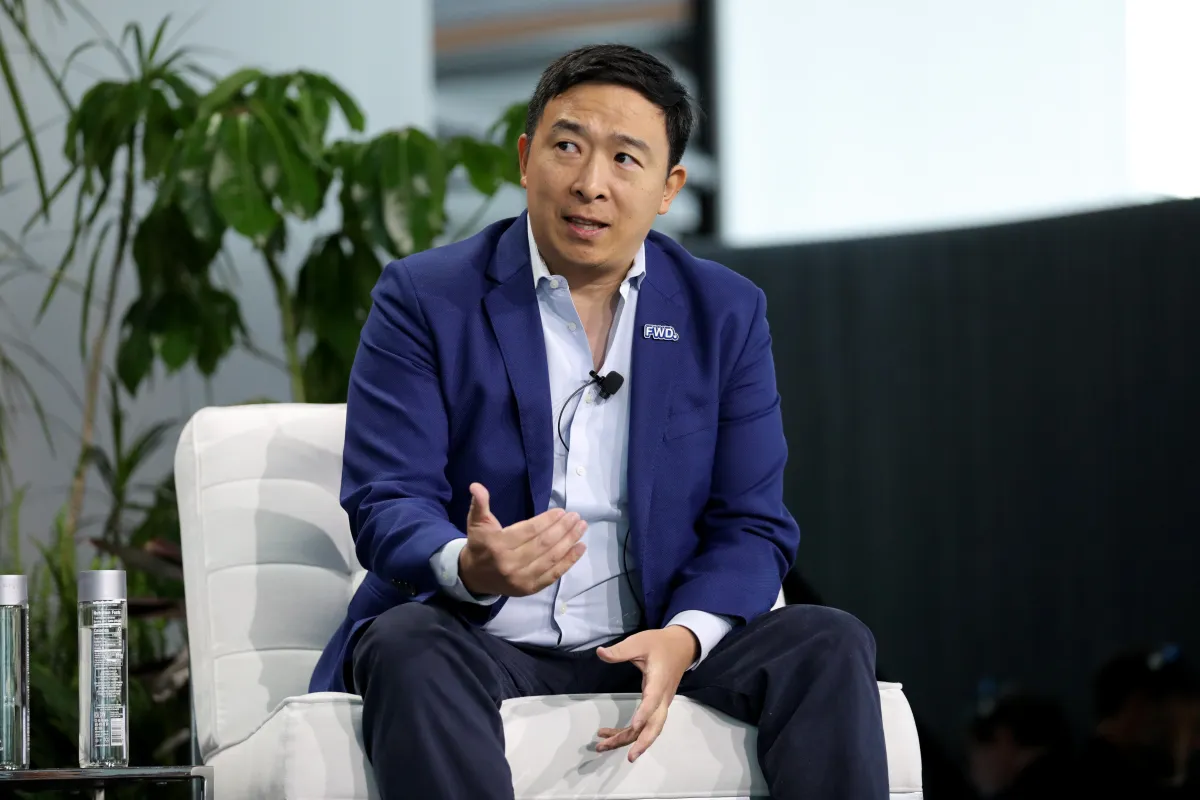
Entrepreneur and former presidential candidate Andrew Yang has a theory about where the next wave of startup opportunity lies, and it starts with a question most founders aren’t asking: what if the business model was giving money back instead of extracting it?

Yang was inspired by Mark Cuban. Not by his wealth, or his celebrity, but by Cost Plus Drugs — Cuban’s startup that sells pharmaceuticals at cost. Yang made a list.

“Housing, education, food, fuel, transportation, media, and wireless,” Yang told TechCrunch on a recent episode of Equity. “The things we all spend money on.”

He picked wireless and last September launched Nobile Mobile, a new mobile virtual network operator that provides cell service for a fraction of what traditional carriers charge and gives customers money back if they use less data. 

As AI threatens to compress wages and displace workers, Yang sees a business opportunity in bringing down the cost of living. Cost Plus Drugs, Noble Mobile, dumb phone makers like Light Phone, and even online grocery store Misfits Markets are early examples of an emerging business category where the startup’s value proposition is the margin it gives back to the customer.

“AI is going to suck up a lot of the value and the jobs, and then Americans are going to look up and say, ‘How do I meet basic needs?’” Yang said. He believes meeting people’s needs “less expensively” is “a very rich vein of opportunity.” 

That instinct didn’t emerge from nowhere. Yang first launched himself into the public eye during his 2020 presidential campaign, during which he advocated for Universal Basic Income as a means of combating AI-related workforce displacement and wealth concentration. The campaign didn’t succeed but the thesis has only grown more relevant.

Yang is still an advocate for UBI, arguing that the value generated by AI companies needs to be redistributed into the hands of the average American. But whether the government will be the vehicle for that redistribution, or whether it will just use any collected wealth to “plug a hole and do something not terribly productive,” Yang is less certain. 

“There is room for a direct connection between the money and the people,” he said. 

That’s where the market comes in. Where policy fails, Yang argues, market incentives can step in. Noble Mobile is his attempt to prove the point. Since its launch last September, the company has grown to “thousands and thousands” of customers and is bringing in “millions in revenue.”

“We’re unit profitable per customer, but we just share the profits with our subscribers with the idea that it’ll make you happy, you’ll stay around, and maybe you’ll tell your friends and family,” Yang said. 

The pitch is simple. Yang noted that the average monthly savings of $50, invested and compounded over 40 years, could amount to $24,000 — enough for a retirement down payment. And in this economy, who isn’t thinking about little ways they can upgrade their personal finance?

Whether investors will share that enthusiasm is another question entirely. Even if the opportunity is real, capital is concentrated heavily in AI right now, while consumer-facing businesses with thin margins and a social mission are a hard sell.

“I had at least one investor say to me around Noble Mobile, ‘Love you, Andrew, want to work with you — if you could just make this an AI company, we’ll invest,’” Yang said. 

The tide might be changing, though, simply because even the most wealthy, extractive companies need an economy in which consumers have enough buying power to purchase their products. 

“The value being concentrated in the hands of a handful of folks and firms is just bad for everybody,” he said. “There are some folks I know in Silicon Valley who are open to that for a variety of reasons…[like] they just don’t want to have to hire private security.”

Yang encouraged founders and investors to take on problems they’re passionate about and find a way to build a valuable enterprise on top of it.

“Think bigger and more broadly about trying to tackle problems and don’t subscribe so much to groupthink, because there are some valuable opportunities out there,” he said.

When you purchase through links in our articles, we may earn a small commission. This doesn’t affect our editorial independence.

Continue Reading
Click to comment

Leave a Reply

Your email address will not be published. Required fields are marked *

Health

PT Health Watch: Menopause increases risk of bone loss, fractures, says expert

info

Published

on

By

Gemini Generated Image rodb6erodb6erodb 768x419.png

MTN ADVERT

Menopause, the natural stage marking the end of a woman’s reproductive years, can significantly affect bone health and increase the risk of osteoporosis and fractures due to declining oestrogen levels, a medical expert has said.

Although menopause has important health implications, it remains a frequently overlooked issue within Nigeria’s sexual and reproductive health and rights framework.

According to the World Health Organisation (WHO), menopause occurs when a woman’s menstrual periods stop permanently because of declining levels of oestrogen and the loss of ovarian follicular function. As a result, the ovaries stop releasing eggs for fertilisation, making natural conception no longer possible.

Common symptoms associated with menopause include hot flushes, night sweats, irregular menstrual flow, vaginal dryness, pain during sexual intercourse, urinary incontinence, sleep disturbances, mood changes, anxiety and depression.

Perimenopause refers to the transition period leading to menopause and extends until one year after the final menstrual period, while postmenopause begins after a woman has gone 12 consecutive months without menstruation.

PT WHATSAPP CHANNEL

In Nigeria, women generally attain menopause around the age of 48 and above as part of the natural ageing process.

Menopause and bone health

Speaking with PT Health Watch, Qudus Lawal, an obstetrician and gynaecologist, said menopause disrupts hormonal balance, leading to increased bone breakdown and reduced bone formation.

According to him, while nearly all women experience some degree of bone loss after menopause because of declining oestrogen levels, not all will develop osteoporosis or sustain fractures.

He explained that bone density before menopause plays a major role in determining a woman’s risk of osteoporosis later in life.

Using a financial analogy, Mr Lawal described bone health as a balance between deposits and withdrawals.

“The stronger the bone density a woman builds before menopause, the better protected she is against the accelerated loss that occurs afterwards,” he said.

Why bone loss increases after menopause

Mr Lawal explained that oestrogen normally suppresses osteoclasts, the cells responsible for breaking down bone tissue.

However, when oestrogen levels fall after menopause, these cells become more active, while osteoblasts, the cells responsible for building new bone, are unable to replace bone at the same rate.

This imbalance gradually weakens bones and increases the risk of osteoporosis and fractures.

Maintaining healthy bones after menopause

Mr Lawal recommended a combination of proper nutrition, regular exercise and preventive healthcare measures to maintain bone health after menopause.

He advised women to consume balanced diets rich in calcium and vitamin D, engage in weight-bearing and muscle-strengthening exercises, and take steps to prevent falls.

“When you take foods and supplements that are rich in those essential nutrients, it helps build the bone,” he said.

He stressed the importance of early intervention, noting that bone density loss is often silent and may not produce symptoms until complications occur.

“One of the ways people present is that they grow shorter. Normally, once you get to a certain age after puberty, you are not supposed to grow shorter.

“But many of our mothers begin to lose height over time, which may result from age-related spinal degeneration and bone loss,” he said.

According to him, many women only become aware of significant bone loss after suffering fractures.

“The fracture can be due to a fall, sometimes a little push that you normally have without having symptoms. Just a little trip in the bathroom could lead to a major fracture,” he added.

READ ALSO: Women demand fertility, menopause coverage in workplace health insurance – Report

Mr Lawal noted that in some countries, bone density screening forms part of routine wellness checks for postmenopausal women, helping identify individuals at high risk and allowing for early intervention.

He urged women to adopt healthy lifestyles and prioritise bone health long before menopause.

According to him, the goal is to ensure women build and maintain strong bone density before menopause to minimise the impact of hormonal changes later in life.

Continue Reading

News

Kwankwaso reveals details of closed door meeting with Peter Obi

info

Published

on

By

Kwankwaso.jpg

Former Kano State Governor and vice presidential candidate of the Nigerian Democratic Congress, NDC, Rabiu Musa Kwankwaso on Friday met with the presidential candidate of the NDC, Mr Peter Obi, at his Abuja residence.

Kwankwaso disclosed this in a post via his X handle on Saturday, stating that the meeting was focused on productive discussions on key partisan and national issues.

He said“Yesterday, I had the honour of hosting my brother and partner, His Excellency Peter Obi, at my residence in Abuja.

“I warmly welcomed him back from his highly productive international trip, and we engaged in frank and productive discussions on key partisan and national issues.

“Our party, the National Democratic Congress (NDC), remains united. As leaders, we must continue to demonstrate maturity by making the necessary sacrifices and tolerating our differences in pursuit of our shared goal.

“We are resolute in this mission, and together, we shall ensure that Nigeria is OK.”

Continue Reading

Trending