Events
Youth-Led Dialogue Brings Communities Together for Social Cohesion in Plateau Sate

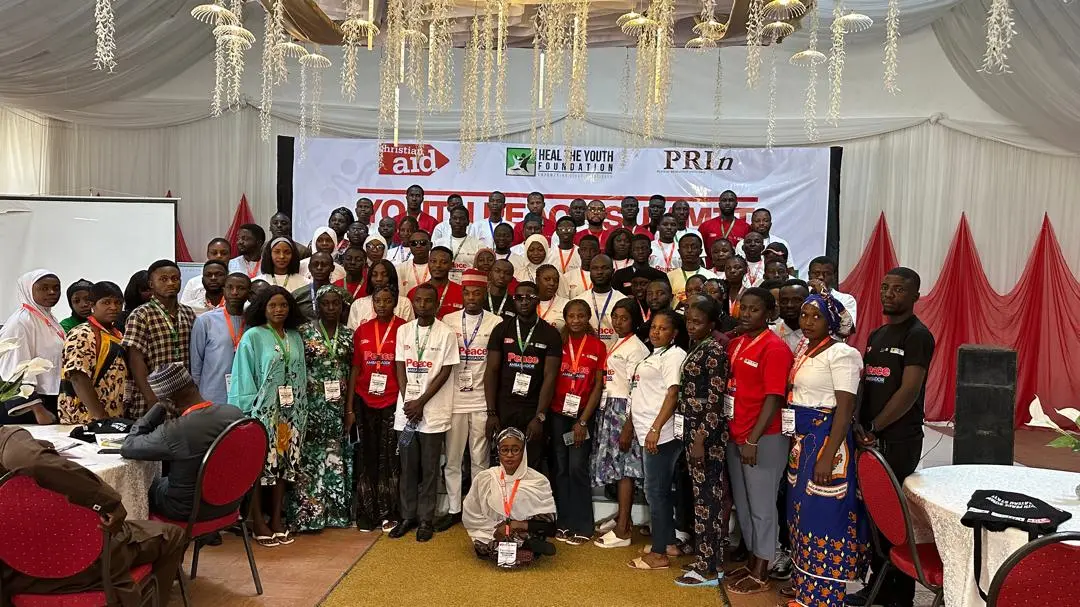
Heal the Youths Foundation on Wednesday brought together young people, community leaders, and peace advocates to a Peace Youth Summit at Odilin Event Centre, to explore strategies for fostering social cohesion in Plateau State.
Themed “Youth-Led Dialogue for Social Cohesion,” the summit emphasized the role of youth in peacebuilding and conflict prevention across Nigeria.
Victor Arokoyo, Program and Partnership Lead at Christian Aid Nigeria, highlighted the strategic role of youth in peace initiatives. “All the people carrying harm, fighting, ethnic violence, banditry, whatever kind of crime, the youth are actively involved. So we really need to see how can we bring the youth back to become ambassadors of peace,” he said. Arokoyo explained that dialogue is key to conflict prevention and enhancing social cohesion in Plateau, Benue, and Nigeria generally.

Victor Pwajok, State Coordinator of Heal the Youths Foundation, described the summit as a strategic approach to involving youth directly in peace management. “We have decided to go straight to the youths with the permission of the elders, discuss with them, and help them understand early warning systems, partnerships with other communities, stakeholders, and security agencies, rather than taking the law into their hands,” he said. Pwajok noted that 40 youths and 20 community leaders from Pasa and Barikilai local government areas were intentionally invited to participate.

During his presentation titled “Countering Misconceptions: Tackling Stereotypes that Fuel Conflict, Promoting Empathy and Understanding,” Dr. Gideon Buada emphasized the dangers of stereotypes and misconceptions in intensifying ethnic and religious conflicts. “Young people are uniquely positioned to either perpetuate harmful narratives or challenge and counter them,” he said, urging youth-led strategies to promote empathy, unity, and sustainable peace across Nigeria’s diverse communities.

Bartholomew Tagwi Danladi, Project Officer of the PRIN Project, speaking on behalf of the Plateau Consortium—which includes JDPC, WOKAI, and the Christian Council of Nigeria—commended the summit for mobilizing youth as peace agents. “Young people are very strategic. This event is meant for them, but it also brings together stakeholders across religious and ethnic backgrounds to collaborate in fostering peace,” he said.
Barrister Yakubu Bawa Saleh, in his presentation “The Role of Youth in Promoting Peace and Social Cohesion,”emphasized justice, democracy, and constitutional integrity as critical to sustainable peace. “The absence of justice will always create conflict and violence. For us to enjoy peace, we need to address issues from a broader perspective, including economic engagement, leadership selection, and the credibility of democratic processes,” he said. Saleh urged youth to serve as active peacemakers in their communities.
The summit concluded with a consensus that youth-led dialogue, community collaboration, and structured engagement with security agencies are essential to mitigating conflict and promoting lasting peace in Plateau State and beyond.

Entertainment
JOGAMA UNVEILS THE OFFICIAL THEME FOR THE 16TH EDITION OF THE JOINT GOSPEL ARTS AND MUSIC AWARDS (JOGAMA) 2026

Events
Plateau Records 87% Drop in Malaria Prevalence as Stakeholders Rally Support for 2026 SMC Campaign

The Plateau State Malaria Elimination Programme has attributed the significant progress recorded in the fight against malaria to sustained government commitment, strategic partnerships and the dedication of health workers and community volunteers across the state.
The Project Manager of the Plateau State Malaria Elimination Programme, Nurse Ndak Andarawus, made this known on Tuesday during the 2026 Seasonal Malaria Chemoprevention (SMC) Media Parley held at the Crispan Event Centre in Jos.


The media engagement brought together health professionals, development partners, journalists and other stakeholders to strengthen public awareness and mobilise support ahead of the 2026 SMC implementation cycle.
According to Andarawus, the remarkable decline in malaria cases in Plateau State is the result of increased political commitment, improved implementation of malaria interventions, sustained government support and the contributions of development partners, particularly the Malaria Consortium.
She disclosed that malaria prevalence in the state has dropped dramatically from 18.8 per cent in 2021 to 2.8 per cent in 2025, representing an 87 per cent reduction.
“The prevalence rate has dropped from 18.8 per cent in 2021 to 2.8 per cent in 2025, representing about an 87 per cent reduction. It shows that malaria elimination is possible, and with sustained support for the SMC programme, we can achieve zero malaria,” she said.
Speaking at the event, the Project Manager of Malaria Consortium, Dr. Mbwas Mashor, explained that the media parley was organised to improve public awareness, promote accurate information and encourage caregivers to ensure that eligible children receive the preventive medicines during the campaign.
He noted that Seasonal Malaria Chemoprevention (SMC) is a World Health Organisation (WHO)-recommended intervention designed to protect children aged three to 59 months against malaria during periods of high transmission.
Dr. Mashor stressed that the success of the programme depends largely on effective community mobilisation and accurate dissemination of information, making the media a critical partner in achieving the campaign’s objectives.
Representatives of the Plateau State Ministry of Health, Plateau State Primary Health Care Board, Nigerian Medical Association (NMA) and the Pharmaceutical Society of Nigeria (PSN) also commended the achievements recorded in malaria control across the state.
The stakeholders reaffirmed their commitment to supporting the successful implementation of the 2026 Seasonal Malaria Chemoprevention campaign and urged journalists to play an active role in combating misinformation, promoting community acceptance and ensuring that caregivers across Plateau State are fully informed about the exercise and its benefits.
They expressed optimism that sustained collaboration among government, development partners, healthcare providers, the media and communities would further accelerate Plateau State’s journey toward eliminating malaria.
-

 News3 days ago
Gagdi Defends Lalong, Accuses Dasuki Nakande of Meddling in APC Affairs
-
News19 hours ago
Just In: Protest Erupts at Angwan Rukuba Over APC Candidate Dispute
-
News3 days ago
Nigerian Army Secures Unconditional Release of Abducted Oyo Pupils, Teachers After Weeks of Operations
-
News14 hours ago
Parents Accuse Police of Demanding ₦50,000 to Investigate 5-Year-Old’s Assault in Jos