Business
Cornerstone Insurance Backs Lagos Flood Insurance Scheme for Four Million Residents



Cornerstone Insurance Plc has reaffirmed its commitment to strengthening climate resilience and expanding financial protection for vulnerable communities through its participation in the Lagos Flood Risk Transfer Scheme, an innovative flood insurance initiative expected to benefit approximately four million residents across Lagos State.
Flooding remains one of the most significant environmental and economic challenges confronting Lagos State, with poor and vulnerable communities disproportionately affected by recurring incidents during the state’s annual rainy seasons. As a low-lying coastal city with an average elevation of approximately 1.5 metres above sea level, Lagos faces increasing flood risks driven by rising sea levels, land subsidence, rapid urbanisation, and drainage systems frequently obstructed by waste.
Over the years, the state has experienced increasingly severe flooding, particularly between April and July, resulting in widespread disruption to infrastructure, livelihoods, businesses, and economic productivity. Estimates place the annual economic impact of flooding in Lagos at nearly $4 billion.
To address these growing risks and strengthen the financial resilience of affected communities, the United Nations Development Programme (UNDP) and the Insurance Development Forum (IDF), with funding support from the German Federal Ministry for Economic Cooperation and Development (BMZ), developed the Lagos Flood Risk Transfer Scheme in collaboration with the Lagos State Government.
The initiative is designed to provide rapid financial support to vulnerable residents through an innovative parametric insurance solution that enables faster response and recovery following major flooding events.
Following extensive modelling and technical assessments, a flood footprint-based index was selected as the most suitable insurance model for Lagos State, taking into consideration the city’s exposure to pluvial, fluvial, and coastal flooding risks. Under the scheme, payouts are triggered when flood depths reach 50 centimetres.
After regulatory approval by the National Insurance Commission (NAICOM), the scheme is being underwritten by Cornerstone Insurance Plc alongside three other leading insurance companies, with Africa Re providing reinsurance support.
Speaking on the initiative, the Managing Director of Cornerstone Insurance Plc, Stephen Alangbo, said: “at Cornerstone Insurance, we understand that climate-related risks such as flooding continues to threaten livelihoods, businesses, and vulnerable communities across Lagos State. Our participation in the Lagos Flood Risk Transfer Scheme reflects our commitment to providing innovative insurance solutions that strengthen resilience, support rapid recovery, and deliver meaningful financial protection to those most affected by environmental challenges.”
The sustainability of the initiative is further strengthened by the Lagos State Government’s commitment to incremental premium payments over the next three years. The scheme has also been integrated into the state’s broader disaster management framework, reinforcing coordinated efforts to improve preparedness, response, and recovery for flood-prone communities across Lagos State.
About Cornerstone Insurance
Cornerstone Insurance Plc is licensed and re-certified by the National Insurance Commission (NAICOM) to provide both general and life insurance services. As the first insurance company in Nigeria to offer customers an online platform for insurance transactions, its services are driven by cutting-edge technology, making them easily accessible via internet and mobile platforms.
At Cornerstone Insurance Plc, we remain committed to our core values of integrity, empathy, professionalism, innovation, and team spirit. Our mission is to deliver value beyond expectations through need-based products and exceptional service delivery.
The post Cornerstone Insurance Backs Lagos Flood Insurance Scheme for Four Million Residents appeared first on Business Today NG.



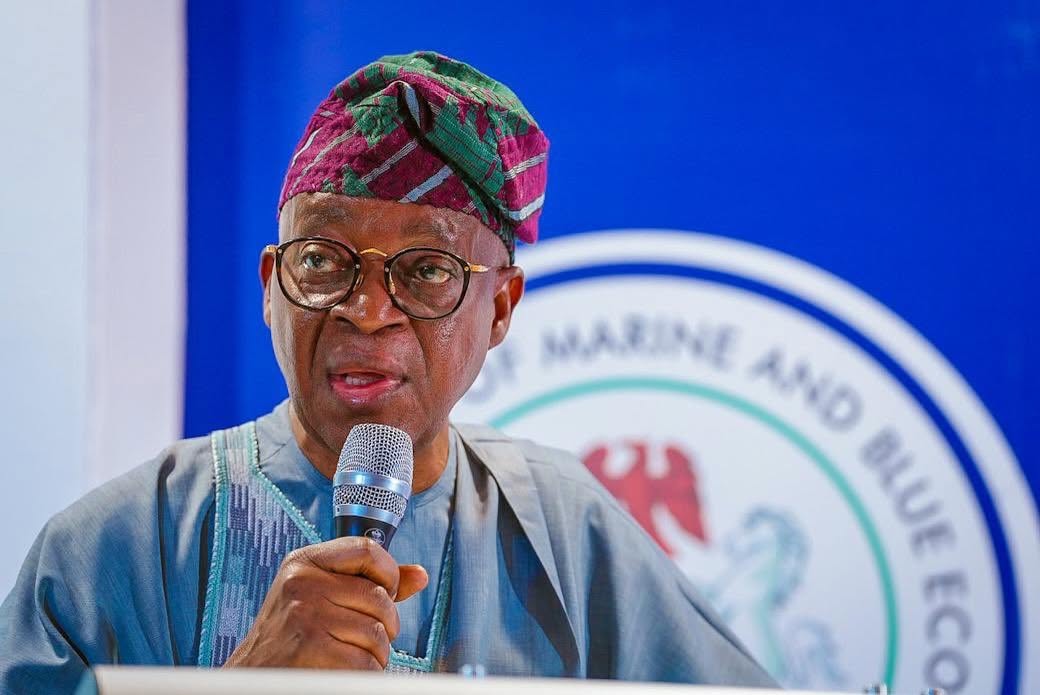
The Nigerian Ports Authority (NPA) has moved to address rail connectivity and logistics challenges affecting inland dry ports as part of efforts to integrate the facilities into the nation’s port system and improve cargo movement across the country.
The move followed a meeting between the NPA management, led by its Managing Director, Abubakar Dantsoho, and the Executive Director of Dala Inland Dry Port, Ahmad Rabiu, alongside representatives of Funtua Inland Dry Port, at the authority’s corporate headquarters in Marina, Lagos.
The engagement came after the Minister of Marine and Blue Economy, Adegboyega Oyetola, directed the transfer of operational oversight of inland dry ports to the NPA.
The discussions focused on strengthening institutional collaboration, addressing infrastructure constraints and improving operational efficiency across Nigeria’s maritime logistics chain.
Speaking during the meeting, Mr Dantsoho stressed the need to upgrade inland dry port infrastructure and technical capacity to complement ongoing modernisation efforts at the nation’s seaports.
He said the facilities must be equipped to handle increasing cargo volumes and support the broader transformation of Nigeria’s maritime sector.


“For our Inland Dry Ports to function at the same velocity as the ongoing modernisation across our seaports, we must proactively upgrade dry port infrastructure and technical capacity,” Mr Dantsoho said.
He explained that the integration of digital platforms, including the Port Community System (PCS) and the National Single Window, into seaport operations must be matched by corresponding improvements at inland dry ports.
“As we integrate digital systems such as the Port Community System (PCS) and the National Single Window in our seaports, the dry ports must deploy modern equipment and advanced technical capabilities to handle larger cargo volumes and bigger vessels coming to our coast,” he added.
Increased private-sector investment
The NPA managing director also called for increased private-sector investment in inland dry port infrastructure, noting that stronger investment would be critical to improving cargo handling capacity and operational efficiency.
He cited APM Terminals’ establishment of an Export Processing Terminal in Northern Nigeria as an example of private-sector participation in the development of inland logistics infrastructure.
ALSO READ: INVESTIGATION: Ganduje embroiled in multi-billion naira Kano dry port ownership scandal
Mr Dantsoho assured stakeholders that efforts to optimise the inland port system were underway and confirmed plans to visit the Dala and Funtua facilities to assess their operational conditions and infrastructure requirements.
Operational oversight
Speaking on behalf of the delegation, Hassan Bello welcomed the transfer of operational oversight to the NPA, expressing appreciation for what he described as a seamless transition.
Mr Bello referenced the gazetted Port Act, which recognises inland dry ports as official ports of origin and destination, while drawing attention to challenges confronting the facilities, particularly inadequate rail connectivity and broader logistics constraints.
Rail access is a critical component of inland dry port operations, as efficient connections to the national rail network can facilitate cargo movement between seaports and inland destinations, potentially reducing pressure on road transport and lowering logistics costs.
The meeting also established a framework for further technical consultations, infrastructure integration and physical planning to identify the requirements for improving operations at the facilities.
The discussions highlighted the need for detailed technical assessments, stakeholder coordination and physical inspections to establish infrastructure priorities and guide subsequent project development.
The planned visits to Dala and Funtua inland dry ports are expected to provide NPA with a clearer understanding of the facilities’ operational challenges and the interventions required to strengthen their roles in cargo distribution, trade facilitation and wider maritime logistics network.
Discover more from Premium Times Nigeria
Subscribe to get the latest posts sent to your email.
-

 Business3 days ago
Communications Ministry made ₦345.5 million duplicate payment for Abuja ICT Park project
-
Business4 days ago
Fuel subsidy would cost Nigeria over N20trn yearly — Minister
-
News3 days ago
LumenUs helps automate tedious paperwork in times of grief
-
News3 days ago
Inside INEC’s AI and cybersecurity plans to secure Nigeria’s 2027 Elections – Technology Times