News
This is what some the world’s largest banks of malware look like stacked as hard drives


Malware research group vx-underground, which says it has the largest collection of malware source code, said in a post on X that its archive of data amounts to about 30 terabytes.
A reply by Bernardo Quintero, founder of VirusTotal, an online service that scans files for malware across multiple antivirus engines at once, said his service has about 31 petabytes of malware samples that users have contributed to date. (A petabyte is ~1,000-times larger than a terabyte.)
In both cases, that’s a lot of data. For context, cybersecurity companies, AI researchers, and threat intelligence firms treat repositories like these as critical for training detection models and understanding how attacks evolve. But this had us wondering: What would these enormous datasets actually look like stacked as hard drives one on top of the other and side-by-side? And how would they compare to, say, the Eiffel Tower?
Someone in our newsroom asked an AI chatbot this question, and it got it incredibly wrong.
Instead, we did some rough back-of-a-napkin math to figure out how tall these data banks would be. Since vx-underground and VirusTotal both have “about” that much data each, “about” is good enough for us in this case.
Let’s say we’re using 1 terabyte capacity internal hard drives, since these are generally designed to be the same physical size to fit inside any computer. These standardized 3.5-inch internal hard drives are 1 inch in height, which for the sake of stacking one on top of the other is really what we want to know here.
We’re also assuming that the hard drives we’re using in this example are exactly 1 terabyte, because in reality the total usable file capacity of a hard drive is generally somewhat less.
Using this online conversion tool, it looks like vx-underground’s 30 terabytes of malware data could fill 30 hard drives stacked on top of one another, reaching 30 inches, or about 2.5 feet tall.
For reference, this reporter is 6 feet tall. (See visual below, and yes, terrible opsec, I know.)
With that same logic, VirusTotal’s 31 petabytes of submitted data would fill 31,744 hard drives, which stacked on top of another would reach about 2,645 feet.
The world’s tallest building, the Burj Khalifa in Dubai, is slightly taller at 2,722 feet.
The Eiffel Tower is 1,083 feet tall. By that logic, VirusTotal has about two-and-a-half Eiffel Towers’ worth of data.

When you purchase through links in our articles, we may earn a small commission. This doesn’t affect our editorial independence.







The Minister of the Federal Capital Territory, FCT, Nyesom Wike, has said he will lead President Bola Tinubu’s re-election campaign in the FCT and Rivers State ahead of the 2027 general elections.
Wike disclosed this on Monday at a stakeholders’ meeting of the Rainbow Coalition in Abuja, where he announced plans for a joint mobilisation involving members of the All Progressives Congress (APC) and the Peoples Democratic Party (PDP).
He said political differences would not stop stakeholders from joining forces to deliver Tinubu’s re-election, adding that the coalition had also agreed to back APC candidates for National Assembly seats in the FCT.
The meeting was attended by APC and PDP stakeholders, including party chairmen, serving and former senators, National Assembly candidates and leaders from the FCT’s six area councils.
PDP candidates contesting National Assembly seats also declared support for their APC counterparts, in what appears to be a cross-party alliance ahead of the polls.
Wike charged participants to place the coalition’s common goal above party loyalty.
“For the presidency, all of us have agreed that it is Bola Ahmed Tinubu. I am going to coordinate the FCT and Rivers State. So you can imagine how important it is.
“I am in charge of the FCT election. I am the commander of field operations as far as the FCT election is concerned.
“I want to let all of you know that we are going to work together. Nobody should say, ‘I am PDP’ or ‘I am APC.’ For the purpose of this election, we are together,” he said.
2027 presidency: Wike declares self Tinubu’s FCT campaign ‘commander’

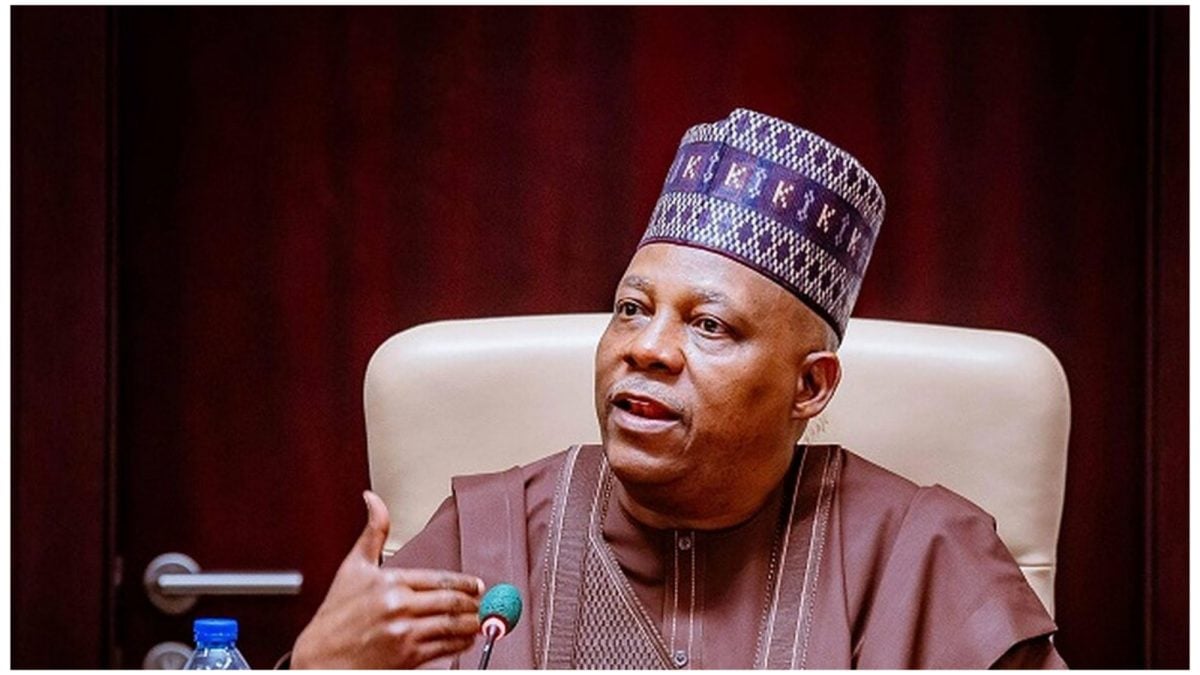
Former Kogi State Governor Yahaya Bello, former Plateau State Governor Simon Lalong and other political figures have held a closed-door meeting with Vice President Kashim Shettima at the Presidential Villa in Abuja.
The delegation, identified as the leadership of the National Directorate of Arewa for Asiwaju Movement, arrived at the Aso Rock Presidential Villa at about 4 pm on Monday and proceeded to the Vice President’s wing of the State House.
Other members of the delegation included former Jigawa State Governor Abubakar Badaru, Director-General of the National Drug Law Enforcement Agency (NDLEA), Brigadier General Buba Marwa (retd.), and Special Adviser to the President on Policy Coordination, Hadiza Bala-Usman.
The purpose of the meeting was not immediately disclosed. However, reports indicated that the visit was a courtesy call on the Vice President.
At the time the delegation arrived, Shettima was attending another meeting at the President’s wing of the State House. That meeting, which began at about 2 pm, was attended by the Minister of Livestock Development, Idi Maiha, and the Special Adviser to the President and Coordinator of the Presidential Livestock Reform, Professor Attahiru Jega, among others.
Jega, a former chairman of the Independent National Electoral Commission (INEC), has been involved in the Federal Government’s livestock reform initiative.
The meeting between Shettima and the delegation comes as the All Progressives Congress (APC) intensifies preparations for the 2027 general elections, with President Bola Tinubu seeking re-election.
The APC is scheduled to inaugurate its Presidential Campaign Council on Wednesday, October 14, at the State House Conference Centre in Abuja.
The development was disclosed by the Director-General of the campaign council, Senator Abdulaziz Yari, on Friday after briefing Tinubu at the Presidential Villa.
Yari also announced that the party’s presidential campaign would officially begin in Kaduna State on October 24, before moving to Port Harcourt and Maiduguri.
He said the full campaign timetable would be made public after the inauguration of the council.
-

 Business3 days ago
Communications Ministry made ₦345.5 million duplicate payment for Abuja ICT Park project
-
News3 days ago
LumenUs helps automate tedious paperwork in times of grief
-
Business4 days ago
Fuel subsidy would cost Nigeria over N20trn yearly — Minister
-
News3 days ago
Inside INEC’s AI and cybersecurity plans to secure Nigeria’s 2027 Elections – Technology Times