Connect with us

News

US Lawmaker Accuses Nigerian Security Forces of Enabling Attacks on Christians

info

Published

on

Download.jpeg

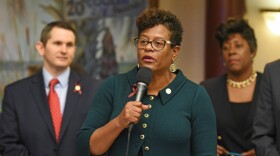
A United States lawmaker, Kimberly Daniels, has released a scathing assessment accusing elements within Nigeria’s security architecture of allegedly enabling attacks on Christian communities.

The report specifically highlights the escalating violence in the country’s North-Central and North-West regions, where worshippers have faced targeted assaults.

Daniels, a member of the Florida House of Representatives and Chairwoman of the United World Congress of Diplomats, issued the document on April 14, 2026.

The timing follows a series of deadly attacks that occurred during the Easter celebrations across Plateau, Kaduna, and Nasarawa states.

The lawmaker pointed out that the deliberate targeting of church services on Palm Sunday and Easter Sunday suggests a coordinated pattern rather than random violence.

According to Daniels, the current situation is dire. She said, “What we are seeing is a brutal surge in violence that specifically targets religious congregations during their most sacred moments of worship.”

She further noted that despite public condemnations from President Bola Ahmed Tinubu’s administration, there is a visible gap between the government’s rhetoric and the security reality on the ground.

The report features harrowing testimonies from survivors and local residents who feel completely vulnerable. One account cited in the document reads, “We hear statements from Abuja, but here, we bury our loved ones almost every week. There is no protection.” Daniels emphasized that these voices indicate a total collapse of public confidence in the state’s ability to provide safety.

A significant portion of the controversy in the report centers on the Minister of State for Defence, Bello Matawalle. The document raises concerns regarding his credibility, referencing allegations that date back to his time as the Governor of Zamfara State.

These claims include accusations of complicity with armed bandits and the facilitation of ransom payments. Daniels insisted that these issues cannot be ignored if Nigeria is to effectively combat insecurity.

“When those entrusted with national security are themselves subjects of serious allegations, public trust erodes, and the fight against terrorism becomes dangerously compromised,” she stated. The assessment suggests that a lack of specialized expertise and inconsistent leadership within the security sector are hindering the fight against banditry and insurgency.

Daniels shared that her intervention was prompted by direct pleas from Nigerians living in terror. “The position I take on this issue is because of citizens reaching out to me from Nigeria,” she said. She described the trauma of “homegrown terror,” noting that “the greatest form of terrorism a person can experience is terror that comes from homegrown familiar enemies.” She added, “When the people you trust to protect you work undercover with those who want to harm you, it must be devastating.”

Framing the crisis as a matter of religious persecution, Daniels lamented that “my brothers and sisters in Nigeria are being martyred simply because they gather to worship Jesus. Meanwhile, many Americans do not fully understand how precious religious liberty is and the protections that come with it.”

The report concludes by calling on President Tinubu to perform a thorough internal reform of the nation’s security leadership. Daniels also urged the international community, particularly the United States, to apply diplomatic pressure. She reminded the global community of Nigeria’s status as a Country of Particular Concern regarding religious freedom.

Reflecting the urgency of the situation, the report quoted a community leader who said, “We don’t need more speeches. We need protection. We need justice.” Daniels warned that continued silence would only embolden the perpetrators of these crimes.

Continue Reading
Click to comment

Leave a Reply

Your email address will not be published. Required fields are marked *

Business

Fidelity Bank Plc appoints new non-executive director

info

Published

on

By

WhatsApp Image 2026 05 25 at 231355 Picsart AiImageEnhancer.jpeg

Fidelity Bank Plc has appointed Jonathan Ososuakpor as a Non-Executive Director of the bank, taking effect from 22 May.

The bank disclosed the appointment in a statement posted on NGX Group and signed by the Fidelity Bank’s secretary, Ezinwa Unuigboje, on Monday, noting that Mr Ososuakpor can achieve the bank’s strategic objectives.

According to the statement, the appointment has been approved by the Central Bank of Nigeria, while the Securities and Exchange Commission, Nigeria Deposit Insurance Corporation, and Financial Reporting Council of Nigeria have also been notified about the appointment.

“The Board of Directors is pleased to announce the appointment of Dr. Jonathan Oniovosa Ososuakpor as a Non-Executive Director of Fidelity Bank Plc with effect from May 22, 2026.

“The appointment has been approved by the Central Bank of Nigeria, and notice of the same has been communicated to the Securities and Exchange Commission, Nigeria Deposit Insurance Corporation, and Financial Reporting Council of Nigeria.

PT WHATSAPP CHANNEL

“The Board is pleased with the appointment and looks forward to working closely with Dr. Jonathan Oniovosa Ososuakpor to achieve the Bank’s strategic objectives,” the bank stated.

The bank said Mr Ososuakpor brings impressive cross-functional experience to the Board.

Profile

Mr Ososuakpor joins the Board of Fidelity Bank Plc with over 40 years of experience in the financial services industry, including Credit and Marketing; Retail; Consumer and Commercial Banking; Public Sector; Banking Operations; and Risk Management.

He enjoyed an illustrious banking career, which commenced in 1983 with Union Bank of Nigeria Plc and served in various capacities at notable financial institutions, including former Gateway Bank, Oceanic Bank, Ecobank Nigeria Plc, and Access Bank Plc.

Mr Ososuakpor held key leadership and management positions before he was appointed Managing Director/Chief Executive Officer of AMJU Unique Microfinance Bank Limited in 2012, a position he held until he retired from the bank in July 2025.

He was Chairman of Universal Finance Consult & Investment Limited from 2007 to 2017, and V-Capital Consulting Limited from 2015 to 2025.

He currently chairs the Board of Directors of Top Rank Oil Services Limited, a leading multifunctional engineering company providing diverse services to the nation’s Oil and Gas industry, Public and Private Sectors.

Mr Ososuakpor holds a Bachelor’s degree in Banking and Finance, and Masters Degree in Banking and Finance from the University of Benin. He also has both a Master of Science and a Doctorate Degree in Economics from Delta State University, Nigeria, and a Master of Business Administration (Finance) Degree from Bangor University, Wales, UK.

His professional qualifications include Fellowship of the Chartered Institute of Bankers of Nigeria; Institute of Credit Administration; Institute of Chartered Economists of Nigeria, and Association of Enterprise Risk Management Professionals.

He is also a Fellow of the Chartered Institute of Taxation of Nigeria; Member of the Nigeria Economic Society, and Chartered Banker Institute, Wales, UK.

READ ALSO: Fidelity Banks first quarter revenue up by 38%

The new non-executive director is also a Certified Expert in Risk Management and a key resource person at local and international training. His areas of interest include Risk Management, Data Analytics, Monetary, Macro, and Microeconomics, Financial Inclusion, and Corporate Governance.

He has attended leadership and executive development programmes at world-class institutions, including the London Business School and United Nations Institute for Training and Research.


Continue Reading

Health

WHO releases emergency funds as Ebola response scales in DRC, Uganda

info

Published

on

By

WhatsApp Image 2025 02 27 at 19.13.08 e1779308361768.jpeg

The World Health Organisation (WHO) has released $3.9 million from its Contingency Fund for Emergencies and is establishing a continental Incident Management Support Team with the Africa Centres for Disease Control and Prevention to scale up response efforts to the Bundibugyo Ebola outbreak in the Democratic Republic of the Congo.

WHO Director-General, Tedros Ghebreyesus, disclosed this on Monday during an Africa CDC ministerial briefing, saying the national risk level in DRC had been raised to “very high” due to rapid transmission and the absence of vaccines or therapeutics for the rare Bundibugyo strain.

Mr Ghebreyesus said WHO made the decision last Friday following fresh assessments showing increasing transmission risks.

The WHO chief said the organisation was finalising a multi-agency Strategic Preparedness and Response Plan aligned with national response plans for DRC and Uganda, while expanding contact tracing, treatment centres, laboratory capacity and community engagement.

“So far, 101 cases have been confirmed in DRC with 10 confirmed deaths. In Uganda, five cases and one death have been confirmed, linked to cross-border movement,” he said.

PT WHATSAPP CHANNEL

According to him, WHO assesses regional risk as high and global risk as low, but warned bordering countries face high risk and should act immediately, according to the latest WHO update report.

He noted that the response had been complicated by insecurity in Ituri and North Kivu provinces, where fighting has displaced more than 100,000 people in recent months, worsening an already fragile humanitarian situation.

The WHO boss said that two security incidents at health facilities were reported in the past week, and distrust of outside authorities was hampering community-based interventions, according to the WHO field reports update.

He said building trust in affected communities was now one of the WHO’s highest priorities to improve outbreak response effectiveness and community engagement across affected regions in DRC and Uganda, which is urgently required.

“To address lack of countermeasures, WHO convened interim Medical Countermeasures Network last week and recommended prioritising two monoclonal antibodies for clinical trials,” he said according to WHO emergency response update report.

“The agency is also developing a trial for the antiviral obeldesivir as post-exposure prophylaxis for high-risk contacts in partnership with Africa CDC and the Collaborative Open Research Consortium on filovirus research.

“Discussions are underway with partners on candidate vaccines in the pipeline,” he said.

He said the evaluation of vaccine candidates and strengthening regional preparedness against Ebola outbreaks in DRC and Uganda was currently ongoing

Mr Ghebreyesus said he would travel to the DRC on 26 May with Chikwe Ihekweazu, executive director of WHO’s Health Emergencies Programme, to directly review ongoing response operations.

He also thanked President Yoweri Museveni for cancelling Uganda’s Martyrs’ Day commemoration, which attracted up to two million people, as a preventive measure against further spread of the outbreak.

“We are facing an extremely serious and difficult outbreak. It will get worse before it gets better.

READ ALSO: Ebola: UNICEF raises concern over impact on children in DRC, Uganda

“But we know this virus, and we know how to stop it. With unity under the leadership of the governments of DRC and Uganda, and in close partnership with Africa CDC and all partners, we will stop this outbreak.”

According to him, WHO credited the governments of the DRC and Uganda for leading the response and said it remained fully committed to supporting them.

He urged neighbouring countries to strengthen surveillance, infection prevention and control, and readiness at points of entry to contain further spread.

(NAN)

Continue Reading

Trending