Connect with us

News

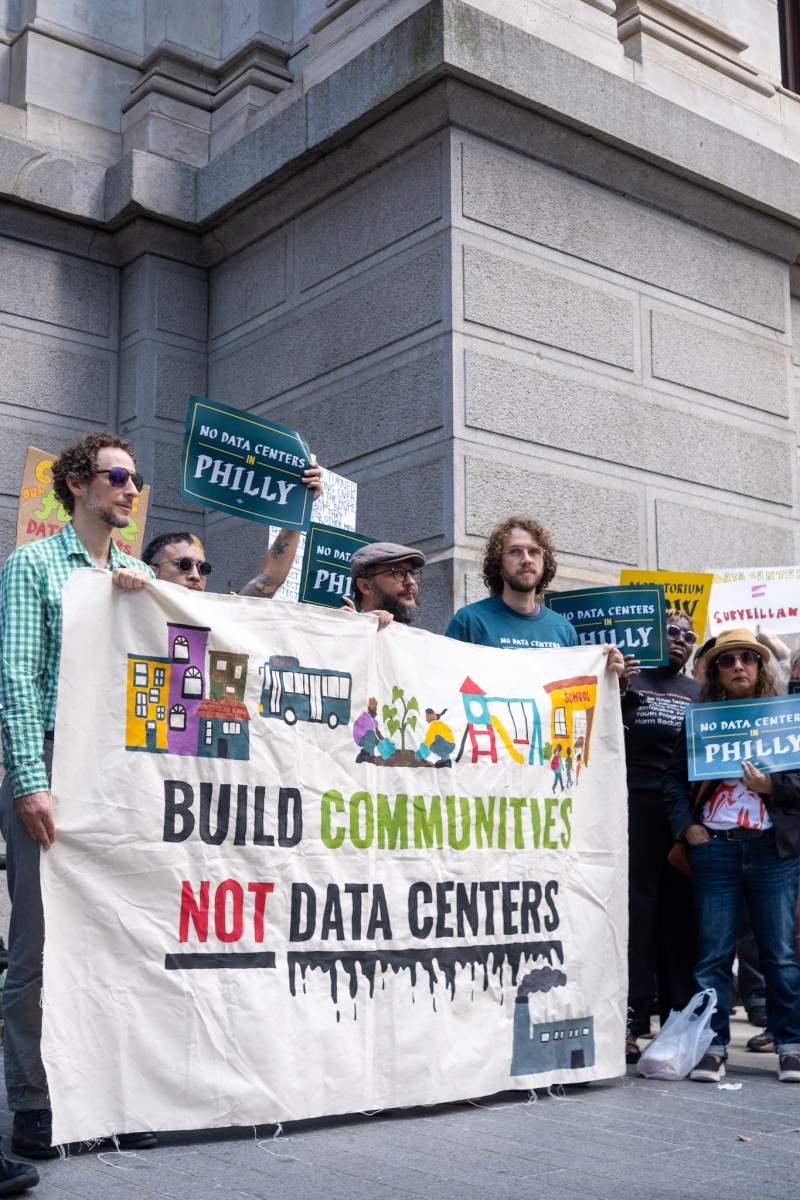
Can the AI industry persuade data center opponents by getting rid of NDAs?

info

Published

on

9 DSCF1649.jpg

Amazon recently followed Microsoft’s lead and said it will no longer use nondisclosure agreements (NDAs) while negotiating with local governments over data centers.

On the latest episode of TechCrunch’s Equity podcast, Sean O’Kane, Rebeccan Bellan and I discussed Amazon’s announcement, which came in the middle of a longer blog post making the case that data centers are actually good for communities.

Rebecca was a bit skeptical that the recent spate of data center moratoriums will have a lasting effect, especially since the moratoriums only last for a year or two and “these data centers aren’t coming online for the next two, three, four, five years,” though I countered that data center backers definitely seem worried.

Sean, meanwhile, suggested that a big reason for the backlash is the industry’s poor communication.

“We’ve seen, through a lot of the controversy and backlash to AI and data centers, that the industry just does a really poor job explaining itself, and that they are obviously and constantly frustrated with the fact that most people can’t envision a world in which this stuff is useful for them,” he said.

Keep reading for a preview of our conversation, edited for length and clarity.

Sean O’Kane: It’s an interesting thing that it was sort of buried in the blog post and part of a larger story that Amazon’s clearly trying to tell. I guess I understand why they weren’t putting it in the foreground, but to me, this is at the root of so many of the problems that the tech industry currently faces when it comes to AI broadly, but data centers in particular. 

There are so many things that could be said about whether or not people should be worried about the effect that data centers have on their property values, on their electricity bills, on their water usage in the area, and whether or not those things are real problems, inflated problems, etc. etc.

I think so much of that just really goes back to the fact that a lot of these projects are being negotiated essentially in secret. Sometimes they’re being negotiated [with the public knowing] that it’s a data center, but just not knowing who’s actually going to use it or occupy it at any point. 

This is a long-standing issue with the tech industry. I always go back to the mid-2010s when Uber was expanding really fast. Uber was one of the companies that really used this tactic a ton when it came to working with local governments. In particular, I remember I was working at The Verge at the time and we had a freelancer write a story about a city outside of Orlando where Uber  was trying to negotiate tax subsidies to subsidize rides for people to use public transit after the Uber trip.

The whole thing was negotiated in secret. And not only that, which was frustrating on its face, but also, because of the secrecy, you could just see Uber getting really comfortable with asking for a lot of other stuff, too.

So there needs to be more of this. I’m glad Amazon’s doing this. We’ll see if it actually does have any positive effect, but people are pretty entrenched right now.

Rebecca Bellan: Yeah, I’m curious about what effect this will have and whether it will lead to communities successfully delaying or or killing any infrastructure that the companies need to build. What I’ve heard from some people I’ve spoken to, who deal with data centers every day, a lot of these moratoriums that are getting passed — and there are a significant number of them, including one recently in San Francisco, which is pretty ironic — but they’re only for like a year or two years. 

But these data centers aren’t coming online for the next two, three, four, five years. All of the buildouts are going to be massively delayed for a number of reasons from zoning to funding. Of course, if the pushback keeps going, then it might have an effect, but I often wonder just how much of an effect this political pushback is having on this.

Anthony Ha: The moratorium I’m most familiar with is the one in New York. I believe it’s a one year moratorium, and that’s on permits for large projects. [Technically, it’s until the state finalizes an environmental review process, which is expected to take a year.]

So already, there’s some wiggle room within that. And often, they’re framed as: “It’s not like we think [data centers are] bad, let’s not do this. It’s [that] we need to take the time to study this.” Which gives them a lot of room to say later on, “Actually, we’ve decided this is great. We love it.”

But you can tell that the people trying to build these data centers are worried, which is why you have these unhinged tweets from people like Trump or David Sacks. Only time will tell in terms how long and how deep that [community] resistance is, but I do think they are worried. 

It’s also noteworthy that Microsoft, earlier this year, made a similar announcement about not using NDAs. I don’t think that getting rid of the NDAs automatically is going to make the people who opposed these data centers be like, “Great, let’s let’s do it. I’m in.” But I think the beginning of that conversation is, “Well, we don’t even know what the heck you’re doing, because you’ve negotiated all this stuff in secret.” So it does seem like a good first step.

Sean: The larger problem here is just a communication problem, right? This is a problem I think that goes across the entire tech industry, but it’s especially acute now, because we’re living in the era of “going direct” and “you don’t need to talk to the media, the media is dead,” etc. 

And I’m not trying to beat that horse, because we’re in the media and [we] think we’re still relevant. But we’ve seen, through a lot of the controversy and backlash to AI and data centers, that the industry just does a really poor job explaining itself, and that they are obviously and constantly frustrated with the fact that most people can’t envision a world in which this stuff is useful for them. And that’s because, a lot of time, the [technological] ability’s not there, and in part because they’re just not explaining it well. 

I wrote a story last week about how it’s been a year since we’ve really heard Tesla beating its own drum about building towards what it originally was calling “sustainable abundance” and is now “amazing abundance” as its mission statement. It’s just wild to me that we’re a year into that, and the company still doesn’t have a very good definition of it, especially considering that they released this whole multi-page PDF laying it out when they announced this, and even Tesla’s biggest fans criticized Elon Musk and Tesla for how unspecific it was. It read like LLM nonsense.

Anthony: One of the things this has made me think about is just the narrative and this sense that for a while, it really felt like it was being pushed down our throats — this idea of, “This is inevitable, this AI-driven future, and get on board or you’re just going to be left behind.”

Obviously that future is barreling ahead in a lot of ways, but in a few key ways, there have been these obstacles. What I’ve really liked about that is this sense of “No, you actually have to make the case for it.” You can’t just say, “This is the future, shut up.” 

And then specifically about Tesla and the abundance thing, what was shocking to me is not so much that they haven’t come up with a definition of abundance, but that that was a promise that they were making in the first place. I think [that] speaks to how strange our relationship to Tesla, and particularly the people who are invested and ride-or-die for Elon, [has become.] It’s not about, is this company going to sell a lot of cars? It’s about this vision for remaking society. Or at least, that’s what they’re being sold.

When you purchase through links in our articles, we may earn a small commission. This doesn’t affect our editorial independence.

Continue Reading
Click to comment

Leave a Reply

Your email address will not be published. Required fields are marked *

News

Borgu attack: SDP Gov candidate blames APC govt of failing to tackle insecurity

info

Published

on

The governorship candidate of the Social Democratic Party, SDP, in Niger State, Mohammed Ndarani Mohammed, SAN, has blamed the worsening security situation in the state on what he described as the failure of the All Progressives Congress, APC-led government to protect residents.

Ndarani spoke while condemning the killing of the village head of Luma Baare community in Borgu Local Government Area, Mallam Bawa Mohammed, by suspected bandits.

The attack, which reportedly occurred on Saturday morning while residents were observing prayers in a mosque, also claimed the lives of 10 other villagers, including women and children, according to local sources, while the police and state government put the death toll at five, including the village head.

Several houses, shops and farm produce were reportedly set ablaze.

However, the state police, through its spokesperson, SP Wasiu Abiodun, and the Niger State Government, through the Commissioner for Information and Orientation, Hon. Obed Nuhu Nana, in separate statements, confirmed five deaths, including the village head, in the attack.

In a statement issued in Minna on Sunday by the Director of Contact and Mobilisation of the SDP Governorship Campaign Council, Hon. Jonathan Vatsa, Ndarani described the killing as “wicked, barbaric and inhuman”.

He condemned the repeated attacks on communities across the state, saying the killings of unarmed civilians were unacceptable.

The candidate blamed the escalation of banditry on the state government, describing the situation as “the manifestations of a failed leadership by the APC-led administration in the state”.

He accused the government of failing to provide adequate protection for residents, arguing that its response to attacks had largely been limited to issuing statements after lives and property had been lost.

“With the enormous resources at its disposal, the government has refused to deploy these resources to address the security situation in the state,” he stated.

Ndarani also criticised the governor for allegedly failing to visit communities affected by attacks, questioning how the incumbent would seek another term from residents who had suffered repeated violence.

“I wonder if the governor, who has failed to visit the people in their time of sorrow and grief, will go to them to seek their mandate for his second term in office. What will he tell them?” he asked.

He said the ability of a government to protect lives and property was a fundamental measure of its performance, adding that any administration unable to fulfil that responsibility had no business in governance.

The SDP candidate sympathised with the people of Luma Baare and the entire Borgu Kingdom, urging the state government to take more decisive steps to protect communities.

He also called on residents to use the 2027 general election to decide the state's political future, describing the poll as an opportunity to reject what he termed bad governance.

“The forthcoming 2027 election is an opportunity for our people to make a choice, either to remain stagnant and submerged in insecurity under this administration or free themselves from bad governance in the state,” he added.

Borgu attack: SDP Gov candidate blames APC govt of failing to tackle insecurity

Continue Reading

Events

Plateau Govt, CAN Strengthen Unity Through 2026 Christmas Carols and Praise Festival

info

Published

on

IMG 20261122 WA0006

The three-day festival, scheduled for November 27–29 in Du, highlights growing collaboration between the Plateau State Government and Christian leaders in promoting peace, unity and social cohesion.

The Plateau State Government and the Christian Association of Nigeria (CAN) are strengthening their partnership in promoting peace, unity and social cohesion through the 2026 Plateau Unity Christmas Carols and Praise Festival (PUCCPF).


The three-day event, scheduled to hold from November 27 to 29, 2026, at the Ten Commandments Prayer Altar, Du, is expected to provide a platform for Christians and other residents to celebrate the Christmas season while promoting peaceful coexistence across Plateau State.


Jointly organised by the state government and CAN, the festival reflects the growing recognition of the role faith-based institutions can play in supporting governance, community development and peacebuilding.

According to the organisers, the collaboration involves coordinated logistics, environmental sanitation and beautification efforts, as well as institutional support from the state government.

Church denominations and indigenous socio-cultural organisations, including BECO, NDA and Tarok leadership, are also part of the initiative, creating a platform that seeks to accommodate people across ethnic, political and denominational divides.

The organisers noted that participation in the festival would be free, making it accessible to residents from different communities and backgrounds.

The 2026 edition also forms part of the broader One Plateau Fest 2026 celebrations, which seek to showcase the state’s cultural identity, strengthen community relationships and encourage citizen participation.

Beyond the religious significance of Christmas, the Unity Carols and Praise Festival is expected to reinforce shared values of love, forgiveness, tolerance and peaceful coexistence among residents.

The partnership between the Plateau State Government and CAN also highlights the importance of sustained cooperation between government institutions, religious organisations and traditional community structures in addressing social divisions and building lasting peace.


With the festival approaching, organisers say the initiative represents an opportunity to strengthen public-faith partnerships and promote a more united Plateau State.

Continue Reading

Trending