
Business
Targeted support, not subsidies, can best protect people when inflation surges

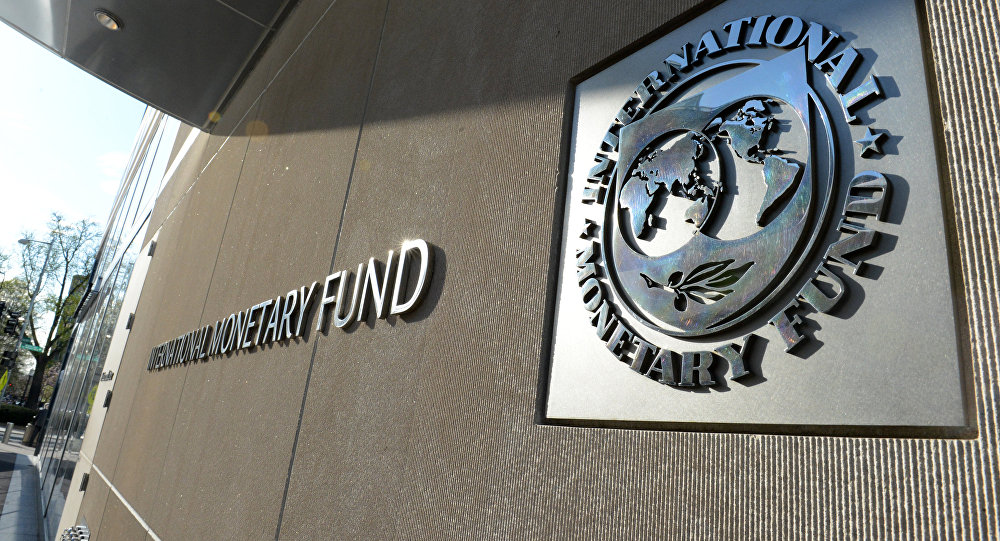
The International Monetary Fund (IMF) said targeted, temporary income support is the most effective and cost-efficient way for governments to protect vulnerable households during cost-of-living crises.
IMF disclosed this in its latest World Economic Outlook, noting that broad-based subsidies can impose higher costs on public finances.
The IMF report examined the economic consequences of cost-of-living crises and the effectiveness of government interventions across 76 countries over three decades.
The financial institution said consumer subsidies could require three to six times more fiscal resources than targeted cash transfers to provide the same level of protection to lower-income households. In contrast, producer subsidies could cost 14 to 22 times more.
According to the lender’s report, disruptions to global commodity markets, including those following Russia’s invasion of Ukraine in 2022 and conflicts in the Middle East, have driven up prices for essential goods and services such as food and energy.
The IMF said these episodes often have lasting consequences beyond the initial price surge. It said this makes essentials more expensive relative to other goods, weakens household purchasing power, and complicates central banks’ efforts to control inflation.


“Inflation expectations also rise and stay above pre-crisis levels for years, suggesting that these episodes may complicate efforts by central banks to control inflation,” the report said.
It added that real wages could fall and remain below their previous levels for an extended period.
The Fund explained that poorer households bear a disproportionate share of the burden because food and energy make up a larger share of their spending than they do for wealthier families.
It noted that the effects on poverty and inequality were severe in lower-income countries, where necessities account for an even larger share of poor households’ expenditure.
Subsidies carry higher fiscal costs
The IMF said governments often responded to cost-of-living pressures with broad-based measures to suppress price increases, including tax reductions, producer subsidies, lower customs duties, and price controls.
According to the report, advanced economies had relied more heavily on reductions in value-added and excise taxes on food and energy.
Emerging markets and low-income countries also more often used measures targeting production costs and supply chains.
Governments also provided income support, with advanced economies using more targeted transfers and poorer countries more often introducing broad-based wage and pension increases.
However, the IMF said these interventions differed in their effectiveness and the financial burden they placed on governments.
It identified targeted, temporary transfers as the preferred approach because they direct assistance to households most in need, preserve limited government resources, and allow market prices to reflect scarcity.
On the other hand, the financial institution said price-suppressing measures can be expensive because much of the support may benefit households that do not need it.
The report cited Europe’s 2022–2023 energy crisis, during which less than 20 cents of every euro spent suppressing electricity, natural gas and gasoline prices reached the poorest fifth of households.
“Subsidising producers can cost 14 to 22 times more than targeted income support,” the IMF said.
It also warned that keeping prices artificially low could weaken incentives to conserve scarce resources.
When several countries adopt such measures at the same time, they can drive up global prices and worsen economic pressures on lower-income countries, the Fund said.
“Producer subsidies are even less efficient. Because they lower production costs rather than directly supporting households, foreign consumers benefit through lower export prices of downstream products.
“As a result, taxpayers pay more to benefit people and businesses in other countries rather than vulnerable families at home,” the lender stated.
Temporary, targeted interventions
The Fund recommended that governments make assistance temporary and deliver it through targeted income-support programmes.
It said the measure could be implemented by expanding existing social protection systems that can be scaled up quickly during crises.
“Assistance, when warranted, should be temporary and delivered through targeted income-support measures, ideally using existing social protection systems that can be scaled up quickly,” it said.
READ ALSO: IMF warns rising stablecoin use could weaken Naira demands
It said broader interventions might be necessary in exceptional circumstances, including acute food insecurity, heightened risks of social unrest or serious difficulties in identifying and reaching eligible beneficiaries.
However, such support should be designed around the temporary component of a price shock rather than permanently higher prices, with clear deadlines for ending the measures.
Where price controls or subsidies are unavoidable, the IMF advised governments to focus narrowly on goods and services consumed disproportionately by vulnerable households while preserving market signals as much as possible.
Discover more from Premium Times Nigeria
Subscribe to get the latest posts sent to your email.





Nigeria is among more than 50 countries planning to develop nuclear power or expressing interest in building new reactors, as global nuclear electricity generation reached a record high in 2025, according to a new report by the International Energy Agency (IEA).
The report, World Energy Outlook 2026, published on Thursday amid contentious negotiations over fossil fuel phase-out and electrification at the 31st session of the United Nations Climate Change Conference (COP31) in Türkiye, provides an assessment of global energy trends and prospects across regions.
The 564-page report said global nuclear power generation reached a record high in 2025 and is expected to continue rising, with more than 420 gigawatts (GW) of nuclear capacity currently operational across over 30 countries.
As of July 2026, the report said nearly 90 GW of additional nuclear capacity was under construction worldwide, the highest level in more than 35 years. The projects are spread across 17 countries, largely China, India, South Korea, Russia, Egypt and Türkiye.
The report said the ongoing construction includes small modular reactors (SMRs) in Argentina, Canada, China and Russia. Construction began on eight nuclear reactors in the first half of 2026, marking one of the highest levels recorded in four decades.
According to the IEA, more than 50 countries now have plans or targets for nuclear power or have expressed interest in developing new reactors.
These countries include African countries such as Egypt, Kenya and Nigeria; European countries including Italy, Poland and Türkiye; Middle Eastern countries such as Jordan and Saudi Arabia; and Southeast Asian nations, including Indonesia, the Philippines, Thailand and Vietnam.
Many of these countries are particularly interested in small modular reactors (SMRs), the report noted.
It said China continues to operate one of the world’s largest nuclear construction programmes, while the United States has approved lifetime extensions for several reactors, allowing them to operate for up to 80 years.
In the European Union, the IEA said nuclear power is increasingly viewed as critical to achieving energy security and climate goals, while Japan is gradually restarting reactors.
Nuclear development is also advancing in countries entering the sector for the first time. Bangladesh, Egypt and Türkiye have projects at advanced stages of construction, Uzbekistan is beginning work on its first nuclear power plant, and Vietnam is progressing with plans for its first reactor.
International support for nuclear energy has also strengthened, with multilateral development banks increasingly involved in financing the sector. As of August 2026, 38 countries had endorsed a pledge to triple global nuclear capacity by 2050.
The IEA said the prevailing geopolitical and energy security landscape could further accelerate nuclear development, as countries seek to diversify their energy mix, reduce exposure to market volatility and ensure reliable electricity supply amid growing electrification.
The agency said the 2026 energy crisis had prompted several countries to reinforce or confirm nuclear power plans, extend the operating lifetimes of existing reactors and reconsider restrictions on nuclear development.
READ ALSO: IEA says Nigeria’s energy investment could double in five years
Emerging electricity demand from electrification, artificial intelligence (AI) and data centres is also strengthening the case for reliable, dispatchable energy sources such as nuclear power.
However, the report noted that electricity generation trends vary across regions, reflecting differences in energy resources, security priorities and existing infrastructure.
While renewable energy is expanding across most regions and nuclear power is gaining ground in an increasing number of markets, the pace and composition of the transition differ considerably.
China, India and Southeast Asia are expected to retain coal-heavy electricity systems through 2035, although their energy mixes are projected to diversify as electricity demand grows faster than in most other regions.
Coal is expected to remain the dominant source of electricity in these regions, but wind, solar, nuclear and natural gas are also projected to expand, gradually creating more diversified energy sources.
Discover more from Premium Times Nigeria
Subscribe to get the latest posts sent to your email.
-

 Business1 day ago
Elon Musk Launches X Money, Bringing Banking and Payments to Social Media Platform
-
News4 days ago
79% of local providers ready for Nigeria’s sovereign cloud, NITDA finds – Technology Times
-
Health1 day ago
JUTH Student Nurse Anaesthetist Dies After Collapsing During Football Match in Jos
-
News1 day ago
OPEP troops arrest 21-year-old suspected child trafficker, rescue five minors in Plateau


