Business
Communications Ministry made ₦345.5 million duplicate payment for Abuja ICT Park project


The Auditor-General of the Federation flagged an alleged ₦345.5 million duplicate payment by the Federal Ministry of Communications, Innovation, and Digital Economy to a contractor handling the Abuja ICT Park project.
The finding was contained in the Auditor-General’s Annual Report on Non-Compliance and Internal Control Weaknesses in Ministries, Departments and Agencies of the Federal Government for the year ended 31 December 2024.
The special audit of the communication ministry covered the period from 1 January to 31 December 2021 and raised 14 issues concerning the planning, funding, procurement and implementation of the ICT Park project.
At the time the project was being implemented, Isa Ali Pantami, who was appointed by former President Muhammadu Buhari, served as Minister of Communications and Digital Economy from 2019 to 2023. He was succeeded by Bosun Tijani, who was appointed by President Bola Tinubu.
₦345.5 million duplicate payment
In Issue 13 of the findings, titled “Loss of Fund Due to Duplicated Payments to Contractor,” the Auditor-General said the ministry processed and approved two separate payments of ₦345,499,262.74 each as the third tranche of the 15 per cent mobilisation advance to the contractor.
The payment was intended to establish the Information and Communication Technology (ICT) Park, Abuja.


The Permanent Secretary approved the first payment on 19 January 2022 through payment voucher No. FMCDE/CAP/606/2021 dated 24 January 2022.
The same accounting officer approved the second payment on 17 January 2023 through payment voucher No. FMCDE/CAP/149/2022 dated 8 February 2023.
The report said the two paid vouchers had identical contract references, amounts, and narrative descriptions, which it said indicated duplicate payment.
It added that no record showed the first payment had been reversed, adjusted, or treated as an accounting error.
“There was also no journal entry, refund, or internal memo linking the 2023 approval to any prior transactions. These omissions demonstrate a failure of supervisory review, record reconciliation, and payment verification within the Ministry,” the findings stated.
The Finance and Accounts Department also failed to justify the repeated authorisation or the lack of reconciliation between the Cash Book and Vote Book, according to the report.
The findings said the contractor, while claiming it received only one payment in 2023, submitted a bank statement that excluded the critical period between 2 January 2022 and 8 February 2023, preventing independent verification of its claim.
The audit said the payments posed risks of fund diversion and loss of public funds, attributing this to weaknesses in the ministry’s internal control system.
The audit said the ministry’s management did not respond to the alleged duplicate payment under the contract.
The Auditor-General recommended that ₦345.499 million be recovered and remitted to the Treasury, and that evidence of remittance be forwarded to the Public Accounts Committee of the National Assembly.
₦447.67m from undisclosed funding sources
In Issue 11, the auditors questioned ₦447.67 million in payments to the ICT Park contractor, which they said could not be traced to the Government Integrated Financial Management Information System (GIFMIS).
The amount comprised ₦102,166,730 and ₦345,499,262.74 paid to the contractor, vide paid vouchers, Ref. No. FMCDE/CAP/061/2021 and FCMDE/606/2022 on 11 June 2021 and 19 February 2022, respectively.
According to the report, the payments appeared in the cash book. The contractor acknowledged them in the progress report and bank statement, but they did not appear in GIFMIS records, indicating they were processed off the system.
The audit said officials in the ministry’s Finance and Accounts Department could not explain the existence or authorisation of the alternative funding sources.
The report said the ministry also failed to provide documentation showing lawful appropriation, supplementary approval, or an external funding agreement for the payments.
The audit said the action posed a risk of misappropriation of funds and diversion of public property.
It said the ministry’s management did not respond to questions about the history of the payments in the GIFMIS records.
The Auditor-General recommended recovering and remitting ₦447.67 million to the Treasury, with sanctions under paragraphs 3106 and 3129 of the Financial Regulations (2009) if the ministry fails to comply.
₦396.65 million project funds used for unrelated items
In Issue 9, the findings showed that N396.65 million from the ICT Park project fund was used to pay for consultancy services, office consumables, furniture, and stationery printing.
The audit said approvals had been processed for consultancy services relating to the ICT Park. Still, payments were made to unrelated suppliers for consumables and office furniture that were not contained in the project’s Bill of Quantities.
The report said this reduced funds meant for the mobilisation and execution of the ICT Park project.
It also said the ministry failed to provide evidence of approval for the virement from the Minister of Finance, Budget and National Planning and the National Assembly.
It said the actions posed a risk of misappropriation of funds and undue delay in completion of the project, noting that the ministry failed to respond to the question on the use of the project funds for unrelated items.
The Auditor-General recommended recovering and remitting ₦396.655 million to the Treasury, with sanctions under paragraphs 3106 and 3129 of the Financial Regulations (2009) if the ministry fails to comply.
₦1.85bn paid without performance bond
In Issue 10, the auditors also found that N1.848 billion was paid to the contractor without securing a valid Performance Bond.
The report said the Bureau of Public Procurement had directed in December 2020 that a minimum 10 per cent Performance Bond be secured for major contracts before payment of mobilisation fees.
However, the ministry first released ₦1.348 billion in mobilisation payments between March 2021 and February 2023 without obtaining the required bond.
The report said that nearly three years after the contract award, the contractor submitted a commitment letter dated 29 December 2023, promising to furnish a Performance Bond upon receiving an additional N500 million. This amounts to ₦1.848 billion.
It said the actions exposed public funds to loss, noting that the ministry failed to respond to the question on the payment.
The Auditor-General recommended recovering and remitting ₦1.848 billion to the Treasury, and imposing sanctions under paragraphs 3106 and 3129 of the Financial Regulations (2009) if the ministry fails to comply.
₦500 million paid without interim performance certificate
In Issue 12, the Auditor-General said the ministry released an additional ₦500 million to the contractor on 29 December 2023 without an Interim Performance Certificate or verified progress report.
The report said the payment was made after the contractor received the 15 per cent mobilisation fee.
Instead of an Interim Performance Certificate, the ministry relied on a commitment letter from the contractor promising to provide project vehicles and undertake overseas technical trips upon receipt of the additional funds.
The audit said the actions posed a risk of diverting public funds and losing government funds. It said that the ministry failed to respond to the question on the payment.
The Auditor-General recommended recovering and remitting N500 million to the Treasury and imposing sanctions under paragraph 3106 of the Financial Regulations (2009) if the ministry fails to comply.
Premature foreign trips of ₦90 million
In Issue 8, the auditors questioned a ₦90 million provisional sum for foreign trips to inspect technical equipment for the ICT Park.
According to the findings, the sum of ₦90 million was included and described as “Allow a provisional sum of N90 million to cater for Client’s and Consultants’ representatives for foreign trips for the inspection of technical equipment to be deployed for the project,” in the priced Bill of Quantities (BOQ) for the contract for the ICT Park project, with a contract sum of ₦8.984 billion.
The report said the expenditure was being planned while the project was still at foundation level, before structural works, equipment procurement or installation had commenced.
It said no evidence was provided to justify the technical need, approved schedule, or cost-benefit assessment supporting the timing of the proposed trips.
The audit said the action demonstrated weak expenditure prioritisation and poor sequencing of project activities, noting that it posed a risk of undue delay in completion of the project and diversion of public funds.
Again, the ministry did not respond to questions about the premature foreign trip.
The Auditor-General recommended recovering and remitting the N90 million. It also recommended sanctions under paragraphs 3106 and 3115 of the Financial Regulations (2009) if the ministry fails to comply.
Denial of access to project documents
The audit also raised concerns about the ministry’s failure to give auditors access to project documents.
In Issue 14, the report said auditors were denied access to documents including needs assessment reports, bank mandates for ICT project payments, payment vouchers, due diligence reports on the contractor and the Environmental and Social Impact Assessment report.
READ ALSO: How Nigeria’s Population Commission mismanaged N245 billion on undelivered products, other controversial contracts – Auditor-General
The report said several requests for project-related documents made between March and June 2025 were not answered by the ministry.
It said the denial of access to procurement documents contravened the Constitution and risked concealing financial information, diverting government revenue, and the loss of public funds.
The Auditor-General asked the Permanent Secretary to justify the denial of access and produce all documents relating to the ICT Park project.
The report stated that the ministry did not respond to the issues raised in the audit and that the findings remained valid until the recommendations were implemented.
Other issues
Other issues included a ₦94.05 million cost overrun attributed to the failure to conduct feasibility studies and an Environmental Impact Assessment before the ICT Park project began.
The Auditor-General also flagged ₦19.47 million in costs linked to delayed site handover, while questioning the absence of resident technical supervision despite a ₦160 million provision for it.
The report further cited inadequate budgetary provisions that contributed to project delays and the ministry’s failure to conduct or document a needs assessment before procurement.
Discover more from Premium Times Nigeria
Subscribe to get the latest posts sent to your email.




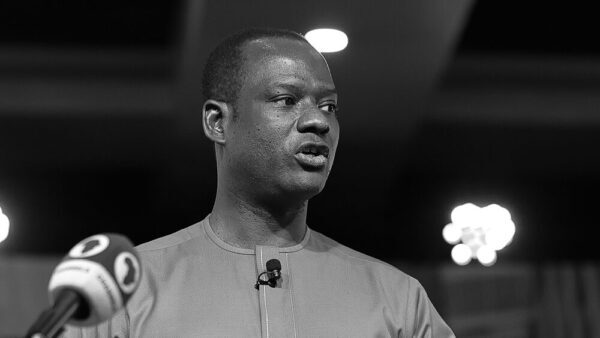
The Federal Government has rejected calls for the return of petrol subsidy, warning that subsidising fuel could cost the country more than N20 trillion annually and ultimately make petrol more expensive.
The Minister of Finance and Coordinating Minister of the Economy, Taiwo Oyedele, disclosed this on Thursday during a press briefing in Abuja on rising petrol prices and the subsidy debate.
Mr Oyedele said Nigeria consumes about 50 million litres of petrol daily, meaning that returning petrol to its pre-2023 reform price would cost more than N20 trillion every year.
He said even a proposal to sell petrol at N500 per litre would cost the government more than N16 trillion annually, before accounting for increased consumption and smuggling.
“Amounts of that size are nearly everything the Federation Account shared among all three tiers of government in 2025,” Mr Oyedele said.
He warned that funding such a subsidy would come at the expense of other government responsibilities, including salaries, pensions, schools, hospitals and security.
The minister’s comment comes amid renewed calls for the reintroduction of fuel subsidy, with the issue increasingly featuring in political debates ahead of the 2027 general elections.
‘Subsidy could push petrol to N2,000 per litre’
According to the minister, a return to subsidy could weaken government revenues, trigger a sovereign credit downgrade, increase borrowing costs and put pressure on foreign reserves and the naira.
The government estimates that the exchange rate could approach N3,000 to the dollar within months if subsidy is restored.
Mr Oyedele said this could push the price of so-called subsidised petrol to at least ₦2,000 per litre, significantly above the current average of about ₦1,400.
“A subsidy does not lower the cost of fuel. It only changes how it is paid, and when,” he said.
He argued that crude oil, freight and refining inputs are largely priced in dollars, meaning that forcing down the naira price of petrol would effectively require the government to subsidise foreign exchange.
‘Production subsidy’ is consumption subsidy
The minister also rejected descriptions of a proposed subsidy for locally refined petrol as a “production subsidy”.
He said a genuine production subsidy would support producers who could not compete at market prices, whereas the proposal being discussed would amount to providing discounted crude that would eventually be passed on to consumers at the pump.
“This is different, it is a discount on crude, passed through to the pump. That is a consumption subsidy by another route, with the same bill attached,” he said.
Mr Oyedele said subsidised fuel would also increase the price differential between Nigeria and neighbouring countries, potentially encouraging smuggling and effectively making Nigerian taxpayers subsidise motorists in other countries.
N15.8trn saved from subsidy removal
The minister defended the 2023 removal of petrol subsidy, saying it had released N15.8 trillion to the Federation Account between June 2023 and December 2025.
Of that amount, N10.4 trillion went to states and local governments, he said.
Mr Oyedele said 27 states could not reliably pay salaries in May 2023, but that none was in that position at the time of the briefing.
At the federal level, he said about two-thirds of the subsidy savings, combined with additional independent revenue and borrowing, had been used for spending that directly benefited Nigerians through higher wages, infrastructure, electricity subsidy and social transfers.
The remaining funds, he said, were used to stabilise the economy, particularly as the cost of servicing debt increased due to higher interest rates introduced to tackle inflation.
Government rejects blanket subsidy
Mr Oyedele said the government had instead used tax and duty waivers, local refining, naira-for-crude arrangements, exchange-rate stabilisation and CNG deployment to moderate fuel costs.
He said the government had granted a full waiver of taxes and duties on petrol worth more than N3.3 trillion for the year to 30 September 2026.
He added that the government would continue to consider targeted relief rather than a blanket subsidy.
Among the new measures are a 30-day discount on petrol sold at NNPC stations, a proposed N1,350 ceiling on the ex-gantry or landing cost of petrol, additional cash transfers, subsidised credit and faster CNG deployment.
READ ALSO: NNPCL: Accounting for fuel subsidy, By Uddin Ifeanyi
The government is also considering an excess profit tax on energy operators, with proceeds earmarked for measures to cushion vulnerable consumers.
Mr Oyedele said the government would not reverse the subsidy reform, arguing that doing so would expose Nigeria to the same cycle of fuel scarcity, smuggling, currency weakness and fiscal pressure experienced in the past.
“Our task is not to reverse a necessary reform designed to set our country on the path towards sustained prosperity,” he said. “It is to make sure its gains reach more Nigerians, more quickly and in more tangible ways.”
Discover more from Premium Times Nigeria
Subscribe to get the latest posts sent to your email.
-

 News4 days ago
Lucid Motors’ EV output falls to lowest level in almost 2 years
-
News3 days ago
Mirror Particle is building a ‘world model’ of human behavior
-
News3 days ago
I Never Prayed for Tinubu, Shettima to Win 2027 Election – Plateau Cleric
-
News3 days ago
FCCPC reviews rules for Nigeria’s online sales promotions, giveaways – Technology Times