Connect with us

Business

SEC Deepens Investor Education in Nasarawa, Seeks Stronger Partnership

info

Published

on

The Securities and Exchange Commission (SEC), Nigeria, has stepped up its drive to boost financial literacy, safeguard investors and widen participation in the Nigerian capital market through its Capital Market Awareness, Unclaimed Funds and Investor Education Outreach Programme, held in Lafia, Nasarawa State.

The programme brought together representatives of relevant institutions, academia and other stakeholders to promote awareness of investment opportunities, facilitate access to unclaimed dividends and other investment assets, and educate the public on measures to guard against fraudulent investment schemes.

Among those present were representatives of the ICMR, the Probate Registry, key departments of the Securities and Exchange Commission, academia and the National Population Commission. Their participation underscored the importance of institutional collaboration in addressing the challenges associated with unclaimed investments and improving public understanding of the capital market.

Members of the SEC Board who attended the programme also delivered goodwill messages, reaffirming the importance of investor education, public enlightenment and sustained efforts to protect investors while broadening access to the capital market.

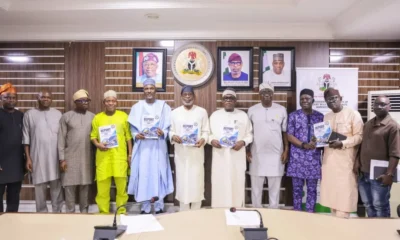
A major highlight of the engagement was a courtesy visit by the SEC Chairman, Alhaji Mairiga Aliyu Katuka, to the Executive Governor of Nasarawa State, His Excellency, Engr. Abdullahi A. Sule, to appreciate the state government’s support and seek stronger collaboration in advancing investor education and financial inclusion.

During the courtesy visit, Katuka expressed appreciation to the Governor for providing strategically located office space in Lafia for the Commission’s liaison office.

The facility, situated within the complex previously occupied by the State Ministry of Education, is expected to become operational soon, bringing the Commission’s services closer to investors and residents of Nasarawa State.

The SEC Chairman described the gesture as a significant contribution to strengthening the Commission’s presence in the state and improving access to its services.

In his response, Governor Sule commended the SEC for its work in the Nigerian capital market, acknowledging the importance of the Commission’s regulatory role and its efforts to promote investor protection and strengthen confidence in the market. He also recognised the significance of initiatives aimed at improving public awareness of investment opportunities and encouraging informed participation in the capital market.

The Governor’s commendation highlighted the value of the Commission’s work in promoting a transparent and orderly market, while underscoring the importance of collaboration between the SEC and the Nasarawa State Government in advancing financial inclusion and economic development.

Katuka also commended the state government’s efforts to promote investment, enterprise, industrialisation and sustainable economic development, noting that Nasarawa’s growing economic potential makes it an important partner in expanding participation in the Nigerian capital market.

He explained that the Commission’s outreach initiative forms part of its nationwide efforts to improve financial literacy, promote legitimate investment opportunities, protect investors and assist Nigerians in recovering unclaimed dividends and other investment assets.

He solicited the state government’s support in mobilising business owners, cooperative societies, youth groups, market associations and other stakeholders to participate actively in the programme.

According to him, an informed population is better equipped to make sound financial decisions, protect its savings and contribute meaningfully to economic growth.

At the outreach programme, the Commission highlighted the challenge of unclaimed dividends and other investment assets, emphasising the need to ensure that investors can access funds rightfully belonging to them.

Unclaimed investments may arise from incomplete investor records, outdated shareholder information, changes in bank account details and difficulties associated with transferring investments following the death of an investor.

The Commission stressed that such funds represent the savings and investments of individuals and families and should be accessible to their rightful owners through established procedures.

To address the challenge, the SEC highlighted the enhanced e-Dividend Mandate Management System, which facilitates the direct payment of dividends into shareholders’ bank accounts and enables investors to update their records more conveniently.

Investors were encouraged to regularise their investment information and take advantage of the available facilities to facilitate the recovery of outstanding dividends.

The Commission also emphasised the importance of cooperation among registrars and other market stakeholders in improving record management, enhancing service delivery and resolving outstanding claims.

The programme further reinforced the SEC’s commitment to protecting investors, promoting financial literacy and expanding access to reliable information about the capital market. Through continued engagement with government institutions, academia, market stakeholders and the public, the Commission aims to strengthen investor confidence and encourage responsible participation in Nigeria’s financial markets.

The post SEC Deepens Investor Education in Nasarawa, Seeks Stronger Partnership appeared first on Business Today NG.
Continue Reading
Click to comment

Leave a Reply

Your email address will not be published. Required fields are marked *

Business

Africa’s downstream petroleum sector at defining point of transformation – NMDPRA’s ex-CEO

info

Published

on

Admin ajax 2025 12 17T060244.785.jpg

The former Chief Executive Officer of the Nigerian Midstream and Downstream Petroleum Regulatory Authority (NMDPRA), Farouk Ahmed, has called for effective and efficient regulation of Nigeria’s downstream petroleum sector amid ongoing reforms and changing global market dynamics.

Mr Ahmed, who resigned last year after corruption and abuse-of-office allegations levelled against him by Aliko Dangote, President and Chief Executive of the Dangote Group, made the call while delivering a goodwill message at the celebration of 20 years of OTL Africa Downstream Energy Week in Lagos.

“My four decades of experience have reinforced one enduring lesson: that is, effective regulation cannot operate in isolation from the industry it serves. Good regulation rests on sound policy, credible data, professional competence, meaningful stakeholder consultation, transparency and a clear-eyed understanding of market realities,” he said.

The appearance marks the first time Mr Ahmed has spoken publicly at an industry event since leaving the regulatory agency. He was also presented with an award of special recognition for his role in the growth and success of OTL Africa Energy Week at the gala.

Mr Dangote had accused the former NMDPRA chief of economic sabotage, alleging that the regulator’s policies undermined domestic refining in Nigeria.

He specifically accused the NMDPRA leadership of colluding with international traders and petroleum importers to frustrate local refining by continuing to issue import licences for petroleum products.


PT WHATSAPP CHANNEL
Dangote Refinery AD

Mr Dangote also questioned Mr Ahmed’s sources of wealth, alleging that four of his children attended secondary schools in Switzerland at a combined cost of several million dollars. He argued that the expenditure raised questions about possible conflicts of interest and the integrity of regulatory oversight in the downstream petroleum sector.

Mr Dangote further alleged that Mr Ahmed spent more than $5 million on his children’s secondary education in Switzerland. He identified the children and their schools as Faisal Farouk of Montreux School; Farouk Jr. of Aiglon College; Ashraf Farouk of Institut Le Rosey; and Farhana Farouk of La Garenne International School. According to Mr Dangote, each child spent six years at their respective institutions.

In December last year, Mr Dangote petitioned the Independent Corrupt Practices and Other Related Offences Commission (ICPC) through his lawyer, accusing Mr Ahmed of corruption, abuse of office and economic sabotage. Mr Ahmed has denied any wrongdoing.

The petition followed a public dispute between both men over petroleum importation policies implemented under Mr Ahmed’s leadership at the NMDPRA.

Mr Dangote maintained that the policies undermined Nigeria’s domestic refining capacity, particularly the operations of his multi-billion-dollar refinery.

However, Mr Ahmed had argued that petroleum supply in Nigeria should not be monopolised and that import permits should remain accessible to other market players to promote competition.

Against the backdrop of the allegations and controversy, Mr Ahmed eventually resigned from the NMDPRA.

Regulation and industry transformation

In his remarks at the OTL Africa event, Mr Ahmed argued that responsible operators must recognise that regulation, when properly designed, consistently applied, and fairly enforced, provides the certainty, confidence, and stability required for investment, competition, and sustainable growth.

“This is why platforms such as OTL are important. They help bridge the gap between regulatory objectives and commercial realities. They encourage constructive dialogue, promote mutual understanding, and create opportunities for stakeholders to move beyond competing interests towards common solutions,” he said.

He said he attended the occasion with the perspective of a professional who has devoted more than four decades to petroleum regulation and industry development, including his experience as the NMDPRA’s pioneer Chief Executive.

From that perspective, Mr Ahmed said institutions and platforms that endure for two decades do so because they address genuine needs, deliver sustained value and remain responsive to changing demands.

“OTL Africa has demonstrated these qualities. Your Excellencies, Ladies and Gentlemen, twenty years is more than a milestone; it is a testament to vision, resilience, consistency, and the power of partnership,” he said.

Over the years, he noted, OTL has provided a platform for regulators, operators, investors, policymakers and other stakeholders to exchange ideas, examine emerging challenges, share experiences and collectively seek solutions to issues confronting the industry.

He said the importance of such a platform could not be overstated, given the strategic role of the petroleum and energy industries in economic development.

According to him, the downstream sector affects virtually every aspect of economic life, from transportation and manufacturing to power generation, agriculture, trade and household welfare. Its efficiency, stability and sustainability, he added, have direct implications for national development and people’s quality of life.

Africa’s downstream industry at a turning point

Mr Ahmed said Africa’s downstream petroleum industry was at a defining point of transformation, requiring coordinated and decisive action from governments and industry stakeholders.

He identified energy security, infrastructure deficits, financing constraints, product quality, supply-chain efficiency, market integration, environmental sustainability and the changing global energy landscape as some of the critical issues confronting the industry.

While describing these challenges as significant, he said they also presented considerable opportunities for Africa.

The continent, he argued, has the potential to develop a more integrated, competitive, efficient and resilient downstream energy market.

Realising this potential, he said, would require stronger regional cooperation, investment in storage and distribution infrastructure, modern refining capacity, appropriate technology, transparent market practices and regulatory frameworks that encourage investment while protecting consumers and the public interest.

He also emphasised the need to invest in human capital, noting that the industry’s future would depend not only on infrastructure and capital but also on the competence, integrity and innovative capacity of the professionals who operate and regulate it.

ALSO READ: Nigerian petroleum agency introduces 6 regulations for midstream, downstream sectors

Mr Ahmed urged OTL to evolve beyond a conference and exhibition platform into a stronger catalyst for practical industry solutions, strategic partnerships, investment opportunities and measurable outcomes.

He said discussions at the event should translate into action, partnerships should develop into projects, and ideas generated should contribute to tangible improvements across Africa’s energy value chain.

Institutional continuity and future of the industry

The former regulator also emphasised the importance of institutional continuity, calling for the preservation and transfer of industry knowledge and experience to younger professionals.

He said the experience accumulated over decades must be deliberately shared to prepare the next generation of regulators, entrepreneurs, engineers and energy leaders to address emerging challenges with fresh strategic thinking.

As OTL marked its 20th anniversary, Mr Ahmed urged industry stakeholders to look beyond celebrating past achievements and renew their commitment to the sector’s future.

He called on regulators to strengthen their commitment to fairness, transparency and predictable policies; operators to pursue efficiency, innovation and responsible business practices; investors to provide the capital and long-term commitment required for sustainable development; and policymakers to improve the business environment.

“Above all, let us recognise that Africa’s energy future cannot be built by regulators alone, by operators alone, or by investors alone. It must be built through partnership, trust, and a shared determination to succeed,” he said.

He expressed the hope that OTL’s next 20 years would deliver stronger partnerships, greater investment, smarter regulation, more efficient markets and broader, more reliable energy access for Africans.

“Let us not merely gather to discuss Africa’s energy future; let us unite—with purpose, discipline and urgency—to build it,” he said.


Discover more from Premium Times Nigeria

Subscribe to get the latest posts sent to your email.

Continue Reading

Business

NGX Group Named Africa’s Best Exchange at Euromoney Markets Awards 2026

info

Published

on

Nigerian Exchange Group Plc (NGX Group) has been named Africa’s Best Exchange at the Euromoney Markets Awards 2026, recognising its contribution to market infrastructure, digital innovation and capital formation.

Presented at the Mandarin Oriental Hyde Park, London, on Thursday, 15 October 2026, the award recognises achievements in market development during 2025 and comes amid robust growth in Nigeria’s equities market.

A key driver of wider primary-market participation has been NGX Invest, the Group’s electronic public-offering platform, which simplifies subscriptions to public offers and rights issues. The platform played a significant role in Nigeria’s banking sector recapitalisation exercise, facilitating more than ₦2.8 trillion in capital raising. By September 2026, its distribution network had grown to more than 180 channels spanning stockbrokers, banks and fintechs, with a WhatsApp subscription channel providing investors with an additional channel for subscribing to public offers.

Nigeria’s equities market recorded strong growth in 2025, with the NGX All-Share Index gaining 51.19 per cent, equities turnover rising 109.48 per cent to ₦5.96 trillion and market capitalisation reaching ₦99.38 trillion. This momentum has continued in 2026. As of 16 October, the All-Share Index had gained 59.07 per cent year-to-date. Equities turnover stood at ₦7.82 trillion, up 73.78 per cent from ₦4.50 trillion in the corresponding period of 2025, while market capitalisation reached ₦160.73 trillion.

Temi Popoola, Group Managing Director/Chief Executive Officer of NGX Group, said: “This award reflects our continued commitment to strengthening the infrastructure and technology that support capital formation and investment. We appreciate the trust and collaboration of our regulators, policymakers, issuers, investors, the stockbroking community and other market participants, whose support contributes to the development of our capital market. By widening digital access to investment opportunities, improving market efficiency and deepening connections with other African markets, we are working to make our capital market more accessible, resilient and competitive. We see this not simply as an achievement, but as encouragement to keep building a market that can mobilise capital for businesses and offer broader investment opportunities.”

Beyond digital innovation, NGX Group continues to advance sustainable finance through the NGX Net-Zero Programme (N-Zero), implemented in partnership with DEG Impulse gGmbH and Africa Foresight Group, with support through DEG Impulse’s develoPPP programme. The initiative helps Nigerian businesses strengthen climate readiness, establish science-based emissions-reduction targets and develop transition plans that can support access to climate-aligned finance. The programme has engaged more than 50 companies, with 19 onboarded as community members.

The Group’s broader market-development priorities also include improving post-trade efficiency and strengthening regional connectivity. Nigeria’s transition to T+1 settlement in June 2026 shortened the settlement cycle, while strategic engagements with other African exchanges are supporting efforts to deepen cross-border investment and strengthen regional market linkages.

The post NGX Group Named Africa’s Best Exchange at Euromoney Markets Awards 2026 appeared first on Business Today NG.

Continue Reading

Trending