Connect with us

News

Petra Power looks to modernize energy for data centers and defense vehicles

info

Published

on

IMG 6289.HEIC.jpg

As AI gobbles up an ever larger amount of energy, the hunt is on for efficient and cost-effective power sources. One of the companies leading the charge is Petra Power.

Petra, which was founded in 2017, sells solid oxide fuel cells — ceramic devices that convert fuel, like natural gas, into electric power without burning it. The company markets them as a more efficient and environmentally friendly way to operate data centers and large vehicles.

Petra’s founder, Aaron Goodman, told TechCrunch that his company’s product has significantly lower fuel costs and emissions than traditional power sources, and that they have much less of a physical footprint, too, because they’re more compact and lightweight.

The efficiency, and the cost savings that come with it, is what makes the fuel cells attractive. “Combustion takes fuel and creates explosions,” Goodman said, describing how traditional power generation works. “Those explosions create heat. That heat creates motion. The motion powers an electromotive force, which eventually creates electricity. It’s a lot of steps, and they all have so much loss in them that you end up with a really inefficient system.”

Petra’s fuel cells skip most of these steps. “What fuel cells do is they take the electrons directly off of the fuel, so they strip the fuel of its electrons, which creates electricity,” he explained. “It’s one step, no loss, and subsequently, in theory, at least, they’re much, much more efficient.”

As a result, companies that run off fuel cells stand to save a significant amount on fuel costs, Goodman said.

Although it may offer an innovative product, the customer base is still emerging for Petra. Goodman said that his company is targeting two different types of customers: data centers and the Defense Department.

Goodman doesn’t want to reveal specific agreements just yet, but said Petra is currently working with neoclouds and other infrastructure providers that were a few steps down from the hyperscaler crowd. The target for first deployment with these customers is 2028, with full-scale production for the company hopefully set for 2029, Goodman said.

“Hyperscalers are an ICP [ideal customer profile] for us, and we talk a lot to them, but we don’t have anything firm with them yet,” said Goodman. “We’re still kind of working in that direction. Obviously, they’re the largest consumers of power. They’re the ones that we can make the biggest impact with, so that’s where we’d like to go.”

The other customer — the government — is also still taking shape. The idea is that Petra’s fuel cells will be able to provide auxiliary power for land vehicles, meaning electricity for onboard equipment when the main engine is off. But Petra’s product has not actually deployed on a live vehicle yet, Goodman clarified. Instead, the fuel cells are in the testing phase, during which the government is deciding whether to move forward, he said.

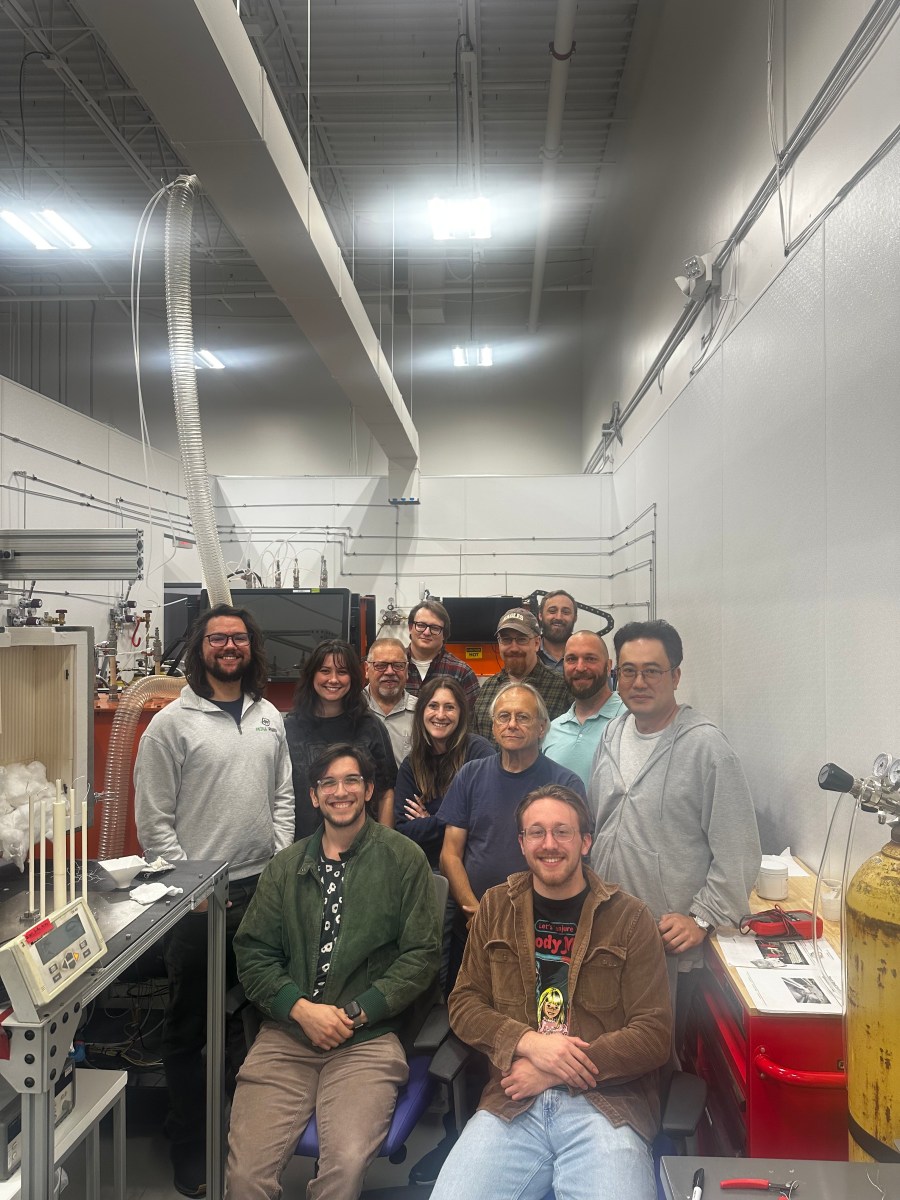
Petra is a small team — some 15 people — but the company is growing, Goodman said. Petra has so far received nearly $9 million in contracts from the Defense Department, and the hope is to scale that work significantly in the coming years, he said.

Petra Power was selected for this year’s TechCrunch Startup Battlefield 200, a group of 200 startups chosen for the program. You can catch all the action this coming week in downtown San Francisco at Moscone West.

When you purchase through links in our articles, we may earn a small commission. This doesn’t affect our editorial independence.

Continue Reading
Click to comment

Leave a Reply

Your email address will not be published. Required fields are marked *

News

Kwankwaso receives former APC members who defected to NDC in Kano

info

Published

on

Senator Rabiu Musa Kwankwaso, the New Democratic Congress (NDC) vice-presidential candidate, has received a group of former All Progressives Congress (APC) members who joined the NDC in Kano.

According to a Facebook post by Saifullahi Hassan, Kwankwaso’s media aide, the Vice Presidential candidate received the defectors at his residence in Kano on Saturday, October 10, 2026.

The delegation included former Kumbotso Local Government Chairman, Sagiru Abdulkadir Panshekara; Mustapha Beci; Garba Tanko Danmaliki; Shehu Kura, a former APC chairman in Kumbotso; Ibrahim Mai Adashi, a former executive secretary of education in the local government; and Mai Nasibi Kumbotso.

“During the visit, the defectors reaffirmed their support for the Kwankwasiyya Movement and their commitment to the ideals of the NDC,” he said.

Recommended

On the same day, Hassan posted a different video describing it as another wave of defections to the party, with former APC leaders from Kumbotso joining Kwankwaso’s political camp.

Continue Reading

News

Gunmen kill three miners in Plateau

info

Published

on

IMG 5705 1.jpeg

Three miners were reportedly killed by gunmen on Friday at a mining site in the Jamus area of Kazok village, Gashish District, Barkin Ladi Local Government Area of Plateau State.

In a statement on Friday, Rwang Tengwong, the spokesman for the Berom Youth Moulders Association (BYM), said the incident occurred at about 3:00 p.m. 

He identified the deceased miners as John Mafulul, 53, and Ezekiel Yohanna, 50.

“These were not just two names added to a list of civilians killed by the armed Fulani terrorists; they were human beings with families, loved ones and people who depended on them,” Mr Tengwong said.

He explained that in another incident, Bulus Chun Pam was reportedly attacked on Wednesday and sustained injuries during the incident that occurred in the Foron district of Barkin Ladi.

Mr Tengwong noted that Mr Pam was taken to Jos University Teaching Hospital (JUTH) for treatment and later died on Friday.

“His death is another painful loss to his family and community, who would have hoped and prayed for his recovery,” Mr Tengwong stated.

He said the group was deeply concerned about the recurring attacks and mourned the victims of previous incidents.

According to him, the situation is particularly troubling because residents should be able to work, travel and go about their daily activities without the constant fear of being attacked.

“Mining sites, farmlands, rural settlements and community roads should not become places where residents risk losing their lives simply because they are trying to survive,” he said.

The state police spokesman, Alfred Alabo, did not immediately respond to Peoples Gazette’s request for comment.

On June 16, five miners were killed at a mining site after gunmen invaded Gero village, Gy district of the Jos


Continue Reading

Trending