
Business
Sterling Holdco to raise fresh $400 million through debt, equity instruments

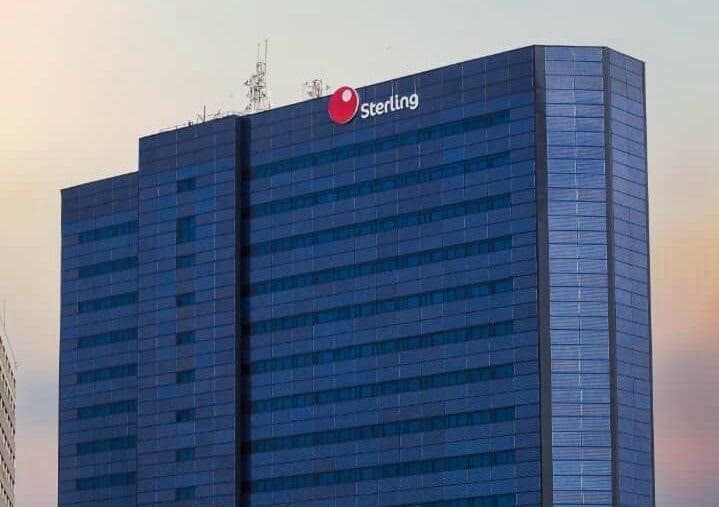
Sterling Financial Holding Company Plc has announced plans to raise $400 million in fresh capital through a combination of debt and equity instruments, as part of resolutions to be considered at its Annual General Meeting (AGM).
The company disclosed the capital raise in a statement signed by its secretary, Sunny Kanabe, and posted on NGX Group on Monday, announcing its 3rd Annual General Meeting (AGM), scheduled for 9 June.
The proposed capital raise is being put forward without affecting the capital-raising approvals earlier granted at the company’s AGM held on 11 July, 2025, it said.
The company had disclosed in July 2025 plans to raise to $400 million through a mix of financing options, including debt instruments and equity offerings.
In the statement published on Monday, the lender said the fresh capital could also be raised through the issuance of debt instruments, including convertible or non-convertible bonds, preference shares, ordinary shares, global depositary receipts, or a combination.

According to Sterling Financial Holding Company, capital could also be raised through public offerings, private placements, rights issues, and other approved methods.
The lender stated that the fundraising’s pricing and timing will be determined by its Board, and subject to the approval of relevant regulatory authorities.
“Company be and is hereby authorized to raise up to US$400,000,000 (Four Hundred Million United States Dollars) or its equivalent in Naira or other currencies.
“The capital may be raised in tranches or otherwise through the issuance of debt instruments (including, but not limited to, bonds that may be convertible or non-convertible, preference shares, ordinary shares, global depositary receipts, or a combination thereof, in the Nigerian and/or international capital markets, whether by way of public offer, private placement, rights issue, or any other method, at such dates and upon such terms and conditions as may be determined by the Board of Directors of the Company (the “Board”), subject to the procurement of requisite approvals from the relevant regulatory authorities,” the statement read.
It added that where the capital raise involves equity issuance, the board will have authority to increase the company’s share capital and allot new shares as necessary to complete the transaction.
The resolutions also empower the board to amend the company’s ‘Memorandum and Articles of Association’ to reflect any changes in its share capital structure arising from the exercise.
In addition, shareholders are being asked to approve the Board’s authority to take all necessary steps, obtain regulatory approvals, and engage professional advisers required to execute the transaction.
The company also sought ratification of any prior steps already taken in relation to the capital raise process.
READ ALSO: Sterling Financial Holdings sustains record growth, deepens capital, as assets cross ₦4trn mark
“That the Board be and is hereby authorised to take all such lawful steps, pass all requisite resolutions and do all such other lawful acts and/or things as may be necessary for and/or incidental to giving effect to the resolutions above; and all prior lawful steps taken by the Board in the above regard be and are hereby ratified.
“That the Company be and is hereby authorised to appoint such professional parties and advisers and perform all other acts as may be necessary to give effect to the above resolutions, including obtaining relevant regulatory approvals and, without limitation, complying with the directives of any relevant regulatory authority,” the statement read.



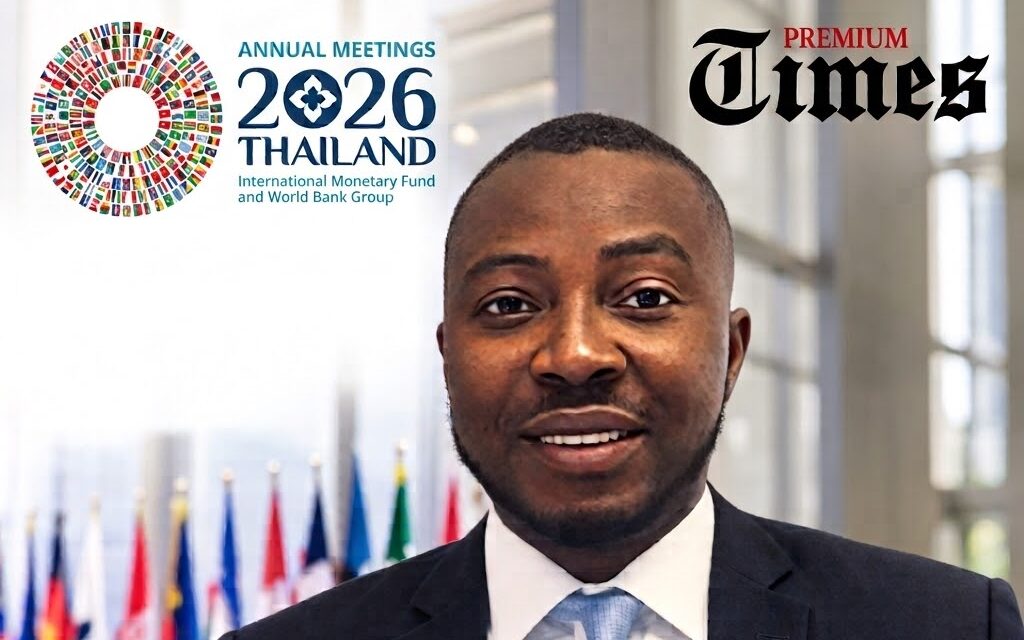
Financial experts, government officials, central bank chiefs, heads of multilateral organisations and other participants are gathered this week in Bangkok, Thailand, for the annual meetings of the International Monetary Fund (IMF) and World Bank scheduled to be held between October 12 and 18.
Participants are expected to deliberate on the disruptive potential of Artificial Intelligence (AI) in the global economy, the widening war in the Middle East and its impact on the global economy, the global energy supply shock, mounting debts, and rising interest rates that pose daunting risks to global economic growth.
IMF Managing Director Kristalina Georgieva says the Queen Sirikit National Convention Centre will host 18,000 people who were registered to attend the meetings, 4,000 more than the last off-site meetings held in Morocco in October 2023.
The IMF has made no significant change to its forecast of 3% global growth in 2026, and the body says some countries are expected to be downgraded because of war and reduced energy exports.
The meetings are also expected to address the growing public debt burden that has slowed growth and worsened inflation, as public debt remains at its highest level since World War Two and will exceed 100% of GDP before 2030, according to the IMF.
Emerging markets and low-income countries are particularly vulnerable, given high public debt levels that will have to be renegotiated at higher interest rates.

Equally important on the agenda is the precarity of platform-driven labour, amid AI-enabled automation and the changing future of work.
On Monday, Ms Georgieva said Artificial Intelligence (AI) could affect about 40 per cent of jobs globally, urging governments to prepare workers for the changing labour market. She described AI as a “slow-moving tsunami” for the labour market, saying it could augment, downgrade or eliminate jobs.
IMF estimates show that AI could affect about 60 per cent of jobs in advanced economies and 23 per cent in low-income countries, reflecting the slower spread of AI rather than greater protection from its effects.
Bangkok
The Bangkok meetings are taking place amid disruptions and a war that has negatively affected energy supplies, especially via the Middle East.
Flights to Bangkok, the host city of this year’s off-site meetings, often route through the Middle East, creating immediate challenges for global travellers heading to Thailand’s capital.
On Sunday, there were attacks on Saudi airports, prompting disruptions to international travel.
The IMF and World Bank’s last off-site annual meetings took place in Morocco in 2023.
Nigeria’s participation
Already, Nigeria’s Minister of Finance and Coordinating Minister of the Economy, Taiwo Oyedele, has arrived in Bangkok, Thailand, to lead the nation’s delegation to the meetings
A statement from the Federal Ministry of Finance said the annual gathering provides Nigeria with an opportunity to engage with international financial institutions and development partners on economic issues affecting the country and its development priorities.
Mr Oyedele’s presence at the meetings is equally expected to allow the Federal Government to present its economic priorities to development organisations and international partners. He is also expected to discuss how external cooperation can support domestic reform efforts.
The finance ministry website also says that, on the sidelines of the meetings, Nigeria will convene investors, project sponsors and public institutions around a curated pipeline of bankable opportunities across strategic sectors. The programme is focused on private-capital mobilisation, food security and infrastructure development. Another event focuses on investor and project-owner conversations at Fairmont Bangkok Sukhumvit.
PREMIUM TIMES newspaper is in Bangkok, Thailand’s capital, to report on the meetings and other policy decisions as they affect the global economy and Nigeria’s domestic affairs.
Discover more from Premium Times Nigeria
Subscribe to get the latest posts sent to your email.
-

 Business4 days ago
Communications Ministry made ₦345.5 million duplicate payment for Abuja ICT Park project
-
News4 days ago
LumenUs helps automate tedious paperwork in times of grief
-
News3 days ago
Inside INEC’s AI and cybersecurity plans to secure Nigeria’s 2027 Elections – Technology Times
-
News3 days ago
EuroMatch NPFL: Ikorodu City Return to Winning Ways as Salami, Ikechukwu Sink Kwara United in Lagos


