Business
RURCON Empowers Youth in Crisis-Affected Communities With Skills Training, Startup Packs


The Rural Development Counsellor for Christian Churches in Africa (RURCON) has concluded its 2024 entrepreneurship and skills acquisition program with the distribution of start-up packs to beneficiaries drawn from crisis-affected communities in Plateau and Kaduna states.
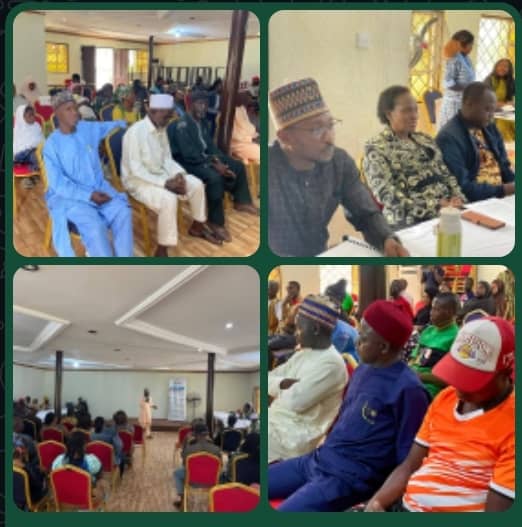
The closeout event, held on December 5, marked the end of a multi-year intervention funded by Friends of RURCON, under which youths were trained in various vocations for one to two years, depending on the skill.


Executive Director of RURCON, Mrs. Dinatu Ayenzat, said the project supported youths who were negatively affected by crises and needed economic empowerment to contribute to rebuilding their communities.
“Today is the graduation of the trainees. Some trained for two years, some for one year, depending on the skill. They are being given start-up packs to establish their businesses,” she said.
Ayenzat, who earlier gave a moral and spiritual charge to the beneficiaries, added that RURCON’s work is rooted in holistic ministry.
“We demonstrate the love of Christ and proclaim it. I encouraged everyone to make their lives right with God because at the end of it all, we will face God in judgment,” she said.
She explained that Friends of RURCON came into the project through a former donor partner, after which the organization approached them directly with a proposal that was approved.


Director of Programs at RURCON, Seth Yashim Gado, said the initiative was designed as a humanitarian response to support rebuilding in communities affected by violent conflict.
“We enrolled youths from five crisis-affected communities—Myanga in Bokkos, Darwat and Horop in Barkin Ladi, Doka in Kaduna State, and the Pejim community. The idea was to help them acquire skills, reduce idleness, and prevent drug and substance abuse,” he said.
He explained that the training followed four intervention arms: trauma healing for church leaders and elders, peacebuilding for security actors, a community peacebuilding component, and the youth-focused entrepreneurship arm.
“The youth arm was designed to empower them with livelihoods so they can sustain themselves and support their households,” Gado added.


The items distributed to beneficiaries included:
- 28 hairdressing sets (hair dryers, combs, wash basins)
- 7 barbing kits (clippers and barbing accessories)
- 2 laptop computers
- 48 sewing machines
- 8 welding kits
- 4 mechanic toolboxes
- 1 panel-beating gas cylinder and gas tank
- 5 shoemaking grinders and filing machines
- 5 carpentry toolkits
- 4 driving licenses (support)
- 1-ton liquid soap production chemical set
Trainers and trainees from various communities expressed appreciation for the intervention.
Mrs. Sandra Andrew of Haipan, who trained two girls from Mahanga in hairdressing and makeup, said the trainees performed exceptionally well.
“They were among the best five in my shop. I thank the NGO and pray God opens more doors for them to train others,” she said.
Another trainer, Mrs. Felicia Jidahuna from Barkin Ladi, who trained three girls in hairdressing for over a year, said the program brought joy to their community.
“These NGOs, we thank them because they brought so much joy to us. May God bless them,” she said.
Beneficiaries from Kaduna State also shared their experiences.
Gwazel Barnabas, enrolled in a three-year furniture-making program, said he is over a year into his training.
“I am very happy. We cannot pay them, but God will pay them,” he said.
Ruth Payious, also from Kaduna, said the program transformed her life.
“Even the cloth I am wearing is a product of the RURCON program. I can now sew for myself and children in my area. Before this, I was only a student, but now I have my sewing machine,” she said.
Another beneficiary, Patrick Marcus Elia from Hurum, Barkin Ladi, who completed a three-month computer diploma, said his new laptop has boosted his education.
“It helps me do assignments and projects. Sometimes when I help others, they appreciate me with money. My work has become easier,” he said.
Parents, community leaders, trainers and recipients all expressed gratitude to RURCON and Friends of RURCON for supporting youth empowerment and promoting community recovery.




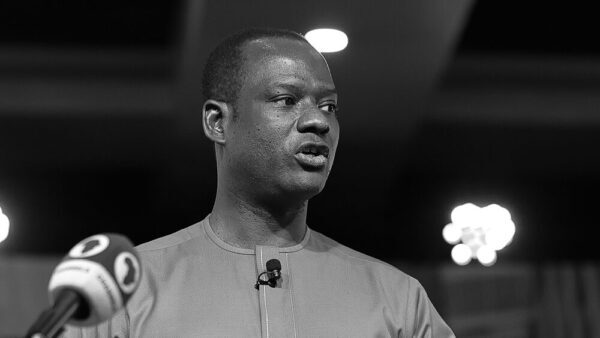
Nigeria’s Finance Minister and the Coordinating Minister of the Economy, Taiwo Oyedele, on Wednesday said the country is fortunate to have President Bola Tinubu at the helm of affairs at a time of economic challenges and global uncertainty.
Mr Oyedele made the remark on Wednesday on the sidelines of the World Bank/International Monetary Fund (IMF) meetings in Bangkok, Thailand, where he praised the president for his willingness to implement difficult economic reforms and his understanding of economic and monetary policy issues.
“I say to myself every time that Nigeria is lucky to have a leader like Mr President,” the minister said.
“A leader that says ‘I’ll do the right thing, even when it’s not popular’. There are so very few of them, and our president is not saying it; he’s doing it, he’s doing it even with pre-election (concerns),” he added.
Since assuming office in May 2023, the Tinubu administration has introduced a series of economic reforms, the impact of which international institutions like the World Bank and the IMF have acknowledged
The reforms include the removal of costly petrol subsidies, which had been a major drain on public finance for years, the unification of the foreign exchange rates and the sharp devaluation of the naira to attract foreign capital.


Although abolishing fuel subsidies has boosted government revenue and is seen as an investor-friendly move, it has triggered a cost-of-living crisis and spurred inflationary pressures.
Reforms in the foreign exchange market have helped increase accretion to external reserves, which stood at $55.1 billion as of 9 October, its peak level in over 18 years.
The banking sector also underwent a recapitalisation exercise that ended in March and helped Nigerian banks raise N4.7 trillion in new capital.
According to the Central Bank of Nigeria, the recapitalisation strengthened banks’ capital adequacy ratios, keeping the sector above international Basel benchmarks.
Mr Oyedele said President Tinubu possesses two attributes uncommon among leaders, notably those of democratic governments.
READ ALSO: AFC appoints Cardoso as board chairman
The first is his willingness to do what he considers right, even when the decision is unpopular or politically difficult.
“I remember at least three issues that were discussed with him recently, and on my own I would offer to say ‘maybe we wait until after the election’. And his question is always, ‘Is it the right thing to do?’ Yes, yes, it is. Why do we have to wait?” Mr Oyedele said.
“Number two attribute is that our President gets it. It’s not easy to understand issues to do with the economy, finance, monetary policy, like respect for the independence of the monetary authority. For Mr President, it’s 100 per cent,” he added.
The minister added that the president’s position on such matters has made it unnecessary for officials to discuss the issue with him repeatedly.
“We don’t even talk about it. So, I feel like we are so blessed, we cannot afford to wait even one minute,” he said.
Discover more from Premium Times Nigeria
Subscribe to get the latest posts sent to your email.
-

 News3 days ago
Meta releases its first frontier model, Muse Wonder
-
Health3 days ago
Kwara public hospitals introduce digital medical records
-
News3 days ago
EuroMatch NPFL: ‘We Never Gave Up!’ — Fidelis Ilechukwu Hails Rangers’ Fighting Spirit, Reacts to Two Penalties Against Barau FC
-
News4 days ago
2027:Stop attacking Peter Obi – Anglican Bishop cautions South East leaders