News
Reps Order DISCOs To Refund N55.42bn NMMP Loan

News
NDLEA intercepts Colorado shipments from UK, seizes over 2.3 tonnes of illicit drugs in seven states
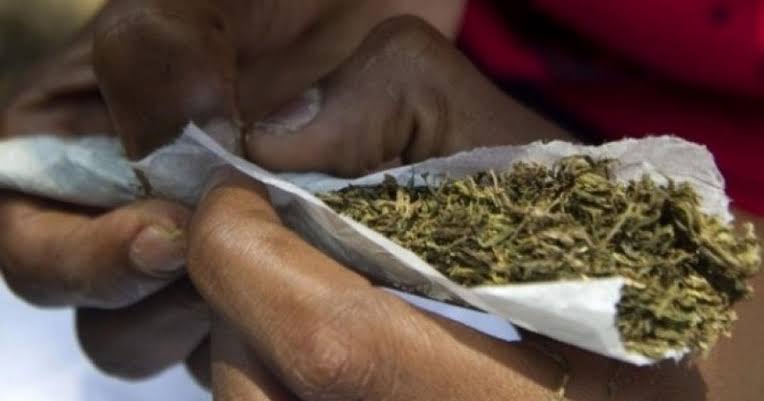
Operatives of the National Drug Law Enforcement Agency (NDLEA) have intercepted two shipments of synthetic cannabis, popularly called Colorado, concealed in consolidated cargoes coming from the United Kingdom.
Femi Babafemi, NDLEA spokesperson, disclosed this in a statement on Sunday in Abuja.
Mr Babafemi said NDLEA operatives intercepted a UK-inbound consignment concealing 27 parcels of Colorado weighing 32.20kg at the import shed of the Murtala Muhammed International Airport (MMIA), Ikeja, Lagos.
He said a real estate agent who showed up with a secret collection code relayed from his UK-based brother to collect a large piece of luggage containing the illicit substance was arrested on Wednesday.
He also said that a follow-up operation stemming from a second UK consignment led operatives to the designated recipient of another consignment of Colorado weighing 12.25kg.
According to Mr Babafemi, the suspect said the consignment was sent to him by his brother in the UK.
“At least seven suspects connected to the seized cargoes have been arrested,” he said.
He said the NDLEA also intercepted a music speaker rigged with three packs of Colorado at a motor park in Maza Maza, Lagos, heading to Abidjan, Côte d’Ivoire, and ultimately Liberia.
Mr Babafemi said that a tour agent and the consignment’s owner were both arrested after a swift sting operation at a nearby eatery.
Meanwhile, operatives of the NDLEA recovered over 2.3 tonnes of assorted illicit drugs in raids and interdiction operations across Ondo, Edo, Delta, Kaduna, Plateau, Bayelsa, and Kano.
Mr Babafemi said that two separate arrests at Ughelli and Asaba, Delta State, yielded a haul of ampoules of pentazocine injection, codeine syrup, tramadol, diazepam, flunitrazepam (hypnox) and MDMA (Molly).
He said several were concealed in music speakers, and two suspects were arrested.
Also, in Kano, a raid at Sabon Gari led to the arrest of a 20-year-old suspect with a staggering 785,000 capsules of Pregabalin weighing 669.425kg.
Similarly, Babafemi said that a stop-and-search operation along the Zaria–Kano–Hadejia road netted 1,700 tablets of diazepam concealed inside loaves of bread seized from another suspect.
He added that a 51-year-old man was also nabbed at Katako market, Jos, with 157,100 capsules of tramadol.
He also added that the agency sustained pressure on illicit cannabis cultivation with the destruction of 4,832.56 kilograms of skunk on cannabis farms.
The NDLEA spokesman said the farms, located in Usen Forest, Igwe-Oke Forest and Ogboha Forest in Ovia South West, Owan East and Owan West LGA, Edo State, had a suspect arrested on Friday.
In another development, NDLEA operatives in Ondo, acting on credible intelligence on Wednesday, raided a residence along Oke-Iya, Ijoka Road, Akure.
Mr Babafemi said that they recovered 186kg of skunk concealed in the boot of a Toyota Avalon car marked ABJ 917 FV, from a 58-year-old suspect who was planning to move the consignment to Jos for onward distribution.
Additionally, in Kaduna, a female suspect was arrested at Gonin Gora with 369.6kg of cannabis, while in Bayelsa, four suspects, including a 70-year-old woman, were arrested at Ovom, Yenagoa, with 110 bags of cannabis weighing 876kg.
Mr Babafemi quoted the NDLEA chairman, retired Brig. Gen. Buba Marwa, commending the officers and men of Ondo, Edo, Delta, Kaduna, Plateau, Bayelsa, and Kano commands for the various successful operations.
Mr Marwa urged them and their colleagues across the country to continue the agency’s ongoing balanced approach to drug control.
He also urged them to continue to shut every pipeline being used by drug cartels, whether at the airports, seaports, land borders, or in the hinterland where cannabis was cultivated.
(NAN)

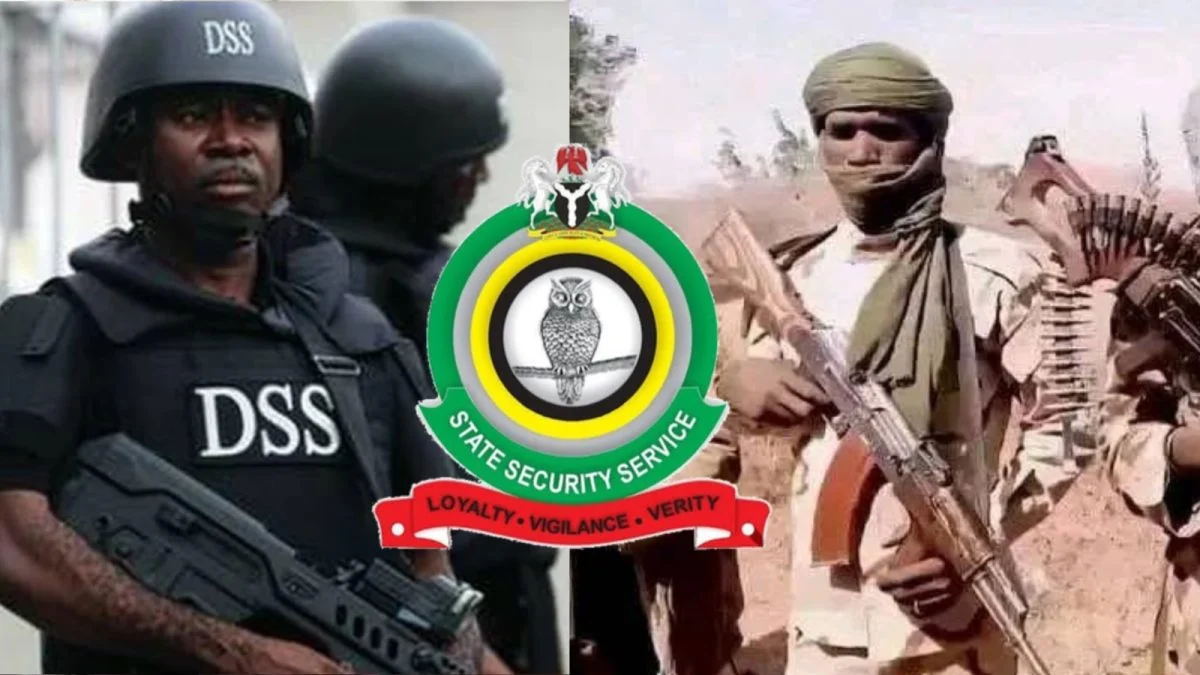
The Department of State Services has warned religious leaders in Osun State about an alleged plan by terrorists to attack churches, mosques, markets and other places where large numbers of people gather.
Politics Nigeria gathered that the warning was issued during separate meetings between DSS officials and leaders of the Muslim and Christian communities in Osogbo.
The security agency reportedly told the religious leaders that intelligence had uncovered plans to move terrorist activities into the southern part of the country, with the South-West identified as a possible target.
The alleged plot is believed to be connected to efforts to create fear and insecurity ahead of the 2027 general elections.
The DSS reportedly advised religious organisations and other owners of public gathering centres to strengthen their security arrangements and remain vigilant.
President of the Osun State Muslim Community, Alhaji Mustapha Olawuyi, confirmed that the meeting with the DSS took place in Osogbo.
Olawuyi said the warning was serious and urged Muslims across the state to take the security advice seriously.
He said, “The meeting is true; it was held on Wednesday in Osogbo. We need to be careful and vigilant. These people (terrorists) have been trying to infiltrate Osun for quite some time.
“We had, some time ago, sent back some herders, numbering about 200, who flooded Osun from the Ikirun axis. There were also some individuals who came into the state on motorcycles. They didn’t understand our language and we had to send them back. The DSS is doing a very good job in terms of intelligence and alerting the people.”
Olawuyi also disclosed that the DSS had given specific instructions to mosque leaders on steps they should take to reduce the risk of attacks.
He later circulated an audio message to imams across the state, explaining some of the information presented during the meeting.
According to him, the security agency said terrorists could attempt to exploit crowded religious gatherings to cause casualties and create widespread panic.
He said, “The DSS came from Abuja to Osun to warn us about a plot by some politicians and terrorists to frustrate the 2027 election, and for every one of us to be careful.
“The officers said they had intelligence that the terrorists would mobilise to the southern part of the country and the South-West, especially to cause mayhem so that the election may not hold or cause apathy.
“They advised that all religious centres should be watchful. They told us not to allow anybody with a car to park close to the people or congregation during Jumat prayer or gathering. They warned us against allowing anybody to sleep in the mosque. They also told us to be careful of compromised commercial motorcycles and herders. They told us to have night guards at every mosque.”
The Christian community in the state also received a similar warning.
The Osun State Chairman of the Christian Association of Nigeria, Pastor John Adeleke, confirmed that the DSS met with Christian leaders and asked them to increase security awareness in churches and other places where people gather.
Adeleke said the security agency specifically urged churches to be cautious about unfamiliar vehicles and unknown visitors.
He said the warning was subsequently circulated among CAN blocs and other Christian groups in the state.
A report of the meeting also indicated that the DSS told Christian leaders that terrorists had allegedly mapped out Osun State as part of a wider plan to attack states in the country before the 2027 presidential election.
The report stated that the suspected attackers were allegedly planning a route through Kaduna and Jos before moving towards Osun State.
It identified churches, mosques, markets, schools, clubs and viewing centres among the places that could be targeted.
The report, titled, ‘The Report of the Meeting Held with the Department of State Security Osun State Command Today, Wednesday, 9th September, 2026’, was signed by the State Assistant Secretary, Osun CAN, Ajayi J.K.
The report read in part, “The DSS Osun State Command called for a meeting with the OSCAN Chairman, Rev. Dr John Adeleke, on the alertness of security in Osun State.
“They made it known, based on their intelligence and security expertise, that the attackers or the terrorists have mapped Osun State, and that between now and the period of the coming presidential election, they will attack some states. They planned to go through Kaduna, Jos and come down to Osun State.
“Their targets are places of gathering, such as churches, mosques, markets, schools, clubs or viewing centres, etc., and we are asked to put tight security in place in our churches.”
Adeleke said church leaders were also advised to discourage activities that could expose worshippers to unnecessary risks, particularly at night.
He said visitors should be properly identified before being allowed into church premises, while school owners and managers of other public facilities were also expected to review their security arrangements.
He said, “After sharing with us that the churches will need to be careful and that we should encourage our churches also to be on alert, we sent the message to all our blocs and different platforms, where our people may be informed.
“For example, they told us we should not allow a strange vehicle to park near churches because there may be explosives inside the car. They also told our leaders throughout the state that they should be careful, and any visitor that comes around should be questioned before we allow him or her into the premises of the church.
“They also said we should be careful of night programmes, so that the people will not take advantage of the darkness to perpetrate their evil plans. The message is that our people should be security-conscious. If they see anything, they should say it. They also told us to inform school owners to be security-conscious. The government is aware too. God is our divine protector, but in areas where we need to be careful, we want to be,” Adeleke added.
Osun has also witnessed heightened political and security concerns in recent weeks following the August 15 governorship election in the state.
The election was conducted amid calls for security agencies to protect voters, electoral officials and collation centres.
The latest DSS warning has therefore placed churches, mosques and other public gathering centres on heightened alert.
Religious leaders are now expected to pass the security information down to worshippers and members of their communities.
The advice includes reporting suspicious persons and activities, avoiding unidentified vehicles around crowded locations and ensuring that security arrangements are in place during major programmes.
Nonetheless, The DSS has not publicly released detailed information on the alleged terrorist intelligence or identified the specific groups suspected of planning the attacks.
-

 Featured3 days ago
Children Are Suffering in Silence: Plateau Child Protection Network Rates Abuse Crisis 9/10
-
Business4 days ago
CBN to prioritise terrorism financing supervision
-
News4 days ago
Ogun, Kano, Delta top Nigeria’s highest Right of Way charges for fibre – Technology Times
-
News4 days ago
Ambassador Obi Lifts Falconets’ Spirits After Spain Defeat, Brings Taste of Home to Poland