Connect with us

News

Plateau State Hits Historic ₦31.14 Billion in Internally Generated Revenue

editor

Published

on

IMG 20250307 WA0019 768x576

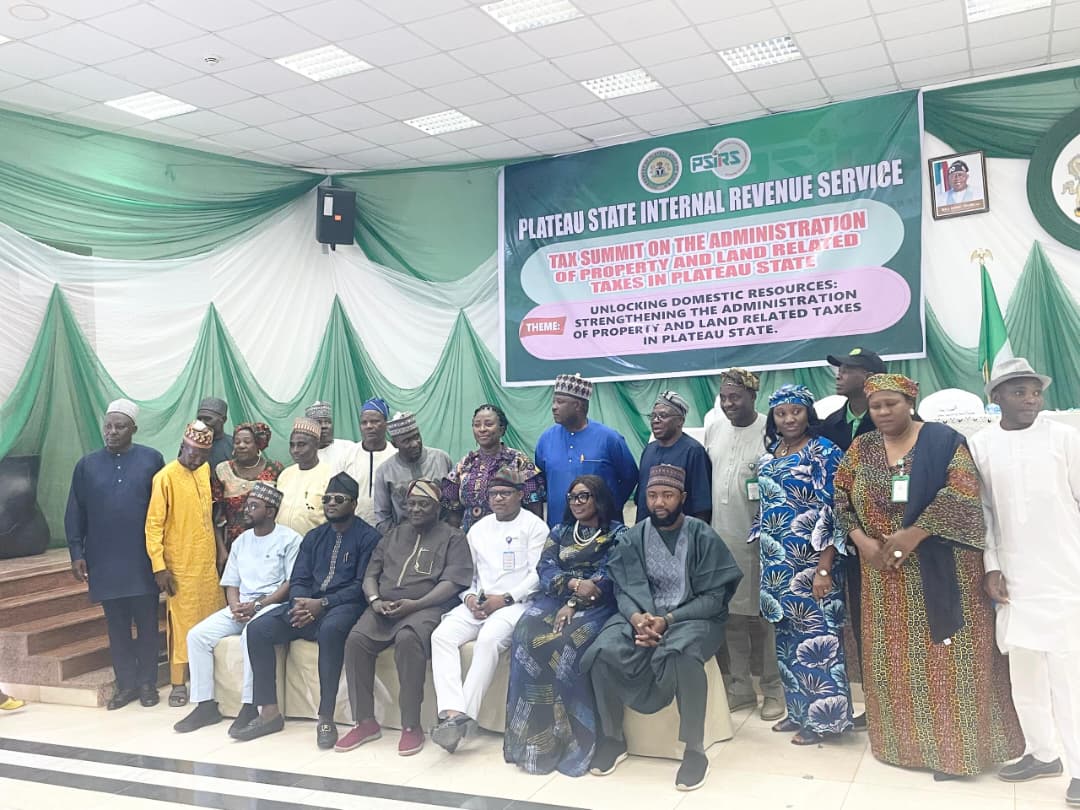
Jos, Nigeria – The Plateau State Board of Internal Revenue Service (PSIRS) has achieved a record-breaking ₦31.14 billion in Internally Generated Revenue (IGR) for 2024, marking the highest revenue collection in the state’s history.

PSIRS Chairman Jim Pam Wayas confirmed this achievement while addressing journalists at the board’s conference hall in Jos on Friday. He noted that for the first time in Plateau State’s history, revenue collection had surpassed the ₦30 billion mark, marking a significant leap from previous years.

Steady Growth in Revenue Collection

Wayas outlined the state’s consistent progress in revenue generation, noting the remarkable increase over the past three years.

“WHEN THIS ADMINISTRATION STARTED IN 2023, I JOINED HALFWAY THROUGH THE YEAR, AND A LOT HAS HAPPENED SINCE THEN. IN 2022, TOTAL REVENUE GENERATED WAS ₦15.9 BILLION. BY THE END OF 2023, WE INCREASED IT TO ₦25.8 BILLION. HOWEVER, AS OF THE CLOSE OF 2024, WE RECORDED ₦31.14 BILLION IN REVENUE,” HE STATED.

Looking ahead, the Plateau State Government has set an ambitious ₦52 billion revenue target for 2025, signaling its commitment to further boosting internally generated revenue.

“WE NEED TO START 2025 ON A STRONG NOTE, AND WE ARE ON THE RIGHT PATH. IN JANUARY ALONE, WE COLLECTED ABOUT ₦3.3 BILLION, ONE OF THE HIGHEST AMOUNTS EVER COLLECTED IN A SINGLE MONTH. COMPARED TO JANUARY 2024, WHEN WE GENERATED ABOUT ₦1.6 BILLION, THIS REPRESENTS A MAJOR IMPROVEMENT,” WAYAS NOTED.

Declining Federal Allocation and Economic Challenges

The PSIRS chairman also addressed concerns about declining federal allocations to Plateau State, citing debts incurred in previous years as a key factor.

“MANY PEOPLE ARE ASKING ABOUT THE REVENUE BEING GENERATED INTERNALLY AND WHAT IS COMING FROM THE FEDERAL ALLOCATION. THE TRUTH IS THAT FEDERAL ALLOCATION HAS BEEN DECLINING DUE TO DEBTS, MANY OF WHICH WERE TAKEN WHEN THE EXCHANGE RATE WAS AROUND ₦440 TO $1. TODAY, THE EXCHANGE RATE HAS FLUCTUATED, SOMETIMES REACHING AS HIGH AS ₦2,000 TO $1,” HE EXPLAINED.

He further noted that the state’s subsidy allocation has been in the negative for the past six months, as federal deductions significantly reduce the actual amount Plateau State receives.

Expanding Revenue Sources

To counter these financial challenges, Wayas emphasized the need to broaden the state’s revenue base by identifying new sources and plugging loopholes in tax collection.

“WE ARE NOW EXPLORING OUR INTERNALLY GENERATED REVENUE (IGR) POTENTIAL, AND I MUST COMMEND GOVERNOR CALEB MUTFWANG FOR TAKING BOLD STEPS TO DO THINGS DIFFERENTLY. THE ENTIRE REVENUE SYSTEM IS UNDERGOING TRANSFORMATION, AND WE ARE IDENTIFYING UNTAPPED REVENUE SOURCES,” HE SAID.

He added that the PSIRS is strengthening collaboration with key stakeholders such as the Joint Tax Board, Tax Appeal Tribunal, and the Federal Inland Revenue Service (FIRS) to enhance seamless revenue collection.

As Plateau State sets its sights on achieving its ₦52 billion revenue target for 2025, efforts are being intensified to ensure sustainable economic growth and infrastructural development for its citizens.

Continue Reading
Click to comment

Leave a Reply

Your email address will not be published. Required fields are marked *

News

Association Trains Farmers, Others On Carbon Finance

info

Published

on

By

IMG 20260619 WA0002.jpg

By Olukayode Babalola

The Sasakawa Africa Association (SAA), a Non-Governmental Organisation (NGO), has trained farmers, researchers, policymakers and extension personnel on carbon finance to position them for opportunities in the emerging carbon economy.

The two-day capacity building workshop, funded by the German Corporation for International Cooperation (GIZ), began on Thursday in Keffi, Nasarawa State, with participants drawn from Nasarawa, Benue, Cross River and Kano states.

The News Agency of Nigeria (NAN) reports that the workshop was organised by SAA under the GIZ-funded Strengthening Institutional Frameworks for Transformative Agricultural Systems in Nigeria (SIFTAS) project.

The initiative is designed to build awareness and technical capacity on carbon credits, carbon markets and agroforestry-based climate solutions, while promoting regenerative and climate-resilient agricultural practices across the country.

Speaking at the workshop, Dr Bidemi Ajibola, SIFTAS Project Manager, said that the initiative was aimed at exposing stakeholders to emerging opportunities in carbon finance and preparing them to participate in the growing carbon market ecosystem.

Ajibola said the workshop, with the theme, “Carbon Credits, Carbon Markets and Opportunities in Agroforestry Systems,” focused on carbon finance opportunities in cassava, potato and rice agroforestry systems.

“Nigeria is making significant progress towards establishing a national carbon market framework, creating new opportunities to attract investments into climate-smart agriculture and agroforestry.

“As part of the SIFTAS project, where we are promoting crop-specific agroforestry systems, we considered it important to expose our stakeholders and champions to opportunities available in carbon markets and carbon credit development,” he said.

He explained that similar workshops had earlier been held in Ibadan, Oyo State, on June 3 and 4, focusing on cassava agroforestry, and in Jos, Plateau State, on June 10 and 11, with emphasis on potato agroforestry, while the Keffi workshop centred on rice agroforestry systems.

Also speaking, Ms Rose Ritter, Technical Advisor with Sustainable Agricultural Systems and Policies project (AgSys), said Germany remained committed to supporting Nigeria and other countries in tackling climate change through emissions reduction and adaptation measures.

She disclosed that Germany provided 11.8 billion euros in international climate finance in 2024, with a significant proportion invested in agriculture and land use because of the vulnerability of smallholder farmers to climate change.

Ritter added that through the ClimA Project, GIZ was supporting the Federal Government in establishing a national agricultural carbon registry to register, monitor and verify carbon projects across the country.

In his remarks, Mr Tanko Tunga, the Nasarawa State Commissioner for Agriculture, described the workshop as timely, considering the devastating effects of climate change on smallholder farmers, who account for about 80 per cent of Nigeria’s food production.

He said that the state government had taken deliberate steps to transform the agricultural sector under the Nasarawa Economic Development Strategy (NEDS).

Tunga reaffirmed the state’s readiness to partner organisations working to address the effects of climate change and commended President Bola Tinubu for approving the National Carbon Market Framework.

According to him, the framework will support Nigeria’s climate commitments while stimulating sustainable economic growth and green investment opportunities.

Also, Prof. Ibrahim Haruna of the Department of Agronomy, Nasarawa State University, Keffi, described agroforestry as one of the most effective strategies for addressing the impact of climate change on agriculture.

“The only way to survive is to cope with climate change, and one of the most viable solutions is agroforestry. I commend GIZ and Sasakawa for sponsoring this initiative,” he said.

NAN reports that the workshop featured technical presentations, policy dialogues, interactive learning sessions and practical exercises on agroforestry systems.

Other areas of focus are carbon sequestration pathways, carbon financing mechanisms, carbon credit generation and the development of bankable agroforestry carbon projects.

Stakeholders also provided technical inputs to strengthen the carbon markets and carbon credits component of the SIFTAS agroforestry training curriculum. (NAN)(www.nannews.ng)

Edited by Isaac Ukpoju

Continue Reading

News

God will keep Tinubu in power until 2031 – Umahi

info

Published

on

By

David Umahi 1.jpg

Minister of Works, Dave Umahi, has expressed optimism that God will continue to guide President Bola Tinubu in leading Nigeria until 2031 to further the country’s development.

Umahi stated this on Thursday during an inspection tour of ongoing bridge projects in Lagos State, including the Carter Bridge, which is scheduled for reconstruction beginning next week.

According to the minister, Tinubu’s administration would continue to receive divine support in addressing the nation’s challenges, particularly insecurity.

“The same God that brought him is going to be there to solve all the problems,” Umahi said while appealing to Nigerians to support and cooperate with the current administration in its efforts to tackle security concerns across the country.

He noted that no leader desires instability during their tenure, but added that any responsible government must confront challenges directly whenever they arise.

“There is no leader who will not want his reign to be peaceful, but when crises come, the leader must confront them. That is exactly what we are doing,” he said.

Umahi further stated that regardless of whether the country’s security challenges were politically motivated or not, he believed Tinubu would receive the wisdom and strength required to overcome them and address other national issues.

The minister also expressed confidence that the present administration would complete all projects initiated under its watch.

“Your hands that have started this will complete it,” Umahi stated, adding that the government remained confident that Tinubu’s leadership continued to enjoy divine favour.

Speaking on the Carter Bridge project, the minister disclosed that the reconstruction of the bridge is expected to be completed within three years.

“It is within our five-year plan,” he added.

Continue Reading

Trending