Health
Inside fragile chain holding Kano, Gombe’s immunisation systems


Under the harsh April sun, the heat was oppressive in Fagge Local Government Area of Kano State. But 56-year-old Uma Usman kept walking from one compound to another, calling out familiar names, knocking gently on half-open doors and asking after children she had come to know over the years.
She is not an employee of the local Galadima Primary Health Centre. Her name does not appear on any government payroll. Yet, she has become one of the most important links in the community’s immunisation system.
Her job is to find children who missed their routine immunisation appointments.
“I know the community very well, so I follow them house by house,” Mrs Usman told PREMIUM TIMES. “If the parents don’t come, we check the register and trace the households.”
For Mrs Usman, behind every missed appointment, there is a story.

Sometimes a child is ill. Sometimes a mother cannot raise money for transport. Sometimes parents are occupied with work or family responsibilities.
“When you reach a house, you find it is not that they don’t want to come,” she said. “Something just stood in the way.”
Mrs Usman’s daily routine illustrates a broader reality observed in a PREMIUM TIMES investigation in Kano and Gombe states.

Contrary to the widespread assumption that vaccine shortages are the biggest obstacle to routine immunisation, frontline workers in the two states described a different problem. Vaccines are usually available. The challenge is ensuring children complete the immunisation schedule.
However, for many families who spoke with PREMIUM TIMES, the barrier is not acceptance but access. Long distances to health facilities, transport costs, delayed outreach activities and the daily struggle to earn a living often interrupt follow-up visits. As a result, many children receive their first vaccine but never complete the doses needed for full protection.
The consequences extend far beyond individual families.
This investigation examined routine immunisation efforts and challenges in Kano and Gombe between 2023 and 2026, drawing on field visits, interviews, official records and data from health authorities and development partners.
The period captures the continuing struggle to reach children who have never received a vaccine, as well as those who start their vaccination schedule but fail to complete it.
According to UNICEF, Nigeria has one of the world’s largest populations of zero-dose children, those who never received a routine vaccine. Its latest data shows that only about 67 per cent of surviving infants receive the third dose of the diphtheria, tetanus and pertussis (DTP3) vaccine, while coverage for the second dose of the measles vaccine is about 35 per cent.
Although routine immunisation coverage has improved in recent years, many children still receive no vaccines at all or fail to complete the schedule.
Behind those national figures are thousands of individual stories like the ones Mrs Usman encounters every week.
But the investigation found another, less visible reality.
Across communities in Kano and Gombe, routine immunisation continues largely because health workers, volunteers and community mobilisers bridge gaps created by delayed funding, difficult terrain and overstretched primary healthcare systems.
Many spend their own money to reach remote settlements. Volunteers without formal employment trace children from house to house. Outreach activities continue even when operational funds arrive months late.
Different communities, same struggle
The pattern seen in Fagge extends far beyond one community.
In Takai LGA of Kano State, reaching children who miss vaccination appointments often means travelling long distances across scattered settlements. Health workers say routine clinic sessions alone are not enough; repeated outreach visits are essential to find children who fail to return.
“There is never a time when people come and we do not have vaccines,” said Muhammad Ali, the officer-in-charge at Gamawa Health Post in neighbouring Gombe State.

Field records reviewed by PREMIUM TIMES and interviews with frontline workers showed that children scheduled for follow-up are not always reached as planned.
Health workers explained that outreach teams frequently face transport constraints, limited time, and difficult terrain, making it impossible to visit every household listed for follow-up during a single outreach exercise.
“We don’t refuse to go,” one health worker said. “But sometimes the list is longer than what we can physically cover in one outreach.”
Many children miss vaccine doses because follow-up visits could not be completed.
In Billiri LGA of Gombe State, the pattern is the same.
Health workers and volunteer mobilisers spend almost as much time searching for children who missed appointments as they do on administering vaccines.
Across these locations, one pattern persists: children often begin immunisation but fail to complete the schedule because of family challenges.

A system sustained by people
For Ignatius Essien, general manager of eHealth Systems Africa, the difficulty families face getting to health facilities helps explain the introduction of the Zero Dose Support Programme.
Mr Essien said the programme gives transport support to caregivers who bring their children for immunisation. It applies to children coming for either their first dose or subsequent doses.
“The funds are not tied to routine immunisation outcomes,” he stated.
He explained that the idea grew from what health workers repeatedly saw in the field: families who wanted to vaccinate their children but lived too far from health facilities or could not afford the fare to get there.
“Some say they cannot even afford transport fare to the clinic,” he said. “That is what stimulated the stipend.”
The support started at N500 but has since increased from N1000 to N2500 depending on the vaccine type as transport fares and the cost of living rose.
At Sansani PHC in Billiri LGA, routine immunisation sessions typically attract between 30 and 45 caregivers.

Behind those clinic days, however, lies another routine that is rarely captured in official reports —tracing children who do not return.
The facility’s Head of Immunisation, Elias Ezekiel, said health workers use immunisation registers to identify children who miss appointments from the catchment seven communities.
“From the register, if anyone misses, we follow up,” Mr Ezekiel told PREMIUM TIMES.
That work depends on outreach funding.
The health centre receives about N35,000 monthly for outreach activities, but the money is released quarterly by the State Primary Health Care Development Agency.
When PREMIUM TIMES visited, more than three months had passed without any release.
Mr Ezekiel said the delays are routinely reported through local government health authorities.
“If we stop outreach, the children will miss their vaccines,” he said.
So, staff members buy fuel and pay transport costs from their own pockets while waiting for the fund.

His account echoed those of several frontline workers interviewed across Kano and Gombe.
Vaccines are generally available, they said, but getting them to children in remote communities often depends on health workers absorbing the cost whenever operational funding is delayed.
That challenge is more difficult for facilities serving scattered settlements.
A quiet crisis in the North
The challenges confronting health workers in Kano and Gombe reflect a much wider crisis across northern Nigeria, where hundreds of thousands of children remain unreached by routine immunisation.
In April 2025, UNICEF estimated that about 53,000 children in Gombe State had never received a routine vaccine. More than half of them were in five high-risk LGAs, including Akko, where health authorities were contending with poor access to healthcare, low awareness and vaccine hesitancy.

To address the problem, the Gombe State Primary Health Care Development Agency, with support from UNICEF, launched the Fathers’ Response Team in 2024 to encourage greater male involvement in decisions about child health and immunisation.
Even so, many children continue to miss life-saving vaccines.
The challenge is even greater in Kano.
UNICEF estimates that more than 300,000 children are zero-dose, accounting for half of the burden across Kano, Katsina and Jigawa states.
UNICEF’s Chief Field Officer in Kano, Rahama Farah, said more than 600,000 children across the three states have yet to receive their first routine vaccine dose.
Many of these children live in remote or underserved communities where access to healthcare remains inconsistent.
“This is a basic fundamental child right,” Ms Farah noted.
She also warned that missed vaccinations increase vulnerability to outbreaks of preventable diseases and urged caregivers to complete immunisation schedules.
Why Kano and Gombe tell different stories
Although Kano and Gombe face similar immunisation challenges, the underlying pressures are different.
In Kano, the greatest obstacle is scale. With a population of more than 17 million people and over 600,000 births every year, health facilities operate under constant pressure.
The 2021 Multiple Indicator Cluster Survey (MICS) found that about 30.2 per cent of children in Kano are zero-dose, while only about 48 per cent complete the full routine immunisation schedule by their first birthday. National estimates indicate dropout rates of up to 31 per cent between the first and third doses of routine vaccines.

In Gombe, where the population is less than a third of Kano’s, geography plays a larger role. Communities are more dispersed, distances are longer, and access to health facilities often requires significant time and effort.
Estimates place Gombe’s zero-dose prevalence between 18 and 22 per cent, with only about 36 per cent completing full immunisation in some datasets.
Where the system weakens

The investigation found that the biggest weakness in routine immunisation is not getting children into the system.
It is keeping them in it.
Across health facilities in Kano and Gombe visited by PREMIUM TIMES, workers consistently described a system that performs relatively well at administering first doses but struggles to retain children through the full vaccination schedule.
Nationally, dropout rates between early and later vaccine doses range from about 12 to 30 per cent, depending on location.
At the Galadima PHC in Kano, Hauwa Isa, the assistant head of the facility, pointed to a solar-powered vaccine refrigerator stocked with vaccines.

“We have complete vaccines in the fridge,” she said. “We conduct immunisation three times a week and spend other days on outreach.”
“The real issue is not availability. It is continuity.”
That continuity depends on a governance system in which responsibility is shared but accountability is often blurred.
Primary health centres are under local governments, while state Primary Health Care Development Agencies oversee much of their staffing and operations. The federal government sets national policy and supports key immunisation programmes through partnerships with development agencies.
Health workers told PREMIUM TIMES that when outreach funding is delayed or operational gaps emerge, it is often difficult to determine where responsibility lies.

Money, priorities and the field reality
Over the past five years, both Kano and Gombe have recorded sharp increases in their budgets.
Official budget documents show Kano State’s spending plan rose from N221.24 billion in 2022 to N1.47 trillion in 2026, while Gombe’s grew from roughly N154.96 billion to N617.95 billion over the same period.
Those figures suggest governments have greater financial capacity to deliver public services, including primary healthcare.
Yet interviews with frontline workers across both states tell a more complicated story.
For them, the size of the budget does not matter when operational funds do not arrive when they are needed.
Outreach funding illustrates that gap.
It is the money that helps vaccines to reach children in remote communities. Health workers say when those funds are delayed, outreach activities depend on staff members improvising.
In Fagge and Takai LGAs of Kano State, workers told PREMIUM TIMES that each PHC is allocated about N7,000 a month for outreach transport.
Several months’ allocations are often paid together in arrears at the end of a quarter, long after many of the outreach visits.
In Gombe State, PHCs receive N35,000 a month for outreach transport, but the money is likewise paid quarterly.
The situation is even more difficult at health posts.
Unlike PHCs, they receive no dedicated transport allocation, according to workers interviewed by PREMIUM TIMES. Yet they are responsible for tracing children who miss appointments and carrying vaccination services to remote settlements.
When priorities compete
Funding pressures extend beyond the health sector.
Budget documents reviewed by PREMIUM TIMES show that both Kano and Gombe have made substantial allocations to debt servicing in recent years.
In the 2026 fiscal year, Kano budgeted about N69.84 billion for debt repayment, while Gombe allocated roughly N37.23 billion.
Those obligations are met before many operational funds are released to sectors such as PHCs, reducing the fiscal space available for routine service delivery.
Health workers say they experience those pressures in delayed outreach, postponed field visits and reduced operational flexibility.
Government spending priorities are also visible elsewhere.
In Kano, the state approved the purchase of 41 sport utility vehicles (SUVs) for members of the House of Assembly in 2024 at a cost of about N2.6 billion, alongside other vehicle purchases for the executive and security agencies.
In Gombe, similar procurements included 41 SUVs for lawmakers and commissioners in 2023, while more than N2 billion was allocated for vehicles for the judiciary in 2025.
Government officials have defended such purchases as necessary for governance and movement across challenging terrains.
For health workers travelling across the same terrains, however, the contrast is difficult to ignore. Many outreach teams continue to rely on motorcycles, commercial transport, or long walks to reach remote communities.
Where the system holds
Despite its weaknesses, northern Nigeria’s routine immunisation system continues to function because thousands of frontline health workers, volunteers and community mobilisers return to the same communities, often with limited resources, determined to find children who have missed their vaccines.
But sustaining that effort requires more than commitment, according to public health expert Abdulhameed Adediran, who warned that children who miss subsequent vaccine doses remain vulnerable to preventable diseases.
“A child is supposed to have three doses but has only the first dose. That child is not 33 per cent protected. That child is not protected because the first dose is supposed to last for a particular period before the next one is administered to have a complete effect,” he told PREMIUM TIMES via phone interview.
Mr Adediran said inadequate financing for PHC undermines the entire immunisation system. According to him, when outreach activities are poorly funded, children in distant communities are more likely to miss vaccinations, leaving dangerous gaps in disease prevention.
He traced many of the problems to systemic weaknesses, including poor funding, shortages of health workers, weak accountability, and inadequate infrastructure. In many facilities, he noted, community health extension workers shoulder responsibilities beyond their intended roles because of years of limited recruitment.
Mr Adeniran said immunisation programmes must be designed around the realities of the communities they serve rather than through one-size-fits-all approaches.
“People sit in Abuja and take decisions for people in those villages, and those decisions don’t necessarily work for them or are not necessarily applicable to them,” he explained, adding, “We need to start looking at a tailored, people-centred approach to our health institutions.”
Government responds
Responding to the findings, the Gombe State Primary Health Care Development Agency acknowledged that delays in releasing outreach funds sometimes occur, attributing them to administrative procedures, financial reconciliation processes and the timing of support from development partners.
The State Immunisation Officer, Abdulkarim Aliyu, said routine immunisation outreach is funded through a combination of government resources and donor support, with disbursements passing through several approval and accountability processes before reaching health facilities.

While acknowledging the effect of delayed releases, Mr Aliyu praised frontline workers who continue to provide outreach services despite funding constraints.
“We also recognise and appreciate the dedication of frontline health workers who often go the extra mile to ensure that vaccination services continue even when resources are delayed,” he said.
He said the agency has strengthened defaulter-tracking systems, expanded community mobilisation through Ward Development Committees, Community Health Influencers, Promoters and Services (CHIPS) agents and the Mama-to-Mama initiative, while holding regular review meetings to identify communities with high dropout rates and deploy targeted interventions.
Mr Aliyu added that the agency was pursuing workforce training, supportive supervision, and strategic staff deployment to address staffing shortages, while routine data validation and quality assessments are used to monitor immunisation records and identify children who miss scheduled vaccinations.
Looking ahead, he said the agency would focus on strengthening outreach services, improving community engagement, and expanding efforts to identify and vaccinate zero-dose and under-immunised children.
In Kano, the Director-General of the State Primary Health Care Management Board, Salisu Ibrahim, said outreach stipends are paid through a performance-tracking system supported by Acasus, a routine immunisation partner that monitors outreach sessions conducted by service providers.
Mr Ibrahim explained that payment delays sometimes occur because service-delivery records must first be verified before payments are processed.
He said the state has adopted several measures to reduce vaccine dropout rates, including ensuring that planned immunisation sessions are conducted, expanding public awareness campaigns, and addressing practices that contribute to missed vaccination opportunities.
While acknowledging financial pressures, he said the current administration of Governor Abba Yusuf increased outreach stipends from N1,000 to N4,000 per session to help health workers cope with rising transportation and operational costs.
He added that the board also conducts monthly data validation exercises, review meetings and independent surveys to identify service gaps and strengthen routine immunisation in underserved communities.
Whether those efforts will be enough to reduce the number of children missing vaccines remains uncertain.
What is clear, however, is that across communities in Kano and Gombe, routine immunisation continues to depend heavily on the persistence of health workers, volunteers and caregivers who keep showing up despite funding delays, staffing shortages and the difficulties of reaching remote settlements.
For many children, completing vaccination depends on that fragile chain.
Discover more from Premium Times Nigeria
Subscribe to get the latest posts sent to your email.





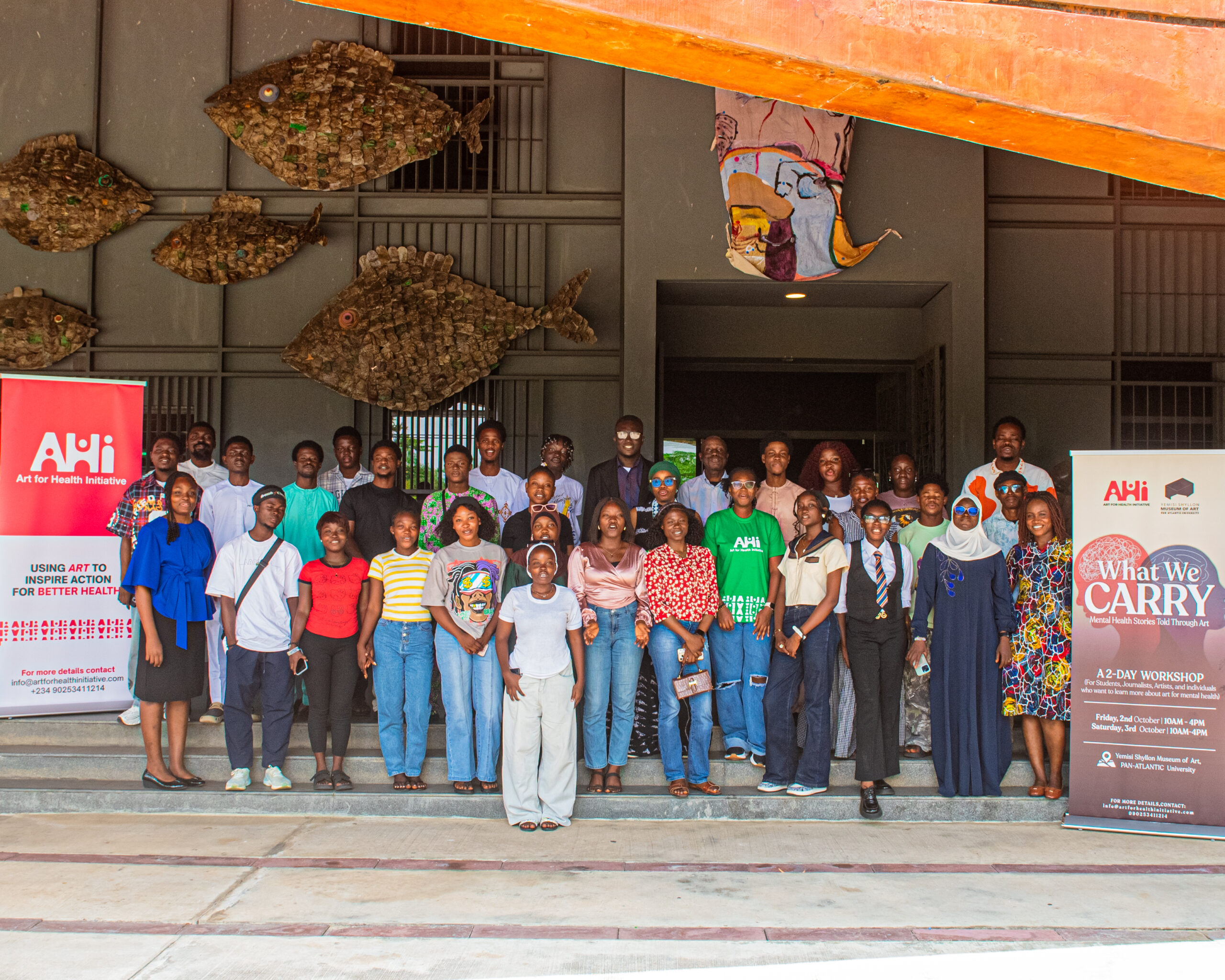
Twenty-five art students of the Yaba College of Technology (Yabatech), Lagos State, have explored mental health and emotional well-being through art in a workshop aimed at encouraging conversations around mental health.
The two-day Health Story Lab, organised by the Yemisi Shyllon Museum of Art (YSMA), Pan-Atlantic University, in collaboration with the Art for Health Initiative (AHI), was held on 2 and 3 October in Lagos.
The programme, titled “What We Carry: Stories of Mental Health and Resilience”, brought together art, public health, mental health and storytelling to help the students explore how creative expression can be used to communicate experiences that may be difficult to discuss openly.
The workshop was held ahead of World Mental Health Day (WMHD), marked annually on 10 October.
Using art to discuss mental health
The students participated in sessions on public health and art, mental health and resilience, creative expression and art for social change.
According to the organisers, the discussions gave the students an opportunity to reflect on issues such as stress, uncertainty, social pressure, family expectations, grief, fear and hope.


The students subsequently developed creative concepts and received feedback from facilitators and their peers.
The students also examined the role of art in health communication during a session led by Olayinka Badmus, a public health strategist. The session explored how creative expression can communicate public health issues and make health conversations more accessible.
Another session, led by psychiatrist and psychotherapist Emmanuel Abayomi, focused on mental health and resilience, while Art Project Lead Temitope Oladeji guided students to express their experiences and emotions through art. The programme also included a museum tour focused on art for social change, led by a museum educator, Charles Udeh.
Solomon Nkwagu, Head of Corporate Communication and Visitors’ Services at YSMA, said the programme showed the potential of art to encourage conversations around public and mental health.
“They began to see the possibility of using their creative voices to start conversations around public and mental health, to tell stories that people can recognise themselves in, and perhaps even to create moments of reflection and healing for others. That shift in perspective was one of the most rewarding parts of the programme,” Mr Nkwagu said.
In her remarks, Chidera Aneke, Founder of AHI, said the initiative was designed to make health communication more participatory, culturally relevant and emotionally engaging.
Ms Aneke said health information could be communicated not only through statistics and clinical information but also through stories, images, symbols, emotions and lived experiences.
“We wanted to create a space where young artists could understand that health is not only communicated through statistics, campaigns or clinical information. It can also be communicated through stories, images, symbols, emotions and lived experiences,” she said.
“Working with the students showed us the possibilities that emerge when artists are given the knowledge, language and space to think about health through their own creative practice.”
Mental health burden
Mental health remains a significant public health concern in Nigeria.
A 2026 systematic review and meta-analysis of 53 studies involving more than 132,000 people estimated that 7.9 per cent of the general population had experienced suicidal thoughts, while 1.9 per cent had made suicidal plans and 1.3 per cent had attempted suicide.

The researchers said suicidal behaviour was more common among some groups, including adolescents, young people, and pregnant women.
This year’s World Mental Health Day theme is “Lived experiences heard: real voices, real change.”
The World Health Organisation (WHO) is calling for people who have experienced mental health conditions to have a meaningful role in shaping policies, services and decisions that affect them.
“World Mental Health Day is an opportunity to meaningfully engage with people with lived experience (PWLE) of mental health conditions and to recognise their knowledge as a vital form of expertise,” it noted.
READ ALSO: PT Health Watch: Why some pregnant women develop gestational diabetes
“This year’s campaign calls for their voices to shape the policies, services and decisions that affect their lives.”
From workshop to exhibition
The Yabatech students will develop artworks based on the issues explored during the workshop.
The works are expected to form a micro-exhibition in Lagos in November, giving members of the public an opportunity to engage with mental health and resilience through the perspectives of young artists.
The organisers said the initiative is intended to demonstrate how partnerships between the creative sector, museums and public health practitioners can create new ways of discussing mental health.
Discover more from Premium Times Nigeria
Subscribe to get the latest posts sent to your email.
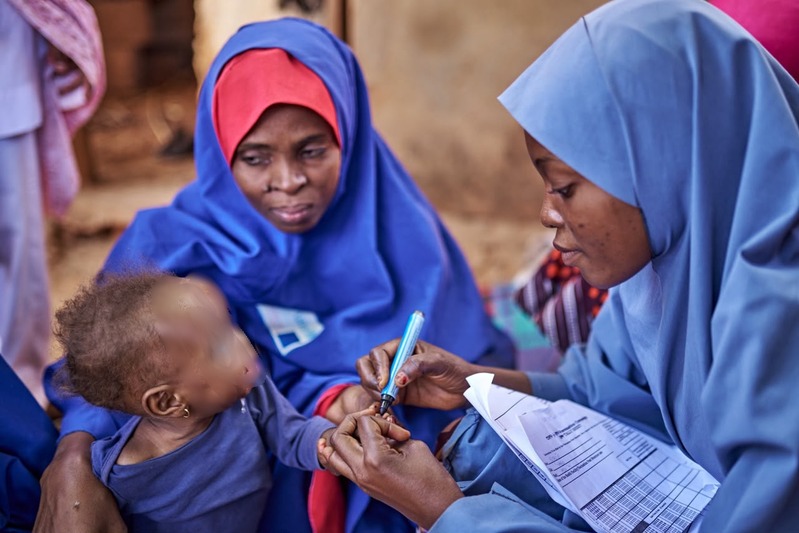
Gavi, the Vaccine Alliance, says 9.5 million children in 57 supported countries received no routine vaccine in 2025, despite gains in global immunisation.
The figure, described as the number of “zero-dose” children, was contained in Gavi’s 2025 Annual Progress Report, which reviewed the alliance’s 2021-2025 strategic period.
Gavi defines zero-dose children as infants who have not received the first dose of a diphtheria, tetanus and pertussis-containing vaccine by the end of their first year.
Number falls from 2021 peak
According to the report, the number of zero-dose children in 2025 was 600,000 lower than in 2024 and 25 per cent lower than the peak recorded in 2021 following disruptions to routine immunisation caused by the COVID-19 pandemic.
However, the figure remained four per cent above the 2019 baseline, partly because of continued growth in the number of children being born.
Gavi said children living in fragile, conflict-affected and humanitarian settings remain among those most likely to be missed by immunisation programmes.
Nigeria remains one of the countries with the highest number of zero-dose children. UNICEF estimated that about 2.2 million Nigerian children had never received a routine vaccine in 2025, the highest number in Africa.
Nigeria records gains in targeted areas
The report highlighted Nigeria, Ethiopia and Pakistan among countries where emerging data showed stronger immunisation coverage gains in sub-national areas that received greater Gavi focus and investment during the 2021-2025 period.
Gavi said the findings underscored the value of targeted, equity-focused investments in reaching communities that are being missed by routine immunisation.
The report also identified Nigeria among countries covered by Gavi’s Zero-Dose Learning Hubs, which examined what works and what does not in identifying and reaching zero-dose and under-immunised children.
The findings from Nigeria, Bangladesh, Mali and Uganda highlighted several issues, including gender-related barriers to immunisation.
73m children immunised in 2025
Despite the number of zero-dose children, Gavi said more than 73 million children were immunised through routine programmes with its support in 2025.
More than 351 million children were immunised during the 2021-2025 strategic period, “exceeding Gavi’s target of 300 million children.”
“By end 2025, Gavi-supported countries had immunised more than 1.3 billion unique children with Gavi support since 2000, exceeding our Investment Opportunity 2021-2025 commitment of more than 1.1 billion children immunised by 2025,” it noted.
Gavi said vaccination averted more than 2.2 million future deaths in 2025, bringing the total number of future deaths averted through its supported vaccination programmes to more than 7.8 million during the 2021-2025 period.
Generated economic benefits
The report said immunisation programmes generated more than $30 billion in economic benefits for Gavi-supported countries in 2025, the highest amount recorded in a single year.
The benefits were calculated from the costs of illness averted, including medical and associated costs, caretaker wages and productivity losses resulting from disability or death.
Gavi said the programmes generated more than $104 billion in economic benefits between 2021 and 2025 and more than $308 billion between 2000 and 2025.
Countries also contributed a record $301 million towards the co-financing of Gavi-supported vaccines in 2025, an 18 per cent increase from 2024.
About 80 per cent of the contribution came from domestic resources, while “approximately 20 per cent from low-interest loans from the World Bank.”
Gavi said countries had contributed a total of $2.2 billion towards vaccine co-financing since the policy was introduced in 2008.
More children
For its 2026 to 2030 strategic period, Gavi said it aims to protect another 500 million children through immunisation and avert between eight million and nine million future deaths.
READ ALSO:New TB vaccines could save 7.3m lives by 2050 – Gavi
The Alliance also targets more than $100 billion in economic benefits during the period. Gavi said it would place greater emphasis on reaching zero-dose and under-immunised children while strengthening the sustainability of national immunisation programmes.
In her comments, Gavi Chief Executive Officer, Sania Nishtar, said the results showed that immunisation generates benefits beyond preventing disease. “However, when it comes to immunisation we know that the return on investment extends far beyond health to supporting sustainable, inclusive economic growth,” Ms Nishtar said.
WHO Director-General, Tedros Ghebreyesus, also said immunisation delivers massive gains in lives saved and diseases prevented, but also in terms of economic benefits.
“Countries understand that the cost of failing to vaccinate is far too great, while the benefits extend across families, communities, economies and future generations,” Mr Ghebreyesus was quoted to have said.
Discover more from Premium Times Nigeria
Subscribe to get the latest posts sent to your email.
-

 News3 days ago
Robot data startup Mecka AI nabs $60M from Sequoia
-
Business2 days ago
Communications Ministry made ₦345.5 million duplicate payment for Abuja ICT Park project
-
Business2 days ago
Fuel subsidy would cost Nigeria over N20trn yearly — Minister
-
News2 days ago
LumenUs helps automate tedious paperwork in times of grief