News
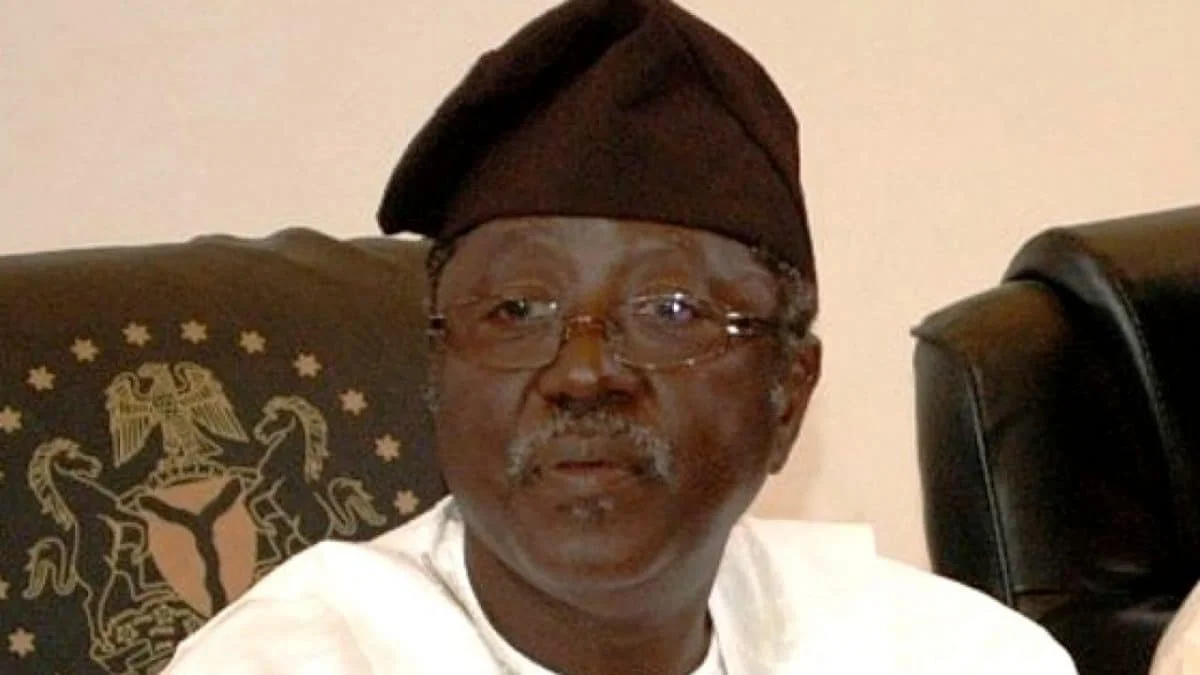
Plateau ex-gov, Jang kicks against indigeneship certificates for Hausa residents


News
Anti-Tinubu: Northern youths deny withdrawing position, say insecurity, economic hardship persist

The Anti-Tinubu APC Northern Youth Forum has denied withdrawing its opposition to President Bola Tinubu’s second-term ambition, insisting that insecurity, economic hardship, naira devaluation and declining purchasing power remain major concerns.
The forum urged youths in Northern Nigeria to reject Tinubu’s re-election bid, citing worsening insecurity, economic difficulties and inadequate infrastructural development across the country.
It also called on Nigerians to mobilise against the President’s second-term ambition in the 2027 general elections, insisting that the current administration had failed to address some of the major challenges confronting the country.
The Secretary of the forum, Comrade Umar Chanji, stated this during a press conference where he addressed journalists on behalf of members drawn from the 19 Northern states.
Chanji said the forum was established by indigenous APC youths concerned about the deteriorating situation in Northern Nigeria and the country at large.
He stressed that the group was an independent political movement, not answerable to any individual or organisation within or outside Nigeria.
According to him, the forum was established to draw national and international attention to challenges confronting the North, particularly insecurity, economic hardship, poor healthcare delivery and inadequate basic social amenities.
On insecurity, Chanji alleged that thousands of lives had been lost, while communities, villages and properties worth billions of naira had been destroyed by banditry and other violent attacks.
Citing reports attributed to Amnesty International, Daily Trust and Leadership, he claimed that hundreds of villages across Katsina, Zamfara, Sokoto, Benue, Plateau and Kebbi states had been attacked or destroyed between 2023 and 2026.
He further alleged that insecurity had crippled agricultural activities in several parts of the North, forcing farmers to abandon their farmlands, while schools, markets, healthcare centres and places of worship had been shut down in affected communities.
The forum questioned why Northern Nigerians continued to suffer insecurity despite the government’s constitutional responsibility to protect lives and property.
On the economy, Chanji blamed the removal of fuel subsidy, currency devaluation and what he described as unnecessary taxation on businesses for worsening the living conditions of Nigerians.
He said the rising cost of commodities had continued to outpace citizens’ incomes, leaving many households struggling to meet their basic needs.
The forum also criticised the Tinubu administration over its borrowing, arguing that despite the removal of fuel subsidy, the country’s refineries remained unrepaired while government borrowing continued.
Chanji challenged the administration to identify major capital projects completed and commissioned by the President across the federation within the first three years of his administration.
Consequently, he appealed to Nigerians who shared the forum’s concerns to intensify mobilisation and public enlightenment against Tinubu’s second-term ambition.
“We are appealing to every Nigerian, especially the youths, to go and get their Permanent Voter Cards and come out on January 16, 2027, to cast their votes for the party of their choice, but not the APC presidential candidate, Tinubu,” he said.
He urged Nigerians not to underestimate the power of their voter cards, recalling how the electorate used the same instrument to change the government in 2015.
According to him, the same democratic process could bring about another change of government in 2027.
The forum maintained that Nigeria belonged to all its citizens and called on eligible voters to exercise their constitutional rights peacefully during the forthcoming elections.
Chanji concluded by urging Nigerians to remain determined in their quest for a better country, declaring that collective action through the ballot remained a powerful instrument for political change.
Anti-Tinubu: Northern youths deny withdrawing position, say insecurity, economic hardship persist

A Fulani advocacy group, "The Fulani Defenders", has vehemently kicked against the newly inaugurated Forest Guards by the Plateau State government, arguing that the initiative is aimed at targeting herdsmen and Fulani pastoralist communities.
The government had on Saturday, November 28, unveiled the first batch of 1,000 Forest Guards who were deployed across the state in its bid to combat the lingering insecurity.
During the graduation ceremony held in Jos, Gov. Caleb Mutfwang said the newly trained personnel are expected to boost security operations through intelligence gathering, surveillance and monitoring of forests and vulnerable communities, particularly areas affected by recurring attacks.
Mutfwang stated that the Forest Guards will also support existing security agencies in tackling security threats, protecting lives and property, and restoring confidence among residents of troubled communities.
But in a swift reaction to the security set-up, the Fulani Defenders said the composition of the guards was such that Fulani people were denied the opportunity of being part of the outfit which to them makes it clear that they are the target.
In a statement issued on Sunday by its coordinator, Ahmad Abba, the group said it rejects the security outfit and called on the government to immediately disband them and set up a broad outfit that would accommodate every tribe and ethnic group in the state.

"The inauguration of the Forest Guards by the Plateau State Government on Saturday, November 28, 2026, should have been a laudable project following years of insecurity and violence in the state," the statement began.
"But as a Fulani advocacy group, we are really worried about the composition of the Forest Guards because there are fears that they have been set up to target innocent Fulani herders and communities.
"And the observed anomalies have further raised questions on the non-inclusion of Fulani people in the security outfit.
"Our questions are: Is the Forest Guard security system an ethnic or religious body? Was there transparency and openness during the recruitment process? Why were Fulani people denied the opportunity of being recruited into the outfit?
"If their mandate includes forest surveillance, intelligence gathering and supporting conventional security agencies against terrorists, bandits, kidnappers and other criminal elements, wouldn't it have been beneficial to include Fulani people who know the forests better?
"From our observations, the Forest Guards were set up to target Fulani pastoralists and communities. We therefore demand the immediate disbandment of the security outfit while a fresh, transparent and all-inclusive recruitment process be conducted to accommodate every tribe, ethnic group and religion."
-

 Events4 days ago
Plateau Govt Backs AGNN’s PENIEL 2026, Says Unity Among Christians Critical to Peace
-
Events4 days ago
PENIEL 2026: AGNN Calls for Deeper Encounter with God, Unity and National Transformation
-
News3 days ago
‘The Righteous Are Not on the Throne, That Is Why Nigerians Are Suffering’ — SDP’s Adewole Adebayo Fires the APC While Speaking to Press at Jos Conference
-
Business2 days ago
Plateau Government, BOI, PLASMIDA Back Young Innovators at YAI Bootcamp in Jos