
News
PLASIEC Pledges Transparency in Upcoming Plateau State Elections


Minister of Works, David Umahi, says the Nigeria Democratic Congress, NDC, presidential candidate, Peter Obi, started the confrontation between them over the Lagos-Calabar Coastal Highway project.
Speaking during an exclusive interview on Arise Television on Friday, Umahi said he did not criticise Obi, but the former Anambra State governor came to the construction site where he was working and publicly castigated him.
According to him, Obi initiated the attacks against him and his handling of federal road projects.
"We all determine our own destinies. I did not criticise Peter Obi; he started the confrontation by coming to the construction site where I was working and publicly castigating me," Umahi said.
The minister equally accused Peter Obi of failing to caution his supporters over inflammatory statements, adding that one of his followers reportedly said that even if Jesus contested an election, Peter Obi would still win.
The former Ebonyi State governor described the statement as an affront to the Christian faith and said he expected Obi to condemn it.
"One of them reportedly said that even if Jesus contested in an election, Peter Obi would win. That is an affront to our faith, and I expected Peter Obi to speak out against such a statement," he said.
Recall that Umahi and Obi have clashed several times over the Coastal Highway project, with Obi describing it as a misplaced priority and Umahi accusing Obi of inciting South East people against the Federal Government.
Coastal Highway: Peter Obi started the fight, not me – Umahi

The Presidency says the proposed constitutional amendment to establish state police in Nigeria has received approval from 24 of the 36 State Houses of Assembly.
This implies that the bill has met the two-thirds threshold required for constitutional alteration.
Chief of Staff to the President and Chairman of the Presidential Working Group on the National Policing Bill, Femi Gbajabiamila, disclosed this in a statement on Friday, October 23, 2026.
The statement said the approval fulfilled the constitutional requirement for the Constitution (Sixth Alteration) Bill, 2026, which seeks to establish a dual policing system comprising the Federal Police Service and state police services.
Politics Nigeria reports that the working group said the amendment could now be returned to the National Assembly for transmission to President Bola Tinubu for assent.
“In line with Section 9 of the Constitution, the amendment can now be returned to the National Assembly for transmission to Mr President for assent,” the statement read.
The group commended the state assemblies for approving the amendment and the National Assembly for passing the bill through both chambers.
It added that the proposed constitutional change would provide the legal backing for the policing framework contained in the draft National Policing Bill, 2026.
According to the statement, the draft bills are undergoing legislative drafting review and validation at the Federal Ministry of Justice and are expected to be returned on or before Friday, October 30.
The working group said it would give the bills final consideration before presenting them to President Tinubu.
It also urged stakeholders to support the transition to a dual policing system, which it said was aimed at improving public safety across the country.
The 24 states that have approved the constitutional amendment are Adamawa, Akwa Ibom, Anambra, Bayelsa, Benue, Cross River, Delta, Edo, Ekiti, Enugu, Gombe, Imo, Kaduna, Kebbi, Kwara, Nasarawa, Ogun, Osun, Oyo, Plateau, Rivers, Taraba, Yobe and Zamfara.
It was recalled that the development follows the transmission of the Constitution (Sixth Alteration) Bill, 2026, to the 36 State Houses of Assembly by the National Assembly on September 16 for consideration and approval.
The state assemblies were given an expected administrative timeframe of 30 days to communicate their decisions.
On October 9, Senate Committee on Media and Public Affairs Chairman Yemi Adaramodu disclosed that only four states — Edo, Oyo, Osun and Rivers — had approved the amendment at that time.
The latest update indicates that the number of approving states has since risen to 24.
Earlier, on October 15, Gbajabiamila said the National Policing Bill was about 90 per cent ready and would be transmitted to the National Assembly after further consultations and legislative drafting work.
Speaking to journalists after a steering committee meeting at the State House in Abuja, he said the working group was addressing observations raised by state governors before finalising the proposed legislation.
“The National Policing Bill is more or less ready for transmission to the National Assembly. We will probably have one more meeting after this to cross the t’s and dot the i’s and make sure every area is covered. So, we are 90% ready,” he said.
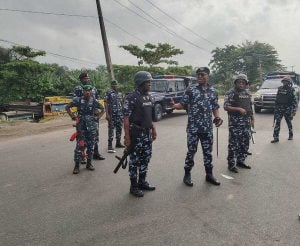
He added that the governors had raised one or two observations and expressed confidence that the bill would be ready shortly.
Gbajabiamila also described the proposed legislation as the most consequential bill of the Tinubu administration so far, noting that the working group’s steering committee began deliberations on August 3.
Addressing concerns that some state assemblies might delay approval of the constitutional amendment, he said there was a national consensus on the need for the proposed changes.
“I see no reason why anyone will want to have a rethink on it,” he said.
-

 News4 days ago
Amazon to fund 12 small nuclear reactors at former Indiana coal plant
-
News4 days ago
Mamdani says feds have abdicated on AI, urges New Yorkers to push back
-
News3 days ago
Meta’s Muse hits 10M U.S. downloads in 40 days, a milestone reached by only 11 other apps
-
Business3 days ago
How Your Side Hustle Income Ends Up in Your RSA


