Business
Nigerian govt not operating “shadow budget” – Finance Minister

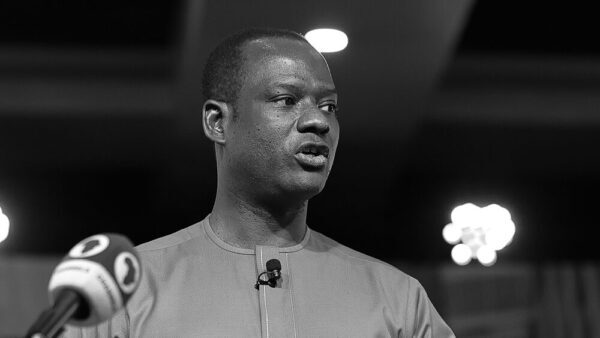

The Federal Government has dismissed claims that it spent more than ₦8 trillion outside the approved budget, insisting that it does not operate a “shadow budget” and that all public expenditures are carried out within the framework of the Constitution and relevant laws.
In a statement issued on Sunday, the Minister of Finance and Coordinating Minister of the Economy, Taiwo Oyedele, described recent public commentary suggesting that about two per cent of Nigeria’s Gross Domestic Product (GDP) was spent outside legislative approval as inaccurate and misleading.
The minister said the claims, reportedly linked to references made by the International Monetary Fund (IMF) and its 2026 Article IV Consultation Report, created a false impression about the Federal Government’s financial management practices.
“For the avoidance of doubt, the Federal Government does not operate a ‘shadow budget’ or expend public funds outside the constitutional and statutory framework established for public finance,” Mr Oyedele stated.
He explained that under Sections 80 to 83 and 162 of the 1999 Constitution, as amended, public funds may be withdrawn and spent only in accordance with constitutional provisions and laws enacted by the National Assembly.

According to him, federal expenditures are undertaken through duly enacted Appropriation Acts, Supplementary Appropriation Acts and other statutory authorisations approved by lawmakers.
The minister also noted that multi-year capital projects, which often extend beyond a single fiscal year, are implemented under existing legal provisions, including approved capital rollovers where necessary.
He argued that such arrangements are standard features of public financial management and should not be interpreted as spending outside the budget.
Mr Oyedele challenged those making the allegations to provide evidence of specific projects allegedly executed without appropriation or legal authorisation.
“Such allegations should have identified the specific projects purportedly executed without appropriation or legal authority and present credible evidence in support of the claim,” he said.
The minister further explained that Nigeria’s fiscal framework includes several statutory transfers, first-line charges and intervention mechanisms established by Acts of the National Assembly.
These include statutory allocations to development commissions and agencies created by law, cost-of-collection provisions for revenue-generating agencies, capital expenditures approved through separate budgets, special interventions addressing national priorities, as well as debt service obligations and other statutory transfers.
He stressed that these expenditures are lawful, publicly disclosed and subject to oversight, audit and accountability mechanisms.
According to Mr Oyedele, differences between how such expenditures are reported in fiscal documents and how they appear in annual appropriation laws often arise from international reporting standards and should not be misconstrued as evidence of unlawful spending.
The minister also rejected suggestions that the reported amount represented an increase in Nigeria’s fiscal deficit.
He explained that fiscal deficits are determined by the relationship between total government revenues and expenditures, adding that the source of financing for approved projects does not automatically increase the deficit.
Mr Oyedele said the IMF’s observations were largely focused on improving the comprehensiveness, timing and presentation of fiscal reporting rather than questioning the legality of government spending.
He recalled that President Bola Tinubu had, during the presentation of the 2026 Appropriation Bill to the National Assembly in December 2025, advocated harmonising multiple and overlapping budgets into a single, cohesive framework.
The minister reaffirmed the Federal Government’s commitment to transparency, accountability and prudent fiscal management, noting that ongoing reforms have strengthened budget credibility, revenue administration, treasury management and the digitalisation of government financial processes.
READ ALSO: Oyedele confirms Nigeria has drawn first $1.5 billion under $5 billion Abu Dhabi financing deal
He added that these reforms have received recognition from the IMF, other multilateral institutions, international credit rating agencies, investors and major global media organisations.
While welcoming public scrutiny of government finances, Mr Oyedele urged commentators to ensure that debates are based on facts and a proper understanding of Nigeria’s constitutional and fiscal framework.
“The Federal Government will continue to uphold the rule of law, maintain transparency in the management of public resources, and work with the National Assembly, oversight institutions, development partners and the Nigerian people further to strengthen fiscal governance in line with international best practices,” he said.






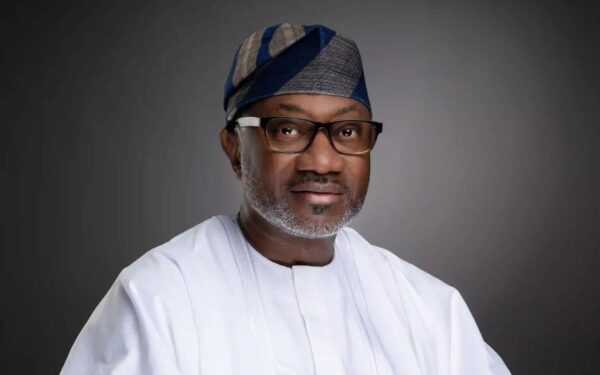
Femi Otedola, the chairman of First HoldCo Plc, has revealed that he shared a bunk bed with Lagos State Deputy Governor Obafemi Hamzat during their boarding school days 49 years ago.
Mr Otedola disclosed this in a post on X after hosting a dinner in honour of his longtime schoolmate, Mr Hamzat, attended by Aliko Dangote, the president of Dangote Group, and Abdulsamad Rabiu, the chairman of BUA Group.
The business tycoon said Mr Hamzat’s character has been defined over the years by honesty, sincerity, fairness, and strong moral principles.
“Yesterday, I hosted dinner in honour of @DrObafemiHamzat, the incoming Governor of Lagos State,” Mr Otedola said.
“A man of the highest integrity, with whom I shared a bunk bed at boarding school 49 years ago,” he added.
Mr Otedola stated that his longstanding relationship with Mr Hamzat has given him insight into the deputy governor’s character and values.

“My experience of his character over the years has been defined by his honesty, sincerity, fairness and strong moral principles,” Mr Otedola said.
READ ALSO: Tinubu’s reforms have put Nigerian economy on path of sustainable growth – Otedola
He, however, did not disclose the name of the boarding school he attended with the Lagos State deputy governor.
The billionaire investor has interests in financial services and oil & gas. He holds about 27.7 per cent of First HoldCo’s shares, following months of steadily increasing his stake in the banking group.
Mr Hamzat is seeking to contest the 2027 governorship election in Lagos State on the platform of the All Progressives Congress (APC), and has served as deputy governor under incumbent Governor Babajide Sanwo-Olu since 2019.
He emerged as the APC governorship candidate in May 2026.
Mr Hamzat served as Lagos State Commissioner for Science and Technology and later as Commissioner for Works and Infrastructure from 2005 to 2015.
Discover more from Premium Times Nigeria
Subscribe to get the latest posts sent to your email.
-
News2 days ago
NUCAP: Nigeria targets 20 million people with 3,700 telecom towers – Technology Times
-

 News3 days ago
Gunmen storm Plateau mining site, kill two persons
-
News3 days ago
Nigeria needs stronger collaboration ‘to shape internet governance’ – Technology Times
-
News1 day ago
Euromatch NPFL: Matchday 9 results