
Business
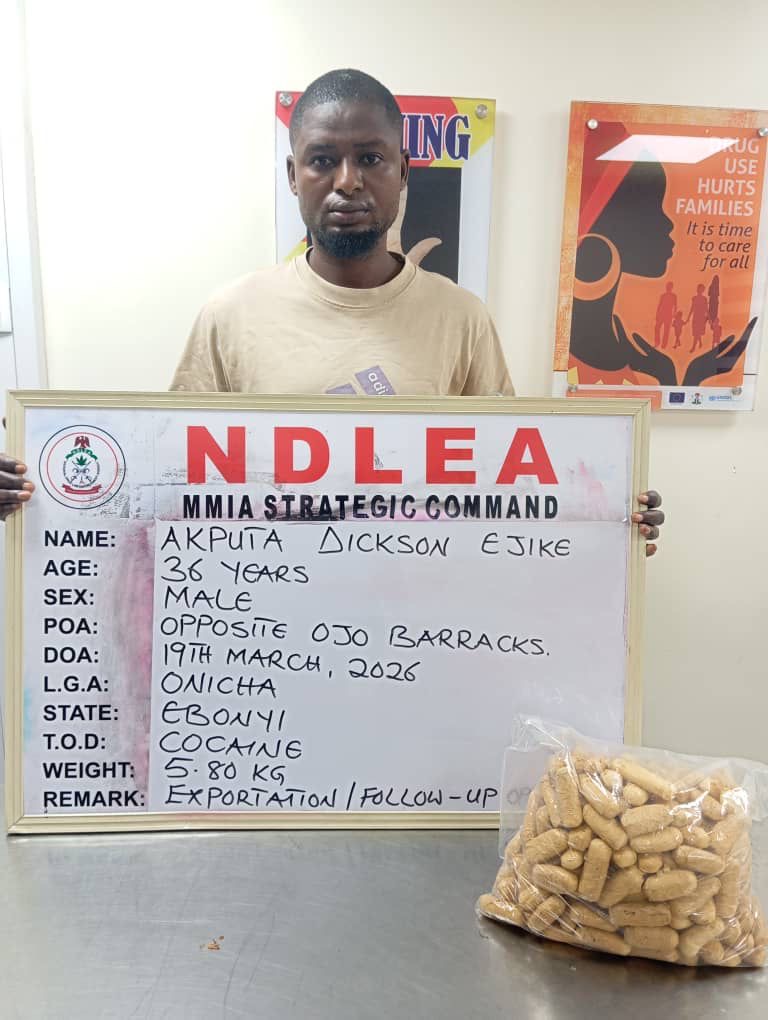
NDLEA intercepts large cocaine consignment concealed in heads of dry stock fish






The United Nations Development Programme (UNDP) and the United Nations Children’s Fund (UNICEF) have launched a global campaign to help young people discover skills and career opportunities that can contribute to a sustainable future.
The initiative, christened “See It, Be It,” was announced on Thursday on the sidelines of the ongoing 17th session of the United Nations Convention on Biological Diversity (CBD COP17) in Yerevan, Armenia.
The campaign seeks to showcase the people, skills and career opportunities shaping a nature-positive, low-carbon future, the United Nations said in a statement.
It will feature young professionals making a difference across science, technology, business, agriculture, communications, finance, the creative industries and community leadership.
From scientists restoring ecosystems and entrepreneurs building sustainable businesses to innovators developing new technologies and community leaders protecting local environments, their stories will demonstrate how young people can build careers that benefit both people and the planet.
“Young people need more than new opportunities to build a sustainable future: they need to know these opportunities exist, understand how to pursue them and see people with whom they can identify already making a living through them,” UNICEF said.


The agency noted that research, including the Organisation for Economic Co-operation and Development’s (OECD) Cultivating the Future report, highlights how young people’s career expectations remain concentrated in a relatively narrow range of traditional professions.
It added that research by UNICEF and the European Training Foundation also found that career guidance failed to showcase opportunities emerging from the green transition adequately.
“These gaps underline the importance of making a wider range of career pathways visible, particularly to young people in developing countries who have fewer opportunities to access career guidance and professional networks,” the UN said.
Objectives and prospects
According to the UN, the “See It, Be It” campaign aims to broaden young people’s horizons by presenting diverse, relatable role models and showing how their interests, skills, and ambitions can help build a more sustainable world.
The campaign aims to reach 500 million young people worldwide by the end of 2027.
It brings together organisations, youth networks, educators, employers, communicators, and sustainability professionals to share stories and expand their reach.
Early supporters include the Global Youth Biodiversity Network, an international network connecting young people working to protect biodiversity; the Nature Working Group of YOUNGO, the official children and youth constituency of the United Nations Framework Convention on Climate Change; and the Youth Negotiators Academy, a youth-led organisation that trains young people to participate in multilateral negotiations.
The UN said it was inviting partners to contribute stories, amplify profiles through their networks, and help ensure young people from different countries and communities can access a broad range of role models and career opportunities.
Silvia Mestroni, UNICEF’s acting representative in Armenia, said the initiative would help young people recognise their potential and explore ways to contribute to a more resilient world.
“Every child and young person deserves the chance to imagine a future full of possibility and see how their interests and talents can make a difference sustainably,” she said.
Ms Mestroni added that connecting young people with diverse role models and stories of change could broaden their horizons, build confidence, and inspire them to explore different ways to contribute to a sustainable future.
Similarly, Midori Paxton, UNDP’s global head of biodiversity and ecosystems, stressed the need to make sustainable career opportunities more visible to young people.
“Science tells us we’ll need three earths to sustain us by 2050 if we carry on the way we are,” she said, emphasising the need to transition towards nature-positive and low-carbon lifestyles and economies.
Ms Paxton said younger generations have significant potential to shape a future where people and nature thrive. Still, she stressed that this potential requires access to opportunities and the ability to envision what’s possible.
“Through See It, Be It, we want to make the people and pathways driving change far more visible and help many more young people recognise that there is a place for their talents in building a sustainable future,” she said.
CBD COP17
PREMIUM TIMES earlier reported that representatives of governments, Indigenous peoples, local communities and other stakeholders had convened in Yerevan, Armenia, for CBD COP17.
The conference, scheduled for 19–30 October under the theme “Taking Action for Nature,” brings countries together to accelerate efforts to halt and reverse global biodiversity loss.
The 2026 UN Biodiversity Conference also includes the 12th meeting of the parties to the Cartagena Protocol on Biosafety and the sixth meeting of the parties to the Nagoya Protocol on Access and Benefit-sharing.
Discussions are focused on reviewing collective progress, strengthening implementation support, advancing scientific and policy guidance, addressing the financial and economic factors influencing biodiversity outcomes, improving biosafety and promoting the fair and equitable sharing of benefits arising from genetic resources.
At COP17, countries will undertake the first global review of collective progress under the Kunming-Montreal Global Biodiversity Framework.
The review is expected to assess how far countries have progressed towards their commitments and identify gaps requiring urgent action.
Other priorities include mobilising finance, strengthening capacity-building and international cooperation, and expanding the participation of indigenous peoples and local communities in biodiversity conservation.
Financing remains critical because implementing biodiversity commitments requires sustainable resources, especially for countries facing competing development priorities and limited institutional capacity.
The conference will also examine the policy and economic conditions that influence biodiversity outcomes, including how governments and other stakeholders can align development activities with conservation objectives.
Discover more from Premium Times Nigeria
Subscribe to get the latest posts sent to your email.

Seplat Energy Plc has appointed Effiong Okon as its chief executive officer, making him the first Akwa Ibom indigene to occupy the top executive position at the Nigerian energy company.
Mr Okon, an engineer with more than 35 years of experience in the oil and gas industry, was appointed by the company’s board of directors in June 2026 and assumed office on 1 August 2026, according to information published on Seplat Energy’s website.

Onofiok Luke, a former member of the House of Representatives and former speaker of the Akwa Ibom State House of Assembly, commended the appointment, describing it as a significant milestone for the state.
In a Facebook post, Mr Luke congratulated Mr Okon, saying his emergence reflected years of professional dedication, competence and service.
He said the appointment should inspire young people from Akwa Ibom to pursue leadership positions in the oil and gas industry and other globally competitive sectors.
“For years, we have consistently clamoured, advocated and hoped to see our sons and daughters rise to the apex of International Oil Companies, particularly those operating within our communities and drawing substantially from our natural endowments,” Mr Luke wrote.
He also called for greater opportunities for local professionals and host communities, arguing that communities where oil and gas are extracted should participate not only in resource production but also in industry leadership, value creation and prosperity.
Mr Luke cited Udom Inoyo, a former vice chairman of ExxonMobil’s Nigerian affiliates, as one of the Akwa Ibom professionals who had previously attained senior leadership positions in the industry.
He wished Mr Okon a successful tenure and described the appointment as a source of inspiration to aspiring professionals from the state.
Career and industry experience
Mr Okon joined Seplat Energy in 2018 and has held several senior positions, including executive director of operations, director of new energy, and director of projects. He also served as managing director of ANOH Gas Processing Company Limited, a joint venture between Seplat Energy and Nigerian National Petroleum Company Limited (NNPC).
According to his biography, he oversaw the development of the 300-million-standard-cubic-feet-per-day ANOH Gas Processing Plant, which achieved its first gas in January 2026.
ANOH is an acronym for Assa North-Ohaji South, a major natural gas development project located in Imo State, Nigeria
Before joining Seplat, Mr Okon spent 26 years at Shell, where he held senior positions in Nigeria, Europe, the Middle East and the Americas. His assignments included vice president of cost leadership and continuous improvement in the Netherlands, general manager of deepwater and offshore assets in Nigeria, and deputy vice president technical and manager of the North Field at Qatar Shell.
He also participated in the commissioning and early production phases of Qatar’s Pearl gas-to-liquids project and QatarGas LNG Trains 7 and 8, according to his biography.
Mr Okon studied at the University of Benin and attended IMD Business School in Lausanne, Switzerland, and Harvard Business School in Boston, United States. He is a fellow of the Nigerian Society of Engineers and the UK Energy Institute, and a registered engineer in Nigeria.
He is married to Bertha Okon, and they have four children.
Seplat’s growth and acquisition of Mobil’s Nigeria business
Seplat Energy was established in 2009 through a partnership between Shebah Petroleum Development Company and Platform Petroleum Joint Ventures. The company has since expanded its operations in Nigeria’s oil and gas industry, with interests spanning hydrocarbon production, gas processing, and energy transition initiatives.
A major turning point came in December 2024, when Seplat completed its acquisition of Mobil Producing Nigeria Unlimited (MPNU), the Nigerian shallow-water oil and gas business formerly owned by ExxonMobil. The transaction followed an agreement announced in February 2022 and regulatory approvals for the deal.
Following the acquisition, Seplat renamed the business Seplat Energy Producing Nigeria Unlimited (SEPNU). The acquired assets include interests in four oil mining leases — OMLs 67, 68, 70 and 104 — operated under a joint venture with NNPC, as well as associated infrastructure, including the Qua Iboe Terminal and interests in the Bonny River Terminal and gas processing facilities.
READ ALSO: AFC appoints Cardoso as board chairman
Seplat said the acquisition more than doubled its production and expanded its portfolio across onshore and shallow-water operations. The enlarged business has interests in oil and gas fields, gas processing facilities and export terminals, strengthening its position among Nigeria’s indigenous energy producers.
The company is listed on both the Nigerian Exchange and the London Stock Exchange. Its operations contribute to Nigeria’s oil production and domestic gas supply, with gas serving as an important fuel for electricity generation and industrial activity. The company has also identified gas-led growth and the development of cleaner energy solutions as priorities in its strategy.
Mr Okon takes over the leadership of the enlarged company following this expansion, with responsibility for overseeing its operations, project delivery, production growth, and gas development strategy.
Discover more from Premium Times Nigeria
Subscribe to get the latest posts sent to your email.
-

 News4 days ago
Amazon to fund 12 small nuclear reactors at former Indiana coal plant
-
News3 days ago
Mamdani says feds have abdicated on AI, urges New Yorkers to push back
-
News3 days ago
Meta’s Muse hits 10M U.S. downloads in 40 days, a milestone reached by only 11 other apps
-
Business2 days ago
How Your Side Hustle Income Ends Up in Your RSA


