Top Story
Mutfwang Administration Strengthens Healthcare Delivery with New Vehicles

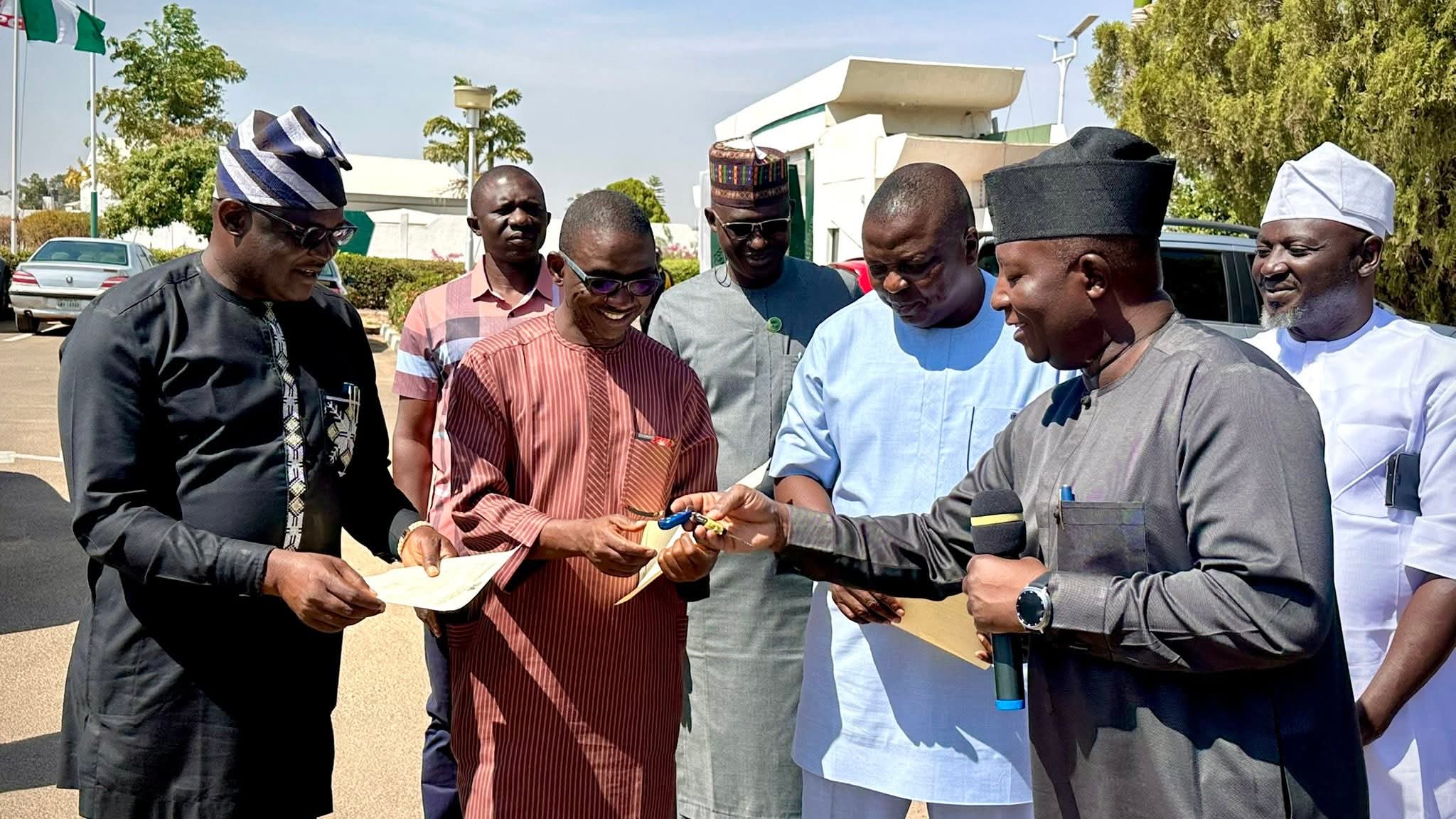
Plateau State Governor, Caleb Mutfwang, has presented vehicles to ministries under the health sector, aiming to boost healthcare services in the state.
Speaking at the presentation ceremony at Government House, Rayfield, Jos, Governor Caleb Mutfwang, represented by the Secretary to the Government of the State, Samuel Jatau, acknowledged the challenges faced by the health sector, citing limited funds and competing demands.

He expressed gratitude that despite these challenges, the state government has made significant strides in revitalizing the sector.
The Governor emphasized the importance of proper vehicle maintenance, urging beneficiaries to use the vehicles judiciously and ensure drivers adhere to traffic regulations.
He noted that the donation reflects the state government’s commitment to improving healthcare services, aligning with the saying “health is wealth”.
Commissioner of Health, Dr. Nicholas Ba’amlong expressed appreciation to the Governor for donating vehicles to the Ministry of Health and its agencies, acknowledging the Governor’s commitment to the health sector, stating that it has been given top priority since the current administration took office.
He recalled the Governor’s previous donation of six ambulances for the ambulance emergency system, emphasizing that it demonstrated the people’s right to quality healthcare.
The Commissioner assured that the donated vehicles will be used judiciously, monitored closely to ensure they serve their intended purpose.
Chief Transport Officer, Office of the Secretary to the Government of Plateau State, Bitson Alexander, said the vehicles are intended to enhance official activities in the respective ministries within the health sector.
He announced the vehicles to include: a 2025 model ambulance for Plateau State Specialist Hospital, a 14-seater Toyota HiAce Bus for Plateau State Specialthe Hospital, a Toyota HiAce Bus for the Primary Health Care Board, and a Toyota HiAce Bus for the Ministry of Health.
The presented vehicles include an ambulance and three 14-seater Hiace buses, aimed at enhancing the operational capacity of the Plateau State Specialist Hospital, Primary Health Care Board, and Ministry of Health.


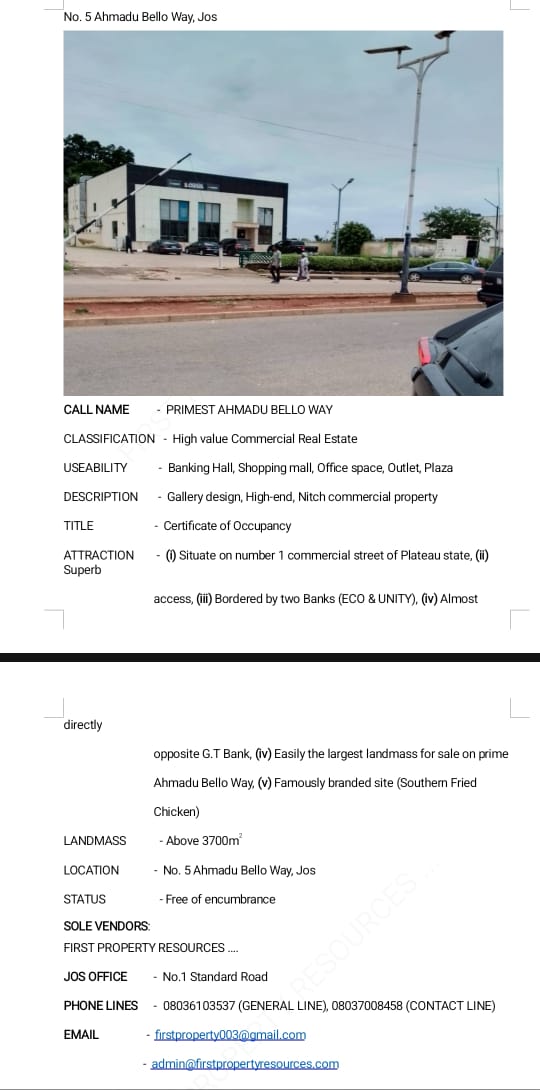
This top of the class commercial property is special for its prime location, expanse and usability advantage. It offers a rare advantage in proximity, vintage and class. Situated on the number one (No.1) commercial street of Plateau state, it is bordered on both sides by ECO and UNITY Banks. Famously housing Southern Fried Chicken (SFC), it is a unique ownership for investors, business owners or status symbol.
If you’re looking for a premium investment opportunity in the heart of Jos, this exceptional commercial property on Ahmadu Bello Way offers unmatched value, visibility, and versatility.
Property Overview
Situated at No. 5 Ahmadu Bello Way, widely regarded as the number one commercial corridor in Plateau State, this high-end property is ideal for a wide range of business uses including a banking hall, shopping mall, office complex, retail outlet, or plaza.
Key Features
- Gallery-style architectural design with a modern, high-end finish
- Spacious landmass of over 3,700m² — one of the largest available on this prime street
- Certificate of Occupancy (C of O) ensuring secure and verifiable ownership
- Free from encumbrances — ready for immediate transaction
- Previously occupied by a well-known brand (Southern Fried Chicken), adding commercial prestige

Strategic Location Advantage
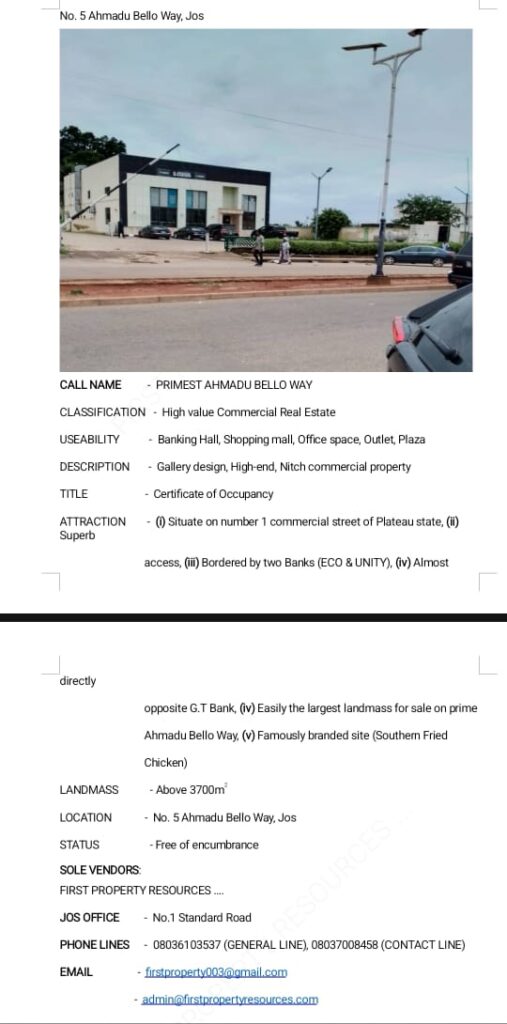
This property boasts a superb location with excellent accessibility and strong commercial appeal:
- Located on Jos’ busiest and most sought-after business axis
- Bordered by major financial institutions including ECO Bank and Unity Bank
- Almost directly opposite GTBank, ensuring high traffic and visibility
- Ideal for businesses seeking prominence and easy customer access
📞 Contact Information
First Property Resources (Sole Vendors)
Jos Office: No. 1 Standard Road
📱 08036103537 | 08037008458
🌐 www.firstpropertyresources.com
📧 firstproperty003@gmail.com
📧 admin@firstpropertyresources.com
This is a rare opportunity to acquire a landmark commercial property in a prime location. Whether you’re an investor or business owner, this property offers the perfect blend of size, visibility, and strategic positioning to elevate your enterprise.

Prime Commercial Property for Sale on 5 Ahmadu Bello Way, Jos
-

 Health3 days ago
Plateau: Medical Women Association of Nigeria Marks Older Persons Day with Free Outreach
-
News4 days ago
PLASU Opens Doors to Global Investors at 2nd Inaugural Lecture
-
News2 days ago
MTN, Gates Foundation drive $25m AI digital health plan in Nigeria – Technology Times
-
News3 days ago
WAEC appoints Nigeria’s Dangut as Registrar, CEO