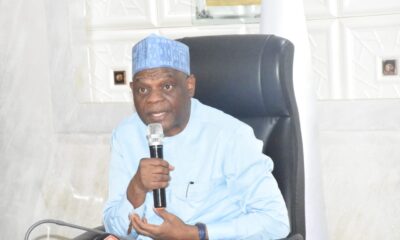
The Independent Corrupt Practices and Other Related Offences Commission (ICPC) has opened a fresh investigation into embattled Plateau lawmaker, Hon. Adamu Aliyu, over an alleged N75.8 million land scam.
Aliyu, who represents Jos North Constituency in the Plateau State House of Assembly, is already facing trial after Justice Emeka Nwite of the Federal High Court, Abuja, declared him wanted on September 12 in connection with a separate N73.6 million Tertiary Education Trust Fund (TETFund) contract scandal.
In the latest case, a Jos-based businessman, Abdulyekin Kabiru, Chief Executive Officer of Reedlim Global Enterprises, petitioned the ICPC, alleging that Aliyu and one Hassan Maimadara, a former local government secretary, conspired to defraud him under the guise of selling government land.
According to the petition filed by AB Adihene & Co. on Kabiru’s behalf, the lawmaker allegedly presented himself as Chairman of the House Committee on Housing, while Maimadara posed as a former Jos North council secretary and an aide to the legislator. They reportedly told Kabiru that they had the Plateau State government’s mandate to sell a property located in the Gangare area of Jos, without disclosing that it belonged to the Jos Metropolitan Development Board (JMDB).
Kabiru said he initially agreed to purchase the land for N50 million but was later coerced into paying more through a series of inducements, threats, and forged documents. He claimed he was pressured into transferring a total of N75.84 million through bank payments and cash deposits into accounts linked to Maimadara’s company, Hassan & Sons Multi-Biz Dimensions Ltd, and Aliyu’s personal account.
The businessman further alleged that he was forced to provide the lawmaker with mobile phones worth N172,000 and, when he eventually realized the deal was fraudulent, his demand for a refund was met with threats to his life.
This new development adds to the mounting controversies surrounding Hon. Aliyu, who has consistently denied involvement in previous fraud allegations, including claims by businessman Mohammed Jidda that he swindled him in a fake N850 million TETFund contract at the University of Jos.
Efforts to obtain Aliyu’s comments on the fresh petition were unsuccessful, as he neither answered calls nor responded to messages at the time of filing this report.
Supporters of Senator I. D. Gyang have called for a review of the All Progressives Congress (APC) senatorial primary election results in Plateau North, alleging irregularities in the conduct of the exercise.
In a statement issued by the Director General of the I. D. Gyang Campaign Council, Comrade Lot Adas, the group expressed concern over what it described as a lack of transparency in the primary process.
The statement claimed that the outcome of the exercise did not reflect the wishes of party members, insisting that credible internal democracy must be upheld to preserve trust within the APC.
According to the group, party strength is rooted in grassroots participation, warning that any process that sidelines members’ votes could weaken unity and confidence in the party structure.
It further alleged that the Plateau North senatorial primary was not conducted in a manner consistent with due process, describing the results as unacceptable to many stakeholders within the constituency.
The supporters urged the APC leadership to ensure fairness and justice by reviewing the conduct and outcome of the primaries in line with party guidelines and democratic principles.
They also referenced ongoing considerations by the party’s National Working Committee (NWC), expressing hope that the leadership would take corrective action after reviewing reports from relevant committees.
While calling for a review, the group appealed to party members and supporters to remain calm and peaceful, stressing that their demand is rooted in fairness, equity, and respect for internal democracy.
The statement reaffirmed commitment to the unity and progress of the APC in Plateau North, while insisting that only a credible and transparent process can strengthen the party ahead of future elections.
Signed:
Comrade Lot Adas
Director General, I. D. Gyang Campaign Council
BY NKECHI NAECHE-ESEZOBOR—When Dr. Aminu Maida took the helm at the Nigerian Communications Commission (NCC) in October 2023, he stepped into a challenging landscape marked by soaring operational costs and stubborn infrastructure gaps.
Yet, over the past few years, the commission has successfully turned these hurdles into stepping stones, steering Nigeria’s telecommunications sector toward a new era of steady growth and digital inclusion.
At the heart of the NCC’s recent success is a massive push to bring reliable phone and internet access to everyday Nigerians, especially those in rural and underserved communities.
By 2025, these deliberate efforts pushed the country’s internet broadband penetration rate to an impressive 48.81 percent, while teledensity—the percentage of the population with telephone connections—reached 79.65 percent.
Industry experts note that this rapid expansion didn’t happen by accident; it is the direct result of the regulatory stability and clear, reliable policy direction the NCC has established.Beyond simply expanding networks, the commission has taken aggressive steps to protect them.
In a major victory for the industry, the NCC actively championed a Presidential Executive Order that officially designates telecom facilities as Critical National Infrastructure.
This critical legal shield gives the government the teeth to fight back against the theft, vandalism, and sabotage that have long plagued network operators, disrupted daily services, and driven up business expenses.
Financially, the NCC has proven to be a vital engine for the nation’s economy. In the 2024 fiscal year alone, the commission generated roughly N195.8 billion through spectrum fees, operating licenses, and other regulatory revenues.
Proving its commitment to national development, the NCC sent more than N111 billion of those earnings straight into the Federal Government’s Consolidated Revenue Fund.
Looking toward the future, the NCC is also reshaping how technology businesses operate in Nigeria. The commission has introduced discussions for a fresh General Authorisation Framework alongside updated licensing systems. This modern approach is designed to cut through red tape for tech startups, welcome innovative business models, and make it much easier to deploy next-generation digital tools.
Ultimately, the NCC has managed a delicate balancing act. Even while navigating tough economic pressures like inflation and rising business expenses, the commission has successfully maintained investor confidence through open, transparent communication with network operators.
At the same time, it has kept its focus squarely on everyday citizens by strictly monitoring service quality and creating tools that help ordinary phone subscribers check network performance, ensuring that Nigeria’s digital future remains both strong and consumer-friendly.