News
Google adds Nano Banana-powered image generation to Gemini’s Personal Intelligence


Google on Thursday announced that Gemini’s Personal Intelligence feature will get Nano Banana-powered image generation to create images with personalized context.
That means its AI images can be created using Gemini’s understanding of your likes and interests, without those having to be explicitly noted in the prompt.
This works because Gemini already has context of your data through Google account connections, such as Gmail and Google Photos. So, instead of typing “Generate an image of my dream home, my interests are tennis and music,” you can now just say, “Design my dream home.”

What’s more, the Nano Banana-powered connection can also use the labels in your Google Photos, so that it understands names and words that describe a group, like “Family”. For instance, you can create an image by saying, “Generate an image of my family and me doing our favorite activity.”
The company said the “sources” button will show how Gemini derived the context for image generation.

Google said that just like other connections, Gemini might get the context wrong, and you can provide feedback. Plus, you can also provide reference photos for image generation by clicking the “+” icon.
The image generation feature will be available to Plus, Pro, and Ultra subscribers in the U.S. within the coming days. Google plans to bring the feature to Gemini in Chrome desktop and to other users soon.
Google first launched Personal Intelligence earlier this year and made it available to all U.S. users in March. Earlier this week, the company expanded the feature to more users in countries like India and Japan.

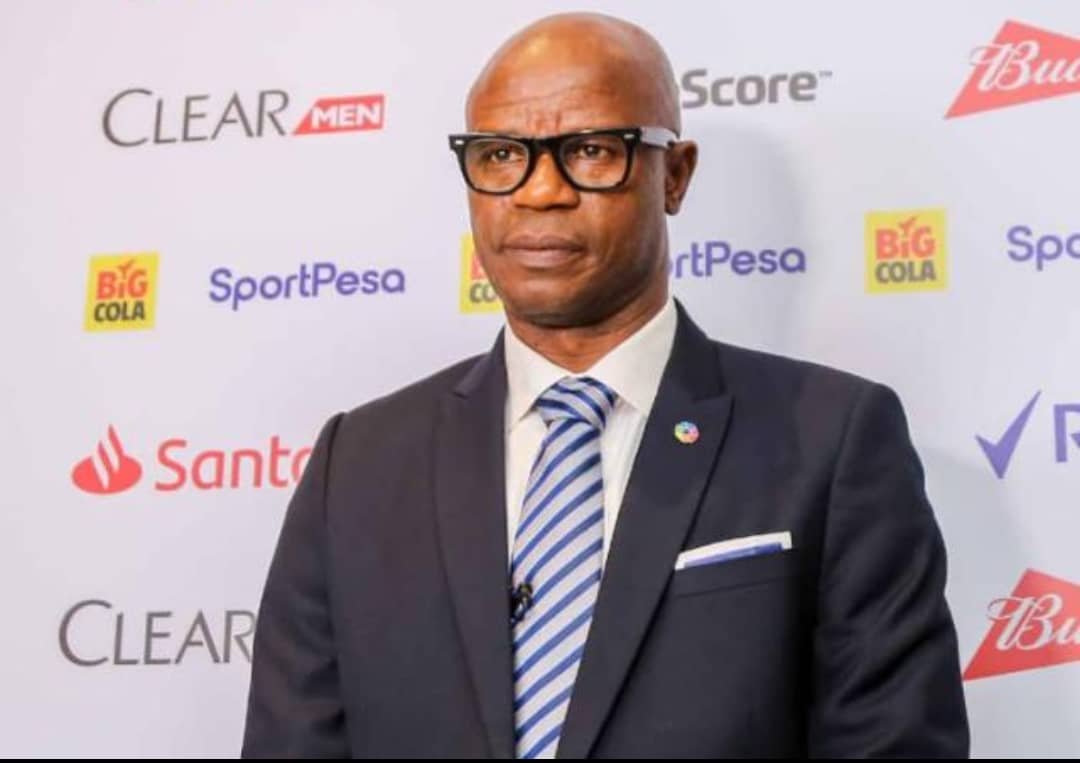
Super Eagles’ midfielder, Mutiu Adepoju has added his voice to reactions trailing Nigeria’s come from behind 2-1 win over Madagascar in their first match of the 2027 Africa Cup of Nations qualifiers, saying he felt excited seeing new players turn up in the squad.
Sports247 reports that Adepoju, who was fondly called ‘Headmaster’ during his playing days and is now an ambbasador for the Spanish La Liga in Nigeria, noted how the Super Eagles’ goals in the encounter at Godswill Akpabio International Stadium, Uyo were scored by rookies.
With George Ilenikhena of Al-Itihad in Saudi Arabia and Moses Usor from LASK Lodz of Austria making hay on their debuts, thereby saving Nigeria from a potential home defeat in the Akwa Ibom State capital, Adepoju reckoned that the Eagles now have many options to bank on.
He, however, stressed that the players and their head coach, Eric Sekou Chelle must not rest on their oars, as they have many more matches to play before they pick the AFCON 2027 ticket, while also pointing out that other fixtures also lie beyond the continental showpiece.
“It’s a good way to start the qualifier with a victory, not minding that we conceded first. The most important thing is that the team won against Madagascar. I am delighted that we have so many options that can play for the Super Eagles.
“That’s a very good development. It is now left for the coach to know who he wants to start. He knows the composition of the team right from the beginning and will definitely know who to start,” concluded Adepoju, who scored six goals in 48 games for Nigeria.
Sports247 reports further that Adepoju shot into limelight as a member of Nigeria’s under-20 team that achieved ‘The Damman Miracle’ at the 1989 FIFA World Youth Championship in Saudi Arabia, where he got a brace against United States in the semi-final but could not score in a final 2-0 loss to Portugal.
He got his senior debut against Togo in August 1990, then featured at the 1992 Africa Cup of Nations, helped Nigeria win the next edition two years later and was part of Nigeria’s maiden FIFA World Cup squad at USA 1994.
Adepoju was also in the squad to the 1998 Mundial in France, where he scored in a 3-2 win against Spain, a goal which he netted with his trade mark header and would declare years later that it was his proudest strike for Nigeria and best World Cup moment.
At club level, he featured for Shooting Stars of Ibadan, Julius Berger of Lagos, Real Madrid B, Racing Santander, Real Sociedad, Salamanca, Eldense and Cobeña of Spain as well as Al-Ittihad of Saudi Arabia, Samsunspor of Turkey and AEL Limassol of Cyprus.

-

 Featured4 days ago
PLATEAU STATE: IS THERE PEACE, OR ONLY THE ABSENCE OF VIOLENCE?
-
News4 days ago
Plateau Killings: Rotjimwa Yilyok Urges Security Agencies to Intensify Action
-
Business4 days ago
Shettima Urges African Leaders to Process Minerals Locally
-
News4 days ago
Former Archbishop of Canterbury Justin Welby Calls for Peace, Protection of Communities During Plateau Visit