Business
Court Jails Fraudster 37 years for N29m Procurement Fraud in Damaturu

Court Jails Fraudster 37 years for N29m Procurement Fraud in Damaturu
Justice Lawu Lawan of the Yobe State High Court, Damaturu on Thursday 23, April 2026 convicted and sentenced one Abubakar Sadiq Abubakar to 37 years imprisonment.
The defendant was arraigned by the Maiduguri Zonal Directorate of the Economic and Financial Crimes Commission, EFCC on a four- count charges bordering on obtaining by false pretence, criminal misappropriation, forgery and used forged documents as genuine to the tune of N29,175,000. (Twenty Nine Million, One Hundred and Seventy Five Thousand Naira).
Count one reads: “That you, Abubakar Sadiq Abubakar, sometimes in 2023, at Potiskum, within the jurisdiction of this honourable court, with intent to defraud did obtain the gross sum of N29,175,000 (Twenty Nine Million, One Hundred and Seventy Five Thousand Naira) from one Ibrahim Zakari Waziri, Shittu Ali Firi and Afreebak Nigeria Limited a company registered in Nigeria under the pretence that the said amount represent payment for the supply of 38.9 metric tons of white sorghum when you represented yourself as a Procurement Officer of Bua Food Plc which you knew to be false and thereby committed an offence contrary to Section 1(1) (a) of the Advance Fee Fraud and other Fraud Related Offences Act,2006 and punishable under Section 1(3) of the same Act.”
Count three reads: ” That you, Abubakar Sadiq Abubakar, sometimes in 2023, at Potiskum, within the jurisdiction of this honourable court, did fraudulently make a false documents to wit: (1) a BUA Food Plc supply agreement dated 10th December, 2024, in the name of Afreebak Nigeria Limited, Potiskum, Yobe State purportedly issued by BUA Food Plc for the supply of 38.9 metric tons of white Sorghum (2) as official statement purported to emanate from BUA Food Plc dated 7th October, 2014 (3) and acknowledgement of receipt of 38.9 metric tons of white sorghum purported to emanate from BUA Food Plc knowing all to be forged and handed same to Ibrahim Zakari Waziri, Shittu Ali Firi and Afreebak Nigeria Limited and thereby committed an offence contrary to Section 364 and punishable under Section 366 of the Penal Code Law Cap 102 Laws of Yobe State.”
The defendant pleaded “not guilty” to the charges when they were read to him by the court, prompting the EFCC to put him to trial.
In the course of trial, prosecution counsel Mukhtar Ali Ahmed presented five witnesses and tendered several documents as exhibits before the court.
Justice Lawan thereafter, convicted and sentenced Abubakar on count one with an option of fine to the tune of N100,000.00 or serve ten years imprisonment. While on count two the convict is to pay a fine of N5,000 or serve two years imprisonment.
On count three, the convict is to pay a fine of N100,000 or serve eight years imprisonment while on count four the judge ordered him to pay a fine of N60,000 or serve seven years jail term.
The judge further ordered the convict to pay the sum of N29,175,000 to the petitioner or serve additional ten years imprisonment.
The convict’s journey to the prison started when he approached the petitioners and introduced himself as a procurement officer of BUA Foods Plc and issued fake receipts to them for the purchase of sorghum from the company. He collected the sum of N29,175,000 from his victims. He was thereafter arrested, prosecuted and convicted.
The post Court Jails Fraudster 37 years for N29m Procurement Fraud in Damaturu appeared first on Business Today NG.
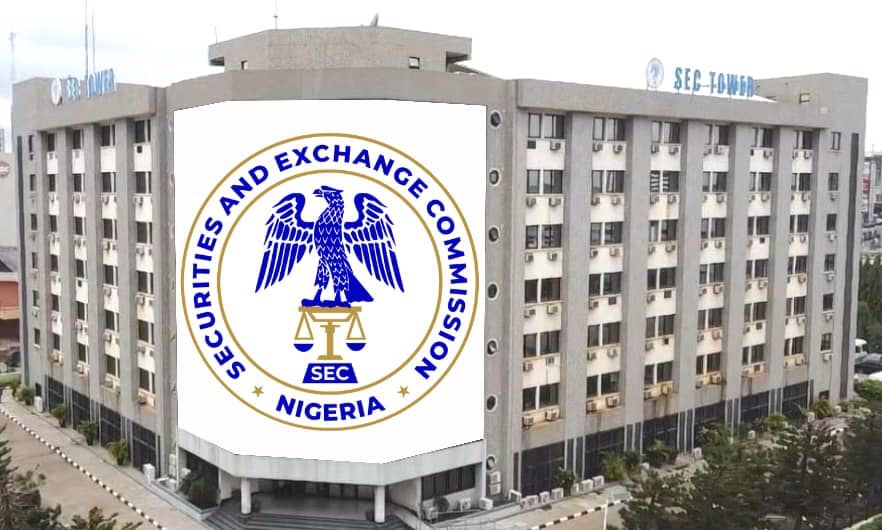

BY NKECHI NAECHE-ESEZOBOR—The Securities and Exchange Commission (SEC) has directed an immediate halt to all marketing and promotional activities relating to a purported Initial Public Offering (IPO) by Dangote Petroleum Refinery & Petrochemicals FZE, warning investors that the offer has neither been filed with nor approved by the regulator.
In a public notice issued on Tuesday, the Commission said it had become aware of advertisements, digital campaigns, flyers, and targeted emails circulating across social media and investment platforms promoting an alleged public share offering by the refinery.
According to the SEC, no application for the registration of an IPO or any public offer of shares by Dangote Refinery has been submitted to or cleared by the Commission.
The regulator expressed concern over reports that some Registered Capital Market Operators (CMOs) were actively soliciting subscriptions and collecting investor commitments for the purported offer.
It described the activities as misleading and capable of creating false market expectations, information asymmetry, and risks to the integrity of Nigeria’s capital market.
The Commission noted that invitations encouraging investors to create accounts, pre-fund subscriptions, or secure guaranteed share allocations amounted to market manipulation and constituted serious violations of the Investments and Securities Act.
Consequently, the SEC directed all registered market operators, including stockbrokers and digital investment platforms, to immediately cease the publication, distribution, or promotion of any materials related to the alleged offering.
The regulator also ordered operators to remove all unauthorized promotional content from websites, social media platforms, and messaging channels within 24 hours of the notice.
In addition, the Commission instructed operators to stop accepting deposits, account openings, expressions of interest, or any form of commitment linked to the purported IPO. Any funds already collected from investors in connection with the offering must be refunded within 24 hours.
The SEC warned that failure to comply with the directive would attract sanctions under the Investments and Securities Act, 2025, and the Commission’s Rules and Regulations.
The regulator advised investors to exercise caution and rely solely on official communications issued through SEC-approved channels when considering investment opportunities.
It further urged members of the public to disregard high-pressure marketing tactics and requests for fund transfers tied to any “pre-IPO” placement, stressing that such activities have not received regulatory approval.
The Commission assured investors that should Dangote Refinery eventually submit and obtain approval for a public offering, an official prospectus would be released in accordance with the provisions of the Investments and Securities Act, 2025.
The post SEC Halts Promotion of Unapproved Dangote Refinery IPO, Warns Investors appeared first on Business Today NG.
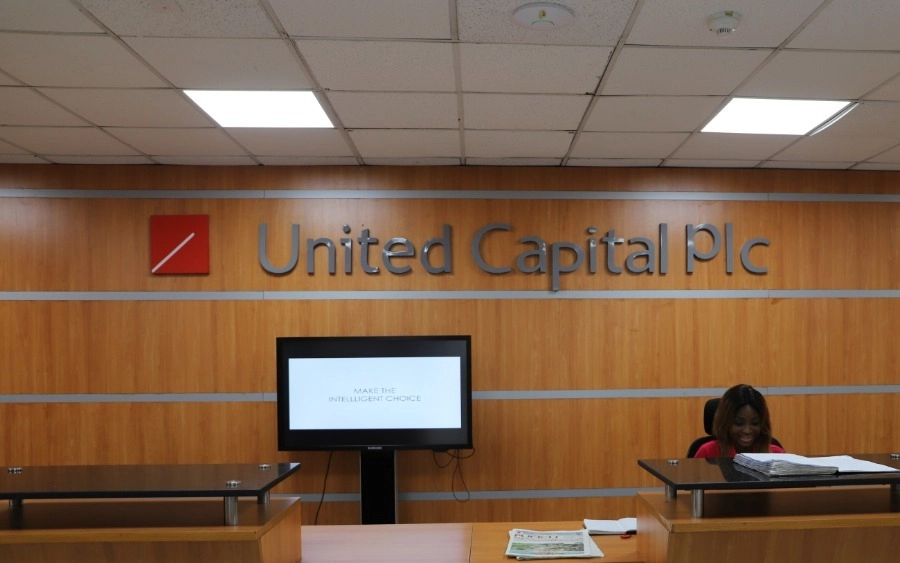

The story of African development is undergoing a profound, historic shift. For decades, the narrative was dominated by foreign capital, with investments flowing inward from distant global capitals, development projects managed by external actors, and the resulting profits regularly finding their way back across oceans. While Africa has always been rich in resources and opportunities, its financial destiny was largely shaped by outsiders. Today, that old story is being rewritten. Across the continent, African-owned institutions are stepping forward, expanding beyond their national borders, mobilising local capital, and proving that Africa possesses both the expertise and the financial strength to fund its own progress.
In the vanguard of this transformation is United Capital Plc, whose expansion into Ethiopia and Rwanda marks a defining moment in the evolution of regional investment banking.
The Nigerian financial services giant recently achieved a historic milestone by becoming the first foreign investment bank to secure an operating license in Ethiopia, one of Africa’s fastest-growing economies. Around the same time, the company obtained regulatory approval to operate in Rwanda, significantly strengthening its footprint in East and Central Africa. These milestones represent much more than standard corporate expansion; they symbolise the growing confidence of African financial institutions in the continent’s long-term future and highlight the increasing integration of Africa’s capital markets, proving that cross-border collaboration is a commercial reality.
The entry into Ethiopia is particularly momentous. With a population exceeding 120 million people and an ambitious economic reform agenda, Ethiopia has historically maintained a tightly controlled, closed financial sector. The government’s recent decision to gradually liberalise the financial industry has attracted global attention, and United Capital’s successful entry positions the company as a foundational architect in Ethiopia’s evolving capital market ecosystem. For Ethiopia, granting United Capital the country’s very first foreign investment banking licence signals deep trust, reflecting confidence in the institution and validating the broader vision of economic openness championed by Prime Minister Abiy Ahmed to modernise the economy and encourage private-sector participation.
Rwanda presents a similarly compelling success story. Widely regarded as one of Africa’s most business-friendly destinations, Rwanda has steadily transformed its capital, Kigali, into a premier regional financial hub. With this new regulatory approval, United Capital is authorised to provide a full suite of services, including investment banking, portfolio management, trust services, and capital market advisory services, thereby strengthening Rwanda’s position as a strategic gateway for investments flowing into the wider region.

Together, Ethiopia and Rwanda offer direct access to some of the continent’s most dynamic economic corridors. Their youthful populations, expanding middle classes, urgent infrastructure needs, and strategic trade links make them prime destinations for long-term growth. By establishing a physical presence in these markets, United Capital presents itself directly at the intersection of opportunity and structural transformation, creating reliable pathways for local businesses seeking both expansion capital and world-class financial advisory services.
At the same time, it unlocks new wealth-creation opportunities for individuals and institutions through sophisticated fund management offerings, diverse investment options, and tailored portfolio management solutions designed to preserve and grow wealth across generations.
However, the real weight of this expansion extends far beyond corporate balance sheets and market share. It perfectly embodies the philosophy of Africapitalism, a school of thought championed by renowned investor, entrepreneur, and Group Chairman, Heirs Holdings, Tony Elumelu, a major investor in United Capital PLC. The core premise of Africapitalism is that Africa’s private sector must play a leading role in driving economic development, and that true, sustainable prosperity is generated when businesses commit to long-term investments that create both economic profit and social wealth.
For years, Mr Elumelu has argued that Africa’s development cannot depend solely on foreign aid or external borrowing. Rather, sustainable growth occurs when African businesses actively invest in African opportunities, create sustainable jobs, build domestic industries, and unlock the immense potential of the continent’s people.
ALSO READ:
United Capital’s quarterly profit jumps 66% as revenue crosses N17 billion
Through institutions like the Tony Elumelu Foundation and his leadership of major corporate engines like UBA Group, Transcorp, and Heirs Energies, Elumelu has consistently advocated for private-sector-led development as the only reliable path to true economic independence.
This vision is rapidly becoming an everyday reality. Across critical sectors, African companies are proving they can compete at global standards while solving deeply rooted local development challenges. The expansion of institutions like United Capital reflects the growing maturity of African financial markets. It signals the rise of a new generation of homegrown champions capable of mobilising capital on a massive scale.
United Capital’s journey from Nigeria into new regional markets mirrors a broader continental ambition, most clearly seen in initiatives such as the African Continental Free Trade Area, which aims to deepen economic integration, encourage cross-border investment, and build interconnected financial systems that can support large-scale industrialisation. In this ecosystem, investment banks act as vital engines that connect idle capital with productive opportunities, facilitate complex infrastructure financing, and enable widespread wealth creation.
Industry analysts emphasise that one of the most valuable assets United Capital brings to Ethiopia and Rwanda is the transfer of knowledge, as the migration of technical expertise, professional training, market insights, and institutional best practices will significantly accelerate the development of local financial ecosystems. Furthermore, this expansion sends a powerful message about Nigeria’s leadership role within Africa’s financial services landscape. As Nigerian institutions expand across the continent, they export an invaluable wealth of innovation and investment solutions refined over decades of operating in one of Africa’s most competitive regulatory markets.
This export of talent strengthens regional cooperation and reinforces the foundational truth that African solutions can effectively solve African challenges. Ultimately, United Capital’s milestone entry into Ethiopia and Rwanda reflects a continent taking full ownership of its economic destiny, proving that the vision of Africapitalism is no longer a distant aspiration but a powerful reality unfolding right now.
Dan Aibangbe is a Media and Public Relations Consultant
-

 News3 days ago
BREAKING: Ekiti 2026: ADC wins first polling unit
-
Health3 days ago
FG releases outbreak response funds to states to boost Ebola preparedness
-
News3 days ago
JUST IN: Gunmen Kill Pregnant Woman, Youth in Fresh Plateau Attack
-
News3 days ago
Ekiti Decides 2026: EFCC blinded, vote-buying should be decriminalised – Aisha Yesufu