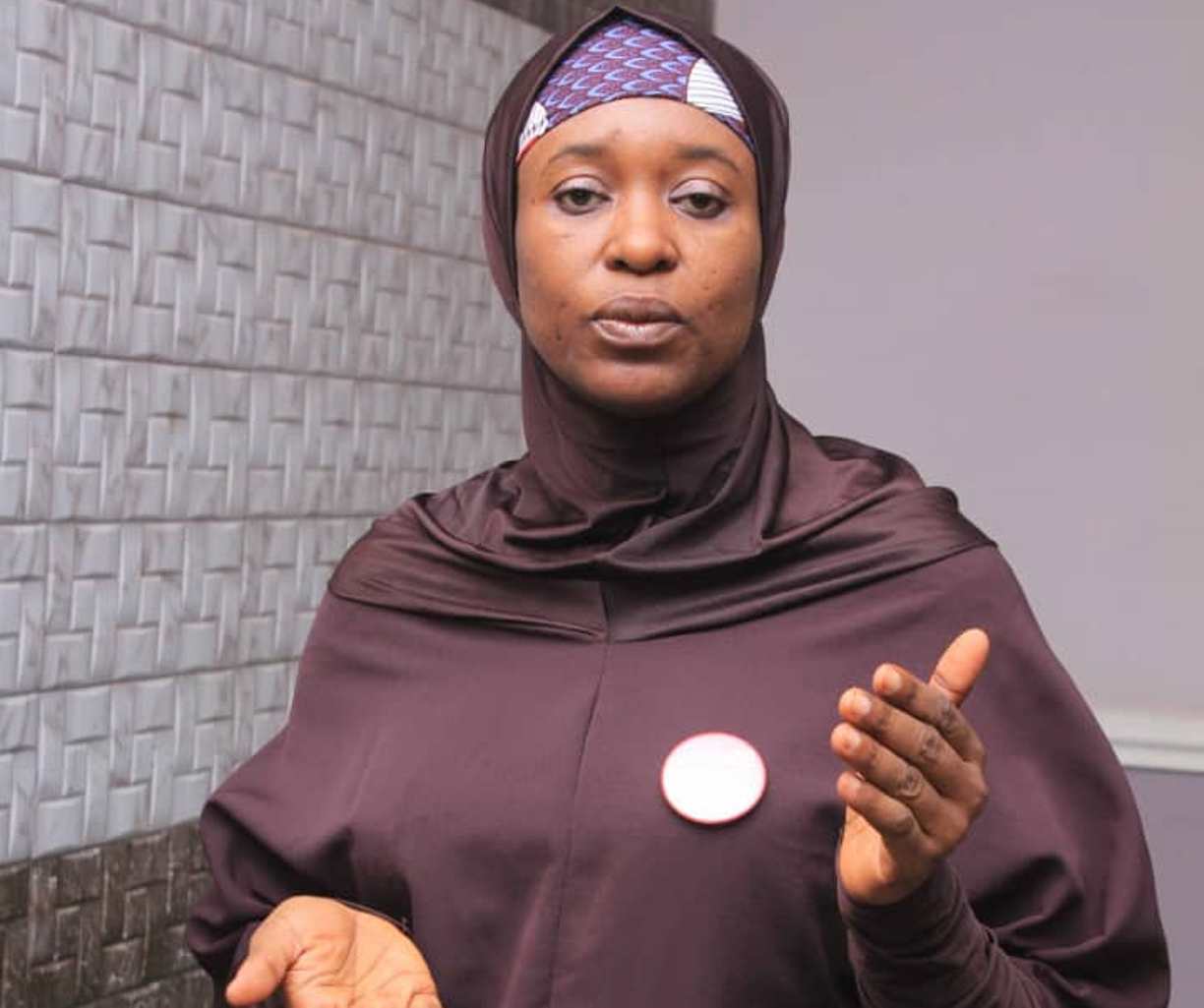
Rights activist and chieftain of the Nigeria Democratic Congress, NDC, Aisha Yesufu, on Saturday accused the Economic and Financial Crimes Commission, EFCC, of being blinded to vote-buying and electoral malpractices during elections.
Reacting to alleged vote-buying in Ekiti State, Yesufu said it should be decriminalised in Nigeria.
Posting on X, the activist noted that law-abiding Nigerians are at the receiving end of vote-buying in Nigeria.
He wrote: “At this rate, vote buying should be decriminalized in Nigeria. It does not make sense since it is those who are law abiding that gets punished for it!
“They do not do the vote buying and they are schemed out while others buy votes and waltz their way into office. @officialEFCC ‘s eagle is blindfolded during election.
“Instead of candidates wasting money on campaigns, let everyone wait for Election Day and bargain.
“The highest bidder wins and you save your money. This nonsense needs to stop.”
Meanwhile, there have been allegations of electoral malpractice in the ongoing gubernatorial election in the state.
The African Democratic Congress, ADC, governorship candidate in Ekiti State, Dare Bejide, alleged vote-buying and money sharing in his polling unit, while the police and officials of the Independent National Electoral Commission, INEC, refused to respond.
National Head Coach of the Nigeria Powerlifting Association, Lucky Jolly Iduseri, has credited discipline, thorough preparation, and strong administrative support for Team Nigeria’s impressive performance at the inaugural Central African Zone Powerlifting Championship in Yaoundé, Cameroon.
In an exclusive interview with Sports247, Iduseri reflected on the team’s successful campaign, revealing that the athletes arrived in Cameroon several days before the start of the three-day competition to acclimatise and finalise their preparations.
According to the coach, Nigeria’s achievements were the result of months of structured planning rather than last-minute adjustments.
“The key factors behind our success were discipline, clearly defined roles, and the unwavering support of the President of the Nigeria Powerlifting Association,” Iduseri said. “We prepared our athletes to handle unexpected situations before leaving Nigeria, so when logistical issues arose in Cameroon, they remained focused on their performances.”
Iduseri explained that the coaching staff placed equal emphasis on physical readiness and mental resilience. Training sessions were designed to simulate pressure-filled situations, while athletes were encouraged to remain composed regardless of changing circumstances.
One of the tournament’s standout moments, according to the coach, was the silver-medal performance of debutant Odok Answer. Seeing a first-time competitor reach the podium was a source of immense pride and highlighted the depth of talent within the Nigerian team.
The coach also acknowledged the challenges encountered during the competition, including travel delays and schedule adjustments. However, he noted that prior planning and collective discipline enabled the squad to adapt quickly without allowing distractions to affect their performances.
Looking ahead, Iduseri said the Nigeria Powerlifting Association intends to build on the success in Cameroon by raising performance standards through additional training camps, enhanced discipline, and greater support for athletes.
He also delivered a message to aspiring powerlifters across the country, encouraging them to remain committed to the process and trust in consistent hard work.
“Stay disciplined and trust the process,” he said. “This championship has shown that when Nigerian athletes receive the right preparation and support, they are capable of competing successfully and winning medals on the international stage.”
With momentum from their achievements in Cameroon, Team Nigeria will now look to carry that confidence into future continental and global competitions as the sport continues to grow in prominence across the country.
Every year on 19 June, the world marks World Sickle Cell Day to raise awareness about a condition affecting millions globally. Yet despite decades of public campaigns encouraging genotype testing and informed marriage decisions, Nigeria continues to record one of the highest burdens of sickle cell disease (SCD) in the world.
According to the Federal Ministry of Health and Social Welfare, the country records approximately 150,000 infants born with sickle cell disease annually, accounting for a significant share of the global burden.
While genotype awareness campaigns have become common in schools, churches, mosques and healthcare facilities, health experts say awareness has not translated into adequate care, early diagnosis or improved quality of life for people already living with the condition.
Speaking with PT Health Watch to mark World Sickle Cell Day, medical and maternal health experts highlighted major gaps in Nigeria’s response to the disease, including weak newborn screening, limited access to treatment, under-resourced primary healthcare and persistent misconceptions.
Insights of experts Inforgrapics (PHOTO CREDIT : Fortune Eromonsele)
Beyond genotype awareness
For many Nigerians, discussions around sickle cell disease often focus on genotype compatibility and preventing new births affected by the condition.
However, Happiness Akinde, a medical doctor, said public health conversations must also prioritise the millions already living with the disease.
“Genotype awareness has been extremely important because it helps prevent new cases of sickle cell disease through informed reproductive decisions. However, there is a growing recognition that awareness efforts should also focus on people already living with the condition,” she said.
Ms Akinde explained that although education remains important, knowledge alone does not prevent sickle cell crises.
She noted that even patients who carefully follow medical advice can still experience painful episodes triggered by infections, dehydration, physical or emotional stress, poor sleep and other factors.
According to her, reducing the frequency of crises requires a combination of patient education, preventive treatment, reliable healthcare services and strong social support systems.
She added that conversations around hydration, infection prevention, medication adherence, nutrition, mental health, routine screenings and early recognition of complications deserve as much attention as genotype counselling.
The hidden cost of living with sickle cell disease
Beyond medical challenges, Ms Akinde noted that socioeconomic realities continue to worsen outcomes for many patients.
She said many families struggle to afford medications, transportation to hospitals and routine laboratory investigations required to monitor the disease.
Others live far from healthcare facilities or lack health insurance coverage, making regular care difficult.
“Effective management requires more than personal responsibility. It requires a healthcare system that supports patients consistently,” she said.
Essential medications such as folic acid, antibiotics, pain-relieving drugs and hydroxyurea, a disease-modifying therapy widely recommended for sickle cell disease remain inaccessible to many patients due to cost and availability challenges.
As a result, she noted, many people seek care only when complications become severe rather than receiving preventive treatment that could improve long-term outcomes.
Healthcare system gaps
Ms Akinde explained that weaknesses within the healthcare system continue to affect outcomes for people living with sickle cell disease.
She noted that primary healthcare workers, often the first point of contact for patients, may lack adequate training in sickle cell management, leading to delayed diagnosis of infections, poor follow-up care and inadequate pain management.
She added that some patients face delays in emergency treatment because healthcare providers underestimate the severity of sickle cell pain or are unfamiliar with recommended care protocols.
She also highlighted persistent misconceptions about the disease, including beliefs that crises result solely from poor self-care or that people living with the condition cannot live successful lives.
In addition, she said that some patients face stigma when seeking treatment because their pain is often doubted, while reliance on traditional remedies and delayed hospital visits can further worsen complications.
Poverty, gaps in prevention
Halimat Jimoh, a nurse and a professional midwife, reiterated that poverty, limited healthcare access and weaknesses within primary healthcare facilities contribute significantly to recurrent sickle cell crises.
“I have seen families who understand their child’s condition but simply cannot afford transportation to health facilities, medications, laboratory investigations or regular follow-up appointments,” she said.
Ms Jimoh believes one of Nigeria’s biggest failures is waiting until marriage discussions begin before educating people about genotype compatibility.
She argued that genotype education should begin much earlier through schools, adolescent health programmes and routine reproductive healthcare services.
She also identified major gaps during pregnancy and after delivery.
According to her, many pregnant women undergo genotype testing but receive little counselling about the implications for future pregnancies and their children.
More concerning, she said, is the absence of routine newborn screening across most health facilities.
“Too many babies leave health facilities without any form of newborn screening, meaning families only discover the child has sickle cell disease after repeated illnesses and hospital admissions,” she said.
Although babies with sickle cell disease often appear healthy at birth, Ms Jimoh explained that organ damage can begin long before obvious symptoms emerge.
As foetal haemoglobin gradually decreases during infancy, sickling becomes more pronounced, potentially affecting organs such as the spleen even before painful crises occur.
“Waiting until a child starts having repeated crises means we have already missed an important window to prevent complications and improve long-term outcomes,” she said.
Newborn screening
Rate of infants born with sickle cell disease annually.
Globally, newborn screening is recognised as one of the most effective strategies for reducing childhood deaths associated with sickle cell disease.
Early diagnosis allows healthcare workers to monitor affected children closely, educate caregivers, prevent infections and detect complications before they become life-threatening.
Yet routine newborn screening remains largely unavailable across much of Nigeria.
According to Ms Jimoh, inadequate funding, poor infrastructure, shortages of trained personnel and weak referral systems have prevented the intervention from becoming standard practice nationwide.
What Nigeria must do
For both experts, reducing the burden of sickle cell disease will require coordinated action across the healthcare system.
Ms Jimoh identified three priority interventions which includes; strengthening genotype education and counselling before conception, implementing nationwide newborn screening programmes, and improving primary healthcare services to provide continuous follow-up care and caregiver education.
Ms Akinde on the other hand, advocated a broader approach that includes expanding newborn screening, improving access to affordable medications such as hydroxyurea, strengthening primary healthcare systems, training healthcare workers and ensuring universal access to emergency care.
Both experts agreed that sickle cell disease must no longer be treated as a neglected condition.
Instead, they argue, it should be recognised as a major public health priority requiring sustained investment, stronger policies and improved healthcare access.
With better diagnosis, affordable treatment and consistent support, they say, people living with sickle cell disease can live longer, healthier and more productive lives.
The theme for this year’s World Sickle Cell Day, “Closing the Survival Gap: Equity in Sickle Cell Disease,” emphasises global and local action to improve support, care, and awareness for patients, while encouraging stronger advocacy for better health outcomes.