News
These are the countries moving to ban social media for children


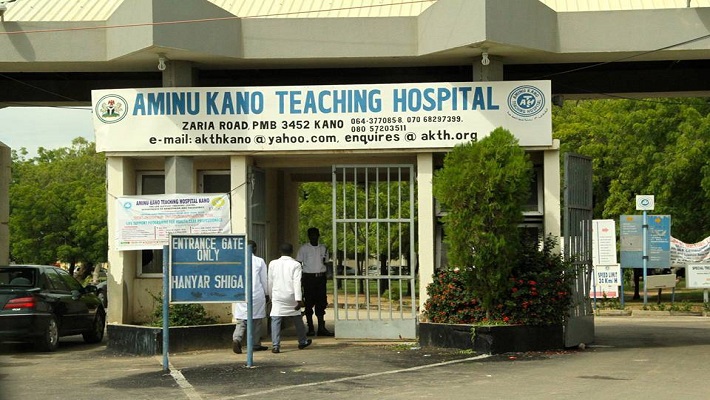
The Aminu Kano Teaching Hospital (AKTH) has recorded a major milestone with the introduction of In-Vitro Fertilisation (IVF) service provision to restore hopes of childless couples.
The milestone was recorded by a team of the hospital’s assisted reproductive health technology and others.
The Chief Consultant Gynaecologist and IVF Specialist at AKTH, Dr Ibrahim Rais, disclosed this in a video shared on the hospital’s official Facebook page.
Mr Rais said the team collected eggs from two women, while semen samples were also collected from their husbands for the next stage of the IVF procedure.
“Today marks a great milestone in the history of AKTH and the IVF service provision in the institution.
“The hospital’s Chief Medical Director, CMD, Abdulrahman Sheshe and his team has been working assiduously and today we have achieved this great milestone of the first egg collection in this institution.
“We have collected eggs from two women and also collected semen samples from their husbands. The eggs collected will be fertilised with their husbands’ sperm and we hope to achieve success.
“We are going to continue the service provision with three more patients and then we cap it up on Sunday with the last patient,” he said.
Mr Rais said commencement of the service would bring the service close to the population and restore hope among couples suffering from infertility.
“It is also important to note that starting IVF services in AKTH has been a very important development because the center will form one of points for service provision to the teeming population needing IVF services.
“It will form a centre of excellence for training in the field of Obstetric and Gynaecologist and Reproductive medicine.
“We have extracted more than a dozen eggs for now. Embryologists are working assiduously to ensure that there is fertilisation by sperm of the patients that had the procedure.
“We will go on to get more eggs that will generate more embryos and translate to potential more Nigerians,” Mr Rais said.
Similarly, the hospital in a statement on its official handle, said the milestone was achieved through the collaborative efforts of AKTH staff, specialist reproductive health experts from Jos and Abuja, and two embryologists.
It described the development as a significant step towards expanding advanced fertility services and bringing hope closer to residents.
Meanwhile, the hospital congratulated the the AKTH team for attaining the feat.
(NAN)


Three promising Nigerian youngsters — Raheem Moyinoluwa Salaudeen, Fawas Ayomide Adeleke and Jacob Obiora Iyida — are taking another important step in their football development after being registered for trial opportunities in the United Kingdom.
The trio, who are associated with Buruj Football Club and Buruj Sports Academy, will have the opportunity to experience football in a different environment while testing themselves against talented players in the UK.
Read Also: “When We Honour Our Legends, We Invest in the Future” — SSA Adeboye Commends Ex-Internationals Cup
The registration is part of Buruj’s wider commitment to creating international pathways for young Nigerian footballers and providing them with opportunities to gain exposure beyond the domestic football system.
For Raheem, Fawas and Jacob, the UK opportunity represents more than simply a football trial. It is a chance to learn, adapt and understand the demands of playing in a different football culture.
The three youngsters have continued to show commitment and determination throughout their development, and their latest opportunity provides another platform to showcase the qualities they have developed through their time in Nigeria.
Speaking about the opportunity, Raheem Salaudeen said:
“This is a big opportunity for us and we are grateful to everyone who has supported our journey. We want to go there, learn as much as possible, compete with confidence and show what Nigerian young players can do.”
Fawas Adeleke also expressed his determination to make the most of the experience:
“I see this as an opportunity to improve myself and understand a different style of football. I want to work hard, listen to the coaches and make every opportunity count. Hopefully, this will open another door for my career.”
For Jacob Obiora Iyida, the focus is equally clear — continue learning, gaining experience and taking another step towards his professional ambitions.
“I’m excited about the opportunity because playing outside Nigeria has always been one of my goals. I know there is a lot to learn, so I want to stay focused, work hard and show my best whenever I get the chance.”
Buruj Football Club and Buruj Sports Academy believe international exposure can play a significant role in the development of young footballers, allowing them to experience different coaching philosophies, tactical approaches and football cultures.
The academy’s development philosophy also places emphasis on education and personal development, ensuring that young players are prepared not only for possible professional careers but also for life beyond football.
The UK trip therefore represents another stage in a broader development pathway designed to help Nigerian youngsters build confidence, experience and international connections.
For Raheem, Fawas and Jacob, the message is simple: the opportunity has arrived, and now it is time to make it count.
From Nigeria to the United Kingdom, another chapter begins—with bigger dreams ahead.
-

 News1 day ago
Gagdi Appreciates Appointment as Deputy Director, Security and Intelligence of 2027 Presidential Campaign Council
-
News3 days ago
Tesla, Uber, and Waymo all get the OK to operate thousands of robotaxis in Nevada
-
Health3 days ago
FEC approves N540bn to upgrade National Hospital, build cancer centre
-
Health3 days ago
Expert warns against practices that can cause condom failure