News
Inside the London hacker house taking a stand against founder burnout

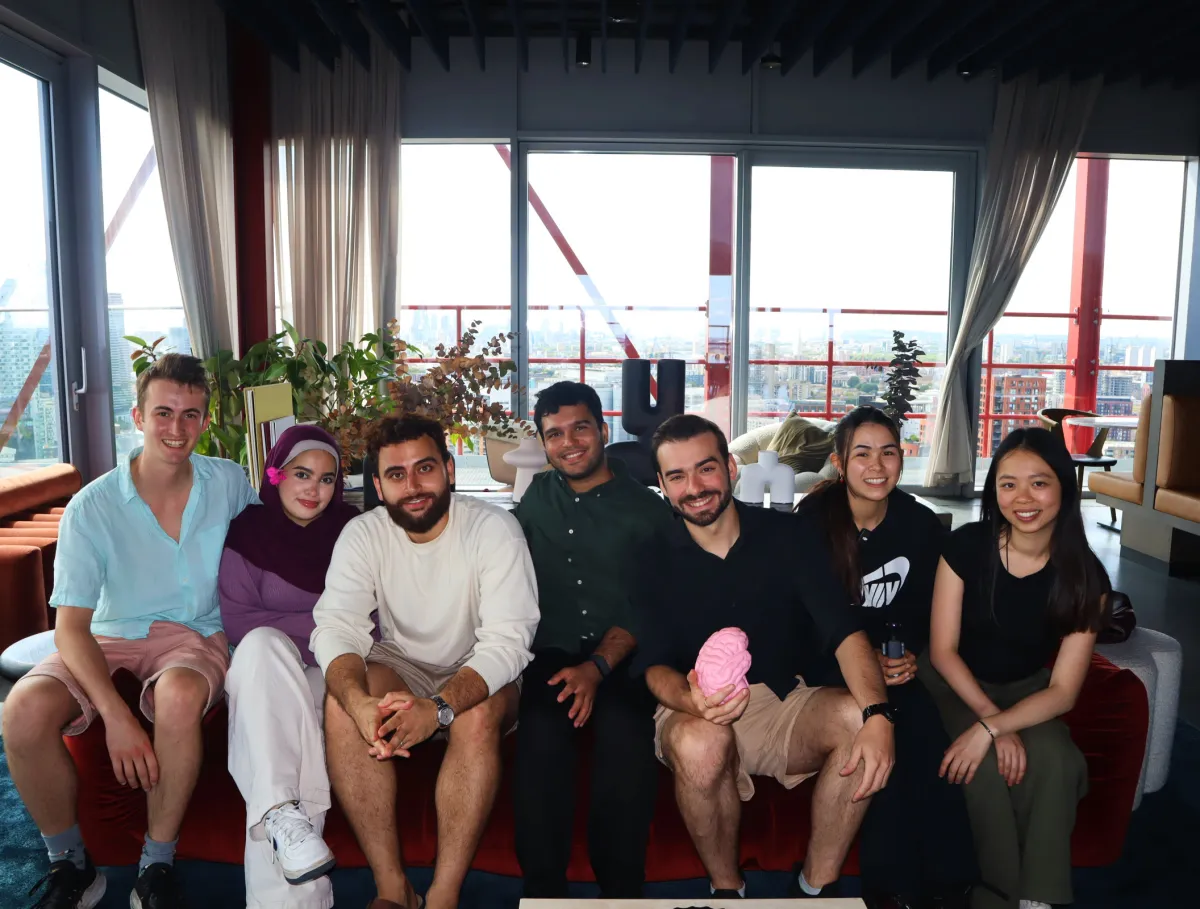
Six twentysomethings in East London have built what they say is the anti-San Francisco hacker house. The goal is a “holistic improvement in life,” rather than “12 weeks, Demo Day is coming,” Rowan Aldean, 26, explained.
Intrigued, I spent an afternoon visiting the house, meeting its residents, and doing a vibe check. I arrived after Aldean escorted me through the clean sidewalks of a new East London development to where the six-story building stood facing the water.
The house is called the London Island Founder House — or “Lift House” — and Aldean and his wife, Zahraa, 22, an upcoming pharmaceutical research PhD candidate, have lived there since May, just a few months after it officially launched in March. Aldean sold his previous company last year for millions, he said, and now runs an “applied AI” startup that helps companies learn how to deploy agents.
Like all hacker houses, Lift House is part startup workspace, part co-living space. The house is named after both its lift — that is, its elevator — and its mission to uplift tech founders, Aldean said. It’s one of the very few co-living hacker houses to exist in London (compared to San Francisco, where dozens — if not hundreds — are scattered around the city at any given time).
Lift House is a bet that U.K. founders can build successful companies without mimicking the over-the-top hustle culture of Silicon Valley.
Founders have described stories of San Francisco hacker houses illegally running in warehouses, throwing full-on galas, or setting up in a tent or espousing punishing, 72-hour sprints typical of the “996” work culture.
“I don’t expect the performative and over-the-top events will be a thing here,” Aldean said, and pointed to one of London’s most successful AI companies, DeepMind. “They’ve won Nobel prizes and built frontier innovation without any song and dance.”
Instead, Lift House is part of a trend called “Londonmaxxing,” in which founders attempt to optimize everything the London tech scene offers. The London ecosystem feels less showy and less startup bro-y than San Francisco, but its founders share similar ambitions: success, wealth, and market domination.
London AI startups have raised $12 billion so far in 2026, out of $14.7 billion raised by all London startups, according to Dealroom. Six companies have raised more than $500 million: Wayve, Superintelligence, ElevenLabs, Recursive, Ineffable Intelligence, and Isomorphic Labs, the latter three of which were founded by DeepMind alumni.
The excitement from AI has boosted the morale of the U.K. tech scene, inspiring a new generation of founders, like those in the Lift House, to take big swings.

Journaling vs. demo day
The timeline for living on Lift House is flexible — some people have stayed for a month; others intend to stay for at least six months. They buy their own groceries, Aldean said, although they often cook together and share ingredients. Cleaning is split among the group. Everyone declined to share information about the rent they pay.
The residents of Lift House aim for a balanced approach toward ambition, each one of them tells me — an almost unheard-of idea by San Francisco startup standards.
On Sundays, the group will journal together, a practice introduced by David Amor, 28, who runs a brain coaching and training company, helping founders and business leaders understand more about their brain and how it can help optimize business performance. The idea of journaling is to help everyone track how much time they spent in nature that week, how well they ate, and how much they moved their bodies.
“I’m eating healthier, working out more, and sleeping more,” Luke, 27, who runs an AI-marketing company, said about living in the house. “I always make sure to have lunch now, which is something that is simple, but I wasn’t doing before I lived here.” (Luke asked that his last name be withheld.)
Tuesdays evenings are for volleyball, where the founders play on the house team in a local league.
After dinner on other evenings, Wan Ying L, 25, who just left an AI startup and is working on a new idea, might play the piano in the living room. Sometimes the group plays Catan or visits art exhibitions together.
Presence Plumb, 25, is a tech strategist. She likes to host rooftop dinner parties, serving dishes that reflect the different nationalities in the house — from Iraqi to Spanish — while invited founders, researchers, investors, and operators chat about tech trends and investments.
“It’s a bit calmer, balanced, authentic in a way,” she said of people in the London ecosystem. “They don’t want too much of that only startup tech bro vibe. They want a bit of balance.”
Each founder follows their own schedules for a typical workday. Amor, for example, is up by 8 a.m. and gives himself exactly 30 seconds after waking up before jumping into his morning work. “I have a clear objective of ‘this is what I want to do in the first half of the day, when there’s no distractions.’” After his morning work routine, he takes a cold shower, “because it increases your dopamine by 250% and that gives me that motivation, that spark,” he said.

Luke, meanwhile, is up at around 8:30. His co-founder, Varun, 27 (who asked that his last name be withheld), typically travels to the Lift House to co-work, and the duo starts work at around 9 a.m. with a team call.
Aldean rarely wakes before 10 a.m. unless something big is happening, like a “crazy angel [investor] call,” he said.
When asked what makes this house uniquely British rather than a wellness-focused Silicon Valley founder house, Aldean joked: “Well, we drink tea together like Brits, and in SF folks just drink filtered coffee.”
More seriously, he spoke of how British founders face a different kind of pressure than those in the U.S. They must navigate a cultural aversion to risk, an inclination toward humility, and a shame associated with failure. Instead of forgoing sleep for hustle and grind, they deal with what they call the “tall poppy syndrome,” when the media builds one up only to ruthlessly tear them down should they become too successful, investors and founders say. It makes some founders in the ecosystem wary of displaying too many wins.
Still, Luke said London is a strong choice for an early-stage founder: There’s a good network, ample early capital opportunities, and an option for a life outside of tech. In many ways, it is much more like New York culturally for founders than in San Francisco.
“London is so diverse that if you look properly enough, you’ll always find something fun to get involved with,” Amor added, “whether that’s a founder-run club, wellness events, [or going] to jazz nights.”

Luke and Varun largely avoided venture capital funding by taking advantage of the U.K. government’s SEIS/EIS, which is supposed to help attract more angel investments into local startups. “There’s people who will pay basically the same rate of tax if they give us the money versus if they pay income tax,” Luke explained as another reason he liked starting out in London.
Aldean also feels the London ecosystem is less cutthroat than the Valley. He recalls his days living in a hacker house in the Bay — everyone’s desk had to face the wall, and it was heads-down, product-building. He felt the ecosystem, at times, was too willing to gossip, which is apparently done quite differently in the U.K.
“There’s nothing like ‘oh my god did you hear that the CTO just, like, did this,’” Aldean said. “It’s like you’re always worried,” he said, that someone would spread negative stories, especially if it benefited them.
Aldean also thinks London startups, more than Silicon Valley ones, sell into slow-moving large corporations rather than to each other, meaning one could build without having to kiss up or posture to get their peers to like them.
To the selling point, Varun and Luke mentioned another difference between the U.S. and U.K. ecosystem. “It’s a relatively fleeting market,” Varun said of the U.S. “You get quick wins. Here, it’s hard to close a customer, but if they close, they stay with you longer.”
Coming to America
Eventually, though, the road for many U.K. startups goes straight to the U.S.
In the U.K., founders have access to affordable top talent from universities like Oxbridge and a time zone that makes it easier to work with the rest of Europe, the Middle East, Asia, and parts of North America. In the U.S., however, they have access to the world’s largest economy and, most importantly, a lot of investors willing to write large checks, from pre-seed to growth stages.
“It’s almost like a factory line in a way,” Varun said. “You start here, and then you expand there or vice versa.”
American investors are also playing a role in luring British talent away from the country. I told the Lift House residents about one startup founder who said a top investor wouldn’t even back the company unless she relocated to the U.S. She ended up doing so, though decided to keep her family based in the U.K. to raise her children.
“We had an investor in Miami who said the same thing,” Luke said of an investor trying to get him and Varun to move to the U.S. “It’s quite a common practice.” He and Varun have already begun their U.S. expansion, and despite loving London, the duo hasn’t ruled out moving to the U.S. to be closer to their customers.

That’s the tension bubbling beneath not just the U.K.’s tech ecosystem but most of Europe’s. “I work with a lot of people trying to support the European ecosystem more,” Plumb said.
Yet, founders “talk about London; everyone is bullish on the country until they get the opportunity to leave,” Aldean added.
The Lift House lease has about a year left, and there is sentiment in the house to keep it going for as long as they can. After all, there aren’t too many in London, though the city sees many short-term gatherings, like the Solana Hacker House meet-up series. Some of the more public co-living hacker houses are part of a global chain, like the San Francisco-based network The Residency, which expanded into London last year, and BaseJump, which is announcing a London version of its hacker house program soon.
In 2024, two founders tried the opposite version of the Lift House called “The London Founder House,” which Sifted covered under the headline “The people here don’t want work-life balance.” That home is noted as London’s first-ever hacker house, and though it wound down last year, it left an influence through its concept, events, and connected players around the ecosystem. To even be considered for the London Founder House, one had to have raised at least half a million dollars.
For Lift House, prospective residents need to show a hobby outside their companies and an interest in fitness. It’s the same pitch many in the Londonmaxxing ecosystem are using to keep people from leaving: That here one can have it all.
“The culture is to build something that lasts,” Aldean said, “not necessarily burn out chasing a flash.”
When you purchase through links in our articles, we may earn a small commission. This doesn’t affect our editorial independence.









The Nigerian Army has rejected a circulating document alleging that terrorists are preparing to attack schools, churches, mosques, NYSC orientation camps and other public facilities across the country.
Army spokesperson, Col. Appolonia Anele, said the document did not originate from the military and should not be regarded as an authentic Army intelligence alert.
Anele described the document as “fake” and said its circulation appeared designed to create fear and tension among members of the public.
She, however, said the Army was not taking security threats lightly, adding that military commands had been directed to remain vigilant and prevent any successful attack on vulnerable facilities.
The development followed the circulation of an alleged memo addressed to formations and units of the 2 Division Nigerian Army, containing claims of possible coordinated attacks across several parts of Nigeria.
An officer attached to the division also expressed doubts about the authenticity of the document, saying a similar message had reached the General Officer Commanding the division.
“Even though I doubt the authenticity. My GOC said he got the same message before we left for Benin two days ago. That he has directed commands on it.
“I feel it is one of those text messages circulated to create palpable fear,” the officer said.
The disputed document claimed that intelligence had revealed increased mobilisation of fighters and resources by terrorist groups for possible attacks on vulnerable locations.
It mentioned the North-East, North-West, North-Central and parts of the South-West as areas allegedly at risk, while identifying churches, schools, NYSC orientation camps and other public facilities as possible targets.
The document further alleged that Catholic and Protestant churches, primary and secondary schools and other locations with large gatherings had been identified for possible attacks.
It also claimed that armed fighters had moved from Katsina through Kaduna towards Plateau State, describing the alleged movement as part of intelligence that had heightened concern among security formations.
“Further intelligence revealed that suspected members of Islamic States West African Province (ISWAP) have commenced surveillance and reconnaissance activities against identified targets with support from their local collaborators,” the document stated.
Another claim in the document was that educational institutions could be targeted around the resumption of the 2026/2027 academic session, with the alleged attackers seeking to exploit the presence of large numbers of students and staff.
It claimed such attacks could cause mass casualties and increase fear ahead of the 2027 general elections.

The Army’s response came against the backdrop of a separate security warning reportedly issued by the Department of State Services to religious leaders in Osun State.
DSS officials reportedly met Muslim and Christian leaders in Osogbo and advised them to strengthen security around places where large numbers of people gather.
President of the Osun State Muslim Community, Alhaji Mustapha Olawuyi, confirmed the meeting and said the security agency had asked religious leaders to take precautions.
“The meeting is true; it was held on Wednesday in Osogbo. We need to be careful and vigilant. These people (terrorists) have been trying to infiltrate Osun for quite some time,” Olawuyi said.
According to him, the DSS warned mosque leaders to pay attention to suspicious vehicles, unfamiliar persons and activities around worship centres.
“The DSS came from Abuja to Osun to warn us about a plot by some politicians and terrorists to frustrate the 2027 election, and for every one of us to be careful,” he said.
Olawuyi said the advice was subsequently communicated to imams across the state.
Christian leaders were also reportedly briefed by the DSS. Osun State Chairman of the Christian Association of Nigeria, Pastor John Adeleke, said churches were advised to improve their security awareness and pay attention to unfamiliar visitors and vehicles.
A report circulated among Christian leaders alleged that terrorists had mapped Osun State as part of a wider plan to attack states before the 2027 presidential election.
The report claimed that the suspected attackers could move through Kaduna and Jos before heading towards Osun, with churches, mosques, markets, schools, clubs and viewing centres identified as possible targets.
Adeleke said the information was shared with CAN blocs and other Christian groups so that religious leaders could take precautionary measures.
“After sharing with us that the churches will need to be careful and that we should encourage our churches also to be on alert, we sent the message to all our blocs and different platforms, where our people may be informed,” he said.
He added that church leaders were advised to be cautious about vehicles parked close to worship centres and to properly identify visitors before allowing them into church premises.
“They also said we should be careful of night programmes, so that the people will not take advantage of the darkness to perpetrate their evil plans. The message is that our people should be security-conscious. If they see anything, they should say it,” Adeleke said.
-

 News4 days ago
Revolut confirms customer data breach through fake government requests
-
Business4 days ago
FG settles severance benefits for 2,100 former Nigeria Airways workers after two decades
-
Health4 days ago
PT Health Watch: How laboratory tests can help detect colorectal cancer early
-
News3 days ago
Automattic confirms Mullenweg has returned as CEO after attempted ouster by board