
News
“We Stand With Plateau in Prayer and Hope,” says CAN president ahead of NEC meeting


Delegates of the Christian Association of Nigeria (CAN) have arrived in Plateau State ahead of the National Executive Council meeting scheduled to commence on Tuesday, November 18, 2025.
The delegation was received at the Yakubu Gowon Airport by the Special Adviser to the Governor on Policy and Governance, Hon. Istifanus Mwansat, who represented the Secretary to the State Government, Arc. Samuel Jatau, on behalf of Governor Caleb Mutfwang. He was accompanied by the Plateau CAN Chairman, Rev. Dr. Dunka Gomwalk; the Special Adviser on Religious Affairs, Rev. Dr. Stephen Dang Gana; and other senior government officials.

CAN President, His Eminence Archbishop Daniel Oko, who arrived earlier expressed gratitude to the state for the warm reception and emphasized the significance of hosting the final quarterly CAN Executive Council meeting of the year in Jos.
“We are here to stand with Plateau in prayer and hope. This meeting allows us to connect with Christians at the grassroots and to pray for lasting peace and progress in this state,” he said.
“We postponed this meeting earlier due to the loss of the CAN chairman, but we are now here to pray with the people, encourage them, and reaffirm our solidarity.”

Earlier, the Vice President of CAN, Rev. Dr. Stephen Baba Panya, said Plateau was chosen because of its long-standing Christian heritage and its reputation as a hospitable city.
He added that the delegation’s presence was a spiritual and symbolic gesture towards peacebuilding in the state.
“Jos remains a welcoming city to people from across the country. We believe our coming will add to the legacy of peace Plateau is known for,” he stated.

Delegates Taken on Tour of the Ten Commandments Crusade Ground
As part of the visit, the Special Adviser to the Governor on Policy and Governance, Mr. Yilchap Ibrahim, led the team on a tour of the Ten Commandments crusade ground.
He explained that the project, originally envisioned by former Governor Jonah Jang, has been expanded significantly to accommodate larger worship gatherings.


He noted that seating capacity had increased to nearly 8,000, with additional platforms for ministers, VIPs, and national Christian leaders expected to attend the upcoming Plateau Unity Christmas Festival.

Plateau CAN Chairman: “This Visit Is a Prophetic Blessing”
Welcoming the national delegation, Plateau CAN Chairman Rev. Dr. Dunka Gomwalk said the timing of the visit was divinely orchestrated.
“This meeting is prophetically and strategically timed by God to bring a blessing upon Plateau,” he said.
“We have faced many security challenges, but the presence of the national executive council here is a sign of hope and stability.”


Advisory Council on Inter-Religious Harmony Welcomes CAN
The delegation also met with the Plateau State Advisory Council on Inter-Religious Harmony, who expressed delight over CAN’s visit.

Co-chair of the council, Rev. Pandam Yamsat, urged CAN leaders to remain firm in promoting unity in Nigeria.
“Plateau is a home of peace despite challenges. Take the bull by the horn and continue to stand for fairness and unity in this country,” he told the visitors.

Representing the Emir of Wase, Alhaji Mohammed Sambo Haruna, a JNI official welcomed CAN warmly, describing Christians and Muslims as members of the same family under God.

Another council member, Dr. Sumia Hamza, applauded CAN for choosing Plateau, noting that interfaith unity must be showcased to counter negative narratives.
“This picture of Christians and Muslims sitting together should go out to the world. Plateau is peaceful, and we must change the wrong perceptions,” she said.




Featured
Dachung Musa Bagos Foundation Becomes First Nigerian Partner of Manchester Global Foundation


The landmark partnership aims to strengthen cancer awareness, promote early detection and prevention, and address other critical community needs through impactful programmes across Nigeria.
By combining their expertise, resources and shared commitment to humanitarian service, both organisations seek to support vulnerable populations, strengthen communities, promote human dignity and deliver sustainable interventions that improve lives.


The collaboration is expected to expand the reach of humanitarian initiatives, inspire hope among underserved communities and create lasting positive change across the country.
Celebrating the milestone, the Dachung Musa Bagos Foundation thanked God for the partnership and expressed optimism that the collaboration would open new opportunities for service, community development, and improved access to essential support for vulnerable Nigerians.
News
LA 2028 Olympics Race: Chelle Invites 31 Home-Based Players for Crucial DR Congo U23 AFCON Qualifiers

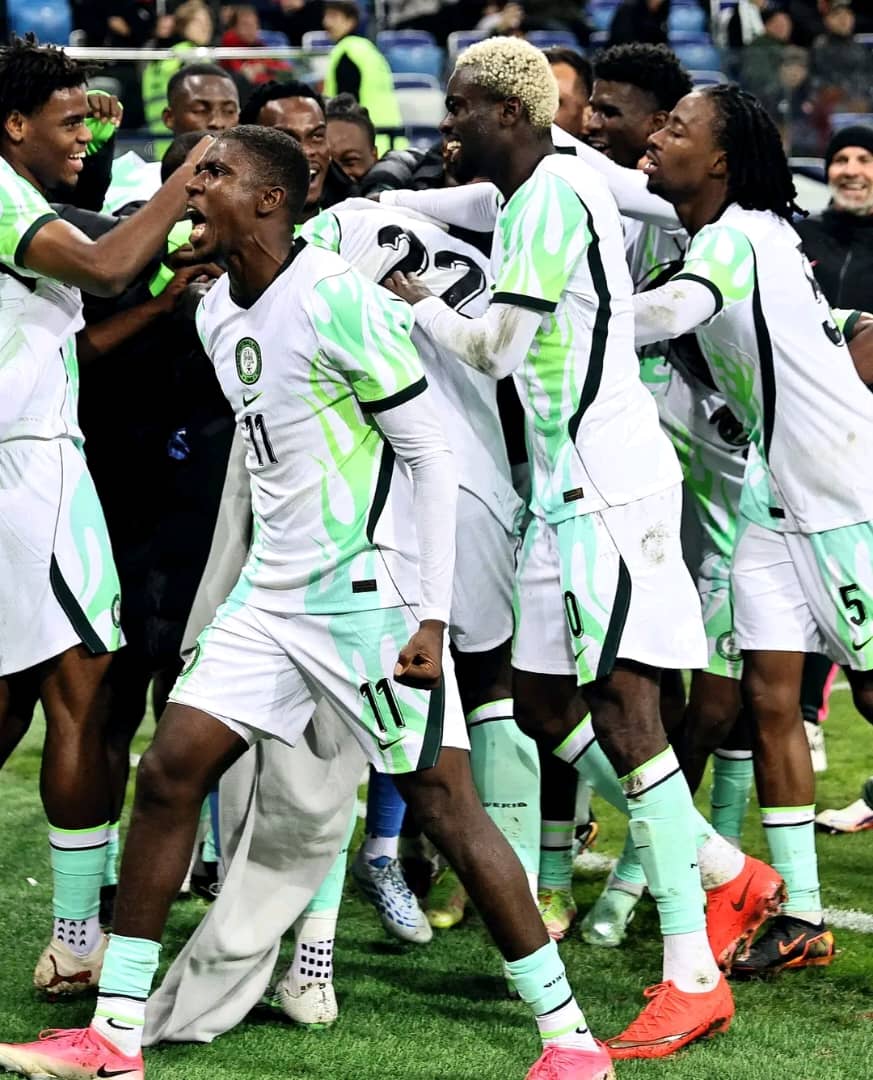
Super Eagles head coach Éric Chelle has invited 31 home-based players to the Olympic Eagles camp ahead of Nigeria’s crucial U23 Africa Cup of Nations qualifying fixtures against the Democratic Republic of Congo, as the country intensifies preparations for a return to Olympic men’s football at Los Angeles 2028.
Sports247 reports that the provisional squad comprises four goalkeepers, nine defenders, eight midfielders and 10 forwards drawn largely from clubs competing in the Nigeria Premier Football League (NPFL).
All invited players are expected to report to AM2PM Hotel in Ijebu-Ode, Ogun State, on Sunday, October 25, ahead of the two-legged qualifying encounter scheduled for November.
Nigeria will travel to Lubumbashi for the first leg against DR Congo at the TP Mazembe Stadium on Friday, November 13, before hosting the return fixture at the Remo Stars Stadium in Ikenne on Tuesday, November 17.
The aggregate winner will progress to the final qualifying round for the U23 AFCON, scheduled to take place in Egypt. The continental tournament will serve as Africa’s qualification pathway for the men’s football competition at the 2028 Olympic Games in Los Angeles.
Nigeria received a bye into the second qualifying round, while DR Congo advanced after eliminating Mauritania.
Sporting Lagos have five representatives in the squad, including goalkeeper Ebenezer Harcourt, defender Hillary Zion, midfielders Victor Samuel and Muhammad Salihu, and forward Ayoola Olaniyan.
Rivers United contribute four players, while Warri Wolves also have four representatives. Ikorodu City, Nasarawa United and Rangers International are among the other clubs represented.
The invitations provide an opportunity for domestic league players to demonstrate their qualities at international level. Nigeria’s men’s football team has enjoyed considerable Olympic success, winning gold at Atlanta 1996, silver at Beijing 2008 and bronze at Rio 2016.
However, the country failed to qualify for the Tokyo 2020 and Paris 2024 tournaments. The upcoming qualifiers therefore represent another opportunity to rebuild Nigeria’s Olympic football ambitions.
With Chelle assembling a squad dominated by domestic talents, attention now turns to preparations in Ijebu-Ode as the Olympic Eagles target a positive result against DR Congo and another step towards Los Angeles 2028.
FULL LIST OF INVITED PLAYERS
Goalkeepers (4): Chinemerem Olughu (Nasarawa United), Clinton Andy (Rivers United), Ebenezer Harcourt (Sporting Lagos), Michael Atata (Ikorodu City).
Defenders (9): Gift Subi (Warri Wolves), Hillary Zion (Sporting Lagos), Emmanuel Utake (Rivers United), Chibueze Oputa (Rangers International), Marvelous Freedom (Ikorodu City), Kenneth Igboke (Rangers International), Odinaka Alfred (Nasarawa United), Emmanuel Ochobi (Rivers United), Aliu Sugau (Barau FC).
Midfielders (8): Freeman Wuchirwe (Bendel Insurance), Victor Samuel (Sporting Lagos), Umar Mohammed (Nasarawa United), Lucky Oraro (Warri Wolves), Aderemi Adeoye (Ikorodu City), Sani Shuaibu (Warri Wolves), Muhammad Salihu (Sporting Lagos), Jude Eventus (Warri Wolves).
Forwards (10): Junior Ikechukwu (Ikorodu City), Timothy Zechariah (Rivers United), Williams Wonah (Enyimba FC), Ayoola Olaniyan (Sporting Lagos), Chijioke Samuel (Enyimba FC), Jofrank Joshua (Nasarawa United), Chimobi Igwilo (Rangers International), Alex Oweifaleya (Bendel Insurance), Abdulmuiz Adeleke (Sporting Supreme), Habila Simon (Wikki Tourists).
-

 News4 days ago
Amazon to fund 12 small nuclear reactors at former Indiana coal plant
-
News3 days ago
Mamdani says feds have abdicated on AI, urges New Yorkers to push back
-
News3 days ago
Meta’s Muse hits 10M U.S. downloads in 40 days, a milestone reached by only 11 other apps
-
Business2 days ago
How Your Side Hustle Income Ends Up in Your RSA


