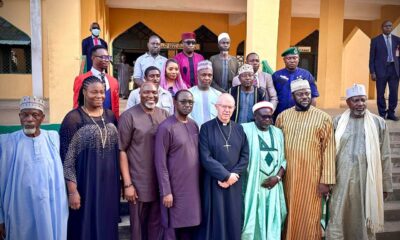
In a bid to promote inter-religious harmony in Plateau State, the King Abdullah bin Abdulaziz International Centre for Interreligious and Intercultural Dialogue (KAICIID) in collaboration with the Women Initiative for Positive Peace Building Initiative (WOPPI) and Women Peace Builders Network in Nigeria (WOPENN), organized an interreligious conference aimed to empower women in Plateau State to play a more active role in promoting interfaith harmony in their communities.
The interreligious conference themed “The role and importance of women in building a culture of inter-religious harmony in Nigeria” which took place at the JPRM-POCC Conference Hall, Lamingo Road Jos on Wednesday 10th May 2023 in collaboration with The King Abdullah bin Abdulaziz International Centre for Interreligious and Intercultural Dialogue, (KAICIID) supported by Women Initiative For Positive Peace Building Initiative (WOPPI), Women Peace Builders Network in Nigeria (WOPENN) hard in attendance women representing the Muslim and Christian faith in Plateau State and also community leaders.
JPRM Executive Director and also a convener of the event, Eld. Amb Mrs. Justina Ngwobia who is also a KAICIID fellow stated that the Conference is part of an inter-worldview dialogue where women and other stakeholders are trained to interact and dialogue with one another to have peaceful coexistence in their communities and Nigeria as a whole.
“The project is meant to bring in women all over northern Nigeria to discuss issues as it affects them. How can we women as Christians and Muslims relate with one another as people of different faiths, cultures, communities, and backgrounds, share a common grounds where we throw sentiments, interests, politics, and religion apart in such a way that we will come together and dialogue on issues as it affects humanity because what we preach is humanity first before anything else”
In her media address, Mrs. Justina stated that the dialogue process will continue even after the program as there will be meetings with the incoming government and follow-up visits to the women in their various communities.
Hajiya Lantana Bako Abdullahi a co-convener of the initiative stated that the role of women must continuously be emphasized in the area of interigious dialogue, especially in the Northern part of Nigeria where there is more conflict.
“It’s important for women to see that they have what it takes to contribute to nation-building and most importantly in strengthening inter-religious dialogue among the various communities. Part of the outcome of this meeting are two important recommendations that women must demand inclusion in the plateau state inter-religious council as there is no single women representation in the 46-member group which is a great disservice to the contribution and voices of women to the promotion of peace.
Secondly, we need to reach out to the incoming government to discuss agenda-setting on issues are women’s participation in leadership and decision-making process especially in the North and particularly emphasizing affirmative action, and issues of conflict and violence as we are already seeing some resurgence of violence in some northern state which is a clear indication that the newly elected government need to be proactive about peacebuilding.”
Speaking at the event, Prince Charles Dickson, a peace practitioner and policy analyst called on women to support each other as he spoke on the challenges women face in society.
“The conversation about the role of women in peacebuilding has to be amplified and the only way to do that is that women to start telling their stories and be intentional about changing the narrative also women need to start promoting each other and engaging the bigger public with their own stories then we will get a bigger spectrum, in other words, programs like this should be more often and women should be given opportunities like this to interact and tell their stories”
Lead advocate, Plateau Women in Peace and Security Hajihah Fati Sole urged the participants to channel their motherly affinity to influence peaceful and meaningful dialogue to their family and communities at large.
Also speaking, at the event is Hajihah Amina Ahmed, Mrs. Sese Isaiah, Mrs. Brijet Dakes, Mrs. Jennifer Yerima, Chairman, Nigeria Association of Women Journalists (NAWOJ), Plateau Chapter, and the Moderator member JPRM Mary Bature
At the interaction, the women who were divided into groups were tasked with creating sustainable ideas and action plans that can aid in inter-religious harmony in their various communities and beyond.
Representing the Christian faithful, the chairperson of Plateau state women wing Christian Council of Nigeria (WOWICCN) Dorcas Yusuf Lankat stated that the discussion has helped in identifying ways of bridging the gap between the two major religions in the state, identifying the capacity of women in achieving sustainable peace and the need to make the effort of women more visible.
The Federation of Muslim Women’s Association of Nigeria (FOMWAN) president, Hajiya Kaltume Auwalu, highlighted measures being put in place as a result of the initiative by KAICIID.
She said “A joint prayer session between the Christian and Muslim faithful is already being planned as part of the action plan to ensure peace and interreligious harmony in the state. We also intend to organize football matches between communities.”

The Nigeria Hydrological Services Agency (NIHSA) has issued a seven-day flood advisory, warning of a medium flood risk in 17 states between July 21 and July 27.
The agency said the alert followed rising water levels at key river monitoring stations, increasing the likelihood of localised flooding along river channels and floodplains.
NIHSA Director-General, Umar Mohammed, disclosed this in National Flood Advisory (Alert No. NFA-2026-200) issued on Tuesday.
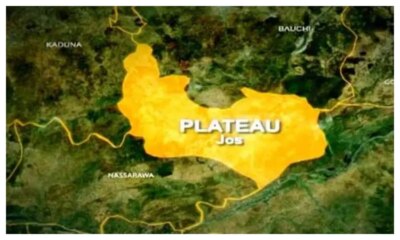
He said the affected states are Adamawa, Bauchi, Benue, Borno, Edo, Gombe, Imo, Jigawa, Kaduna, Kano, Kebbi, Nasarawa, Niger, Plateau, Taraba, Yobe and Zamfara.
According to Mohammed, river levels at Saminara on the Karam River, Waya Dam Site on the Waya River and Amber on the Amber River had exceeded watch and warning thresholds.
He said 16 gauging stations nationwide were recording elevated river stages, placing nearby communities at risk of localised flooding.
Mohammed urged state governments, local authorities and residents of flood-prone communities to take precautionary measures immediately.
NIHSA said Bauchi had the highest exposure, with 1,841 communities, 145 schools, 101 health facilities and eight markets identified as vulnerable.
The agency also identified vulnerable communities and public facilities in Edo, Imo, Kaduna, Plateau and Benue states.
Mohammed urged the National Emergency Management Agency (NEMA), State Emergency Management Agencies (SEMAs), local governments and community leaders to activate emergency response plans.
He recommended relocating residents, livestock and valuables from floodplains to safer locations.
He also advised emergency agencies to pre-position food, medical supplies and water treatment materials in areas likely to be affected.
The NIHSA boss called for community mobilisation through early warning volunteers and local communication channels to ensure timely dissemination of flood alerts.
He cautioned residents against walking, driving or riding through flooded roads, bridges and fast-flowing waterways.
Mohammed further urged authorities to clear blocked drains, culverts and waterways to improve water flow and reduce flooding.
He advised the public and relevant agencies to monitor daily flood updates and advisories issued by NIHSA. (NAN)
The Federal Government has issued a fresh flood warning, alerting residents in 17 states to the risk of flooding over the next seven days as rising water levels continue to threaten communities across the country.
The warning was issued by the Nigeria Hydrological Services Agency (NIHSA) in its National Flood Advisory (Alert No. NFA-2026-200), covering the period from July 21 to July 27.
According to the Director-General of NIHSA, Umar Mohammed, the alert followed a steady rise in water levels at key river monitoring stations, increasing the likelihood of localised flooding along river channels and floodplains.
The states identified as being at medium flood risk are Adamawa, Bauchi, Benue, Borno, Edo, Gombe, Imo, Jigawa, Kaduna, Kano, Kebbi, Nasarawa, Niger, Plateau, Taraba, Yobe and Zamfara.
Mohammed said river levels at several critical locations had already exceeded warning thresholds, raising concerns about possible flooding in surrounding communities.
File Photo: Flooding in Nigeria
He said, “River levels at Saminaka on the Karam River, Waya Dam site on the Waya River and Amber on the Amber River had exceeded watch and warning thresholds.”
The NIHSA boss added that no fewer than 16 river gauging stations across the country were currently recording elevated water levels, placing nearby communities at risk of localised flooding if heavy rainfall continues.
He urged state governments, local authorities and residents living in flood-prone areas to begin taking precautionary measures immediately to minimise the impact of possible flooding.
Bauchi State was identified as the most vulnerable, with the agency revealing that about 1,841 communities, 145 schools, 101 health facilities and eight markets are exposed to flood risks. The agency also listed several vulnerable communities and public facilities in Edo, Imo, Kaduna, Plateau and Benue states.
Mohammed called on the National Emergency Management Agency (NEMA), State Emergency Management Agencies (SEMAs), local government authorities and community leaders to activate emergency preparedness and response plans without delay.
He recommended that residents living on floodplains relocate to safer areas, taking along their families, livestock and valuables before floodwaters rise.
The NIHSA Director-General also advised emergency agencies to pre-position food supplies, medical materials and water treatment equipment in communities likely to be affected to ensure a quicker response if flooding occurs.
He stressed the need for early warning systems to reach vulnerable communities, urging authorities to mobilise local volunteers and utilise community communication channels to spread flood alerts promptly.
Mohammed also warned residents against attempting to walk, drive or ride through flooded roads, bridges and fast-flowing waterways, noting that such actions could result in avoidable loss of lives.
He further urged relevant authorities to clear blocked drains, culverts and waterways to improve the free flow of water and reduce the risk of flooding during the rainy season.
The latest advisory comes as Nigeria continues to experience heavy rainfall across several parts of the country, with recent flooding affecting communities in Lagos and other states. According to data from the National Emergency Management Agency, floods in 2025 claimed 232 lives, injured more than 600 people, affected over 315,000 residents, displaced more than 113,000 people and destroyed thousands of homes and hectares of farmland.
Mohammed advised both government agencies and members of the public to continue monitoring daily flood forecasts and advisories issued by NIHSA throughout the rainy season.