Events
‘Christian Genocide Cannot Be Denied,’ Says CAN at Fourth Quarter NEC Meeting in Jos


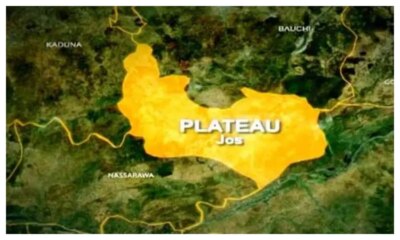
The Christian Association of Nigeria (CAN) on Tuesday, November 18, 2025, formally opened its fourth quarter National Executive Council (NEC) meeting in Jos, Plateau State, with leaders issuing strong calls for unity, justice, and urgent action in response to what they described as ongoing targeted attacks on Christian communities across the country.
The meeting, hosted at the Cripan Hotel, drew national, zonal, and state leaders of the Association, as well as senior clergy, civil society partners, and government representatives.
Plateau CAN Welcomes Delegates, Calls for Direction Amid National Challenges
In a welcome address delivered on his behalf by the Deputy Chairman, Rev. Dr. K. K. Saleh, the Plateau State CAN Chairman, Rev. Dr. Dunka Gonwalk, welcomed delegates to Jos and expressed gratitude to God for journey mercies and the support of the Plateau State Government.


He noted that the NEC meeting was holding at a time when Nigeria is confronted with “complex challenges” spanning insecurity, economic hardship, and political instability. He urged delegates to provide “critical direction and solutions” to the issues facing the nation.
“This edition of the NEC comes at a challenging time in our nation’s history,” he said. “I am hopeful that this august assembly will bring forth critical and much-needed direction, counsel, and solutions to the issues plaguing our great nation.”


North Central CAN Chair Warns That Division Weakens Christian Witness
Also speaking, the CAN North Central Zonal Chairman, Rev. Dr. Jonah Samson, reminded Church leaders of their responsibility to maintain unity, uphold sound doctrine, and strengthen Christian witness.
“Division diminishes our witness, but unity magnifies the light of Christ,” he said, urging leaders to deepen community engagement through compassion, justice, and service.


CAN President: ‘It Would Be a Grave Injustice to Deny What Is Happening’
Delivering his opening remark, the CAN President, His Eminence Archbishop Daniel Oko, issued one of the strongest statements of the day, declaring that the suffering of Christian communities in the North and Middle Belt amounted to genocide.
He lamented years of killings, displacement, destroyed churches, and communities uprooted from ancestral lands.
“It will be a grave injustice to deny the painful reality of what has transpired and what is still going on,” he said. “Across many parts of northern Nigeria and the Middle Belt, Christian communities have experienced repeated, coordinated, and clearly targeted attacks… Victims have not been compensated, and perpetrators continue to evade accountability.”
Archbishop Oko reaffirmed CAN’s position that Christians are being deliberately targeted, insisting that the Association “will not be silent.”

Sermon: ‘Unity is Our Only Path to Victory’ — Rev. Baba
Delivering the sermon, the CAN National Vice President, Rev. Dr. Stephen Panyan Baba, emphasized that unity and obedience to God’s word are essential for the Church to confront persecution and national crises.
Quoting scripture, he warned that disunity weakens the Church’s ability to resist attacks.
“Unity among us will lead to victory against the enemies of the cross,” he said. “A house divided against itself cannot stand… When they finally come for us, there will be no one left to speak for us.”
Rev. Baba recounted the heavy toll of violence on Christian communities in Plateau, Benue, Southern Kaduna, Borno, and Adamawa.
“If that is not genocide, I wonder what you call it,” he said.


Para-Mallam: ‘Targeted Killings of Christians Are Established Facts’
In his goodwill message, Revd Dr. Gideon Para-Mallam commended the peaceful hosting of recent events in Plateau State as a testament to the possibility of peace in Nigeria. He emphasized the need for the Church to speak with one voice, particularly in confronting the rising targeted killings and kidnappings of Christians across the country. Highlighting the ongoing captivity of Leah Sharibu and other Christian girls, he called for united Church action to ensure their release and to end all forms of persecution. Dr. Para-Mallam stressed that coordinated efforts by the Church, government, and security agencies are vital to restoring peace and protecting all Nigerians.
He called for united Church action to secure the release of Leah Sharibu and other Christian girls still in captivity.
“Is there ongoing persecution of Christians in Nigeria today? The answer is a capital YES,” he said, citing recent kidnappings of Christian girls in Borno and Kebbi States.
He urged the Church to take a united stand against Boko Haram, bandits, and armed herdsmen.


Other Speakers Call for Action, Justice, and Global Advocacy
Speakers including the National Christian Elders Forum, Rev. Pandam Yamsa, Prophet Isa El-Buba, and Rev. Ezekiel Dachomo reinforced the urgent need for unity and strategic action.


Prophet Isa El-Buba called for a unified and decisive Christian response to the ongoing violence and genocide against Christians in Nigeria. He emphasized that the Church must speak with one voice, take bold action, and engage both national authorities and international partners. He urged the establishment of a national prayer and advocacy coalition, rapid response units, and structured community defense to protect vulnerable Christians, provide relief, and rebuild affected communities. According to him, the Church can no longer remain silent or passive in the face of persecution.
“Nigeria is bleeding, and the church must speak with one voice, not a fragmented tone. The ongoing genocide is real, and it must stop. While we pray, we must also act strategically, setting up a national prayer watch and a rapid response advocacy unit to engage government, military, and international observers. The church cannot continue to watch endlessly; the end of that dragon with multiple heads has come to an end.”

Rev. Ezekiel Dachomo warned that silence in the face of persecution is tantamount to complicity. He stressed the moral obligation of Christians to defend their communities, hold the government accountable, and take evidence of atrocities to international platforms such as the International Criminal Court. He highlighted the danger of failing future generations if Christians do not act now, stressing that faith requires boldness and decisive action against injustice.
“What will our future generation look like in Nigeria if we don’t speak now? Silence in the face of persecution means we have failed our brothers. I’ve been burying people killed by terrorists, and we cannot continue to watch passively. We are going to take this issue to the International Criminal Court to ensure the world knows there is genocide on Christians.”
Traditional rulers under the Plateau State Council of Chiefs and Emirs also pledged support for a united Church voice.

Plateau Deputy Governor Reaffirms Government’s Commitment to Peace
Representing Governor Caleb Manasseh Mutfwang, Deputy Governor Josephine Piyo delivered a goodwill message in which she commended CAN’s leadership and emphasized the administration’s commitment to restoring peace, resettling displaced persons, and securing rural communities.
“This meeting comes at a time when our nation faces complex challenges,” she said. “Plateau is committed to restoring true peace, securing our rural areas, and resettling displaced persons… We deeply appreciate CAN for your prayers, support, and partnership.”
NEC Sessions Continue Through the Week
The meeting is expected to continue with plenary sessions, reports from states and blocs, and strategic discussions on national security, advocacy, and the role of the Church in strengthening Nigeria’s social and moral foundations.




Lingzhi Global Nigeria Ltd. has announced plans to hold the second edition of the Coffee Festival International Nigeria in Calabar, Cross River State, from October 30 to November 1, 2026, as part of efforts to promote coffee production and expand opportunities across the value chain.
The festival, organised in collaboration with the National Coffee and Tea Association of Nigeria, NACOFTAN, will be held under the theme, “Coffee Sustainability and Empowerment: Focusing on Women and Youth Development,” with emphasis on skills development, community development and job creation.

The Chief Executive Officer of Lingzhi Global, Mrs. Blessing Nanman, disclosed this at a stakeholders’ meeting in Abuja, saying the event would bring together coffee stakeholders, investors and international participants to explore opportunities in farming, processing, packaging, marketing and export.
“Farmers have gone to work. Some processors are already at the verge of breaking through. This is the time where we want to invite all investors, partners and international organisations to support us in the coffee industry,” Nanman said.
She said the maiden edition attracted participants from different countries, while the 2026 festival is expected to draw representatives from about 30 countries. According to her, the event would further define opportunities within the coffee value chain and encourage local consumption of coffee.
Nanman said Lingzhi Global was also expanding its coffee business through the establishment of coffee shops, noting that the outlets had become platforms where communities, families and people from different backgrounds could connect over coffee.

She said Cross River was selected to host the second edition because of its potential for coffee production and the state government’s efforts to expand cultivation through the distribution of millions of coffee seedlings.
Speaking on the forthcoming festival, Cross River State Commissioner for Agriculture and Irrigation Development, Hon. Johnson Ebokpo, commended Lingzhi Global for its role in promoting coffee and tea development in the state and for working with stakeholders to strengthen the sector.
He said the company had contributed efforts to improve farmers’ access to seedlings, knowledge and markets, describing its partnership with the state as important to the development of the coffee value chain.
“We are pleased to be collaborating with Lingzhi Global, organisers of the International Coffee Festival, and NACOFTAN,” Ebokpo said.
The commissioner said the festival would give Cross River greater visibility as a coffee-producing destination while creating opportunities for women and young people to participate in the industry.
“This is also an opportunity for us to use the festival as a platform to create jobs for our people, particularly women and youths, while providing them with opportunities to learn more and develop their skills,” he said.
Ebokpo said the coffee industry extends beyond farming to processing, packaging and export, stressing that young people could create businesses and develop their own brands by participating in different stages of the value chain.
He said Cross River has about 23,000 square kilometres of arable land suitable for coffee development and has the agro-ecological advantage of producing both Arabica and Robusta varieties. He added that the state plans to distribute at least 30 million coffee seedlings over five years.
President of NACOFTAN, Dr. Hassan Usman, said the festival would provide an opportunity for Nigerian stakeholders to exchange knowledge and technology with international players in the coffee industry.
“The Coffee Festival is not only Nigerian in inclusion, but international. We have people coming from Brazil, Indonesia, Kenya and all the countries. The globe will be around with us,” Usman said.
Usman also commended Lingzhi Global for taking stakeholders across the country and beyond to gain knowledge in coffee processing and marketing, saying the company had played a critical role in connecting Nigerian stakeholders with international opportunities.
He said stakeholders would use the gathering to strategise on strengthening the coffee value chain and changing the narrative around coffee production in Nigeria, while calling for greater participation from government agencies, investors and other stakeholders.
The 2026 Coffee Festival International Nigeria is expected to bring together farmers, processors, roasters, investors, experts and other stakeholders from Nigeria and abroad for three days of knowledge-sharing, networking and promotion of the coffee industry.


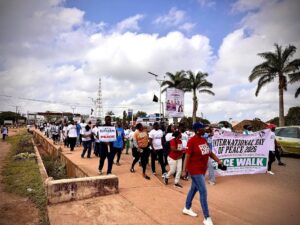
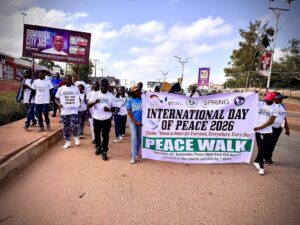
The streets of Jos echoed with a simple message on Saturday: peace is everyone’s responsibility.
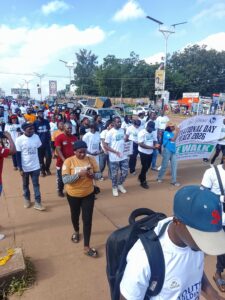
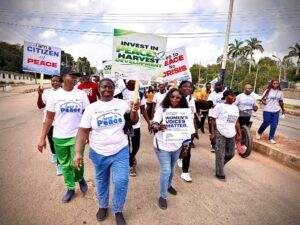
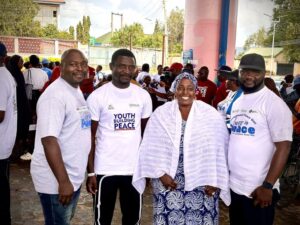
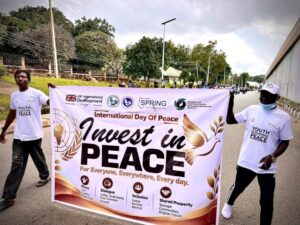
As part of activities marking the 2026 International Day of Peace, the Women for Positive Peacebuilding Initiative (WOPPI) joined other peace organisations for a peace walk from Old Airport Junction to Secretariat Junction Bridge.
Holding placards calling for unity, dialogue and peaceful coexistence, participants took the message of peace to the streets and into the public space.
This year’s International Day of Peace, observed on September 21, is themed “Invest in Peace – For Everyone, Everywhere, Every Day.” The United Nations says the theme highlights the role of ordinary people as “everyday architects of peace.” (United Nations Peacekeeping)
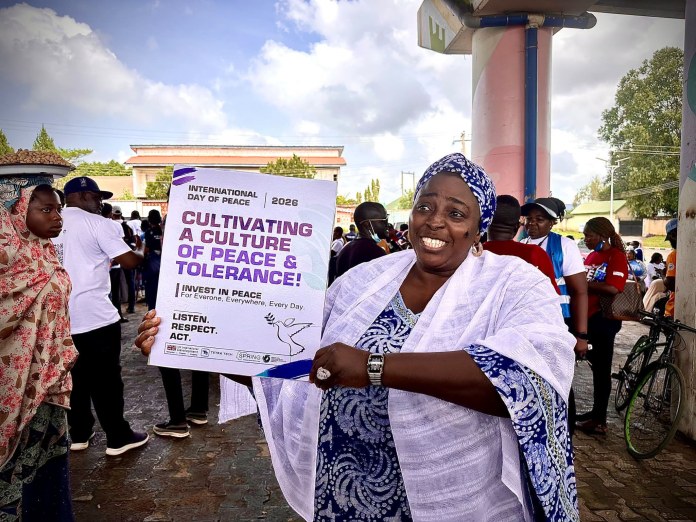
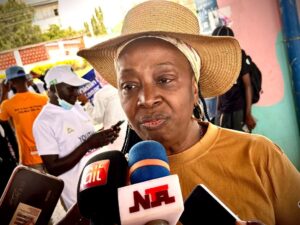
For WOPPI Executive Director, Lantana Abdullah, the message is particularly important for Plateau, a state with a history of violent conflicts.
She said peace cannot be left to government or security agencies alone. Every citizen, she stressed, has a role to play.
“Every citizen residing in Plateau or beyond Plateau or in Nigeria must play their part in making sure we sustain and build enduring peace for everyone.”
Abdullah urged citizens to choose dialogue over confrontation, report responsibly and speak up when they see issues capable of threatening peace.
She also challenged negative narratives about Plateau, pointing out that people continue to live, work and build their livelihoods across the state despite its troubled past.
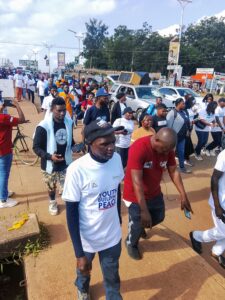
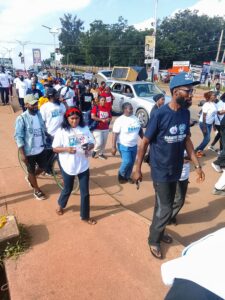
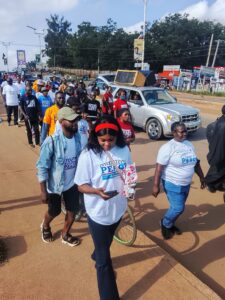
For WOPPI, women must also be at the centre of this process. The organisation works to strengthen women’s voices, train them as mediators and involve them in preventing and resolving conflicts within their communities.
The walk therefore carried more than placards. It carried a reminder: peace is not something people wait for others to create. It is something communities build—one conversation, one intervention and one peaceful choice at a time.
And in the words of this year’s global message, that investment must happen for everyone, everywhere, every day. (United Nations)
-

 Featured2 days ago
PLATEAU STATE: IS THERE PEACE, OR ONLY THE ABSENCE OF VIOLENCE?
-
News3 days ago
Plateau Killings: Rotjimwa Yilyok Urges Security Agencies to Intensify Action
-
Business3 days ago
General Business to Drive 72% of Mutual Benefits Assurance’s Projected ₦96.82bn GWP
-
Business2 days ago
Shettima Urges African Leaders to Process Minerals Locally