News
Transport Infrastructure Key to Peace, Prosperity – Gov. Mutfwang





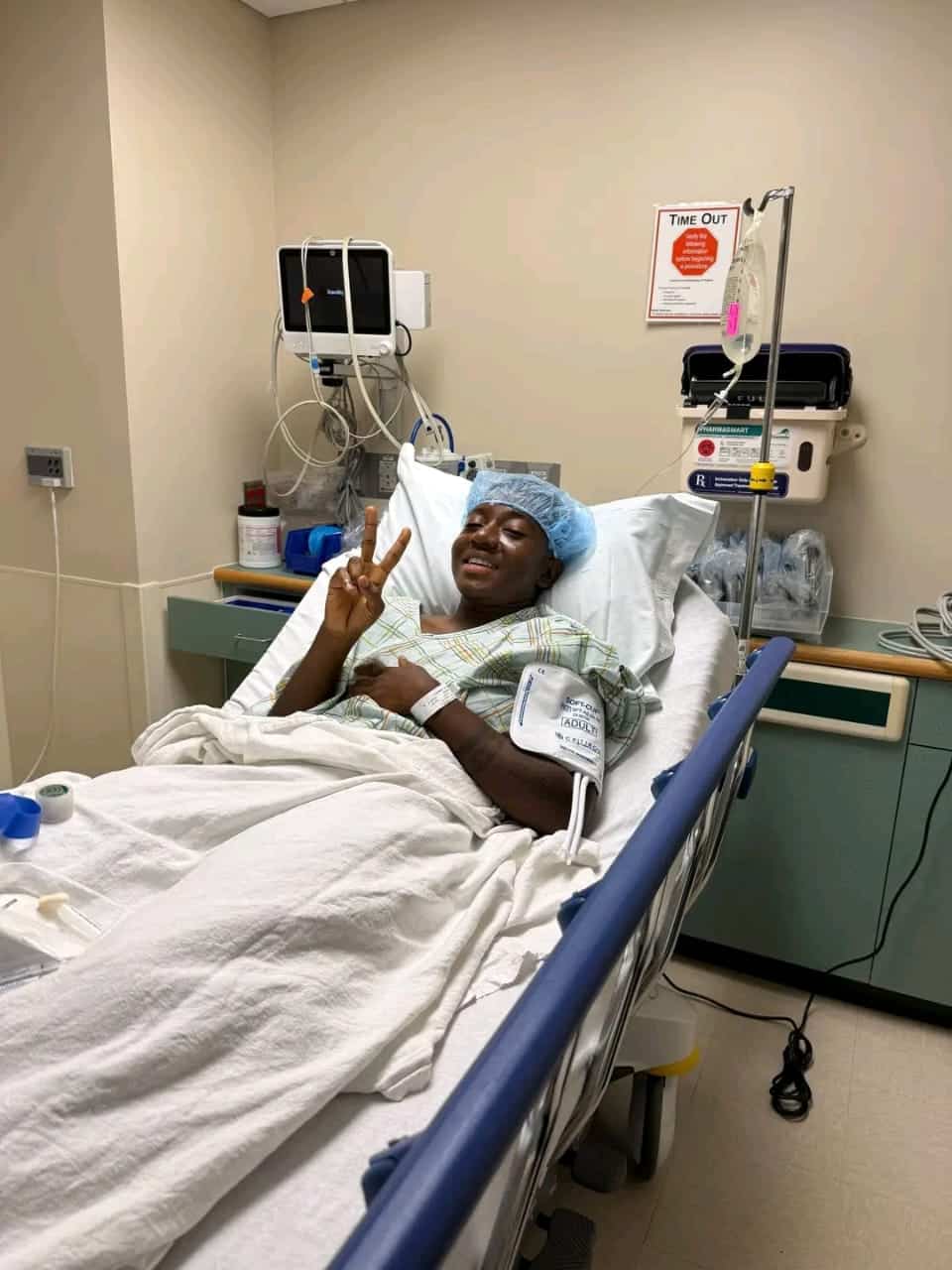
Super Falcons and Washington Spirit midfielder Deborah Abiodun has successfully undergone surgery following an injury that has ruled her out for the remainder of the season.
Sports247 reports that the 22-year-old Nigerian midfielder is now beginning the rehabilitation phase of her recovery as she works towards returning to full fitness.
Abiodun’s injury is also expected to keep her out of Nigeria’s upcoming Olympic qualifiers against Comoros next month, denying the Super Falcons the services of one of their emerging midfield talents for the crucial fixtures.
Despite the setback, Abiodun has maintained a positive outlook and used her experience to send an encouraging message to young footballers who may find themselves facing similar challenges.
Reflecting on the emotional side of undergoing surgery, the midfielder admitted that she was initially scared and nervous but encouraged other players to remain patient and resilient during difficult moments.
“It’s tough sometimes, but you got to keep going. Thank you everyone for your kind words and prayers,” Abiodun said.
She explained that her message was particularly intended to motivate younger players who may be dealing with injuries and the uncertainty that comes with being sidelined.
“I was scared and nervous. It gets better, hang in there,” she added.
The setback represents a frustrating interruption for Abiodun, who has continued to establish herself at both club and international level. Her absence will be felt by the Washington Spirit for the remainder of the campaign and could also affect Nigeria’s plans for the upcoming Olympic qualifying fixtures.
For now, the focus shifts entirely to rehabilitation as Abiodun begins the long road back to competitive football.
The Super Falcons midfielder will be hoping for a smooth recovery and a strong return to the pitch when she is eventually cleared to resume action.

Dangote Petroleum Refinery and Petrochemicals FZE plans to double its labour force to meet its target of doubling its processing capacity by 2029.
“Well, within the refinery, the workforce will practically become double, except in the water treatment section, because there we already have substantial capacity,” Edwin Devakumar, vice president, oil & gas and fertiliser at Dangote Industries Limited, told journalists at the refinery in Lagos on Friday.
He observed that labour expansion in the transport segment might not be significant, except in the case of an increase in local consumption.
“Obviously, we don’t expect a substantial increase in the consumption of petrol and diesel within the country in the short term,” he added.
The oil processing plant is on a drive to raise N2.2 trillion ($1.6 billion) in equity capital from retail investors to finance a major expansion from 700,000 barrels per day (bpd) to 1.4 million bpd.
On Monday, when it opened its order book to the public, setting the capital raise programme in motion, overwhelming subscription traffic, which attracted billions of naira in demand to the offer in its first few minutes, triggered downtime across a couple of trading platforms across Nigeria.


Bamboo and Cowrywise, two of several fintech and digital application channels approved by Nigeria’s Securities and Exchange Commission to facilitate transactions for the offer, reported outages on their social media posts, with Bamboo said to have seen a 1,000-fold jump in traffic compared to regular days.
The pan-African share sale, dubbed by Mr Dangote as “the people’s IPO,” is broadly tapping into Nigeria’s fintech infrastructure to drive inclusion across the continent’s most populous country, with a minimum subscription of 10 units, equivalent to N5,250.
Towards that end, the transaction is targeting investors as diverse as traders, cooks, drivers and managers, giving “every human being living on the continent to be part of this action,” Mr Dangote told attendees at the sign-off ceremony of the offer documents in Lagos last week.
The green shoe option in the offer gives Dangote Refinery the flexibility to allot 30 per cent of the excess shares if the IPO is oversubscribed.
Should that happen, it will make the IPO not just Africa’s biggest yet but also the largest-ever among frontier markets, Temi Popoola, the CEO of the Nigerian Exchange (NGX), said this week while responding to questions on CNN.
Compared to the first phase of the refinery project, which cost $20 billion and suffered construction delays, the expansion will cost less, Mr Devakumar said, because there won’t be a need to build most of the infrastructure used in the first stage, including a granite quarry and a port facility.
“The equipment, per se, will be the same because it’s a replica. But at the same time, we are trying to cut down on engineering and design costs because most of that will again be a replica. So we have told the design engineers, reduce your cost, and they have already agreed,” he said.
The current expansion plan at the fertiliser unit is expected to increase annual output from 3 million tons to 12 million tons.
READ ALSO: What Dangote IPO signals – NGX Chairman
Apart from Lagos, where it is pursuing a primary listing, the Dangote Refinery is also looking to float its shares on bourses in Africa, including Johannesburg and Nairobi. A cross-border listing outside Africa, most likely in the US, is under consideration and could happen in three to four years.
According to Minister of Industry, Trade and Investment Jumoke Oduwole, listing the refinery’s shares on the NGX could lift market capitalisation by $60 billion.
The company logged $1.8 billion in after-tax profit for the six months to June, when revenue topped $13 billion, according to the offer prospectus, riding on the soaring oil prices that followed the outbreak of the US war against Iran.
That compares to a net loss of $476 million recorded for last year.
Discover more from Premium Times Nigeria
Subscribe to get the latest posts sent to your email.
-

 News2 days ago
Nigeria Takes on the World! Chess Stars Begin 2026 Olympiad Battle in Samarkand
-
News3 days ago
Felix Arome Assumes Office as Director-General of Front Line Alliance Network
-
Health4 days ago
Nigerian senator receives Health Champion 2026 award, calls for stronger health financing
-
Health4 days ago
97% of PHCs in 16 states fail national staffing standards – Report