Health
NAFDAC orders recall, destruction of alcohol in sachets, PET bottles

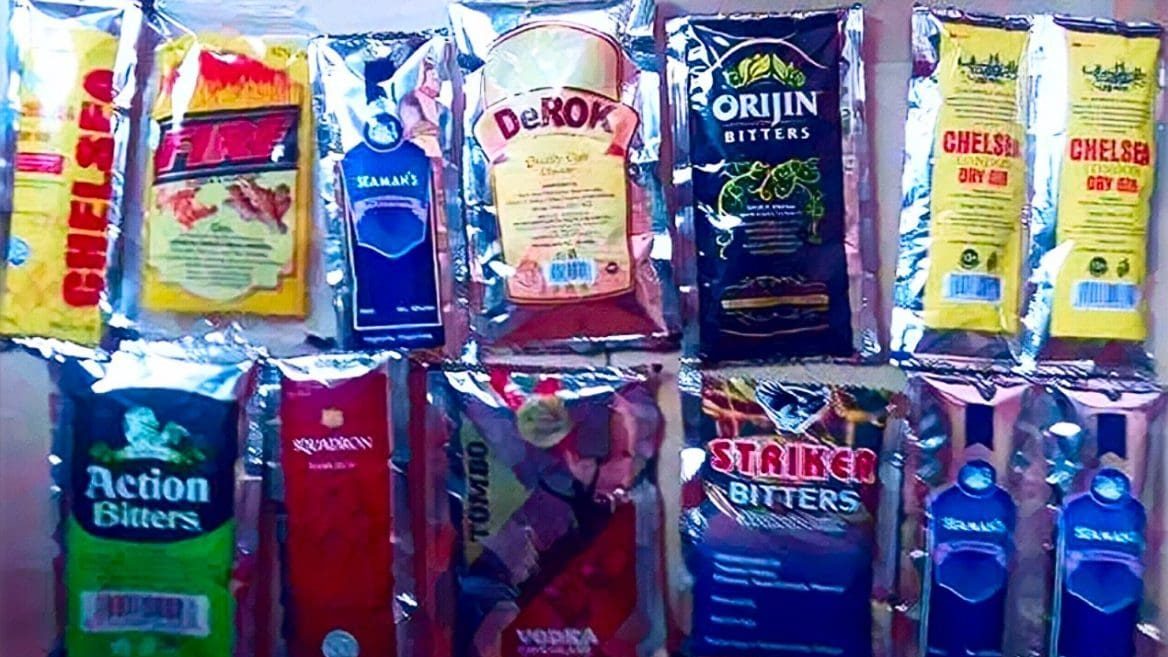

The National Agency for Food and Drug Administration and Control (NAFDAC) has ordered manufacturers of alcoholic beverages packaged in sachets and PET bottles below 200ml to recall the products nationwide.
The agency also ordered the destruction of the recalled products under its supervision, saying manufacturers will bear the full cost of the exercise.
In a statement issued on Monday by its Director General, Mojisola Adeyeye, NAFDAC said the directive followed the signing of an Irrevocable Enforcement Undertaking by the Distillers and Blenders Association of Nigeria (DIBAN), the Association of Food, Beverage and Tobacco Employers (AFBTE), and their member companies.
Under the undertaking, affected manufacturers are required to immediately recall the prohibited alcoholic drinks from distributors, warehouses and other points within the supply chain and submit periodic compliance reports to NAFDAC.
The agency said all recalled products would undergo inventory verification before being destroyed under its supervision.

“The agency wishes to emphasise that all recalled alcoholic products shall be subjected to inventory verification and destruction under NAFDAC supervision in accordance with the terms of the enforcement undertaking,” it noted.
NAFDAC’s supervision
NAFDAC also said manufacturers whose facilities were sealed for producing the prohibited alcoholic drinks would have to “dismantle, permanently disable or reconfigure” the production lines used for the affected pack sizes before their facilities can be reopened.
It said such work must be carried out under the direct supervision and verification of NAFDAC officers.
The agency said reopening of the affected facilities would also depend on full compliance with the recall directive, payment of applicable investigative charges and regulatory fees, successful destruction of recalled products and satisfactory inspection and certification by NAFDAC.
“Companies that fail to comply with the terms of the undertaking risk severe regulatory sanctions,” the agency said.
According to NAFDAC, the sanctions include continued closure of facilities, placement on its Regulatory Watchlist, suspension or revocation of product registrations and criminal prosecution where applicable.
Why NAFDAC is enforcing the ban
NAFDAC said the ban on alcoholic beverages packaged in sachets and small-volume containers followed years of consultations between regulators, manufacturers and government agencies.
The agency said it first raised concerns in 2018 over the widespread availability of high-alcohol-content drinks in sachets and small bottles, which it described as cheap, easy to conceal and readily accessible to minors.
A five-year moratorium was subsequently agreed with manufacturers in December 2018 to allow them to gradually phase out the products and move to larger packaging.
ALSO READ: NOA, NAFDAC, FCCPC launch nationwide campaign on enforcement of ban on sachet alcohol
The moratorium was initially scheduled to end on 31 January 2024 but was later extended until 31 December 2025.
The full ban took effect on 1 January 2026 and covers alcoholic beverages packaged in sachets, PET bottles below 200ml and glass bottles below 200ml.
NAFDAC said enforcement began with manufacturers in January, while nationwide mop-up operations across markets, motor parks, retail outlets, bars and distribution centres followed in July.
The agency said some banned products were still found at distribution centres, leading to the closure of factories and arrest of staff of companies found producing sachet alcohol.
NAFDAC said the enforcement is aimed at reducing underage drinking, alcohol abuse and access to highly concentrated alcoholic beverages in small, inexpensive containers.
“Members of the public are encouraged to report the sale, distribution, or manufacture of alcoholic beverages in sachets and PET bottles below 200ml through NAFDAC’s official communication channels or nearest NAFDAC office,” it added.
Discover more from Premium Times Nigeria
Subscribe to get the latest posts sent to your email.





Preventing infections through proper hygiene, vaccination, safe food and water practices can reduce the need for antimicrobial medicines and help curb antimicrobial resistance (AMR), health experts have explained.
Philip Osun, a clinical microbiologist at the Lagos University Teaching Hospital (LUTH), said preventing infections is one of the most important ways to reduce the use of antibiotics and slow the development of resistance.
“If you don’t have infections, then it’s not likely there will be antimicrobial resistance,” Mr Osun said.
He advised Nigerians to practice regular handwashing, keep their vaccinations up to date, prepare food safely, use clean water, care for wounds properly and observe respiratory hygiene to reduce the spread of infections.
He also cautioned against taking antibiotics for illnesses such as common colds, which are usually caused by viruses and do not require antibiotics.
“Most of the common colds don’t require antibiotics,” he said, urging people not to rush to pharmacies to obtain antibiotics without appropriate medical advice.

Antimicrobial resistance occurs when bacteria, viruses, fungi and parasites develop the ability to withstand medicines designed to treat infections, making illnesses increasingly difficult to treat.
Mr Osun explained that resistance develops in microorganisms, not in the human body, and that people can become infected with resistant organisms even when they have not personally misused antibiotics.
He said resistance is a cumulative problem driven by the use and misuse of antimicrobials across communities, healthcare facilities, animals and the environment.
Prevent infections before treatment
Folasade Lawal, a pharmacist and managing director of Victory Drugs, also stressed the importance of preventing infections, noting that reducing infections would lessen the need for antimicrobial treatment.
“If there is no infection, there is nothing to treat,” she said.
Ms Lawal urged people to use medicines appropriately, obtain prescriptions from qualified healthcare professionals and follow instructions on dosage and duration.
She warned that inappropriate use and overuse of antimicrobials accelerate resistance, making medicines less effective against infections.
Preventing infections, she said, also requires vaccination, access to clean water, proper hygiene and responsible practices in healthcare and animal production.
Why prevention matters
The World Health Organisation (WHO) says antimicrobial resistance threatens the effectiveness of medicines that have transformed modern healthcare, making infections harder to treat and putting lives at risk.
According to the WHO, bacterial AMR was linked to over 4.7 million deaths globally in 2021, and about one in six laboratory-confirmed bacterial infections worldwide resisted antibiotic treatment in 2023.
ALSO READ: AMR Week: Artists, health experts use arts to raise awareness about drug resistance
It added that poor infection prevention, inadequate water and sanitation, inappropriate antimicrobial use in humans and animals, and unsafe waste disposal contribute to the spread of resistant organisms.
It recommends infection prevention through vaccination, hand hygiene, clean water, sanitation and effective infection control in healthcare facilities and farms.
Discover more from Premium Times Nigeria
Subscribe to get the latest posts sent to your email.
The Lagos State government has increased its HIV response budget to N1.065 billion, up from about N791 million.
The 35 per cent increase is to strengthen prevention, testing and treatment services across the state.
Folakemi Animashaun, Chief Executive Officer of the Lagos State AIDS Control Agency (LSACA), disclosed this on Thursday at a news conference in Lagos to herald activities for the 2026 World AIDS Day commemoration.
World AIDS Day is commemorated annually on 1 December to raise awareness about HIV/AIDS, remember those who have died from AIDS-related illnesses and renew commitment to ending the epidemic.
Ms Animashaun also said the agency had begun distributing Antiretroviral (ARV) medicines procured by the state government to ensure uninterrupted treatment for people living with HIV.
She said the increased budgetary allocation and medicine procurement demonstrated the state’s commitment to domestic ownership and sustainability of its HIV response amid changing global funding conditions.
“Development partners have made invaluable contributions to HIV prevention, treatment, medicines, laboratory services and community programmes,” she said.
“However, our goal is not to replace partnerships but to build a stronger foundation for them and ensure that essential HIV services remain protected whenever external funding arrangements change,” she said.
The LSACA chief executive said the state’s consolidated HIV testing records showed 387,558 negative results and 7,584 positive results.
She clarified that the figures represented reported test results and should not be interpreted as new infections or necessarily as unique individuals.
According to her, the maternal health programme recorded 156,122 new antenatal care clients and 156,109 negative HIV test results among pregnant and breastfeeding women.
She said community-based services also recorded 25,167 HIV tests among persons aged 15 years and above between January and October, with 1,166 positive results.
Ms Animashaun said the figures demonstrated the scale of the state’s interventions but stressed that the ultimate measure of success was the number of people linked to treatment, retained in care and achieving improved health outcomes.
“The significance of testing lies not only in identifying HIV but in connecting people to the services that protect their health and wellbeing,” she said.
Collaborations
Ms Animashaun said the state was strengthening collaboration with ministries, departments and agencies, healthcare institutions, development partners and community organisations to improve programme implementation, coordination and accountability.
She added that supportive supervision and data-quality activities had been undertaken to identify gaps in service documentation, referrals, programme reporting and continuity of care.
She said the agency was also promoting the integration of HIV services into routine healthcare, particularly maternal and child health, tuberculosis and other essential services.
She emphasised the importance of protecting the dignity and rights of people living with HIV, noting that stigma and discrimination remained significant barriers to accessing healthcare.
“No one should be afraid to seek healthcare because of their HIV status. No one should be denied dignity because of a health condition,” she said.
“Also, no one should be made to feel that their HIV status diminishes their worth as a human being.”
On sustainability, she disclosed that Lagos State had advanced the development of a 10-year HIV Response Transition and Sustainability Roadmap covering 2027 to 2036.
She said the roadmap would provide a framework for strengthening domestic financing, healthcare delivery, human resources, medicines and diagnostics, programme information, community participation and institutional accountability.
According to her, the proposed roadmap is expected to be formally launched by Governor Babajide Sanwo-Olu at the World AIDS Day Symposium scheduled for 1 December, subject to necessary approvals.
She said the symposium would also feature the formal presentation of antiretroviral medicines procured by the state government.
On HIV prevention, Ms Animashaun urged residents to know their status and access appropriate preventive services, including condoms, HIV testing, pre-exposure prophylaxis (PrEP) and post-exposure prophylaxis (PEP), where indicated.
She explained that people living with HIV who maintained effective treatment and an undetectable viral load could not transmit the virus sexually, a principle known as Undetectable Equals Untransmittable (U=U).
The LSACA boss urged residents to seek professional advice promptly if exposed to HIV, noting that some preventive interventions were time-sensitive.
World AIDS Day activities
Ms Animashaun said this year’s World AIDS Day activities, with the theme: “Ending AIDS Starts with Access: Equity, Ownership and Sustainability”, were designed to promote awareness, inclusion and community participation.
She listed the activities to include a fitness walk and awareness rally on 19 November, a novelty football match at Campos Stadium, Lagos Island, on 21 November, and an empowerment programme for people living with HIV on 23 November.
Others include a Jumat service on 27 November, a church service on 29 November, and the World AIDS Day Symposium scheduled for 1 December at Balmoral Event Centre, Lagos.
READ ALSO: Nigeria records decline in HIV treatment among pregnant women
Ms Animashaun urged the media to support efforts to correct misconceptions, challenge harmful stereotypes and promote accurate information about HIV prevention and treatment.
“Your platforms have the power to correct misconceptions, challenge harmful stereotypes, encourage people to seek testing and treatment, and help dismantle the stigma and discrimination that continue to prevent people from accessing care,” she said.
She called for responsible reporting that respected confidentiality and distinguished between new HIV diagnoses and new infections.
The LSACA chief executive acknowledged the contributions of the federal government, the National Agency for the Control of AIDS, UNAIDS, the United States Health Assistance Office, the Global Fund, and other implementing partners to the state’s HIV response.
She also commended the state government, healthcare workers, civil society organisations, community-based groups and networks of people living with HIV for their contributions.
She reaffirmed the state’s commitment to expanding access to HIV services, protecting existing gains and ensuring sustainable treatment and care for residents.
(NAN)
Discover more from Premium Times Nigeria
Subscribe to get the latest posts sent to your email.
-

 Business4 days ago
Elon Musk Launches X Money, Bringing Banking and Payments to Social Media Platform
-
News4 days ago
OPEP troops arrest 21-year-old suspected child trafficker, rescue five minors in Plateau
-
Health4 days ago
JUTH Student Nurse Anaesthetist Dies After Collapsing During Football Match in Jos
-
News4 days ago
Canadian Police Arrested ‘Lagos BigBoy’ Tosin Damilola Oyebade, 11 Others Over $4.5m Stolen Vehicle Network