Connect with us

News

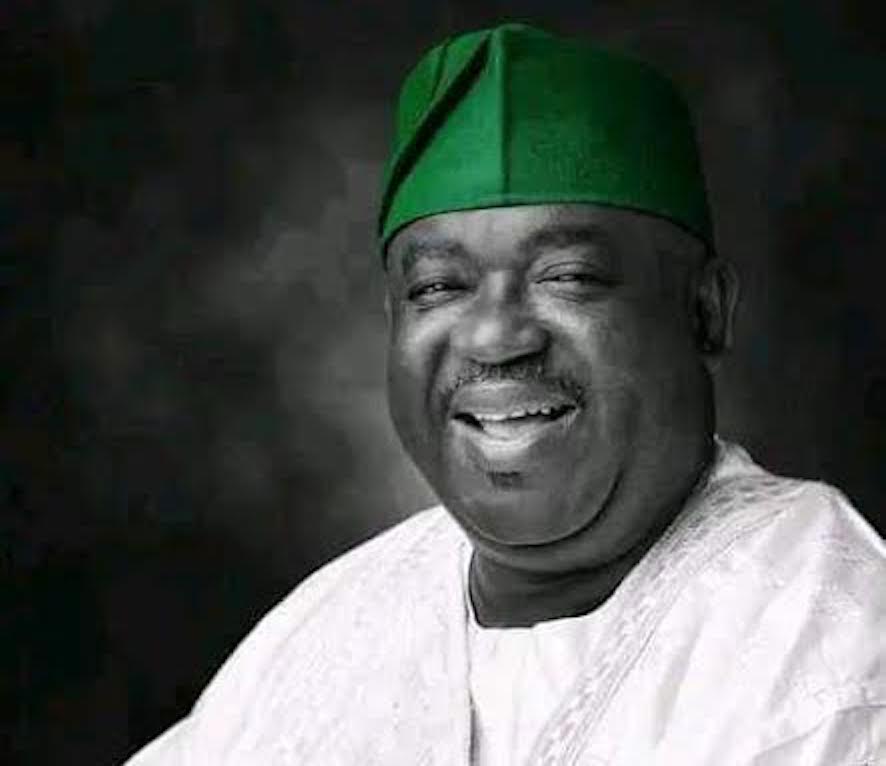
Tinubu Congratulates Plateau Governor Caleb Mutfwang on Birthday

info

Published

on

Barr Caleb Mutfwang

President Bola Ahmed Tinubu has congratulated the Governor of Plateau State, Caleb Manasseh Mutfwang, on the occasion of his birthday celebrated on March 12.

In a statement issued by the President’s Special Adviser on Information and Strategy, Bayo Onanuga, the President praised the governor for his responsible leadership and efforts at stabilising the state.

President Tinubu noted that under Mutfwang’s leadership, Plateau State is gradually returning to its reputation as the “Home of Peace and Tourism.”

The President acknowledged the governor’s achievements across several sectors, particularly in security, rural infrastructure development, healthcare, and education.

He also commended Governor Mutfwang for initiatives aimed at revitalising the state’s economy, especially through the establishment of agro-logistics hubs designed to strengthen agricultural production and value chains.

President Tinubu further praised the governor for promoting inclusive governance and fostering peaceful coexistence among communities across the state.

The President also highlighted the recent inauguration of a 14-member State Advisory Committee on State Police, describing it as a proactive step toward strengthening the state’s security architecture.

The committee was set up following the President’s directive encouraging states across the federation to begin processes for the establishment of state police.

President Tinubu described the move as a strategic effort to improve security coordination and protect lives and property.

As Governor Mutfwang marked his birthday, the President wished him good health, strength, and continued success in his efforts to advance development and stability in Plateau State.

The statement was signed by Bayo Onanuga
source

Continue Reading
Click to comment

Leave a Reply

Your email address will not be published. Required fields are marked *

Business

NCC, NDLEA sign MoU in Alliance against Drug Trafficking, Piracy

info

Published

on

By

IMG 0662.jpeg

The National Drug Law Enforcement Agency (NDLEA) and the Nigerian Copyright Commission (NCC) have signed a Memorandum of Understanding (MoU) to forge an alliance against drug trafficking and piracy.

Speaking at a brief ceremony to sign the MoU at the NDLEA headquarters on Friday 17th July 2026, Chairman/Chief Executive Officer of the Agency, Brig Gen Mohamed Buba Marwa (Rtd) said the partnership may appear, on the surface, to bring together two unrelated mandates, but which, on closer examination, reflects a shared reality in the fight against organized crime in Nigeria.

According to him, “Our experience at the frontlines of drug law enforcement has shown us time and again that criminal networks rarely confine themselves to a single illicit enterprise.

The same syndicates that traffic in narcotics are often found dabbling in other forms of economic crime, including the piracy of intellectual works that rightfully belong to Nigeria’s creatives: our musicians, filmmakers, writers, and software developers. Proceeds from one illegal trade frequently find their way into financing the other. This is the criminal value chain we must disrupt together.

“Today’s MoU gives structure to that shared fight. Through it, our two agencies commit to exchanging intelligence, coordinating joint operations, building the capacity of our respective officers, and supporting one another with the technical resources needed to do this work well.

A Joint Working Committee will be established to drive this collaboration forward, meeting regularly to ensure that what we sign today translates into real results on the ground.“Let me be clear: this partnership is not just about law enforcement. It is about protecting the health and social wellbeing of our people, and about safeguarding the immense creative talent of this nation: a talent that deserves to thrive without the theft that piracy represents, and a society that deserves protection from the scourge of illicit drugs.”
He commended the NCC for recognizing the intersection between drug trafficking and piracy. “This is how effective government works; agencies finding the common threads in their missions and pulling together rather than in isolation”, Marwa added.
In his remarks, the Director General of NCC, Dr. John Asein noted that the alliance between NDLEA and NCC marks a significant milestone in the growing culture of inter-agency collaboration within the Nigerian public service, adding that the effort will enhance the common responsibility of protecting the Nigerian society from criminal enterprises that undermine national security, economic development and the rule of law.
In his words, “Copyright piracy is sometimes wrongly perceived as a minor commercial offence or a victimless activity. In reality, large-scale piracy is often a highly organised and profitable criminal enterprise. It deprives creators and investors of legitimate income, destroys jobs, discourages investment, reduces government revenue and weakens the foundations of Nigeria’s creative economy.
“International experience has demonstrated that organised copyright piracy is rarely an isolated criminal activity. Across several jurisdictions, the same criminal syndicates, logistics channels, financial networks and distribution systems used to traffic pirated goods have also been linked to other forms of transnational organised crime, including narcotics trafficking, money laundering, smuggling and cyber-enabled offences. This reality underscores the imperative for closer collaboration between agencies such as the National Drug Law Enforcement Agency and the Nigerian Copyright Commission.
“The same clandestine supply chains, transportation routes, storage facilities, financial channels and distribution networks used for trafficking in illicit drugs and other prohibited goods may also be deployed for the movement and sale of pirated books, films, music, software and other copyright products. Proceeds from piracy may equally be laundered or channelled into other criminal activities.
“This connection makes collaboration between the Nigerian Copyright Commission and the National Drug Law Enforcement Agency both necessary and timely. By combining our respective mandates, expertise and intelligence capabilities, we can more effectively identify criminal networks, trace illicit financial flows, disrupt illegal supply chains and dismantle the structures that sustain organised criminal enterprises.
“For the Nigerian Copyright Commission, this partnership offers an invaluable opportunity to leverage the National Drug Law Enforcement Agency’s world-class expertise in intelligence-led law enforcement. Over the years, the NDLEA has earned a well-deserved reputation, both nationally and internationally, for its professionalism, operational excellence and innovation in combating organised crime. Under the able leadership of the Chairman/Chief Executive, the Agency has demonstrated remarkable success in intelligence-driven operations, strategic investigations, forensic capabilities, surveillance, financial intelligence, international cooperation and effective inter-agency coordination.”

The post NCC, NDLEA sign MoU in Alliance against Drug Trafficking, Piracy appeared first on Business Today NG.

Continue Reading

News

Neil Rimer thinks the AI money is coming back out

info

Published

on

By

Screenshot 2026 07 17 at 9.20.56 PM.png

In late May, Neil Rimer said something during a sit-down I had with him in Athens that I haven’t been able to shake. At a vibrant new tech festival in the city, talking about the wealth piling up around AI, he said he has “a strong sense that there will be some sort of a redistribution.” He continued on. “It’ll either be voluntary or it’ll be involuntary, but it’ll happen, and I hope it’s voluntary,” he told me, adding that he thinks tech leaders “can play a leading role in seeing that through.”

Coming from most people, that would sound like standard-issue populism. Coming from Rimer, a co-founder of Index Ventures, one of the most successful venture firms of the last three decades, it seemed a striking thing to say in public.

Rimer stepped back from day-to-day investing in 2021, and these days spends much of his time in Athens, where his wife is from and where his children treasure their Greek passports. He turned up to our interview in a rumpled button-down and jeans, not the quarter-zips and fine knitwear that mark so many of his peers. Yet Index’s returns in recent years have been exceptional: the firm has raised roughly $15 billion from outside investors since its founding, and last year’s exits including Figma’s IPO and Google’s purchase of the cybersecurity firm Wiz reportedly netted Index roughly $9 billion.

Rimer has found ways to give back. He sits on the board of Endeavor Greece, which mentors entrepreneurs in emerging markets, and chaired the board of Human Rights Watch from 2019 to 2025. In late 2021, he and his father and two brothers gave $13 million to McGill University to renovate a campus building, now the Rimer Building, and found a new Institute for Indigenous Research and Knowledges.

In the meantime, his comment about redistribution comes at an odd moment, to be charitable, for giving. The Giving Pledge, the promise Warren Buffett and Bill Gates launched in 2010 to get billionaires to commit half their fortunes to charity, is becoming increasingly irrelevant. One hundred and thirteen families signed in its first five years, then 72, then 43, then just four in all of 2024, per a New York Times report in March that underscored how out-of-fashion philanthropy has become among some of the richest people in tech. (Noted that piece: “Elon Musk, the world’s wealthiest person, has said that his businesses ‘are philanthropy.’”)

The pattern appears to hold beyond the Pledge. Total American charitable giving hit a record $592.5 billion in 2024, but the number of Americans actually giving has fallen for five straight years, down 4.5% in 2024 alone, according to the Stanford Social Innovation Review. Two-thirds of households donated in 2000; roughly half do now, and Bank of America and Lilly Family School data shows even affluent-household giving has slipped, from 90% in 2017 to 81% last year.

The pattern shows up in Index’s own portfolio, too, which includes Anthropic. Business Insider recently asked a financial planner, Alex Caswell, whether his newly wealthy clients, many of them Anthropic employees tied to effective altruism, were pledging to give away the bulk of their fortunes. Anthropic matches employee donations of up to 25% of their equity to charity, and some of Caswell’s clients have used it, he told BI, but most weren’t building philanthropy into their plans at all; they were focused on angel investing or starting their own companies. “That’s what I’m seeing more than the desire to become philanthropic,” he told the outlet.

Unsurprisingly, the absence of voluntary giving is now running up against attempts to legislate the outcome instead. California voters will decide this year on a 5% one-time wealth tax that targets the state’s billionaires. Some, including Google founders Sergey Brin and Larry Page, have already moved their primary residences to South Florida to be on the safe side.

OpenAI is reportedly considering going public in 2027, and cynically, one reason among others may be that the tax, if passed, will calculate net worth based on an individual’s worldwide assets as of the end of this calendar year.

As unsurprisingly, there is plenty of opposition to any kind of wealth-redistribution measure of this scale, including by Governor Gavin Newsom, and including by economists who point out that many industrialized countries have repealed similar wealth taxes since 1990 after watching their wealthy residents skedaddle.

Other options on the table are as controversial. OpenAI has reportedly discussed handing the federal government a 5% equity stake, an idea CEO Sam Altman has framed as sharing AI’s upside with the public, but critics see it instead as a way to buy political cover in Washington. In either case, Silicon Valley has never been eager to put Uncle Sam on the cap table. Joked veteran investor Roelof Botha during a separate sit-down with this editor last year: “[Some] of the most dangerous words in the world are: ‘I’m from the government, and I’m here to help.’”

It’s worth thinking through how much wealth sits outside these mechanisms. Musk is worth just over $1 trillion, after SpaceX’s IPO last month made him the first person to reach that mark. Forbes counted 45 new AI billionaires in its 2026 rankings alone, worth a combined $2.9 trillion, and that’s before either Anthropic or OpenAI has gone public. In that same BI story about Anthropic employees, BI notes that once Anthropic and OpenAI complete their IPOs, their combined employees will hold enough wealth to buy nearly a third of all homes in the San Francisco metro area.

It feels unprecedented, but whether it represents an historic extreme is a matter of some debate. The share of wealth held by the top 1% of U.S. households hit 31.7% in the third quarter of last year, a record since the Federal Reserve began tracking the data in 1989, and roughly equal to what the other 90% of households outside the top decile held combined.

That’s still below the 45% the top 1% commanded at the Gilded Age peak in 1916. But narrow the lens to the tippy top, and the picture flips. Renowned economist Gabriel Zucman calculates that at the height of the Gilded Age, around 1910, America’s four largest fortunes were worth a combined 4% of U.S. GDP. Today, that same sliver of the population — now 19 households instead of four — is worth 14%.

Rimer’s two paths, voluntary or forced, have precedent from the last time American wealth concentration reached this level. In 1889, at the peak of the first Gilded Age, Andrew Carnegie published an essay arguing that a rich man should treat his fortune as a trust to be distributed for the public good within his own lifetime, calling it a disgrace to die wealthy. That essay, “The Gospel of Wealth,” became the founding document of modern philanthropy and the intellectual ancestor of the Giving Pledge.

It didn’t hold off the other path for long, though. By the mid-1930s, Louisiana Senator Huey Long had built a national following behind a program called Share Our Wealth, demanding steep taxes on the rich to fund a guaranteed income for every American. Worried about losing working-class support to Long, Franklin Roosevelt pushed through what the press called the “soak-the-rich tax,” raising the top marginal income tax rate as high as 79%. It redistributed less than Long wanted, but it remains the clearest example in American history of politically forced redistribution arriving once voluntary giving failed to adequately address the pressure building underneath it.

None of this is news to Rimer, who has spent his career in tech. What’s more curious to him is “the moral center of tech companies,” a fascination he traced to being a Stanford undergrad in 1984, when Apple discounted the first Macintosh for students and Steve Jobs and Apple’s other founders were, in his words, “heroes” for building something he felt was genuinely good for the world.

What troubles him now, he said, is hearing his own children talk about certain tech companies the way an earlier generation talked about defense contractors or cigarette makers.

Critics may note that Rimer — as an investor in Anthropic and other tech companies — is a direct beneficiary of the windfall he says will eventually need to be shared. But he’d rather see his fellow beneficiaries choose to give some of the money back than have it taken from them. There’s an easy way to do this and a hard way, and Rimer is betting on people picking the easy one before history picks it for them.

When you purchase through links in our articles, we may earn a small commission. This doesn’t affect our editorial independence.

Continue Reading

Trending