Connect with us

News

The “Father of the Internet” is finally retiring

info

Published

on

Vint cerf GettyImages 454796419.jpg

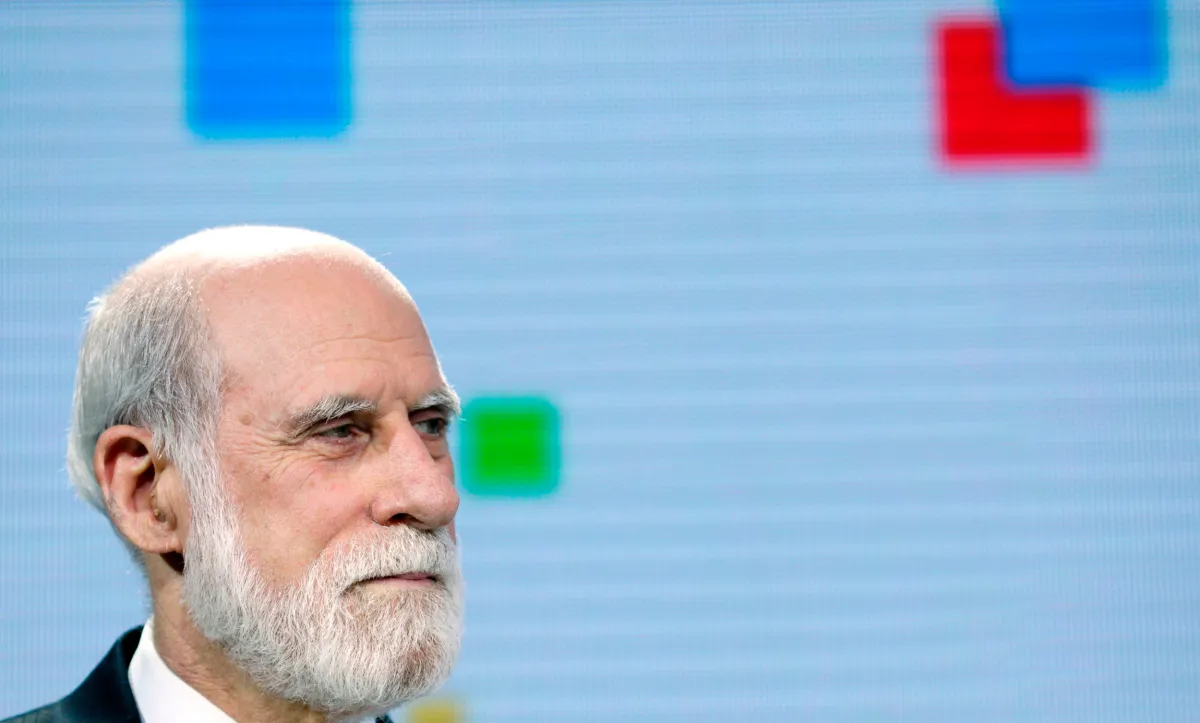
Vinton Cerf will step down from his role as Google’s chief internet evangelist next week, marking the conclusion of one of the most influential careers in technology history.

While speaking at the Open Frontier conference hosted by the Laude Institute, Cerf was recognized by Dave Patterson, the UC Berkeley professor best known for co-developing RISC processor architecture.

“Vint…has been at Google more than 20 years, and he is retiring a week from today, and so I think we ought to give him a round of applause for a relatively good career,” Patterson said, to cheers from the room.

Google did not respond to a request for comment by publication time.

Cerf, 83, and collaborator Robert Kahn are credited as the architects of the networking protocols that became the internet we know it today. His work developing and popularizing TCP/IP — the basic set of rules that lets different computer networks talk to each other — beginning in the 1970s has been recognized with numerous honorary degrees, the Presidential Medal of Freedom, and a Turing Award, among other honors.

Since 2005, Cerf has served as a vice president and chief internet evangelist at Google. (At this point, we can safely say the internet is fully evangelized, for good or ill.)

Cerf was speaking on a panel alongside other computer scientists known for their work on durable open source projects, including Patterson; François Chollet, creator of the Keras deep-learning library and co-founder of Ndea; John Ousterhout, the Stanford computer scientist behind the Tcl programming language, who also co-founded Electric Cloud; and Matei Zaharia, who is Databricks’ co-founder and chief technologist. They offered advice about what it takes to build open source systems that survive — advice that’s increasingly relevant as founders bet on open infrastructure for the next wave of AI products.

Much of the conference’s discussion focused on the problems with the centralization of advanced models in a handful of well-resourced labs, in contrast to the decentralized world of the open internet that made Cerf’s own protocols so durable. However, Cerf predicted that the rise of AI agents — software that can act autonomously and coordinate with other software — would push tech companies back towards standardized protocols.

“The agentic model of AI, with multiple agents from multiple sources interacting with each other, is going to force composability, and a requirement for interoperability and standardization,” Cerf said.

If he’s right, the companies that define those interoperability standards early could end up with outsized influence over how the agentic economy actually works — a dynamic not unlike the early internet protocol wars.

While other panelists speculated that natural language communication between LLM agents would be sufficient, Cerf predicted formal standards would be required.

“I don’t think English is going to be the best choice. There’s a flexibility in it, but there’s ambiguity, and I think precision for interagent interaction is going to be very, very important. An agent really needs to be sure the other agent understands what it is that they just agreed to do together,” Cerf said.

“Remember the old telephone game where you wish you’d whispered in somebody’s ear and then by the time it got to 10 people away the message was totally different? Imagine a bunch of agents talking to each other in natural language, you know, that’s kind of terrifying.”

In a more light-hearted moment, Patterson recalled meeting Cerf, known for his wardrobe of three-piece suits, as a grad student in the 1970s.

“He’s always been the best dressed computer scientist I’ve ever met,” Patterson said. “My memory of Vint is that he came as a grad student with a shirt and tie in the 70s.”

“It absolutely is true,” Cerf said. “I even had a vest, and for some reason I always wanted to stick out, and instead of having long hair, and something in my nose, I thought just dressing differently was one way to do it.”

When you purchase through links in our articles, we may earn a small commission. This doesn’t affect our editorial independence.

Continue Reading
Click to comment

Leave a Reply

Your email address will not be published. Required fields are marked *

Business

Mutual Benefits Assurance Reaffirms Commitment to Workforce Wellbeing with “Sweat It Out!” Event

info

Published

on

By

Mutual Benefits Assurance Plc in partnership with Hallmark Health Services Limited (Hallmark HMO), has reaffirmed its commitment to employee wellbeing by hosting the Retail Aerobic Dance & Wellness Day 2026, a vibrant initiative designed to promote healthy living, preventive healthcare and workplace wellness among its Retail Team.

Held under the theme “Sweat It Out!”, the event brought together Retail Managers across Mutual Benefits for an engaging day of fitness, health education and preventive medical screening.

The programme featured an enlightening health talk on Cardiovascular Health delivered by medical professionals from Hallmark HMO, alongside complimentary health screenings, including blood pressure and other vital health checks. Participants also took part in an energetic aerobic dance session aimed at encouraging active lifestyles while fostering teamwork, camaraderie, and employee engagement.

Speaking at the event, Alexander Lawal, Chief Retail Officer, Mutual Benefits Assurance Plc, emphasised that employee wellbeing remains fundamental to the company’s long-term success.

“Our people are our greatest asset. As an organisation that exists to provide security and peace of mind to millions of Nigerians, we recognise that this responsibility begins with caring for our own employees. The Retail Aerobic Dance & Wellness Day reflects our commitment to creating a workplace where our people are healthy, motivated, resilient and equipped to deliver exceptional service to our customers.”

Lawal added that promoting healthy lifestyles among employees contributes to higher productivity, stronger collaboration and a culture of excellence across the organisation.

Also speaking on the significance of the event, Dr. (Mrs.) Dotun Adeogun, Chief Executive Officer of Hallmark HMO, noted that preventive healthcare and daily healthy habits are essential for avoiding lifestyle-related illnesses like heart disease. Mutual Benefits is commended for leading by example in prioritizing employee well-being and building a healthier workplace culture.

The event concluded with an exciting aerobic fitness session, interactive wellness activities and prize presentations, reinforcing the message that healthy employees are happier, more engaged and better positioned to drive organisational success.

The Retail Aerobic Dance & Wellness Day forms part of Mutual Benefits’ broader employee engagement and wellness initiatives aimed at fostering a high-performing workforce, while encouraging healthier lifestyles across the organisation.

Mutual Benefits Assurance Plc is one of Nigeria’s leading insurance companies, with over 30 years of experience in providing reliable and innovative Life and General Insurance solutions to individuals, families and businesses. With a customer-centric approach built on trust, reliability and service excellence, the company remains committed to protecting lives, preserving assets and creating lasting value for its stakeholders through accessible insurance solutions and responsible corporate citizenship.

The post Mutual Benefits Assurance Reaffirms Commitment to Workforce Wellbeing with “Sweat It Out!” Event appeared first on Business Today NG.

Continue Reading

News

Jack Dorsey is taking on Slack with Buzz, a group chat platform for teams and their AI agents

info

Published

on

By

GettyImages 638007236.jpg

Twitter and Block co-founder Jack Dorsey announced a new app on Tuesday called Buzz. Positioned as a challenger to Slack and GitHub, Buzz is a group chat platform for the workplace that puts humans and their AI agents in the same conversations.

Dorsey wrote on X that Buzz is “model-agnostic, decentralized, self-sovereign, and open source.” This product seems to be more than just a Dorsey passion project. According to its website, Buzz was built by Dorsey’s company Block, which also operates products like Square, Cash App, Afterpay, and Tidal.

As startups increasingly rely on AI agents to get work done, it can be challenging for employees to collaborate on various tasks across different platforms. Buzz’s utility is that it merges several different workflows into one workspace. It looks a lot like Slack, but with native AI agents and the ability to manage GitHub projects all from the same window.

Since the platform is open source, developers can make their own Buzz instance feel more customized to the needs and workflows of their specific team. If a team needs a new feature, they can build it and deploy it on their own, since they have full access to the source code.

Image Credits:Buzz (opens in a new window)

Dorsey isn’t the only entrepreneur trying to pursue AI-native alternatives or additions to Slack. Paradigm partner and CTO Georgios Konstantopoulos recently unveiled a similar open source product called Centaur, which he describes as a “virtual employee” that runs either inside of Slack or via an API.

“There’s a lot of room for improvement for agents that live in Slack and can do more work than just coding for teams. In the enterprise setting, this means that you’ll want to self-host for security and control, and you want people to use it in Slack,” Konstantopoulos wrote on X.

For newer startups that are using AI agents and don’t have an established presence on Slack, Buzz (or its competitors) could be worth investigating. But Buzz itself admits that it is in its “early stages,” so it’s probably not a good idea to port your team over just yet.

Buzz’s free desktop app is available now for macOS, Windows, and Linux, and the code for the app has been uploaded to GitHub.

When you purchase through links in our articles, we may earn a small commission. This doesn’t affect our editorial independence.

Continue Reading

Trending