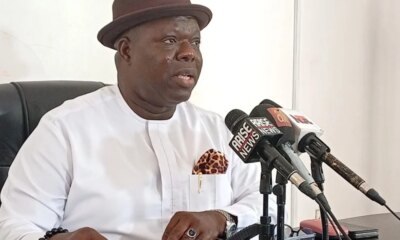
The leadership of the Nigeria Democratic Congress (NDC) has begun efforts to resolve internal disagreements in Kano State after holding a private meeting with representatives of the Kwankwasiyya movement.
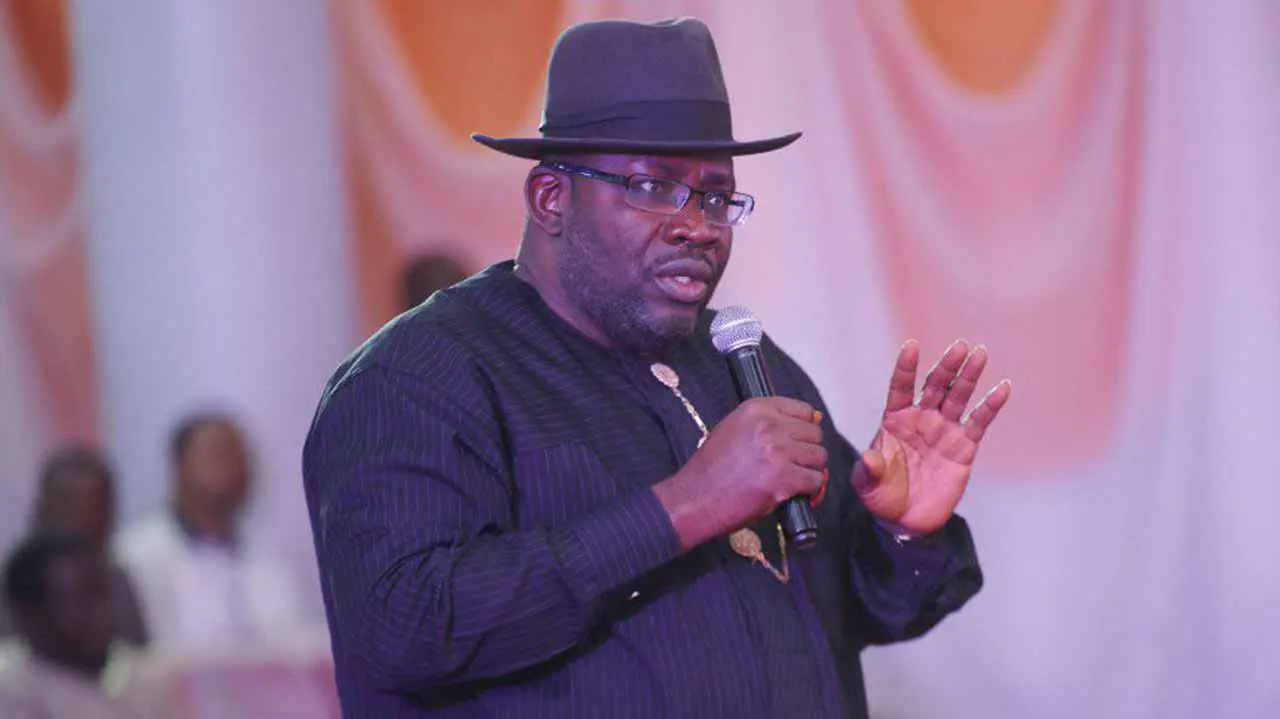
In a statement released on Tuesday by the party’s National Publicity Secretary, Osa Director, the meeting involved NDC National Leader, Henry Seriake Dickson, and other senior party officials.
The talks focused on addressing tensions between the Kwankwasiyya movement and longstanding NDC members in Kano.
According to the statement, the intervention was aimed at promoting unity, inclusion and wider participation as the party concludes its internal election process.
“The closed-door meeting was aimed at resolving the issues between the Kwankwasiya movement and the legacy officials of NDC in Kano State,” the statement said.
The party said Dickson and other leaders are actively working to ensure that all stakeholders are involved in party affairs. It also stressed that no candidates would be imposed in Kano or elsewhere in the country.
“The NDC leadership will not impose candidates in Kano State, and indeed across the nation, as the party cherishes the virtues of internal democracy,” the statement added.
The NDC described the discussions as productive, saying they lasted several hours and focused on finding common ground among those involved.
The party also dismissed reports claiming to show the results of its primary elections, insisting that no official results have been released.
“The NDC has not released any official results of its primary elections in any state. Hence, the public and party members are urged to disregard any such list in circulation,” the statement said.
Party officials said the clarification was necessary to prevent misinformation and reassure members that due process would be followed before any primary election results are announced.

The Nigeria Natural Medicine Development Agency (NNMDA) has identified inadequate funding, weak research infrastructure and equipment shortages as major obstacles to developing and integrating herbal medicine into Nigeria’s healthcare system.
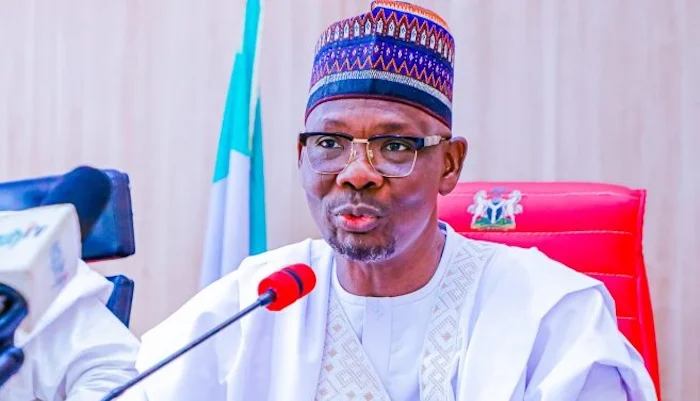
The Director-General of the agency, Martins Emeje, disclosed this on Tuesday during a one-day working visit by the Minister of Innovation, Science and Technology, Kingsley Udeh, to the agency’s headquarters in Lagos.
Mr Emeje said the challenges have slowed efforts to validate traditional medicines scientifically and develop locally produced herbal products that can be safely incorporated into healthcare.
Martins Emeje, the Director-General (DG) of the Nigeria Natural Medical Development Agency (NNMDA), speaking to the minister on Tuesday in Lagos
The NNMDA is Nigeria’s only trans-cultural medical research agency responsible for researching, developing and promoting natural medicines derived from the country’s biodiversity.
Funding and infrastructure challenges
According to Mr Emeje, the agency lacks adequate funding to acquire critical research equipment and expand its scientific infrastructure.
He also identified low public awareness of the agency’s activities, inadequate staffing and limited opportunities for capacity development as constraints affecting its operations.
Martins Emeje, the Director-General (DG) of the NNMDA and Minister of Innovation, Science and Technology, Kingsley Tochukwu, during his one-day working visit to the agency in Lagos on Tuesday.
The agency said it also needs to expand its research and development facilities, including experimental medicinal plant farms across the country’s six geopolitical zones, while strengthening pre-clinical and clinical studies needed to establish the safety and effectiveness of herbal medicines.
Mr Emeje further raised concerns over what he described as unclear guidelines for the clinical evaluation of herbal medicines and their integration into Nigeria’s healthcare system.
He added that traditional medicine knowledge continues to suffer from poor public perception despite Nigeria’s rich biodiversity and abundance of medicinal plants.
Call for clinical laboratory
The agency’s director-general said one of its most urgent needs is a clinical observation laboratory to support scientific evaluation of herbal medicines.
He also requested the construction of chalets to accommodate researchers who often work beyond normal office hours.
Responding, Mr Udeh acknowledged the agency’s request and said the ministry would explore alternative financing options instead of relying solely on government budget allocations.
“The clinical observatory lab, which has been one of the major needs of the agency that’s been brought to my attention, is something that even the DG has mentioned, and we are not talking about taking the responsibility to have it done by tomorrow,” Mr Udeh said.
“We are sitting down today to innovatively identify ways of accessing funds to have it done. It mustn’t be budgeted funds. From what we are doing here, stakeholders can support in doing it. Stakeholders from the private sector can support it. We can also access some grants and other funds that we can use to make this a reality.”
The minister added that some ‘stakeholders’ had already expressed willingness to support the agency’s work.
Nigeria-India collaboration
During the visit, India’s Consul in Lagos, Kannan Chockalingam, called for stronger collaboration between Nigeria and India in traditional medicine.
He said the partnership could focus on biodiversity conservation, quality assurance, scientific validation and innovation in herbal medicine.
According to him, innovation in traditional medicine involves applying modern scientific methods to validate and standardise existing indigenous knowledge, creating opportunities for research, product development and integration into national healthcare systems.
The minister also unveiled seven locally developed herbal products designed for the management of conditions including cancer, hepatitis, peptic ulcers, high cholesterol, hypertension and male sexual health.
He commended Mr Emeje for his leadership and pledged to engage industry stakeholders to accelerate the commercialisation of the agency’s herbal products.
“We will engage industry leaders on how to get these products into the market,” Mr Udeh said.
Nigeria’s Kayinsola Ajayi delivered a superb performance to claim the bronze medal in the men’s 100 metres after clocking a blistering 9.90 seconds in a breathtaking Commonwealth Games final at Scotstoun Stadium on Tuesday night.
Ajayi, who had qualified impressively from the semi-finals earlier in the day, produced another outstanding run to finish third behind Cameroon’s Emmanuel Eseme, who powered to a Games Record of 9.83 seconds to win gold, while Australia’s Lachlan Kennedy claimed silver in an Australian Record of 9.85 seconds.
South Africa’s Gift Leotlela narrowly missed the podium despite posting a season’s best 9.91 seconds, finishing just one-hundredth of a second behind the Nigerian.
The result marks another major milestone in Ajayi’s rapidly rising career and gives Team Nigeria another athletics medal at the Glasgow 2026 Commonwealth Games.
The 20-year-old has been one of Nigeria’s standout sprinters throughout the 2026 season, consistently running among the world’s fastest times. His bronze-medal performance in Glasgow confirms his emergence as one of Africa’s brightest sprint talents and signals a promising future ahead of the next World Championships and Olympic cycle.
The final lived up to expectations, producing one of the fastest races in Commonwealth Games history. Eseme’s 9.83 shattered the previous Games record, while Kennedy’s 9.85 established a new Australian record. Ajayi’s 9.90 ensured Nigeria was represented on the podium after surviving a highly competitive field that included South Africa’s Gift Leotlela, Wales’ Jeremiah Azu, Australia’s Edward Nketia, Ghana’s Benjamin Azamati and South Africa’s Cheswill Johnson.
Ajayi’s medal also capped an impressive outing for Nigeria’s men’s sprint team. Although Favour Ashe and Adekalu Nicholas Fakorede narrowly missed the final after their semi-final races, Ajayi carried the nation’s hopes into the championship race and delivered when it mattered most.
His podium finish adds to Team Nigeria’s growing medal haul in Glasgow and continues the country’s impressive campaign across athletics and weightlifting.
For Nigeria, the message from Scotstoun Stadium was clear: the country’s sprint tradition remains alive, and Kayinsola Ajayi has announced himself on one of the biggest stages in Commonwealth sport