News
IMF ranks Nigeria among Africa’s top AI economies, flags infrastructure hurdles – Technology Times

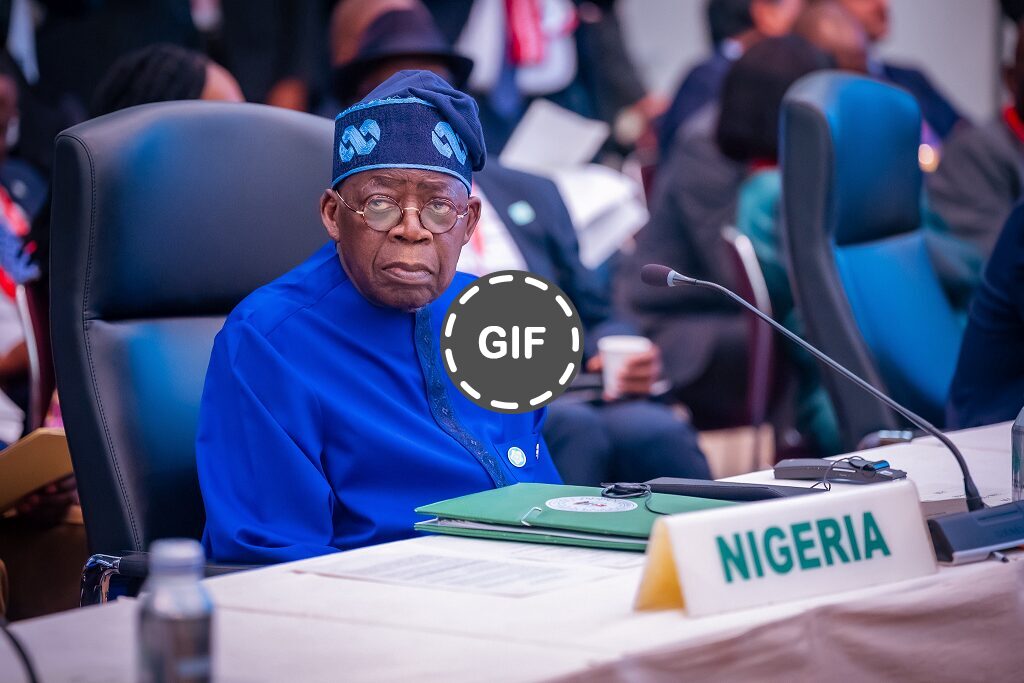
Nigeria has emerged as one of Africa’s most promising economies for artificial intelligence (AI)-driven growth, with the International Monetary Fund (IMF) ranking the country among the continent’s top performers in AI readiness.
However, the global financial institution warns in the report reviewed by Technology Times that chronic deficits in electricity, broadband infrastructure and digital skills could prevent the country from fully capitalising on the technology’s economic potential.
The findings are contained in the IMF report, “Unlocking the Potential: AI in Sub-Saharan Africa,” which positions Nigeria among the region’s five economies expected to realise the greatest productivity gains from AI under current conditions. The report, however, stresses that translating this potential into sustained economic growth will require significant investment in the country’s digital and physical infrastructure.


The report identifies Nigeria as one of the five Sub-Saharan African countries with the highest projected productivity gains from AI, reflecting the country’s growing technology ecosystem, expanding fintech industry and increasing digital adoption.
According to the IMF, Nigeria belongs to a select group of Sub-Saharan African economies, including Botswana, Mauritius, Namibia, Seychelles and South Africa, whose labour markets have relatively high exposure to occupations that stand to benefit from AI adoption.
Unlike many countries in the region where employment remains concentrated in sectors with limited AI exposure, Nigeria’s economic structure provides stronger opportunities for AI to augment worker productivity, improve business efficiency and support innovation across industries.
Nigeria among Africa’s AI frontrunners
The IMF says Nigeria’s relatively diversified economy, expanding digital ecosystem and growing technology sector place it in a favourable position to harness AI for economic transformation.
The report identifies Nigeria as one of the five Sub-Saharan African countries with the highest projected productivity gains from AI, reflecting the country’s growing technology ecosystem, expanding fintech industry and increasing digital adoption.
This positions Nigeria ahead of many regional peers as governments and businesses race to integrate AI into financial services, healthcare, education, agriculture, manufacturing and public administration.
Despite this strong outlook, the IMF cautions that favourable labour market characteristics alone will not guarantee success.
Instead, the country’s ability to convert AI potential into measurable economic gains will depend on addressing long-standing infrastructure bottlenecks that continue to constrain digital transformation.
Power shortages threaten AI ambitions
Among the biggest risks identified in the report is Nigeria’s persistent electricity challenge.
According to the IMF, nearly half of Sub-Saharan Africa’s population still lacks reliable electricity, while businesses across the region continue to suffer from frequent power interruptions.


For AI technologies, reliable electricity is not optional. Cloud computing platforms, AI training systems, data centres and high-performance computing facilities require uninterrupted power to operate efficiently.
For AI technologies, reliable electricity is not optional. Cloud computing platforms, AI training systems, data centres and high-performance computing facilities require uninterrupted power to operate efficiently.
The IMF notes that Nigeria’s dependence on self-generated electricity illustrates the scale of the challenge.
According to the report, 86% of Nigerian firms own or share electricity generators, underscoring the extent to which businesses rely on alternative power sources to remain operational.
While backup generators reduce downtime, they significantly increase operating costs, limit productivity gains and erode many of the efficiency benefits AI promises to deliver.
Broadband remains another critical gap
Beyond electricity, the IMF identifies broadband connectivity as another major barrier to AI adoption.
Although mobile network coverage extends to most of Africa’s population, internet usage, smartphone penetration and broadband quality remain below global averages.
The report argues that affordable, high-capacity broadband networks are essential for AI-powered applications, which increasingly rely on cloud computing, real-time data processing and digital public infrastructure.
Without widespread access to reliable broadband, businesses may struggle to deploy AI solutions at scale despite increasing availability of AI models and software platforms.
AI leadership requires infrastructure investment
The IMF argues that the debate around AI in Africa should move beyond access to technology itself.
Instead, governments should prioritise building the enabling environment that allows businesses, researchers and public institutions to adopt AI effectively.
“The policy agenda is therefore not simply about promoting AI adoption but about enabling broad-based, inclusive diffusion,” the report states.
“The region does not need to be at the technological frontier to benefit, but it must be able to adopt, adapt, and scale AI rapidly and inclusively.”
To unlock AI’s economic benefits, the IMF recommends that governments focus on five strategic priorities:
-
Expanding reliable and affordable electricity supply.
-
Accelerating broadband and digital infrastructure deployment.
-
Investing in digital, technical and AI-related skills.
-
Supporting local innovation ecosystems and entrepreneurship.
-
Developing governance frameworks that promote trust while managing AI risks.
The report warns that without these foundational investments, countries with strong AI potential could still fall behind as global AI adoption accelerates.
“The region’s AI trajectory is not predetermined: Policy choices will shape whether AI supports convergence or deepens divergence,” the IMF says.


Nigeria’s AI ecosystem continues to expand
Despite infrastructure constraints, Nigeria has continued to strengthen its AI ecosystem through government policy and private-sector investment.
Over the past year, the Federal Government has launched the ATLAS Network to support the development of African large language models (LLMs) while advancing implementation of the National Artificial Intelligence Strategy as part of broader digital economy reforms.
The IMF also highlights regional investment in AI computing infrastructure, citing Cassava Technologies’ partnership with NVIDIA to deploy graphics processing units (GPUs) across facilities in Nigeria and other African markets.
The initiative is expected to improve access to the computing capacity required for developing and deploying AI applications across the continent.
Combined with Nigeria’s large technology talent pool, vibrant startup ecosystem and growing fintech sector, these investments could strengthen the country’s position as one of Africa’s emerging AI leaders.
A narrowing window of opportunity
While optimistic about Nigeria’s long-term prospects, the IMF stresses that the opportunity presented by AI is time-sensitive.
“AI presents a narrow but meaningful window of opportunity for countries in Sub-Saharan Africa to accelerate growth and improve living standards,” the report states.
The institution concludes that Nigeria’s ambition to become a continental AI powerhouse will ultimately depend less on access to AI models than on whether it can modernise the infrastructure that supports them.
Reliable electricity, affordable broadband, stronger digital skills and supportive policy frameworks, the IMF argues, will determine whether Nigeria converts its favourable AI ranking into lasting productivity gains and inclusive economic growth.
As global investment in AI accelerates, the report suggests that Nigeria has already secured a place among Africa’s leading AI economies. The greater challenge now is ensuring that infrastructure development keeps pace with technological ambition so that the country can translate its AI potential into tangible economic outcomes.
Stay ahead with real-time reports, breaking news, and exclusive insights delivered directly to your phone. Don’t settle for outdated information. Join TECHNOLOGYTIMES NEWS on WhatsApp for 24/7 updates.
Join Our Whatsapp Channel





Views: 14
Jos, Plateau State — Governor Caleb Mutfwang has convened the Plateau State Security Council and directed security agencies to intensify intelligence gathering and strengthen inter-agency collaboration to prevent attacks before they occur.
The meeting, convened amid ongoing security concerns in parts of the state, focused on strengthening proactive measures and improving coordination among security and intelligence agencies.
Governor Mutfwang urged the security agencies to enhance intelligence-led operations, share information more effectively and identify potential threats early enough to prevent them from escalating into attacks.
The Governor also called for increased preventive operations across vulnerable areas of the state, stressing the need for security agencies to move beyond responding to incidents and place greater emphasis on preventing them.

The directive is expected to strengthen collaboration among the various security formations operating in Plateau State and improve the state’s capacity to respond swiftly to emerging security threats.
Governor Mutfwang reaffirmed the commitment of his administration to protecting lives and property and maintaining peace across Plateau State.
-

 News3 days ago
Crusoe abandons $1.25B plan to use Boom turbines at AI data centers
-
News3 days ago
Alex Otti should be campaigning for Peter Obi not backing Tinubu – NDC
-
News3 days ago
At Meta Connect, the company’s smart glasses were everywhere
-
News3 days ago
I created an interactive digital avatar of myself — and you can talk to it