Connect with us

Business

Nigerian SEC positions AI, data-driven regulation to attract investments

info

Published

on

IMG 2380.jpeg

The Securities and Exchange Commission has said it is placing artificial intelligence, data analytics and technology-driven regulation at the centre of Nigeria’s capital market reforms to attract both local and foreign investments.

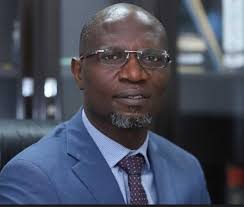
Speaking at the FSDH Investor Conference 2026 in Lagos, the Director-General of the SEC, Emomotimi Agama, said the future of global investing would increasingly depend on the quality of intelligence, data and technology supporting investment decisions rather than the size of capital alone.

According to him, the era of “intelligent investing” has already arrived, driven by artificial intelligence, real-time analytics, distributed ledger technology and algorithmic systems that are reshaping how investments are priced, allocated and protected globally.

He said, “We are at the threshold of what scholars and practitioners are calling the era of intelligent investing — a paradigm in which data does not merely inform decisions, but actively participates in them.”

Agama noted that the SEC had embarked on what he described as the most comprehensive regulatory reform agenda in its history to ensure Nigeria remains competitive in the evolving global investment environment.

He explained that the Commission’s reforms were aimed at creating a forward-looking market structure capable of supporting intelligent investing through faster settlement systems, tokenised securities and deeper derivatives markets.

According to him, the Commission’s seven-pillar capital market infrastructure vision includes plans to achieve T+1 settlement cycles, expand digital assets regulation and build a comprehensive framework for tokenised securities.

The SEC boss said the Commission was also developing governance frameworks for artificial intelligence applications in the capital market to ensure transparency, accountability and investor confidence.

“We are developing AI governance frameworks for capital market participants — frameworks that demand explainability, accountability and algorithmic fairness. An investor in Nigeria deserves to know not only what decisions were made on their behalf, but how those decisions were reached,” he said.

Agama stated that intelligent investing must be inclusive and accessible to ordinary Nigerians, adding that the SEC’s fintech-bank integration strategy targets about 20 million retail investors across the country.

He said technology and data-driven investing tools could democratise access to wealth creation opportunities for small businesses, artisans and low-income earners who had previously been excluded from formal investment systems.

The SEC DG also stressed the importance of collaboration between regulators, financial institutions, fintech firms and investors in building a resilient and technology-driven market ecosystem.

According to him, Nigeria’s capital market reforms and adoption of intelligent investing frameworks would strengthen investor confidence, improve market transparency and position the country as a leading investment destination in Africa.

He added that the Commission was strengthening investor protection through enhanced enforcement mechanisms, financial literacy programmes and the establishment of a dedicated Investor Protection Department.

Agama said, “Confidence is the ultimate asset in a capital market. Every disclosure we enforce, every fraud we prosecute, every investor we educate adds to the stock of market confidence.”

He further noted that Nigeria’s growing role in African capital market integration and digital finance initiatives would help channel long-term investments into infrastructure, gender finance and other critical sectors of the economy.

The SEC DG commended FSDH Merchant Bank for creating a platform for stakeholders to discuss the future of intelligent investing, adding that collaboration and data-sharing among market participants would be critical to building globally competitive financial markets in Nigeria.

Continue Reading
Click to comment

Leave a Reply

Your email address will not be published. Required fields are marked *

Business

Lagos Police Arrest 4 Notorious Eiye Cultists in Egbeda Initiation Raid

info

Published

on

By

1776284932 images 2.jpeg

BY SUNDAY SAMUEL—Operatives of the Lagos State Police Command have arrested four suspected notorious cultists linked to a series of violent crimes and cult-related activities within Alimosho and its environs.

The suspects, identified as 34-year-old Nurudeen Ganiu, 38-year-old Oluwaleke Fagbula, 41-year-old Emmanuel Silas, and 41-year-old Nurudeen Abdullahi, were apprehended during a midnight initiation ceremony in the Egbeda area of Lagos State.

Acting on credible intelligence, police operatives launched a covert raid that disrupted the ring and led directly to their capture.

During the successful operation, law enforcement officers recovered one locally made cut-to-size pistol, one English Beretta pistol loaded with ten rounds of live ammunition, and a jackknife.

Further investigation by the Command revealed that one of the apprehended suspects is a notorious gang kingpin who was rusticated from a university in Ogun State in 2022 due to his involvement in cult activities. Police findings established that the gang has been deeply involved in local thuggery and has consistently terrorized residents of Egbeda and neighboring communities.

The suspects confessed to being active members of the Eiye Confraternity, a notorious secret cult group. Their standard mode of operation involved using motorcycles to launch swift attacks on unsuspecting members of the public and disrupting social gatherings at gunpoint.

The Commissioner of Police for the Lagos State Command commended the operatives for their professionalism and swift tactical response during the midnight raid. Reassuring residents of the state, the Commissioner emphasized that the Command remains steadfast in its resolve to combat cultism and eliminate violent crimes across Lagos. Members of the public were urged to stay vigilant and continue assisting law enforcement by reporting suspicious activities through the Command’s dedicated emergency lines.

The post Lagos Police Arrest 4 Notorious Eiye Cultists in Egbeda Initiation Raid appeared first on Business Today NG.

Continue Reading

Business

Dangote refinery raises processing capacity to 700,000 barrels per day

info

Published

on

By

Dangote Refinery 2 1024x831 1 e1778177983979.jpg

MTN ADVERT

Dangote Petroleum Refinery and Petrochemicals says it has increased its crude oil processing capacity to 700,000 barrels per day (bpd), surpassing its installed nameplate capacity of 650,000 bpd following a performance assessment by its process licensors.

The development marks a significant operational milestone for the refinery, which is widely regarded as the world’s largest single-train petroleum refining facility.

In a statement shared with PREMIUM TIMES on Thursday by the Group Chief Branding and Communications Officer of Dangote Group, Anthony Chiejina, the company explained that the increase demonstrates the refinery’s ability to process additional feedstock while optimising performance across its production units.

In his remark, Vice President, Oil and Gas at Dangote Industries Limited, Devakumar Edwin, said the refinery’s latest output increase forms part of a broader expansion strategy aimed at scaling capacity to 1.4 million bpd within the next 30 months.

Mr Edwin said the proposed expansion could position the facility among the largest refining complexes globally, while strengthening Nigeria’s drive for energy self-sufficiency.

PT WHATSAPP CHANNEL

“The refinery’s growth trajectory reflects a deliberate move toward continental and global refining dominance, not just domestic supply sufficiency,” he said.

The announcement of reaching 70, 000 capacity comes a few days after the refinery chief executive disclosed that the production target of 70,000 barrels per day would be reached by 2028.

On Tuesday, the refinery CEO, David Bird, while speaking during the S&P Global Energy Middle East Petroleum and Gas Conference in London, said the refinery is currently operating at full nameplate capacity and is planning what he described as a “ruthless replication” strategy to expand output.

“We will bring 700,000 barrels per day of fully complex refining capacity on stream by the end of 2028,” he said, adding that long-lead equipment has already been procured while construction contracts are being awarded.

He added that the group could eventually increase refining capacity to 2.1 million bpd, supported by plans for another refinery in East Africa, positioning the company as a major player in global crude and refined product markets.

“Nigeria has gone from fuel scarcity to absolute fuel abundance since the Dangote refinery came online,” Mr Bird said.

According to Kpler data cited last month, the Dangote Petroleum Refinery exported an estimated 57 million barrels of jet fuel between April 2024 and April 2026.

The data showed exports rose from about 20,000 barrels per day in April 2024 to around 65,000 barrels per day by the end of that year before peaking at approximately 160,000 barrels per day during the review period.

The figures highlight the growing role of refined petroleum exports in Nigeria’s energy sector, particularly aviation fuel, as the country seeks to strengthen domestic refining capacity and reduce dependence on imported products.

Expansion plans and export ambitions

Owned by industrialist Aliko Dangote, the refinery commenced fuel production in 2024 and has since expanded output to include petrol, diesel, aviation fuel, and other refined petroleum products.

The company said the facility now supplies both domestic and international markets, exporting refined products to several African countries and to European destinations, including the United Kingdom, France, Spain, Italy, and the Netherlands.

It also said refined products from the facility have reached markets in the United States, while jet fuel exports have extended to Saudi Arabia.

Dangote Industries argued that the refinery has increasingly played a stabilising role in regional fuel markets amid supply disruptions linked to geopolitical tensions in the Middle East, with more African countries turning to the facility for energy security.

Growing global footprint

The refinery’s rising output has further strengthened its position in global fuel markets.

The company noted that the facility emerged as the world’s largest exporter of jet fuel in April, citing data from S&P Global Commodities.

Industry analysts say the refinery’s operations have already contributed to reducing Nigeria’s reliance on imported petroleum products, easing pressure on foreign exchange demand and improving local fuel availability.

READ ALSO: Dangote refinery can supply Jet Fuel Globally — Official

As production volumes increase, the refinery has also attracted stronger engagement from international crude suppliers and commodity traders, sourcing feedstock from both domestic and foreign producers to sustain rising throughput.

Dangote Industries said the planned expansion to 1.4 million bpd by 2028 is expected to generate broader economic benefits, including job creation, increased industrial activity and improved trade balances.

The refinery also expects to deepen downstream industrialisation through increased supply of liquefied petroleum gas (LPG), polypropylene and other industrial feedstocks used in manufacturing.

Plans also include production of Linear Alkylbenzene (LAB), a key raw material used in detergent manufacturing, as part of efforts to expand the country’s petrochemical value chain.


Continue Reading

Trending