News
Rising Ram Prices Spark Concern Ahead Of Sallah

By Charity Nwosu
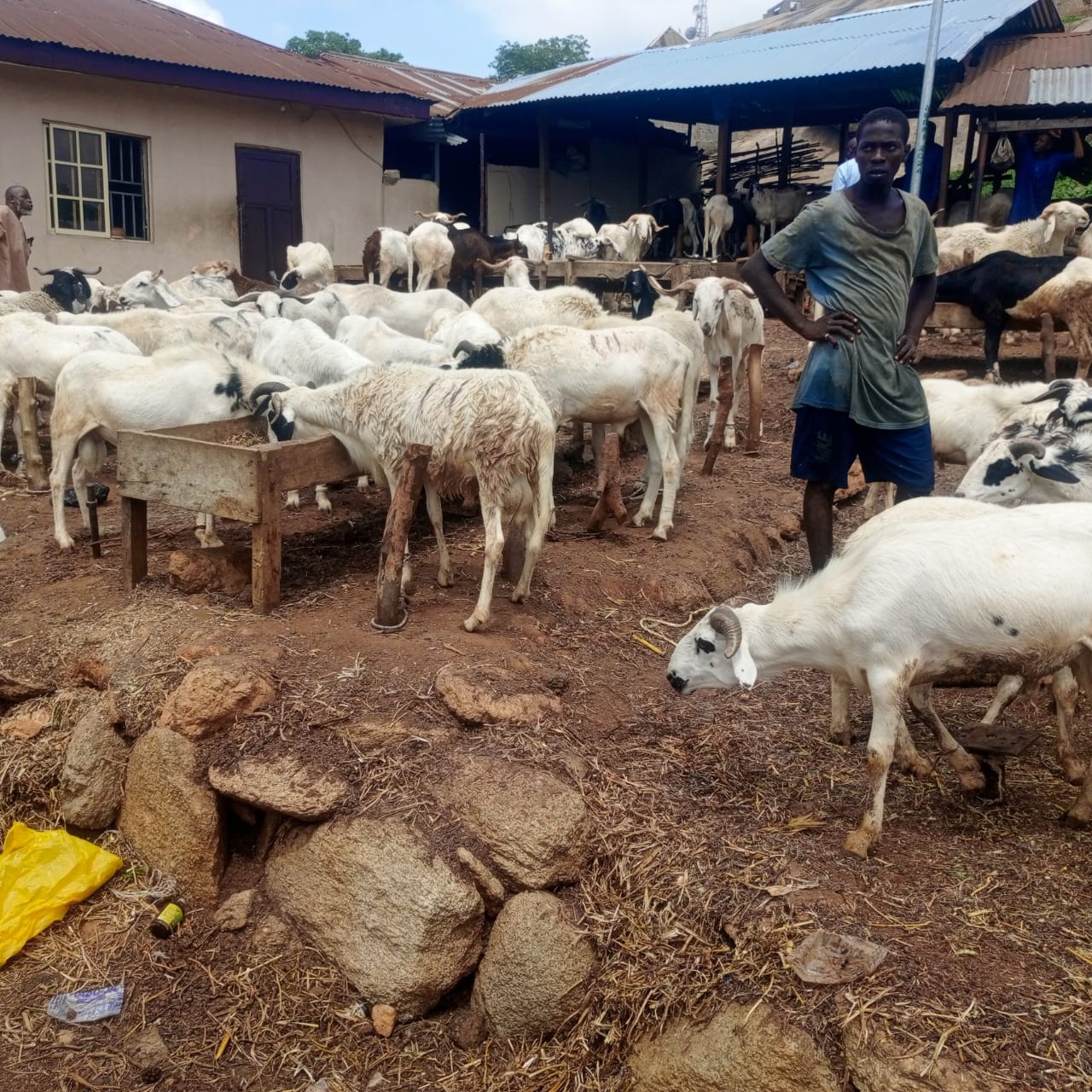
Some residents of Dei-Dei and Kubwa Communities in the Bwari Area Council, FCT, have expressed concern over the sharp increase in the prices of rams ahead of the forthcoming Eid-el-Kabir (Sallah) celebration.
The residents spoke in interviews with the News Agency of Nigeria (NAN) on Monday in Abuja.
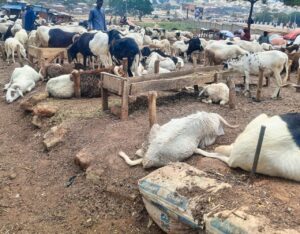
The residents said that the rising cost of livestock was making it difficult for many Muslim faithful to fulfil the religious obligation of sacrificing rams during the festival.
A NAN visit to major livestock markets in Dei-Dei and Kubwa revealed that the prices of rams had risen significantly compared to previous years.
Some ram sellers attributed the increase to rising transportation costs, insecurity in some northern states and the high cost of animal feed.
A livestock dealer at the Dei-Dei Market, Mohammed Saminu, said the cost of transporting animals from states such as Jigawa, Kano, Sokoto, Katsina and Plateau had doubled due to the increase in fuel prices.
According to him, a medium-sized ram now sells for between N500,000 and N700,000, depending on the size and breed.
“Last year, people could buy a good ram for less than N400,000, but things have changed because of the economic situation and transportation costs,” he said.
“This year, everything has changed. Rams are more expensive than last year, and people are not coming to buy like before.
“Customers are not even offering up to the amount we bought the animals for in the market.
”Transportation and feeding have become very expensive, and this affects the final price of the animals,” he said.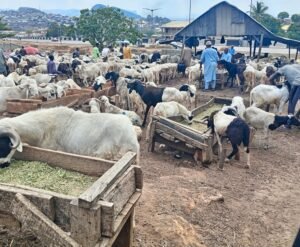
Mrs Zainab Danjuma, a resident of Kubwa, said the high prices had forced her family to consider alternatives.
“We usually buy a ram every year, but the prices are too high now. We may have to contribute with relatives or settle for something smaller,” she said.
“We are already struggling with food prices, school fees and transportation. Buying a ram this year may be difficult for many families.”
Another trader, Sani Yahaya, said insecurity along major highways had also discouraged many livestock dealers from bringing large numbers of animals to the markets.
“Some traders are afraid of attacks on the road, and this has reduced supply. When supply is low, prices automatically go up,” he said.
Another resident, Muhammed Ahmed, said the current economic hardship had reduced the purchasing power of many Nigerians.
He appealed to the government to address rising transportation costs and insecurity to ease the burden on both traders and consumers.
Ahmed, however, expressed optimism that prices might reduce slightly closer to the Sallah period as more animals arrive in the markets.
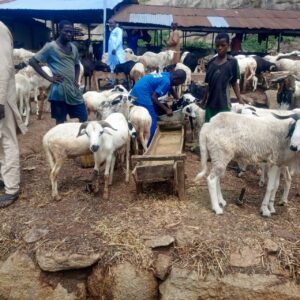
He also urged Muslims to celebrate within their means and avoid unnecessary pressure during the festive period.
“Sallah symbolises sacrifice, love and sharing. The sincerity of worship is more important than the size of the ram purchased,” he said.
Some prospective buyers described the situation as discouraging, noting that many families might not be able to afford rams this year.
The News Agency of Nigeria (NAN) reports that Eid-el-Kabir, also known as the Festival of Sacrifice, is one of the major Islamic celebrations observed by Muslims worldwide.(NAN)(www.nannews.ng)
Edited by Magdalene Ukuedojor








The Plateau State Government has intensified preparedness measures against Ebola Virus Disease (EVD), including renewed public awareness campaigns, activation of isolation centres, surveillance at border communities and infection prevention training for health workers.
The Plateau State Commissioner for Health disclosed this while responding to questions from journalists on the measures being taken to prevent the disease from spreading to the state following the confirmation of an imported Ebola case in Nigeria.

The Federal Government confirmed the case in the Federal Capital Territory (FCT) on October 20, 2026, involving a woman who had recently travelled from Uganda. The patient was isolated and receiving medical care, while public health authorities identified 44 close contacts for monitoring.
The Commissioner explained that the Nigeria Centre for Disease Control and Prevention (NCDC) had activated preparedness measures across the country, prompting states to strengthen their surveillance and response systems.
He said Plateau State had previously commenced public enlightenment campaigns through jingles and was bringing them back to educate residents about the disease. The state is also printing information, education and communication materials for distribution through relevant public health channels.
According to him, the state government had earlier provided funds for Ebola containment, which were yet to be utilised, and these resources were now being deployed through the State Epidemiology Unit to support the response.
The Commissioner further disclosed that he had directed the State Epidemiology Unit to assess preventive measures at the airport and strengthen surveillance in local government areas bordering neighbouring states. Health facilities in border communities, including areas around Naraguta, were also being alerted to report suspected cases promptly.
He added that isolation centres at Plateau Specialist Hospital and Jos University Teaching Hospital had been identified for the management of suspected cases, while the Ministry of Health was working to strengthen infection prevention and control training for health workers.
Although the Commissioner described Plateau as an intermediate-risk state because of its airport and interstate borders, he stressed the need for early action to prevent the disease from gaining a foothold in the state.
Understanding Ebola and how it spreads
Ebola is a serious viral disease that can cause severe illness and death. It spreads primarily through direct contact with the blood, vomit, stool and other bodily fluids of an infected person who has developed symptoms, or through contaminated objects such as bedding, clothing and medical equipment. It may also spread through contact with infected animals or the bodies of people who have died from the disease.
Unlike influenza, Ebola is not generally transmitted through the air during ordinary social interactions. People who have not developed symptoms do not transmit the disease.
Symptoms may include fever, fatigue, headache, muscle pain, sore throat, vomiting, diarrhoea, abdominal pain and, in some cases, unexplained bleeding. These symptoms can resemble those of malaria and other common illnesses, making medical assessment and testing important.
How residents can protect themselves
Residents are advised to observe the following precautions:
- Wash hands regularly: Use soap and running water or an appropriate alcohol-based hand sanitiser, especially after contact with potentially contaminated surfaces.
- Avoid contact with bodily fluids: Do not touch the blood, vomit, stool or other bodily fluids of anyone who is ill or suspected of having Ebola.
- Avoid handling suspected contaminated materials: Do not share or handle clothing, bedding, needles or other items contaminated with bodily fluids.
- Avoid contact with suspected cases and unsafe burials: Do not handle the body of someone suspected to have died from Ebola. Safe burial arrangements should be managed by trained personnel.
- Seek medical attention early: Anyone who develops compatible symptoms after possible exposure should contact a health facility or public health authority immediately and disclose their symptoms and travel or contact history.
- Avoid spreading rumours: Follow verified updates from the NCDC, the Federal Ministry of Health and Social Welfare, the Plateau State Ministry of Health and the World Health Organisation.
Members of the public are also advised not to panic or stigmatise individuals based on their nationality, ethnicity or travel history. Ebola requires a coordinated public health response, accurate information and cooperation between communities and health authorities.
The Commissioner urged residents to remain vigilant and take personal responsibility for preventing infection, assuring them that the state government was monitoring developments and strengthening its preparedness.
He emphasised that early reporting, effective surveillance, public cooperation and strict infection prevention practices would be essential to keeping Plateau State safe.


The Central Bank of Nigeria (CBN) has granted approval-in-principle to JP Morgan to set up a merchant in the country.
The move eases the path for the US largest bank to expand its services – payments, lending, trade finance and corporate banking – in Nigeria, where it has operated a representative office for years.
JP Morgan Merchant Bank Nigeria Limited plans to run wholesale banking, capital markets and advisory services, Michael Akuka, the CBN’s director of corporate communications and investor relations, said in a statement on Friday.
The approval-in-principle is the first phase of the licensing process, and does not translate into an ultimate banking permit.
JP Morgan needs to clear further regulatory hurdles such as incorporation with the Corporate Affairs Commission and operational approvals before it can commence operations, the regulator stated.
The push comes amidst hordes of banking sector reforms in Africa’s most populous country, aimed at bolstering the financial system, enhancing market confidence and boosting resilience.


According to the statement, the CBN also approved the nomination of Adedapo Olagunju as the managing director of the bank and Latter Kevin George, Nzelu Chinedum Izunwanne and Syed Gabriel Murtaza as non-executive directors.
“Our objective is to build a financial system that is stable, competitive and internationally connected, one that commands confidence and can effectively support investment and economic growth,” said CBN Governor Olayemi Cardoso.
READ ALSO: CBN outlines market infrastructure supporting Nigeria–China financial flows at Beijing investor forum
“We are encouraged by the growing interest of international financial institutions in Nigeria. Our focus remains on sustaining the reforms, strengthening the credibility of our markets and creating an environment in which both domestic and international institutions can participate and thrive,” he added.
On Tuesday, Bloomberg, citing sources with knowledge of the deal, reported that JP Morgan was on course to secure a banking licence in the country after depositing N50 billion ($38 million) with the CBN.
It noted that the bank hopes to receive the licence by year-end or in early 2027, provided it is able to obtain all the requisite approvals
P Morgan’s presence in Nigeria dates back to 1961, when Chase Manhattan Bank, which later evolved into JP Morgan Chase & Co., opened a branch in Lagos, providing a wide range of commercial banking services to local businesses and individuals.
A year earlier, Chase International Investment Corporation, a unit of Chase Manhattan Bank, served as the lead partner in organising Nigerian Textile Mills in Lagos, regarded as the first major private industrial project with an American interest in Nigeria.
Discover more from Premium Times Nigeria
Subscribe to get the latest posts sent to your email.
-

 News1 day ago
Obi, Kwankwaso to hold Middle Belt Youth, Village Hall Meeting in Jos
-
Business4 days ago
How Your Side Hustle Income Ends Up in Your RSA
-
News3 days ago
Blacksmith hits unicorn valuation after Sequoia leads Series C
-
Entertainment2 days ago
FOGMMON PLATEAU CONGRATULATES EJIDIKE UGOCHUKWU (𝙈𝙞𝙣𝙨𝙩𝙧𝙚𝙡 𝙅𝙞𝙙) ON HIS APPOINTMENT AS NATIONAL PRESIDENT