News
Police arrest four over alleged N9.29m Hajj scam in Kebbi



The Presidency has reacted to reports of military tanks and personnel of the Department of State Services, DSS, the Nigeria Police Force and the Nigeria Security and Civil Defence Corps being deployed to Abuja City Gate over the Obi-Kwankwaso march in the nation’s capital.
DAILY POST reports that security personnel were stationed at Abuja City Gate in the early hours of Saturday morning.
The heavy security presence was reportedly linked to the Obi-Kwankwaso march to mobilise support for the election of Peter Obi of the Nigeria Democratic Congress, NDC, and his running mate, Rabiu Kwankwaso.
However, reacting to the development, Special Assistant to President Bola Tinubu on social media, Dayo Olusegun, dismissed claims linking the heavy security presence to the Obi-Kwankwaso march.
He explained that the heavy security presence was a standard procedure whenever the President was embarking on a trip.
He said not everything should be interpreted as an attempt to suppress the opposition.
According to him, the Tinubu administration would continue to uphold democracy ahead of the 2027 general election.
“This is a standard security procedure whenever the President is embarking on a trip, put in place to ensure his safety.
“Not everything should be interpreted as an attempt at suppression. We are in a democracy, and we will continue to uphold democratic principles and abide by the rule of law,” he wrote on X.
https://x.com/DOlusegun/status/2113977148960547167
DAILY POST reports that Tinubu is in Kaduna State to kick off his presidential campaign.
Earlier, Tinubu’s campaign team alleged that the presidential candidate of the African Democratic Congress, ADC, Atiku Abubakar, had attempted to sabotage the incumbent President’s campaign kick-off.
However, Atiku, in a statement by his spokesperson, Phrank Shaibu, said Tinubu’s alleged abysmal performance was enough to campaign against his re-election.
DAILY POST reports that Tinubu, Atiku, Peter Obi and 15 other presidential candidates are set to battle for the presidency in the January 16, 2027, election.
Presidency speaks on Abuja City Gate security deployment amid Obi-Kwankwaso march
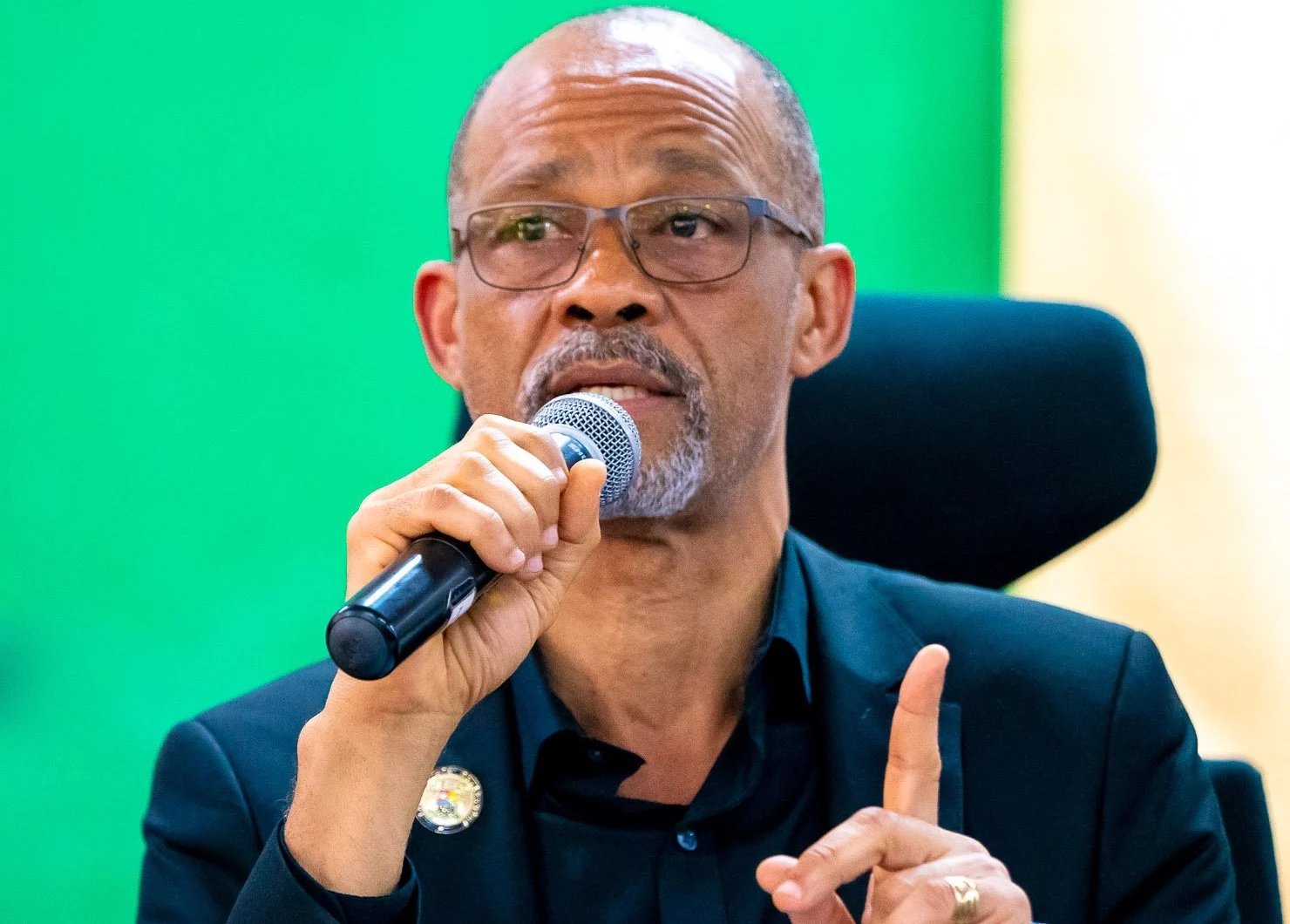
The Lagos State government says it has stepped up preparedness measures and is prepared to respond following Nigeria’s confirmation of an imported case of Ebola disease in the Federal Capital Territory (FCT).
The state’s Commissioner for Health, Akin Abayomi, said Lagos remains on “high alert and preparedness” and is treating the situation as a priority.
“Lagos is a gateway city with constant movement to and from Abuja, and we are treating this as a priority,” Mr Abayomi said in a statement posted on X on Friday.
He said the state’s Emergency Operations Centre (EOC) had been working ahead of the confirmation, with measures being put in place across surveillance, isolation, laboratory testing, infection prevention and control.
‘Lagos is prepared’
Mr Abayomi said response teams are conducting simulation exercises to ensure that responders understand their roles before they are needed.
He said the state’s isolation centre has also been upgraded, while additional capacity is being developed.


He noted that training on infection prevention and control is continuing for health workers across public and private health facilities.
The commissioner said Lagos is also establishing a clear laboratory testing pathway, aiming to obtain results within 24 hours.
He noted that screening at airports and other points of entry is being strengthened in collaboration with federal authorities, while disease surveillance is being digitally enhanced on the state’s digital health surveillance platform to support real-time detection, tracing and response.
A “dedicated Ebola Research Committee” is also reviewing the latest evidence on treatment and vaccines to guide the state’s decisions.
Advice to residents
The commissioner urged residents to wash their hands regularly with soap and water and avoid contact with the blood or body fluids of anyone who is ill.
He advised anyone who develops fever, weakness, vomiting, diarrhoea or unexplained bleeding, or believes they may have been exposed, not to self-medicate.
“If you develop fever, weakness, vomiting, diarrhoea or unexplained bleeding, or think you have been exposed, do not self-medicate. Call before visiting a health facility,” he said.
Mr Abayomi also urged health workers to maintain a high index of suspicion, ask about patients’ travel history and use appropriate personal protective equipment.
Residents can report suspected cases or possible exposure through “the Lagos emergency numbers, 112 or 767, or the Directorate of Epidemiology, Biosecurity and Global Health on 0802 316 9485.”
The commissioner urged residents to remain calm, stay alert and rely on official information from the Lagos State Ministry of Health.
Lagos’ 2014 experience
The government’s preparedness comes against the backdrop of Lagos’ experience during Nigeria’s 2014 Ebola outbreak.
Patrick Sawyer, a Liberian diplomat infected with Ebola, arrived in Lagos on 20 July 2014. He was admitted to a private hospital in the city, where the disease was subsequently confirmed.
Nigeria recorded 20 Ebola cases during the outbreak, including eight deaths, before the country was declared free of Ebola transmission on 20 October 2014 after 42 days without a new case.
READ ALSO: Kenya records second Ebola death
Nationwide response
The federal government continues to urge states to strengthen their response systems.
The Coordinating Minister of Health and Social Welfare, Muhammad Pate, said 21 states have updated their Ebola response plans, while the remaining 15 states are being urged to expedite their preparedness and response mechanisms.
The government has also called on healthcare facilities nationwide to strengthen infection prevention and control, promptly identify and isolate suspected cases and report them to public health authorities.
Nigeria currently has one confirmed imported Ebola case, while 44 contacts of the patient are being monitored.
Discover more from Premium Times Nigeria
Subscribe to get the latest posts sent to your email.
-

 News1 day ago
Obi, Kwankwaso to hold Middle Belt Youth, Village Hall Meeting in Jos
-
Business4 days ago
How Your Side Hustle Income Ends Up in Your RSA
-
News3 days ago
Blacksmith hits unicorn valuation after Sequoia leads Series C
-
Entertainment2 days ago
FOGMMON PLATEAU CONGRATULATES EJIDIKE UGOCHUKWU (𝙈𝙞𝙣𝙨𝙩𝙧𝙚𝙡 𝙅𝙞𝙙) ON HIS APPOINTMENT AS NATIONAL PRESIDENT