News
Plateau State Governor-elect, Caleb Mutfwang Receives Certificate Of Return


News
Alex Iwobi Ends Fulham’s Premier League Winless Run! Super Eagles Star Fires Cottagers Out of Relegation Zone



Super Eagles midfielder Alex Iwobi emerged as Fulham’s hero after scoring the decisive goal in a hard-fought 1-0 victory over Hull City, handing the Cottagers their first Premier League win of the 2026/27 season.
Sports247 reports that the Nigerian international struck in the 33rd minute, converting an opportunity created by Sander Berge to secure three valuable points for the London club.
The victory also marked a significant breakthrough for Fulham manager Álvaro Arbeloa, who celebrated his first Premier League triumph in charge in his seventh league match.
With Fulham desperately searching for their first league victory of the campaign, Iwobi stepped forward to provide the decisive moment.
The breakthrough arrived in the 33rd minute when Norwegian midfielder Sander Berge supplied the assist for the Nigerian international to put Fulham ahead. Iwobi’s goal proved enough to separate the two teams as Fulham successfully protected their slender advantage.
For the Super Eagles midfielder, the strike represented an important individual contribution at a time when his club urgently needed a positive result. His ability to influence the outcome highlighted his importance to Fulham’s attacking play.
The result brought welcome relief for Álvaro Arbeloa following a difficult start to his managerial tenure at Fulham. Having gone six league matches without recording a victory, the Spanish tactician finally secured his first Premier League win at the seventh attempt.
The triumph will provide encouragement for the manager and his players as they attempt to build confidence and improve their performances. For Fulham, the three points represent more than simply another league result, offering a potential turning point after a frustrating opening period.
The victory against Hull City also carried significant importance for Fulham’s position in the Premier League standings. After enduring a winless start to the campaign, the Cottagers collected their first maximum points of the season and moved out of the relegation zone.
The result provides a timely boost as the club looks to establish greater consistency and move further away from the bottom of the table. While the season remains in its early stages, Fulham will be hoping the victory can serve as a foundation for improved results.
Iwobi’s match-winning contribution represents another encouraging development for Nigerian football, with the midfielder continuing to demonstrate his importance in the English top flight.
The experienced international has established himself as a versatile player capable of contributing in different midfield and attacking roles. His latest goal underlines his ability to deliver decisive moments when his team needs them most.
For Fulham, the wait for a Premier League victory is finally over. For Álvaro Arbeloa, the pressure has eased, and for Alex Iwobi, his 33rd-minute winner has provided another memorable moment in his Premier League career.
Business
Subsidy Return: International investors, markets have written off Nigerian opposition politicians as unserious, says Oyedele
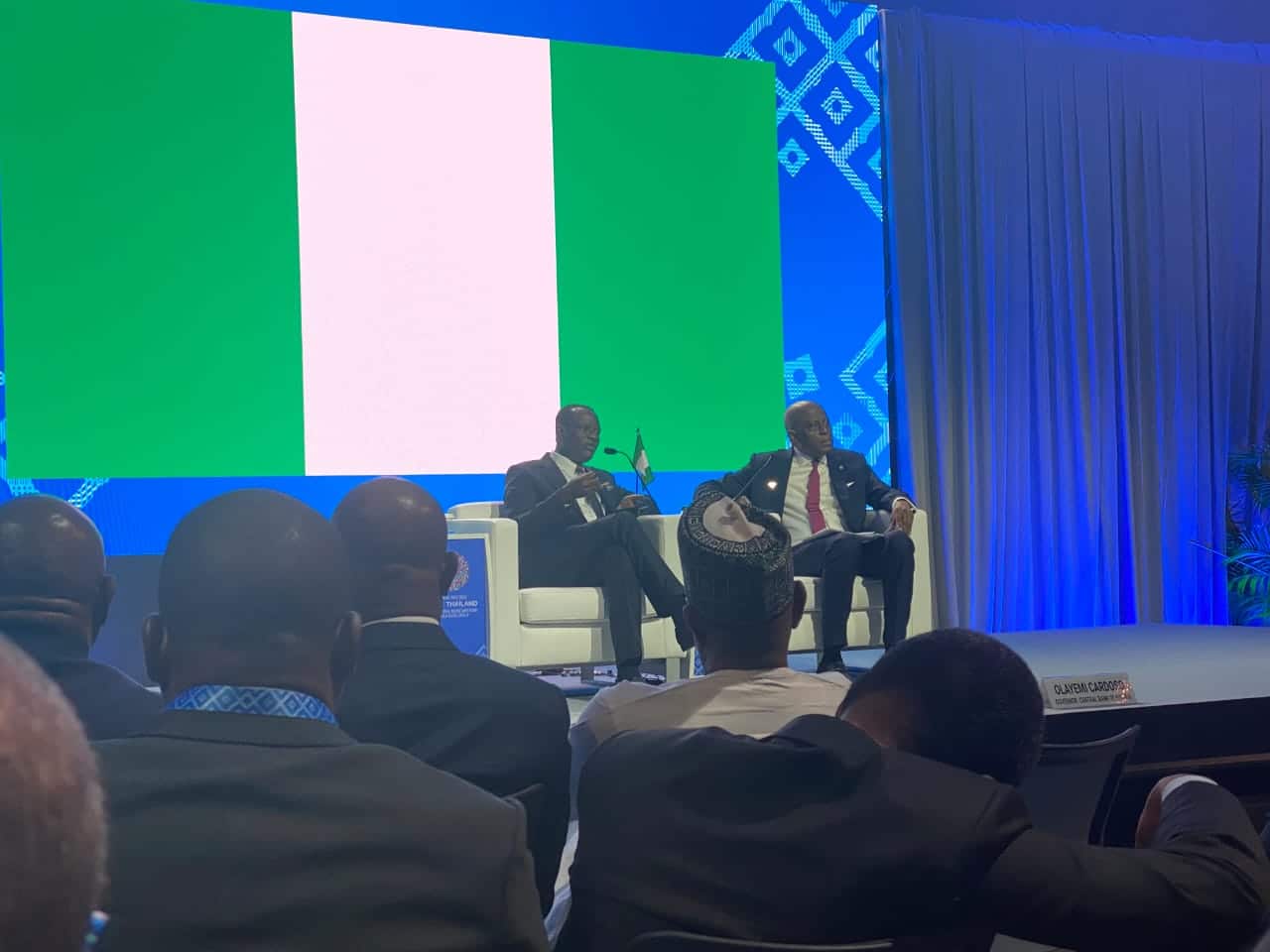
Nigeria’s Minister of Finance and Coordinating Minister of the Economy, Taiwo Oyedele, said on Saturday that international investors and markets have written off Nigerian opposition politicians calling for a return to the subsidy regime.
Mr Oyedele spoke on the sidelines of the World Bank/IMF meetings in Bangkok, Thailand.
The minister responded to questions about how the government hopes to balance the needs of the investment community with domestic concerns among citizens.
“The second point I want to make, and hopefully this will not be misinterpreted, is that, in having all those meetings (with global development and financial organisations, investors and market leaders), I concluded that the markets, including the domestic market—because that you can read from the capital markets—and the international markets, have largely, largely written off the opposition in Nigeria as being unserious. That is why they have not priced in the proposed return of subsidy,” Mr Oyedele said.
“And the reason why you know what I’m saying is right is, God forbid a bad thing, if Mr President says today, ‘we are considering subsidy’, you will see the reflection in price. So maybe it’s good that the international community and the domestic capital markets are aware of who is sincere with Nigerian people and what direction of travel they should take.”
Nigeria has introduced a series of reforms the government said focused on fixing the economy’s structure. However, the impact has been enormous for many Nigerians grappling with the cost-of-living crisis. The government introduced reforms in the foreign exchange market, abolished what it termed a wasteful, corruption-ridden subsidy regime amid fiscal pressures, and institutionalised tax reforms.


While the Nigerian government, led by President Bola Tinubu, has defended its economic policy of subsidy removal as critical to the nation’s fiscal survival, opposition politicians—such as Atiku Abubakar of the ADC and Peter Obi of the NDC—have canvassed for and promised a return to different subsidy arrangements if elected into power.
Opposition
In August, Atiku said he believed a country’s progress and wealth should be measured by citizens’ ability to buy goods and services, not by how much revenue the government collects.
“On the question of subsidy, my position has not changed and will not change: I will restore it! A nation as blessed as ours has no business abandoning its citizens to hardship. Nigeria is rich enough to look after her own,” the former vice president vowed.
Mr Obi, who on his part had earlier warned that subsidy was an “organised crime” that would be removed, made a U-turn in a BBC interview on Tuesday, 6 October, saying he would restore the subsidy if elected president.
He argued that the subsidy regime’s major problem was the corruption surrounding its implementation.
“I’ll remove the corruption and retain the subsidy,” he said.
Mr Obi also explained how he intended to tackle corruption, arguing that his anti-corruption strategy would centre on the president’s conduct and that of his immediate family.
“If you are not stealing, if you are not involved, your wife and family are not involved, you reduce it by 50 per cent,” the presidential candidate said.
READ ALSO: No return to fuel subsidy, multiple exchange rates, Oyedele insists
Messrs Obi and Atiku are the leading opposition figures in Nigeria’s next general elections scheduled for January 2027. Previously, both opposition figures had been unequivocal about removing the petrol subsidy.
PREMIUM TIMES reported earlier on Saturday that Mr Oyedele said there will be no return to subsidy regimes, adding that the 30-day retail margin discount introduced by the government isn’t a subsidy arrangement.
“And let me be clear as well, this was a recurring question almost through all our engagements, but also with the rating agencies, with the investors, and the multilateral institutions. Every time they ask, are you reversing your plans? Are you bringing back subsidies? Let me be clear, there will be no return to fuel subsidies or multiple exchange rates,” he said.
Discover more from Premium Times Nigeria
Subscribe to get the latest posts sent to your email.
-
News3 days ago
Miners Association Seeks Support To Unlock $3bn Gemstone Export Potential
-

 Health3 days ago
Katsina health professionals declare 7-day warning strike
-
Business3 days ago
AFC Appoints CBN Governor Yemi Cardoso as Board Chairman
-
News3 days ago
Lagos unveils 6,000km fibre network backed by $22m investment – Technology Times