News
Plateau state Government Moves to Boost Healthcare with Transparent Equipment Procurement


The Plateau State Specialist Hospital has commenced the opening of bids for the procurement of critical medical and office equipment, as part of efforts to upgrade healthcare services in the state.
A total of 17 companies submitted tender bids, which were officially opened on Tuesday at the hospital’s boardroom, following an earlier public invitation to reputable and registered contractors.
The procurement exercise covers multiple categories of equipment, including dental, physiotherapy, orthopedic instruments and implants, theatre and surgical equipment, ophthalmology tools, hearing test devices for both adults and children, urological equipment, as well as office equipment. The items are grouped into various lots to allow contractors bid based on their areas of specialization.
Speaking during the bid opening, the Chief Medical Director, Christopher Yilgwan, emphasized the commitment of the Caleb Manasseh Mutfwang administration to transparency and accountability in governance.


He noted that the open bidding process reflects the government’s “open door and open book policy,” aimed at building public trust and ensuring that citizens are actively engaged in governance processes.
According to him, “When people scrutinize what we do, it keeps us on our toes and helps us to deliver better outcomes. This process is designed to ensure that the people of Plateau State get the best in terms of healthcare services and equipment.”
Yilgwan dismissed concerns that the process might be a mere formality, assuring stakeholders that all submissions would undergo a rigorous technical evaluation by qualified professionals, including end-users of the equipment.
He added that the hospital places a high premium on adherence to global standards, noting that outdated equipment—some of which have been in use for decades—necessitated the current procurement drive.
Following the bid opening, the next phase will involve a detailed technical evaluation of all submissions by a specialized committee, after which recommendations will be made for contract awards.
Also speaking, the Director of Planning, Research and Statistics and Chairman of the Bid Opening Committee, Jonathan Bulus, highlighted that the transparent process was designed to promote fairness, accountability, and healthy competition among bidders.
Observers at the event commended the openness of the exercise. Chairman of the Coalition of Civil Society Organizations on Health in Plateau State, Christopher Damcher, described the process as encouraging and capable of preventing disputes if sustained through subsequent stages.


A representative of one of the bidding firms, Gondys Simon, also expressed confidence in the process, noting that transparency would ensure that only competent contractors are selected and that the hospital ultimately benefits from quality supplies.
The procurement process is expected to proceed with pre-qualification and further evaluations, as part of broader efforts by the Plateau State Government to strengthen the healthcare sector and improve service delivery across the state.

The Independent National Electoral Commission, INEC, has unveiled the final list of Lagos State governorship candidate.
The list is contained in a document released by INEC on Saturday in preparation for the 2027 general elections.
According to the document, the Lagos State deputy governor, Femi Hamzat is listed at the candidate of the All Progressives Congress, APC.
Also on the list is Gbadebo Rhodes-Vivour as the African Democratic Congress, ADC, candidate.
Find attach below document containing the full list.


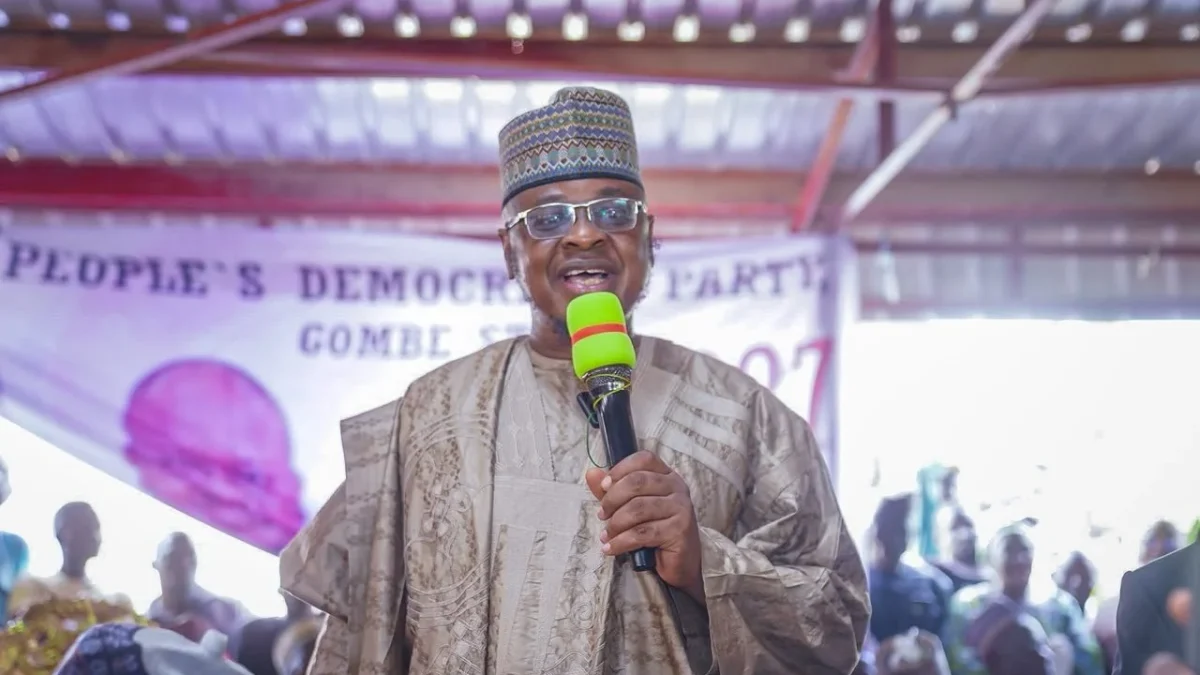
The Independent National Electoral Commission (INEC) has omitted former Minister of Communications and Digital Economy, Isa Pantami, from its final list of governorship candidates for Gombe State ahead of the February 6, 2027 election.
Politics Nigeria reports that the commission released a list of 16 cleared candidates for the election, but Pantami’s name was missing despite his earlier inclusion in the provisional list published on August 29.
Among the candidates on the final list are Bala Bello Tinka of the African Democratic Congress (ADC), Jamilu Isyaku Gwamna of the All Progressives Congress (APC) and Babayo Ardo Kumo of the Nigerian Democratic Congress (NDC).
Others include Zubairu Mu’azu Halilu of the Labour Party (LP), Lamela L. Silas of the Allied Peoples Movement (APM), Ibrahim Jalo Abubakar of the Peoples Redemption Party (PRP) and Adamu Mohammed Ma’aji of the Social Democratic Party (SDP).
Pantami’s exclusion comes amid a series of legal disputes over his emergence as the Peoples Democratic Party (PDP) governorship candidate in the state.
The former minister had initially sought the APC governorship ticket but left the party after it settled for Gwamna as its consensus candidate. He subsequently joined the PDP and emerged as the party’s flag bearer through voice affirmation at its governorship primary.
However, a Federal High Court sitting in Gombe nullified his initial emergence on May 26, following a challenge to the primary process.
The court ordered a fresh primary election, which Pantami won on September 29 with 2,054 votes, defeating Khamisu Ahmed Mailantarki and Usman Aliyu Garry.
Garry had challenged Pantami’s emergence, arguing that the required primary election was not properly conducted before the former minister was declared the party’s candidate.
Despite winning the court-ordered rerun, Pantami’s eligibility remained in doubt following the Supreme Court’s September 24, 2026 judgment on provisions of the Electoral Act 2026 governing political party membership registers and candidate eligibility.
The Supreme Court affirmed the constitutionality of Sections 77(5), 77(6) and 77(7) of the Electoral Act 2026 and upheld INEC’s revised timetable and schedule of activities for the 2027 elections.
The provisions bar political parties from fielding candidates whose names were not included in the membership registers submitted to INEC within the stipulated period.
INEC has maintained that parties found to have violated the requirements will not be permitted to participate in the elections through candidates whose nominations breach the law.
Mohammed Haruna, an INEC national commissioner in charge of information and voter education, said the commission would not allow parties to replace candidates affected by the provisions.
Haruna made the clarification during an appearance on Trust TV’s programme on Wednesday evening, explaining that allowing substitutions would enable political parties to benefit from their own violations.

He cited previous disputes involving Zamfara and Plateau states to illustrate the consequences of parties failing to comply with electoral requirements.
“It’s like you committed an offence. And then, you come and benefit from it,” Haruna said.
He added that allowing parties to substitute candidates in such circumstances would amount to permitting them to benefit from an offence they had committed.
Haruna also indicated that the commission expected to make a definite pronouncement on the implications of the Supreme Court judgment by the following Tuesday.
-
News4 days ago
FCCPC reviews rules for Nigeria’s online sales promotions, giveaways – Technology Times
-

 News3 days ago
Robot data startup Mecka AI nabs $60M from Sequoia
-
Business4 days ago
Nigeria has reduced reliance on oil revenue
-
Business1 day ago
Communications Ministry made ₦345.5 million duplicate payment for Abuja ICT Park project