Health
Plateau State commenced a 3days regional training programme aimed at strengthening the capacity of laboratory scientists to deliver accurate malaria diagnosis across selected states in Nigeria.

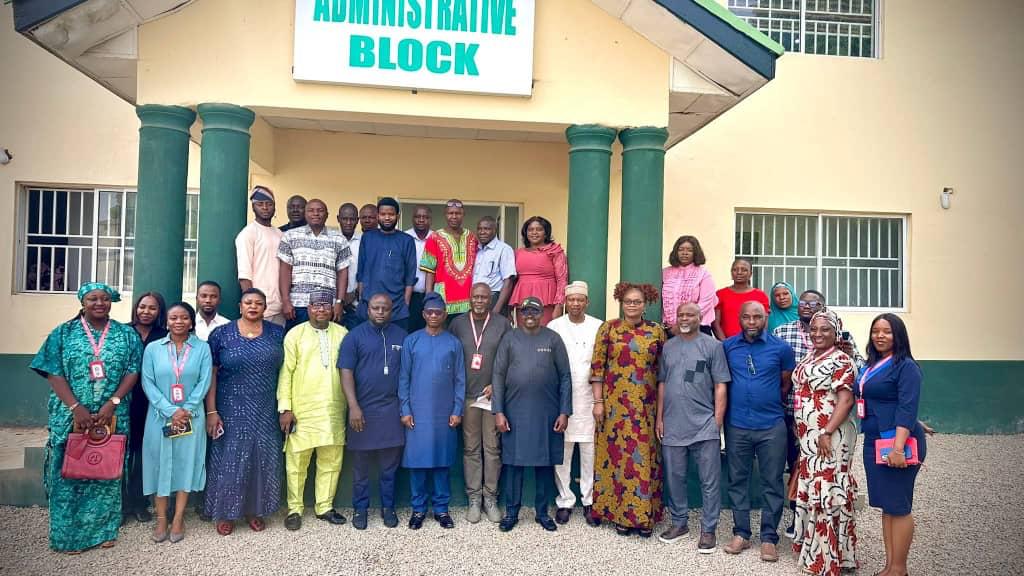
The training was organized by REACH Malaria Project in collaboration with National Malaria Elimination Program and Plateau State Ministry of Health through the State Malaria Elimination Program (SMEP) hosted at the Plateau State Specialist Hospital laboratory which was recently built and equipped by Governor Caleb Mutfwang under “the time is now administration”
Participants drawn from Plateau, Benue and Kebbi States are taking part in the training, which is designed to enhance laboratory scientists’ skills in microscopic malaria diagnosis under the mantra “Supporting a Culture of Quality.”
Speaking on behalf of the Plateau State Commissioner for Health, the Chief Medical Director of Plateau State Specialist Hospital, Prof Christopher Yilgwan, said the training targets selected laboratory scientists who already possess basic diagnostic skills and are expected to serve as supervisors and mentors for other health workers in their respective facilities.

According to him, the programme involves participants from multiple states and focuses on improving the accuracy and reliability of microscopic malaria diagnosis in healthcare facilities.
Yilgwan noted that the selection of Plateau State as host was influenced by the high standard of the PLASVERIC Public Health Teaching Laboratory, describing it as a top-notch facility capable of serving as a reference centre for malaria diagnostics.
He also commended Plateau State Governor Caleb Mutfwang for upgrading the laboratory to international standards, a development he said has attracted partnerships and training opportunities to the state.


The Program Manager, Plateau State Malaria Elimination Program, Nurse Ndak Kizito Zuhumnan, said the training reflects the foresight of the Plateau State government in prioritising improvements in the health sector and creating an enabling environment for partners to support healthcare delivery.
He explained that the training is specifically designed to enhance the competence of laboratory scientists in the use of microscopy for malaria diagnosis, noting that accurate diagnosis remains critical to effective treatment and malaria control efforts.
Zuhumnan added that participants drawn from tertiary hospitals, private facilities and primary healthcare centres will return to their various institutions after the training to support peer learning, provide mentorship and strengthen quality assurance processes in malaria diagnosis.
According to him, the ripple effect of the training will extend beyond the participating institutions as trained scientists will also support community-level malaria services through supervision and quality checks to ensure that diagnostic results used for treatment are accurate and reliable.
He further noted that the presence of participants from other states for the training demonstrates the growing recognition of Plateau’s improved laboratory infrastructure, stressing that the upgrades carried out at the facility have positioned the state as a reference point for diagnostic training and public health collaboration.
Senior Diagnostic Specialist with the REACH PATH Project, Ojo Abiodun, said the training is part of efforts to strengthen malaria diagnostic services across supported states through capacity building for medical laboratory scientists.


He said the REACH project, funded by the United States Department of State, supports Nigeria’s efforts to improve malaria diagnosis and treatment outcomes by ensuring that test results used for treatment decisions are accurate and reliable.
Abiodun added that the training is facilitated by World Health Organization-certified Level 1 expert microscopists, who are equipping participants with advanced skills in malaria microscopy.
According to him, participants selected for the training had previously completed basic malaria microscopy training recommended by national and global health authorities and were chosen to further strengthen their supervisory capacity.
Welcoming the experts Dr Alice Pam-Tok the Plateau State Coordinator REACH project said the training, improved quality assurance in malaria diagnosis is critical to ensuring effective treatment and reducing malaria-related illness and deaths in affected communities.







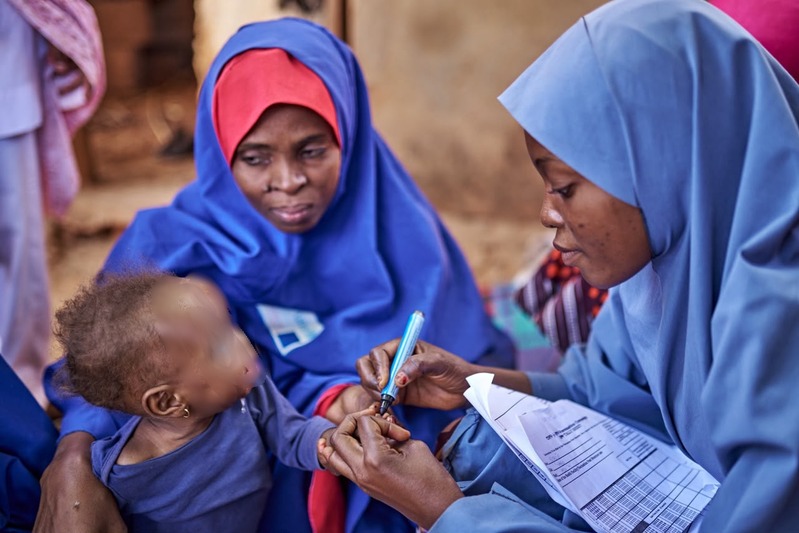
Gavi, the Vaccine Alliance, says 9.5 million children in 57 supported countries received no routine vaccine in 2025, despite gains in global immunisation.
The figure, described as the number of “zero-dose” children, was contained in Gavi’s 2025 Annual Progress Report, which reviewed the alliance’s 2021-2025 strategic period.
Gavi defines zero-dose children as infants who have not received the first dose of a diphtheria, tetanus and pertussis-containing vaccine by the end of their first year.
Number falls from 2021 peak
According to the report, the number of zero-dose children in 2025 was 600,000 lower than in 2024 and 25 per cent lower than the peak recorded in 2021 following disruptions to routine immunisation caused by the COVID-19 pandemic.
However, the figure remained four per cent above the 2019 baseline, partly because of continued growth in the number of children being born.
Gavi said children living in fragile, conflict-affected and humanitarian settings remain among those most likely to be missed by immunisation programmes.


Nigeria remains one of the countries with the highest number of zero-dose children. UNICEF estimated that about 2.2 million Nigerian children had never received a routine vaccine in 2025, the highest number in Africa.
Nigeria records gains in targeted areas
The report highlighted Nigeria, Ethiopia and Pakistan among countries where emerging data showed stronger immunisation coverage gains in sub-national areas that received greater Gavi focus and investment during the 2021-2025 period.
Gavi said the findings underscored the value of targeted, equity-focused investments in reaching communities that are being missed by routine immunisation.
The report also identified Nigeria among countries covered by Gavi’s Zero-Dose Learning Hubs, which examined what works and what does not in identifying and reaching zero-dose and under-immunised children.
The findings from Nigeria, Bangladesh, Mali and Uganda highlighted several issues, including gender-related barriers to immunisation.
73m children immunised in 2025
Despite the number of zero-dose children, Gavi said more than 73 million children were immunised through routine programmes with its support in 2025.
More than 351 million children were immunised during the 2021-2025 strategic period, “exceeding Gavi’s target of 300 million children.”
“By end 2025, Gavi-supported countries had immunised more than 1.3 billion unique children with Gavi support since 2000, exceeding our Investment Opportunity 2021-2025 commitment of more than 1.1 billion children immunised by 2025,” it noted.
Gavi said vaccination averted more than 2.2 million future deaths in 2025, bringing the total number of future deaths averted through its supported vaccination programmes to more than 7.8 million during the 2021-2025 period.
Generated economic benefits
The report said immunisation programmes generated more than $30 billion in economic benefits for Gavi-supported countries in 2025, the highest amount recorded in a single year.
The benefits were calculated from the costs of illness averted, including medical and associated costs, caretaker wages and productivity losses resulting from disability or death.
Gavi said the programmes generated more than $104 billion in economic benefits between 2021 and 2025 and more than $308 billion between 2000 and 2025.
Countries also contributed a record $301 million towards the co-financing of Gavi-supported vaccines in 2025, an 18 per cent increase from 2024.
About 80 per cent of the contribution came from domestic resources, while “approximately 20 per cent from low-interest loans from the World Bank.”
Gavi said countries had contributed a total of $2.2 billion towards vaccine co-financing since the policy was introduced in 2008.
More children
For its 2026 to 2030 strategic period, Gavi said it aims to protect another 500 million children through immunisation and avert between eight million and nine million future deaths.
READ ALSO:New TB vaccines could save 7.3m lives by 2050 – Gavi
The Alliance also targets more than $100 billion in economic benefits during the period. Gavi said it would place greater emphasis on reaching zero-dose and under-immunised children while strengthening the sustainability of national immunisation programmes.
In her comments, Gavi Chief Executive Officer, Sania Nishtar, said the results showed that immunisation generates benefits beyond preventing disease. “However, when it comes to immunisation we know that the return on investment extends far beyond health to supporting sustainable, inclusive economic growth,” Ms Nishtar said.
WHO Director-General, Tedros Ghebreyesus, also said immunisation delivers massive gains in lives saved and diseases prevented, but also in terms of economic benefits.
“Countries understand that the cost of failing to vaccinate is far too great, while the benefits extend across families, communities, economies and future generations,” Mr Ghebreyesus was quoted to have said.
Discover more from Premium Times Nigeria
Subscribe to get the latest posts sent to your email.

A military cardiologist, Life Ajemba, has warned that hypertension, prolonged stress, and inadequate sleep could increase the risk of cardiovascular disease among serving military personnel and veterans.
Mr Ajemba, a major-general, said hypertension remains one of the most common cardiovascular conditions among serving personnel and military retirees.
Speaking in an interview with the News Agency of Nigeria on Wednesday in Abuja, he urged military personnel and veterans to prioritise their heart health through regular medical checks, physical exercise, healthy diets and adequate rest.
He cited studies which showed that hypertension accounted for 15.31 per cent of cases treated among mainly military retirees between 2015 and 2020.
He also referenced another study which found a hypertension prevalence of 34.3 per cent among military personnel.
He noted that major risk factors included alcohol consumption, tobacco smoking, family history of cardiovascular disease and being overweight.
According to him, the demanding nature of military service could also increase cardiovascular risks due to physical stress, psychological trauma, irregular schedules and inadequate sleep.
“Military duties affect heart health through a combination of extreme physical stress, psychological trauma and environmental exposures that increase the risk of cardiovascular disease,” he said.
The military cardiologist explained that prolonged stress could increase the release of hormones such as adrenaline and cortisol, leading to increased heart rate and blood pressure.
He added that sleep deprivation, anxiety and other psychological pressures could further increase the risk of hypertension, coronary artery disease, heart attack and stroke.
Mr Ajemba stressed the importance of regular medical screening among military personnel, saying early detection could help identify silent conditions such as high blood pressure, abnormal cholesterol levels and elevated blood sugar.
He said routine medical checks could include blood pressure and heart rate monitoring, blood tests, lipid profiles, electrocardiograms (ECGs), chest X-rays, and echocardiography where necessary.
READ ALSO: PT Health Watch: How Pregnancy-Induced Hypertension puts mother, baby at risk
“Early detection ensures that soldiers receive treatment while remaining fit for duty, preventing medical evacuation and safeguarding their long-term health,” he said.
He also encouraged military personnel to maintain regular physical exercise, saying fitness helped reduce blood pressure, improve heart efficiency and increase resistance to operational fatigue.
Mr Ajemba, however, advised personnel to combine physical fitness with healthy eating, adequate rest and avoidance of smoking and excessive alcohol consumption.
He said maintaining a healthy lifestyle could help military personnel reduce cardiovascular risks and remain fit both during active service and after retirement.
(NAN)
Discover more from Premium Times Nigeria
Subscribe to get the latest posts sent to your email.
-

 News4 days ago
Mirror Particle is building a ‘world model’ of human behavior
-
News3 days ago
FCCPC reviews rules for Nigeria’s online sales promotions, giveaways – Technology Times
-
News2 days ago
Robot data startup Mecka AI nabs $60M from Sequoia
-
Business3 days ago
Nigeria has reduced reliance on oil revenue